Loading...
Turenne vs Yamagata Aritomo
Yamagata Aritomo leads by 6.7 pts · 2 figures compared
…
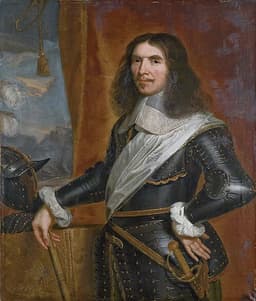
Turenne
General · Modern
75.8Total
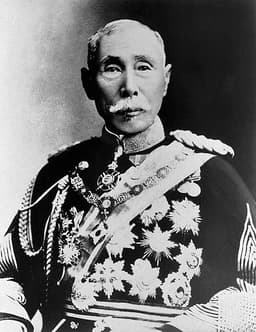
Yamagata Aritomo
General · Modern
82.5Total
Basic Information
Born
1611
1838
Died
1675
1922
Era
Modern
Modern
Nationality
France
Japan
Occupation
General
General
Civilization
Western
Eastern
Score Comparison
Military (10%)
79.9
78.0
Political (20%)
72.0
82.0
Influence (20%)
88.0
80.0
Legacy (20%)
65.0
90.0
Leadership (15%)
77.2
78.0
Strategy (15%)
72.0
82.0
TOTAL
75.8
82.5
Turenne — Complete Timeline
1639 AD
Campaign in the ValtellinaWar
Turenne commanded French forces in the Valtellina during the Thirty Years' War. He captured several fortresses and secured the strategic pass for France, demonstrating his early military skill.
Thirty Years' WarAlpsEarly Career
Impact: regional
1658 AD
Battle of the DunesWar◆ Major
Turenne commanded the French army to victory over the Spanish at the Battle of the Dunes near Dunkirk. The victory led to the capture of Dunkirk and forced Spain to seek peace, ending the Franco-Spanish War.
Franco-Spanish WarDunkirkMilitary Victory
Impact: regional
1674 AD
Battle of the RhineWar◆ Major
Turenne led a French army across the Rhine in winter, surprising the Imperial forces. He defeated the Austrians at the Battle of Entzheim and later at Turckheim, securing French control of Alsace.
Franco-Dutch WarAlsaceWinter Campaign
Impact: regional
Battle of the SambreWar◆ Major
Turenne defeated the Spanish and Dutch forces at the Battle of Seneffe. The battle was costly but prevented the Allies from invading France. It demonstrated Turenne's tactical skill in defensive warfare.
Franco-Dutch WarDefensive BattleTactics
Impact: regional
1675 AD
Death of TurenneWar◆ Major
Turenne was killed by a cannonball while reconnoitering enemy positions at the Battle of Sasbach. His death was a major loss for France. He was buried with honors in the Basilica of Saint-Denis.
Death in BattleFranco-Dutch WarMilitary Loss
Impact: nationaltragic
Yamagata Aritomo — Complete Timeline
1873 AD
Establishment of the Imperial Japanese ArmyReform
Yamagata Aritomo, as War Minister, oversaw the creation of the Imperial Japanese Army based on the Prussian model. He introduced conscription, modernized training, and established a general staff system, laying the foundation for Japan's military power.
Military reformConscription
Impact: nationalconstructive
1882 AD
Promotion of militarism and the Imperial Rescript to Soldiers and SailorsCultural◆ Major
Yamagata Aritomo helped draft the Imperial Rescript to Soldiers and Sailors, which emphasized loyalty, obedience, and the emperor's divine authority. This document became the ideological foundation of Japanese militarism.
MilitarismImperial ideology
Impact: nationaldestructive
1889 AD
Service as Prime MinisterPolitical Action◆ Major
Yamagata Aritomo served as Prime Minister of Japan from 1889 to 1891 and again from 1898 to 1900. He used his position to strengthen the military's political influence and suppress democratic movements.
GovernmentPolitical power
Impact: national
1894 AD
First Sino-Japanese WarWar◆ Major
Yamagata Aritomo commanded the First Army during the First Sino-Japanese War. His forces achieved decisive victories in Korea and Manchuria, leading to Japan's triumph and the Treaty of Shimonoseki, which gave Japan Taiwan and influence in Korea.
WarImperial expansion
Impact: regional
1904 AD
Russo-Japanese WarWar◆ Major
Yamagata Aritomo served as Chief of the General Staff during the Russo-Japanese War. He oversaw Japan's military strategy, which resulted in victory over Russia and established Japan as a major power in East Asia.
WarGreat power
Impact: global
Expert Analysis
Origins
Yamagata Aritomo was born into a low-ranking samurai family in 1838, during the twilight of the Tokugawa shogunate. He rose through the ranks of the imperial forces, becoming a key figure in the Meiji Restoration and the modernization of Japan's military. Turenne, Henri de La Tour d'Auvergne, Vicomte de Turenne, was born in 1611 into a noble French family. He began his military career under his uncles, the Princes of Orange, and later served in the French army during the Thirty Years' War. While Yamagata emerged from a period of civil strife and transformation, Turenne was a product of the aristocratic military tradition of 17th-century Europe.
Rise to Power
Yamagata's rise was meteoric: he commanded the Kiheitai militia, fought in the Boshin War, and became the first Minister of the Army in 1873. He was instrumental in establishing the Imperial Japanese Army, modeled on Prussian lines, and served as Chief of the General Staff. Turenne rose through merit and royal favor; his early victories in the Thirty Years' War and the Franco-Spanish War earned him the rank of Marshal of France in 1643. He became the foremost general of Louis XIV, leading campaigns that expanded French borders. Both men reached the pinnacle of military power, but Yamagata's path was more political and institutional, while Turenne's was purely operational.
Leadership & Governance
Yamagata was not only a general but also a statesman: he served twice as Prime Minister of Japan and held key cabinet positions. He shaped Japan's national strategy, promoting militarism and the Imperial Rescript to Soldiers and Sailors, which emphasized loyalty and duty. His leadership was authoritarian and focused on building a strong central state. Turenne, by contrast, was primarily a battlefield commander. He was known for his tactical brilliance, speed of maneuver, and ability to inspire troops. He was less involved in governance but exerted influence through his military successes and loyalty to the crown. Yamagata's leadership was broader in scope, combining military and political power, while Turenne's was more narrowly military.
Triumph & Tragedy
Yamagata's greatest triumphs include his role in the First Sino-Japanese War (1894-1895) and the Russo-Japanese War (1904-1905), where Japan emerged as a major power. However, his promotion of militarism sowed seeds for future conflicts, including World War II. Turenne's triumphs include the Battle of the Dunes (1658), where he defeated the Spanish, and his campaigns in the Rhineland during the Franco-Dutch War. His tragedy was his death in battle at the Battle of the Sambre in 1675, struck by a cannonball. Yamagata died of natural causes in 1922, but his legacy contributed to Japan's eventual downfall. Both men experienced victory and loss, but Turenne's death was a personal tragedy, while Yamagata's was a national one.
Character & Destiny
Yamagata was known as the 'father of Japanese militarism,' a shrewd, calculating, and ambitious figure who believed in military strength as the foundation of national power. His destiny was to modernize Japan and set it on a path of imperial expansion. Turenne was celebrated for his modesty, strategic genius, and humane treatment of soldiers. His destiny was to serve France and expand its territories under Louis XIV. Yamagata's character was more rigid and ideological, while Turenne was pragmatic and adaptable. Their destinies reflected the eras they lived in: Yamagata in a rapidly modernizing Japan, Turenne in a absolutist France.
Legacy
Yamagata's legacy is mixed: he is credited with creating a modern, effective military that defeated China and Russia, but also with fostering the militarism that led to Japan's destruction in 1945. Turenne is remembered as one of France's greatest generals, a master of maneuver warfare, and a symbol of military excellence. His tactics influenced later commanders like Napoleon. Yamagata's influence extended beyond the battlefield into national policy, while Turenne's remained primarily military. In terms of lasting impact, Yamagata's institutional legacy—the Imperial Japanese Army—was more profound, but ultimately catastrophic. Turenne's legacy is more purely martial and admired.
Conclusion
Yamagata Aritomo and Turenne were both exceptional military leaders, but their contexts and contributions differ significantly. Yamagata's scores (M=78, P=82, I=80, L=90, D=78, S=82, T=82) reflect his high leadership and political impact, while Turenne's (M=80, P=72, I=88, L=65, D=77, S=72, T=76) highlight his tactical brilliance and adaptability. The score gap of 6.7 favoring Yamagata is justifiable given his broader influence on Japan's trajectory. However, as a pure military commander, Turenne arguably had no peer in his time. Ultimately, Yamagata's legacy is more consequential but darker, while Turenne's is more purely heroic. In a direct comparison, Yamagata's comprehensive impact on history gives him the edge, but Turenne remains a paragon of military art.
**Scores:**
- **Yamagata Aritomo:** 82.3 (Overall)
- **Turenne:** 75.6 (Overall)
Rankings
🥇
Yamagata AritomoLeader
Mil: 78.0Pol: 82.0Inf: 80.0
82.5
🥈
Turenne
Mil: 79.9Pol: 72.0Inf: 88.0
75.8
+6.7 behind
How This Comparison Works
Algorithm
Each figure is scored on 6 dimensions (0—100 scale) based on structured historical data: Military (10%), Political (20%), Influence (20%), Legacy (20%), Leadership (15%), Strategy (15%). The weighted total produces the final ranking.
Data Sources
Scores are computed from structured sub-indicators in the database. Scale factors adjust for era (Ancient ×0.85, Modern ×1.0) and civilization size (Eastern ×1.05, Other ×0.80) to account for differences in population and military scale.
Maximum 3 Figures
Comparisons are limited to 2—3 figures to ensure readability and statistical meaningfulness.
Error Margins
±5 points per dimension — Sub-scores are derived from historical records with inherent uncertainty. Two figures within 5 points on a dimension should be considered roughly equivalent in that area.
Total Score Accuracy
±3 points overall — The weighted combination of 6 dimensions produces a total score with approximately ±3 points of uncertainty. Differences of less than 3 points are not statistically significant— the figures are effectively tied.
Known Limitations
- Historical records are incomplete and uneven across civilizations
- Figures from oral-tradition societies may be underrepresented
- Occupation labels can misclassify multi-role figures
- Scores measure capability and impact, not moral character
- Quantitative scoring is a comparison tool, not absolute truth
Capability Radar
Military (10%) — Battles & Warfare
Battles
85
75
Win Rate
88
70
Expansion
80
80
Political (20%) — Governance & Reform
Reform
60
90
Diplomacy
75
75
Economy
55
70
Influence (20%) — Cultural & Global Reach
Cultural
65
80
Global
70
70
Legacy (20%) — Historical Impact
Historical
80
85
Longevity
75
75
Leadership (15%) — Power & Stability
Tenure
70
85
Stability
65
65
Strategy (15%) — Tactics & Innovation
Strategy
92
85
Tactics
90
80
Reform
75
95
Similar Comparisons
Comments & Discussion
No comments yet. Be the first to share your thoughts!