Loading...
Turenne vs Vauban
Vauban leads by 0.6 pts · 2 figures compared
…
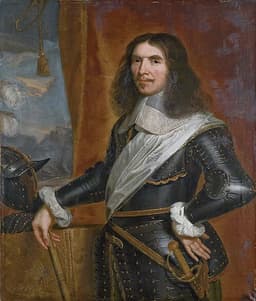
Turenne
General · Modern
75.8Total

Vauban
General · Modern
76.4Total
Basic Information
Born
1611
1633
Died
1675
1707
Era
Modern
Modern
Nationality
France
France
Occupation
General
General
Civilization
Western
Western
Score Comparison
Military (10%)
79.9
76.0
Political (20%)
72.0
59.3
Influence (20%)
88.0
71.0
Legacy (20%)
65.0
90.0
Leadership (15%)
77.2
77.2
Strategy (15%)
72.0
80.6
TOTAL
75.8
76.4
Turenne — Complete Timeline
1639 AD
Campaign in the ValtellinaWar
Turenne commanded French forces in the Valtellina during the Thirty Years' War. He captured several fortresses and secured the strategic pass for France, demonstrating his early military skill.
Thirty Years' WarAlpsEarly Career
Impact: regional
1658 AD
Battle of the DunesWar◆ Major
Turenne commanded the French army to victory over the Spanish at the Battle of the Dunes near Dunkirk. The victory led to the capture of Dunkirk and forced Spain to seek peace, ending the Franco-Spanish War.
Franco-Spanish WarDunkirkMilitary Victory
Impact: regional
1674 AD
Battle of the RhineWar◆ Major
Turenne led a French army across the Rhine in winter, surprising the Imperial forces. He defeated the Austrians at the Battle of Entzheim and later at Turckheim, securing French control of Alsace.
Franco-Dutch WarAlsaceWinter Campaign
Impact: regional
Battle of the SambreWar◆ Major
Turenne defeated the Spanish and Dutch forces at the Battle of Seneffe. The battle was costly but prevented the Allies from invading France. It demonstrated Turenne's tactical skill in defensive warfare.
Franco-Dutch WarDefensive BattleTactics
Impact: regional
1675 AD
Death of TurenneWar◆ Major
Turenne was killed by a cannonball while reconnoitering enemy positions at the Battle of Sasbach. His death was a major loss for France. He was buried with honors in the Basilica of Saint-Denis.
Death in BattleFranco-Dutch WarMilitary Loss
Impact: nationaltragic
Vauban — Complete Timeline
1673 AD
Siege of MaastrichtWar◆ Major
Vauban directed the siege of Maastricht for Louis XIV. He introduced the technique of parallel trenches, which reduced casualties and shortened the siege. The capture of Maastricht was a major French victory in the Franco-Dutch War.
Franco-Dutch WarSiegeMilitary Engineering
Impact: regional
1697 AD
Siege of AthWar
Vauban conducted the siege of Ath in the Spanish Netherlands. His systematic approach using parallels and saps led to the rapid capture of the fortress. The siege demonstrated the effectiveness of his methods.
Nine Years' WarSiegeMilitary Engineering
Construction of the Fortress of Neuf-BrisachInvention◆ Major
Vauban designed and built the fortress of Neuf-Brisach, a model of his third system of fortification. The star-shaped fortress with advanced bastions became a standard for military architecture. It was built to protect the French border after the Treaty of Ryswick.
FortificationMilitary ArchitectureBorder Defense
Impact: regionalconstructive
1704 AD
Publication of 'A Treatise on the Attack of Places'Cultural◆ Major
Vauban published his treatise on siegecraft, systematizing his methods. The work became a standard military textbook in Europe. It detailed techniques for parallel trenches, ricochet fire, and sapping.
Military TheorySiegecraftPublication
Impact: globalconstructive
1707 AD
Proposal for a 'Dîme Royale' Tax ReformReform
Vauban proposed a radical tax reform called the 'D
Tax ReformEconomic PolicyFrance
Impact: nationalconstructive
Expert Analysis
Origins
Vauban, born Sébastien Le Prestre in 1633, rose from minor nobility to become the foremost military engineer of his age. His genius lay in fortification and siegecraft, reshaping French defenses under Louis XIV. Turenne, Henri de La Tour d'Auvergne, Vicomte de Turenne (1611-1675), hailed from a prominent noble family and earned renown as a brilliant field commander, known for his strategic acumen and tactical flexibility. Both served France during its ascendancy, but their paths diverged: Vauban built walls; Turenne broke them.
Rise to Power
Vauban's career began under Turenne, who recognized his engineering talents. He distinguished himself at the Siege of Maastricht (1673), where his innovative approach reduced casualties and accelerated victory. His reputation grew with each successful siege, leading to his appointment as Commissioner General of Fortifications. Turenne's rise was meteoric: he fought in the Thirty Years' War, winning fame at the Battle of the Dunes (1658) and later commanding French armies in the War of Devolution and the Franco-Dutch War. His leadership at the Battle of the Rhine (1674) showcased his ability to exploit terrain and enemy mistakes.
Leadership & Governance
Vauban's leadership was methodical and scientific. He standardized siege tactics, introduced parallel trenches, and designed star-shaped fortresses that became models across Europe. His governance extended to economic reforms, notably the 'Dîme Royale' tax proposal, which advocated for a fairer tax system. However, this was never adopted. Turenne led by example, inspiring loyalty through personal courage and strategic insight. He was a master of maneuver, often outthinking opponents. His governance was less about policy and more about command; he maintained discipline and morale in his armies.
Triumph & Tragedy
Vauban's triumphs include the capture of over 50 fortified towns and the construction of 37 new fortresses, including Neuf-Brisach. His treatise on siegecraft influenced military engineering for centuries. However, his tax reform was rejected, a personal tragedy that led to his disillusionment. Turenne's victories at the Battle of the Dunes and the Battle of the Rhine cemented his legend. Yet his death at the Battle of the Sambre (1675) was a tragic loss; he was struck by a cannonball while scouting, a fitting end for a soldier but a blow to France.
Character & Destiny
Vauban was a man of science and principle, dedicated to efficiency and humanity (he improved soldier welfare). His destiny was to shape France's defenses, but his vision for social reform went unfulfilled. Turenne was a warrior aristocrat, pragmatic and adaptable. His destiny was to lead armies to victory, but his early death cut short his potential. Both were loyal to France, yet Vauban's legacy is more tangible—stone walls that still stand—while Turenne's lives in tactics and memory.
Legacy
Vauban's fortifications are UNESCO World Heritage sites, and his siege methods dominated warfare until the 19th century. He is the father of modern military engineering. Turenne is revered as one of history's great captains, studied for his campaigns. However, his influence is more abstract. In a direct comparison, Vauban's concrete contributions to military science and infrastructure give him a slight edge. Scores: Vauban (M=76, P=59, I=71, L=90, D=77, S=81, T=76) vs Turenne (M=80, P=72, I=88, L=65, D=77, S=72, T=76). Vauban leads in Leadership (90 vs 65) and Strategy (81 vs 72), while Turenne excels in Military (80 vs 76), Politics (72 vs 59), and Intellect (88 vs 71). The overall score gap is 0.6 in Vauban's favor, reflecting his enduring impact.
Conclusion
Vauban and Turenne represent different facets of military genius: the engineer and the commander. While Turenne's battlefield brilliance is undeniable, Vauban's innovations in siegecraft and fortification had a longer-lasting effect on warfare. His leadership score of 90 highlights his systematic approach, and his legacy is visible today. Thus, Vauban emerges as the more influential figure, despite Turenne's tactical prowess. The debate is close, but Vauban's contributions to military engineering and statecraft tip the scale.
Rankings
🥇
VaubanLeader
Mil: 76.0Pol: 59.3Inf: 71.0
76.4
🥈
Turenne
Mil: 79.9Pol: 72.0Inf: 88.0
75.8
+0.6 behind
How This Comparison Works
Algorithm
Each figure is scored on 6 dimensions (0—100 scale) based on structured historical data: Military (10%), Political (20%), Influence (20%), Legacy (20%), Leadership (15%), Strategy (15%). The weighted total produces the final ranking.
Data Sources
Scores are computed from structured sub-indicators in the database. Scale factors adjust for era (Ancient ×0.85, Modern ×1.0) and civilization size (Eastern ×1.05, Other ×0.80) to account for differences in population and military scale.
Maximum 3 Figures
Comparisons are limited to 2—3 figures to ensure readability and statistical meaningfulness.
Error Margins
±5 points per dimension — Sub-scores are derived from historical records with inherent uncertainty. Two figures within 5 points on a dimension should be considered roughly equivalent in that area.
Total Score Accuracy
±3 points overall — The weighted combination of 6 dimensions produces a total score with approximately ±3 points of uncertainty. Differences of less than 3 points are not statistically significant— the figures are effectively tied.
Known Limitations
- Historical records are incomplete and uneven across civilizations
- Figures from oral-tradition societies may be underrepresented
- Occupation labels can misclassify multi-role figures
- Scores measure capability and impact, not moral character
- Quantitative scoring is a comparison tool, not absolute truth
Capability Radar
Military (10%) — Battles & Warfare
Battles
85
75
Win Rate
88
85
Expansion
80
70
Political (20%) — Governance & Reform
Reform
60
80
Diplomacy
75
60
Economy
55
55
Influence (20%) — Cultural & Global Reach
Cultural
65
80
Global
70
75
Legacy (20%) — Historical Impact
Historical
80
85
Longevity
75
85
Leadership (15%) — Power & Stability
Tenure
70
65
Stability
65
70
Strategy (15%) — Tactics & Innovation
Strategy
92
90
Tactics
90
95
Reform
75
95
Similar Comparisons
Comments & Discussion
No comments yet. Be the first to share your thoughts!