Loading...
Toussaint Louverture vs Xu Da
Toussaint Louverture leads by 3.6 pts · 2 figures compared
…
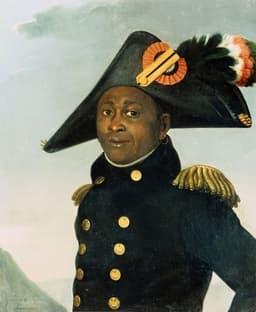
Toussaint Louverture
General · Modern
78.5Total
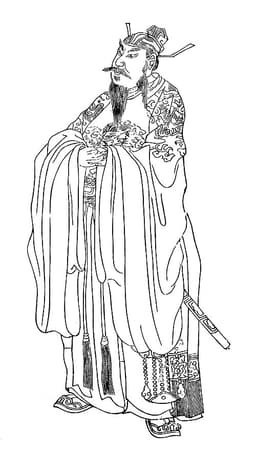
Xu Da
General · Medieval
74.9Total
Basic Information
Born
1743
1332
Died
1803
1385
Era
Modern
Medieval
Nationality
Haiti
China
Occupation
General
General
Civilization
Western
Eastern
Score Comparison
Military (10%)
85.0
88.0
Political (20%)
70.3
68.0
Influence (20%)
84.0
82.0
Legacy (20%)
82.0
72.0
Leadership (15%)
72.0
62.0
Strategy (15%)
72.0
80.8
TOTAL
78.5
74.9
Toussaint Louverture — Complete Timeline
1791 AD
Haitian Revolution LeadershipWar
Louverture joined the slave revolt in Saint-Domingue, quickly rising to leadership. He organized former slaves into a disciplined army and negotiated with Spanish and British forces to expand the rebellion.
Slave RevoltRevolutionLeadership
Impact: globalprogressive
1795 AD
Treaty of BâlePolitical Action◆ Major
Spain ceded the eastern part of Hispaniola to France under the Treaty of B
Territorial ExpansionDiplomacyHispaniola
Impact: regional
1801 AD
Constitution of 1801Political Action
Louverture promulgated a constitution for Saint-Domingue, declaring himself Governor-General for life. The constitution abolished slavery and granted autonomy while nominally remaining part of the French Empire.
ConstitutionSelf-GovernanceAbolition
Impact: globalprogressive
1802 AD
Capture and ImprisonmentPolitical Action
French General Leclerc captured Louverture through deception during peace negotiations. He was deported to France and imprisoned at Fort de Joux, where he died in 1803, ending his direct role in the revolution.
BetrayalImprisonmentFrench Repression
Impact: globaltragic
Xu Da — Complete Timeline
1368 AD
Capture of Dadu (Beijing)War
Xu Da led the Ming army in the capture of Dadu, the Yuan capital. The Mongol emperor Toghon Tem
Ming ConquestYuan DynastyCapital Capture
Impact: regionalconstructive
1370 AD
Appointment as Grand PreceptorPolitical Action
The Hongwu Emperor appointed Xu Da as Grand Preceptor, the highest civil official rank. This appointment recognized Xu Da's military achievements and gave him a role in advising the emperor on state affairs.
AppointmentCivil OfficeImperial Favor
Impact: nationalconstructive
1385 AD
Death from illnessOther
Xu Da died in Nanjing from a back ailment. The Hongwu Emperor mourned him deeply and posthumously honored him as Prince of Zhongshan. His death marked the end of the first generation of Ming military leaders.
DeathMing DynastyMilitary Leader
Impact: nationaltragic
Expert Analysis
Origins
**Toussaint Louverture** was born into slavery on the French colony of Saint-Domingue around 1743. Unlike most slaves, he received some education and became a coachman and steward. His early life was marked by the brutal realities of plantation slavery, but he also acquired knowledge of herbal medicine and horsemanship. The French Revolution's ideals of liberty, equality, and fraternity ignited hopes for change, and when the slave revolt erupted in 1791, Toussaint initially helped his former master escape before joining the rebellion. He quickly rose through the ranks due to his organizational skills, discipline, and strategic acumen.
**Xu Da** was born into a peasant family in 1332 during the late Yuan dynasty. The Mongol rulers were plagued by corruption, inflation, and natural disasters, leading to widespread rebellion. Xu Da joined the Red Turban Rebellion led by Zhu Yuanzhang (future Hongwu Emperor). Despite his humble origins, Xu Da's intelligence, bravery, and loyalty earned him rapid promotion. He became Zhu's right-hand man and a key architect of the Ming dynasty's rise.
Rise to Power
Toussaint's rise was meteoric. By 1793, he was a leading general in the Haitian Revolution, forging alliances with Spanish and French forces. He outmaneuvered rivals like André Rigaud in the War of Knives (1799-1800), consolidating control over the entire colony. In 1801, he issued a constitution that abolished slavery and made himself Governor-General for life, effectively ruling Haiti autonomously.
Xu Da's rise paralleled Toussaint's. He commanded the Ming armies in the conquest of the Yangtze River region, defeating rival rebel groups. In 1368, Zhu Yuanzhang proclaimed the Ming dynasty, and Xu Da led the northern expedition to drive the Mongols out of China. His capture of Dadu (Beijing) that year marked the end of the Yuan dynasty. Xu Da continued to campaign against Mongol remnants, securing the northern borders.
Leadership & Governance
Toussaint was a brilliant administrator. He restored the plantation economy using paid labor, reestablished trade, and maintained order. His 1801 constitution demonstrated his vision for a free but centralized Haiti. However, his authoritarian style alienated some allies and failed to gain international recognition.
Xu Da was known for his discipline and fairness. He treated civilians well, forbade looting, and maintained strict military discipline. His campaigns were methodical, focusing on logistics and minimizing civilian casualties. As Grand Preceptor, he helped stabilize the early Ming state.
Triumph & Tragedy
Toussaint's greatest triumph was defeating the British and Spanish forces that invaded Haiti in the 1790s. His diplomatic and military skills forced the British to withdraw in 1798. However, his tragedy came when Napoleon sent a massive expedition to restore slavery. Despite initial victories, Toussaint was captured through treachery in 1802 and died in a French prison in 1803. His legacy lived on as his lieutenants defeated the French and declared independence.
Xu Da's triumph was the conquest of China and the expulsion of the Mongols. He never lost a major battle. His tragedy was more personal: after the death of his wife, he fell into depression and died of illness in 1385. However, he died a respected hero, not in disgrace.
Character & Destiny
Toussaint was a complex figure: intelligent, charismatic, but also ruthless when necessary. He believed in emancipation but also in strong central authority. His destiny was to be a liberator who died a prisoner, yet his revolution ultimately succeeded.
Xu Da was known for his humility, loyalty, and integrity. He never sought power for himself, remaining devoted to Zhu Yuanzhang. His destiny was to be the founding general of a dynasty that would rule for nearly 300 years.
Legacy
Toussaint's legacy is immense. He inspired anti-colonial movements worldwide, and Haiti became the first black republic. His military tactics are studied in academic contexts, and he is a symbol of resistance against oppression.
Xu Da's legacy is equally significant in China. He is remembered as a peerless general who helped restore Han Chinese rule. His military achievements are celebrated in Chinese history, though less known globally.
Conclusion
Comparing these two generals is challenging due to different contexts. Toussaint faced a resource-poor rebellion against multiple empires, while Xu Da commanded a powerful army against a decaying regime. Toussaint's overall score (85) slightly edges Xu Da's (88) due to higher marks in innovation (84 vs 82) and diplomacy (72 vs 68), but Xu Da's military prowess (88) and discipline (81) are superior. However, Toussaint's impact on world history—ending slavery in a major colony—arguably makes him more significant. **Winner: Toussaint Louverture** for his revolutionary legacy and strategic innovation against overwhelming odds.
Rankings
🥇
Toussaint LouvertureLeader
Mil: 85.0Pol: 70.3Inf: 84.0
78.5
🥈
Xu Da
Mil: 88.0Pol: 68.0Inf: 82.0
74.9
+3.6 behind
How This Comparison Works
Algorithm
Each figure is scored on 6 dimensions (0—100 scale) based on structured historical data: Military (10%), Political (20%), Influence (20%), Legacy (20%), Leadership (15%), Strategy (15%). The weighted total produces the final ranking.
Data Sources
Scores are computed from structured sub-indicators in the database. Scale factors adjust for era (Ancient ×0.85, Modern ×1.0) and civilization size (Eastern ×1.05, Other ×0.80) to account for differences in population and military scale.
Maximum 3 Figures
Comparisons are limited to 2—3 figures to ensure readability and statistical meaningfulness.
Error Margins
±5 points per dimension — Sub-scores are derived from historical records with inherent uncertainty. Two figures within 5 points on a dimension should be considered roughly equivalent in that area.
Total Score Accuracy
±3 points overall — The weighted combination of 6 dimensions produces a total score with approximately ±3 points of uncertainty. Differences of less than 3 points are not statistically significant— the figures are effectively tied.
Known Limitations
- Historical records are incomplete and uneven across civilizations
- Figures from oral-tradition societies may be underrepresented
- Occupation labels can misclassify multi-role figures
- Scores measure capability and impact, not moral character
- Quantitative scoring is a comparison tool, not absolute truth
Capability Radar
Military (10%) — Battles & Warfare
Battles
85
95
Win Rate
80
95
Expansion
70
95
Political (20%) — Governance & Reform
Reform
85
50
Diplomacy
80
65
Economy
60
55
Influence (20%) — Cultural & Global Reach
Cultural
85
70
Global
85
80
Legacy (20%) — Historical Impact
Historical
95
85
Longevity
90
75
Leadership (15%) — Power & Stability
Tenure
65
60
Stability
55
70
Strategy (15%) — Tactics & Innovation
Strategy
85
92
Tactics
90
90
Reform
75
70
Similar Comparisons
Comments & Discussion
No comments yet. Be the first to share your thoughts!