Loading...
Timur vs Yuwen Yong
Yuwen Yong leads by 1.6 pts · 2 figures compared
…
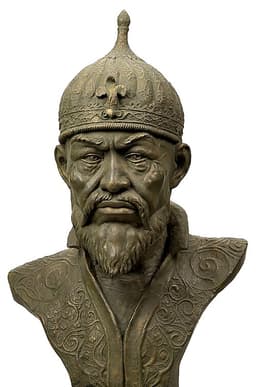
Timur
Emperor · Medieval
65.6Total
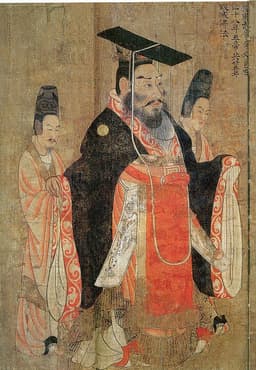
Yuwen Yong
Emperor · Medieval
67.2Total
Basic Information
Born
1336
543
Died
1405
578
Era
Medieval
Medieval
Nationality
Timurid Empire
China
Occupation
Emperor
Emperor
Civilization
Middle Eastern
Eastern
Score Comparison
Military (10%)
79.0
78.0
Political (20%)
70.0
78.0
Influence (20%)
70.0
58.0
Legacy (20%)
40.0
54.0
Leadership (15%)
79.8
85.0
Strategy (15%)
77.6
69.1
TOTAL
65.6
67.2
Timur — Complete Timeline
1362 AD
Battle of the Terek RiverWar
Timur defeated the Mongol ruler of the Chagatai Khanate, establishing his control over Transoxiana. This victory marked the beginning of his rise to power, as he captured Samarkand and declared himself emir.
Rise to PowerBattleCentral Asia
Impact: regional
1387 AD
Conquest of PersiaWar◆ Major
Timur launched a campaign into Persia, capturing Isfahan and Shiraz. He suppressed a revolt in Isfahan by massacring tens of thousands of inhabitants, establishing his reputation for extreme brutality and consolidating control over the region.
ConquestMassacrePersia
Impact: regionaldestructive
1395 AD
Campaign against the Golden HordeWar◆ Major
Timur defeated the Golden Horde under Tokhtamysh at the Battle of the Terek River. He sacked Sarai, the Horde's capital, and destroyed its trade networks, permanently weakening the Mongol state and securing his northern frontier.
ConquestGolden HordeBattle
Impact: regionaldestructive
1398 AD
Sack of DelhiWar◆ Major
Timur invaded the Delhi Sultanate, defeating Sultan Nasir-ud-Din Mahmud Shah Tughluq. His army sacked Delhi, massacring tens of thousands of civilians and destroying the city's infrastructure, then withdrew with immense plunder.
ConquestMassacreIndia
Impact: regionaldestructive
1402 AD
Battle of AnkaraWar
Timur defeated the Ottoman Sultan Bayezid I at Ankara, capturing him. The victory shattered Ottoman power, leading to a civil war among Bayezid's sons and delaying Ottoman expansion into Europe for a decade.
BattleOttoman EmpireDecisive Victory
Impact: global
1404 AD
Construction of SamarkandCultural◆ Major
Timur invested heavily in transforming Samarkand into a cultural and architectural center. He brought artisans from conquered lands to build mosques, madrasas, and the Bibi-Khanym Mosque, making the city a showcase of Timurid art and learning.
ArchitecturePatronageCultural Center
Impact: regionalconstructive
1405 AD
Death during campaign against Ming ChinaWar◆ Major
Timur died of illness while leading a massive army toward the Ming dynasty's borders. His death ended the planned invasion of China and led to the fragmentation of his empire among his sons and grandsons.
DeathCampaignMing Dynasty
Impact: regional
Yuwen Yong — Complete Timeline
574 AD
Suppression of Buddhism in Northern ZhouReform◆ Major
Emperor Wu of Northern Zhou (Yuwen Yong) ordered the suppression of Buddhism, confiscating monastic lands, forcing monks and nuns to return to lay life, and destroying temples. He aimed to increase state revenue and military manpower, strengthening the state.
Northern ZhouBuddhist PersecutionReform
Impact: nationaldestructive
577 AD
Conquest of Northern QiWar
Emperor Wu led a successful campaign against the rival Northern Qi dynasty, conquering its territory and unifying northern China under Northern Zhou. This victory ended the division of the north and set the stage for the Sui dynasty's unification of all China.
Northern ZhouUnificationNorthern Qi
Impact: regionalconstructive
578 AD
Death during campaign against the TurksWar◆ Major
Emperor Wu died of illness while leading a campaign against the G
Northern ZhouMilitary CampaignDeath
Impact: regionaltragic
Expert Analysis
Yuwen Yong vs Timur
# The Conqueror and the Unifier: Timur and Yuwen Yong
In the winter of 1405, a dying emperor lay in his tent on the frozen steppes of Central Asia, his last breath carrying away the dream of invading Ming China. Half a world away and eight centuries earlier, another emperor had fallen ill while marching against the Göktürks, his body giving out just as his ambition reached its peak. Timur of Samarkand and Yuwen Yong of Northern Zhou never met, never knew each other's names, yet their stories run in parallel like two rivers carving through different continents. One built an empire of blood and marble; the other forged a unified realm through quiet discipline. What drove them, and why did their legacies diverge so sharply?
Origins
Timur was born in 1336 into the Barlas tribe, a Turco-Mongol clan that claimed descent from Genghis Khan. His early life was marked by injury—an arrow wound to his leg left him lame, earning him the name Timur-e Lang, "Timur the Lame." This physical limitation did not diminish his ferocity; it sharpened it. He grew up in a world of fractured khanates, where loyalty was fleeting and power belonged to the strongest sword. His era was one of collapse: the Mongol Empire had shattered, and the vacuum invited predators.
Yuwen Yong was born in 543, the son of a general in the Western Wei dynasty. His family was part of the Xianbei warrior aristocracy, a people who had ruled northern China for centuries. Unlike Timur, Yuwen Yong was raised in a court steeped in Chinese bureaucracy and Confucian ideals. His world was one of order and hierarchy, where legitimacy came not just from conquest but from the mandate of heaven. Where Timur saw chaos as an opportunity, Yuwen Yong saw it as a disease to be cured.
Rise to Power
Timur’s ascent was a study in brutal pragmatism. He began as a minor chieftain, allied with the Mongol ruler of the Chagatai Khanate. In 1362, at the Battle of the Terek River, he turned on his overlord and crushed him, seizing control of Transoxiana. From there, he expanded outward like a wildfire, consuming Persia, the Golden Horde, and the Delhi Sultanate. His path was paved with skulls: at Isfahan in 1387, he massacred tens of thousands to suppress a revolt; at Delhi in 1398, his army slaughtered prisoners and civilians alike. Each victory was a stepping stone, each atrocity a lesson in submission.
Yuwen Yong’s rise was quieter, more methodical. He became emperor of Northern Zhou in 560, inheriting a state locked in a bitter rivalry with the Northern Qi dynasty to the east. His early reign was cautious: he consolidated power, reformed the military, and waited. His turning point came in 577, when he launched a campaign against Northern Qi. Unlike Timur’s whirlwind invasions, Yuwen Yong’s conquest was deliberate, a chess game of sieges and maneuvers. He captured the enemy capital and unified northern China under his rule. His victory was not a massacre but a merger—he absorbed Qi officials and soldiers into his own system, preferring integration to annihilation.
Leadership & Governance
Timur ruled through terror and spectacle. His military genius was undeniable: at the Battle of Ankara in 1402, he shattered the Ottoman army and captured Sultan Bayezid I, humiliating him in a cage. His strategy relied on speed, deception, and overwhelming force. Yet his political wisdom was shallow. He built no lasting institutions, no bureaucratic framework. His empire was a personal possession, held together by his will alone. When he died in 1405, it fractured within a generation. His cultural legacy, however, was real: he transformed Samarkand into a jewel of Islamic architecture, importing artisans from conquered lands to build mosques and gardens that still dazzle.
Yuwen Yong governed with a different hand. His political score of 72.0 reflects a ruler who understood that power must be institutionalized. In 574, he ordered the suppression of Buddhism, confiscating monastic lands and forcing monks back into lay life. This was not religious persecution for its own sake—it was state-building. Buddhist monasteries had grown wealthy and independent, draining tax revenue and manpower. Yuwen Yong reclaimed those resources to fund his army and administration. He also reformed the military, creating a system of hereditary soldier-farmers that reduced reliance on nomadic mercenaries. His leadership was steady, his strategy patient. He was a builder, not a destroyer.
Triumph & Tragedy
Timur’s greatest triumph was the Battle of Ankara, where he broke the Ottoman Empire and plunged it into a decade of civil war. His greatest tragedy was his own death: he died in 1405 while marching against the Ming dynasty, his invasion never launched. His empire, built on fear, collapsed without him. Yuwen Yong’s triumph was the conquest of Northern Qi in 577, unifying northern China for the first time in decades. His tragedy was the same as Timur’s—he died in 578 while campaigning against the Göktürks, his body failing at the height of his power. But unlike Timur, his legacy endured. His son, Emperor Xuan, squandered much of his work, but the foundation held. Northern Zhou eventually gave way to the Sui dynasty, which reunited all of China.
Character & Destiny
Timur was a man of fire. His military score of 90.0 and strategy of 85.0 speak to a predator who lived for conquest. He was cruel, ambitious, and restless—a nomad who could not stop moving. His personality drove him to overreach, to plan invasions of China while his empire was still raw. Yuwen Yong was a man of stone. His leadership score of 76.9 and strategy of 81.8 show a ruler who valued stability over glory. He was disciplined, patient, and pragmatic. His personality shaped a legacy of unification, not destruction.
Legacy
Today, Timur is remembered as a monster and a patron—a man who built towers of skulls and gardens of paradise. His name echoes in the nightmares of Central Asia, but also in the blue tiles of Samarkand. Yuwen Yong is less famous, even in China, but his impact was deeper. He paved the way for the Sui and Tang dynasties, the golden age of Chinese civilization. One conqueror left ruins; the other left a foundation.
Conclusion
History remembers the loudest, not always the deepest. Timur’s story is a cautionary tale of ambition without structure, of brilliance without wisdom. Yuwen Yong’s story is a reminder that true power lies in building, not breaking. Both men died on campaign, their dreams unfinished. But one empire crumbled into dust, while the other grew into a civilization. Perhaps the difference was not in their strength, but in their patience—and in what they chose to leave behind.
Rankings
🥇
Yuwen YongLeader
Mil: 78.0Pol: 78.0Inf: 58.0
67.2
🥈
Timur
Mil: 79.0Pol: 70.0Inf: 70.0
65.6
+1.6 behind
How This Comparison Works
Algorithm
Each figure is scored on 6 dimensions (0—100 scale) based on structured historical data: Military (10%), Political (20%), Influence (20%), Legacy (20%), Leadership (15%), Strategy (15%). The weighted total produces the final ranking.
Data Sources
Scores are computed from structured sub-indicators in the database. Scale factors adjust for era (Ancient ×0.85, Modern ×1.0) and civilization size (Eastern ×1.05, Other ×0.80) to account for differences in population and military scale.
Maximum 3 Figures
Comparisons are limited to 2—3 figures to ensure readability and statistical meaningfulness.
Error Margins
±5 points per dimension — Sub-scores are derived from historical records with inherent uncertainty. Two figures within 5 points on a dimension should be considered roughly equivalent in that area.
Total Score Accuracy
±3 points overall — The weighted combination of 6 dimensions produces a total score with approximately ±3 points of uncertainty. Differences of less than 3 points are not statistically significant— the figures are effectively tied.
Known Limitations
- Historical records are incomplete and uneven across civilizations
- Figures from oral-tradition societies may be underrepresented
- Occupation labels can misclassify multi-role figures
- Scores measure capability and impact, not moral character
- Quantitative scoring is a comparison tool, not absolute truth
Capability Radar
Military (10%) — Battles & Warfare
Battles
95
75
Win Rate
92
80
Expansion
96
80
Political (20%) — Governance & Reform
Reform
78
85
Diplomacy
70
70
Economy
82
75
Influence (20%) — Cultural & Global Reach
Cultural
88
40
Global
85
40
Legacy (20%) — Historical Impact
Historical
90
65
Longevity
75
50
Leadership (15%) — Power & Stability
Tenure
85
60
Stability
65
70
Strategy (15%) — Tactics & Innovation
Strategy
93
75
Tactics
94
70
Reform
80
85
Similar Comparisons
Comments & Discussion
ArrowThroughHistory6/16/2026
Timur's empire was fueled by severed skulls and shattered cities. Yuwen Yong unified northern China through tax reform and bureaucratic discipline. One built a pyramid of heads, the other a stable administration. Timur's pyramids collapsed within a century; Northern Zhou's framework fueled the Sui and Tang golden age. Destruction may be spectacular, but administration wins in the long run.
断简残编6/16/2026
把瘸腿帖木儿和北周武帝并列?笑话。帖木儿一辈子就是个掠夺成性的游牧匪帮头子,除了把撒马尔罕装点成暴发户博物馆,就是屠杀从德里到大马士革的平民。宇文邕却是在内忧外患中削灭权臣、灭佛释奴、统一北方的实干帝王。一个是历史舞台上的烟火,一个是真正的奠基者。
StatsAndSarcasm6/16/2026
Let's talk numbers. Timur's campaigns killed an estimated 17 million people—roughly 5% of the global population then. Yuwen Yong's population after conquering Northern Qi? About 30 million, and he actually boosted agriculture. You tell me which ruler was more efficient. One left pyramids of skulls, the other left full granaries. The math isn't hard, folks.
九原魂6/16/2026
有人说他俩都死于征途很相似。我只想说:帖木儿死在攻打明朝的路上,是被自己膨胀的野心噎死的;宇文邕死在对付突厥的路上,是为了彻底解除边患而积劳成疾。一个贪婪到要吞下整个亚洲,一个务实到只想守护北方门户。同样的结局,完全不同的重量。