Loading...
Charles de Gaulle vs Timur
Charles de Gaulle leads by 2.6 pts · 2 figures compared
…
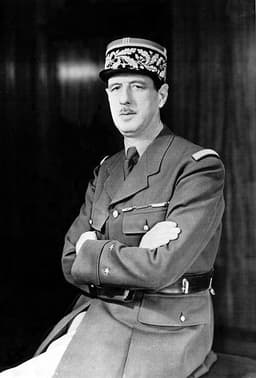
Charles de Gaulle
Politician · Modern
68.2Total
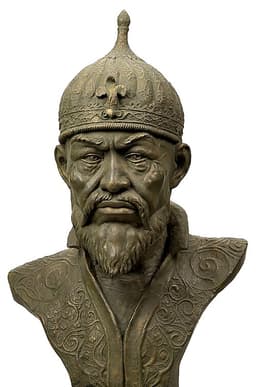
Timur
Emperor · Medieval
65.6Total
Basic Information
Born
1890
1336
Died
1970
1405
Era
Modern
Medieval
Nationality
France
Timurid Empire
Occupation
Politician
Emperor
Civilization
Western
Middle Eastern
Score Comparison
Military (10%)
55.0
79.0
Political (20%)
75.0
70.0
Influence (20%)
65.0
70.0
Legacy (20%)
68.0
40.0
Leadership (15%)
78.0
79.8
Strategy (15%)
65.0
77.6
TOTAL
68.2
65.6
Charles de Gaulle — Complete Timeline
1940 AD
Appeal of 18 June 1940Political Action
From London, de Gaulle broadcast a radio appeal urging French resistance against Nazi occupation. He called on French soldiers and citizens to continue the fight, founding the Free French Forces and becoming the symbol of French defiance.
World War IIResistanceLeadership
Impact: nationalconstructive
1958 AD
Founding of the Fifth RepublicPolitical Action
De Gaulle returned to power during the Algerian crisis and oversaw the drafting of a new constitution. The Fifth Republic established a strong executive presidency, replacing the unstable parliamentary system of the Fourth Republic.
ConstitutionGovernment ReformPolitical System
Impact: nationalconstructive
1962 AD
End of the Algerian WarPolitical Action◆ Major
De Gaulle negotiated the
DecolonizationPeace TreatyAlgeria
Impact: regionalconstructive
1968 AD
May 1968 CrisisPolitical Action◆ Major
Mass student protests and general strikes paralyzed France, challenging de Gaulle's government. De Gaulle briefly fled to Germany, then returned to dissolve the National Assembly and call elections, which his party won, but his authority was weakened.
ProtestPolitical CrisisSocial Unrest
Impact: nationaldestructive
1969 AD
Resignation as PresidentPolitical Action
De Gaulle resigned after losing a referendum on regional reform and Senate restructuring. The defeat marked the end of his political career, as he withdrew from public life and died the following year.
ResignationPolitical DefeatReferendum
Impact: nationaltragic
Timur — Complete Timeline
1362 AD
Battle of the Terek RiverWar
Timur defeated the Mongol ruler of the Chagatai Khanate, establishing his control over Transoxiana. This victory marked the beginning of his rise to power, as he captured Samarkand and declared himself emir.
Rise to PowerBattleCentral Asia
Impact: regional
1387 AD
Conquest of PersiaWar◆ Major
Timur launched a campaign into Persia, capturing Isfahan and Shiraz. He suppressed a revolt in Isfahan by massacring tens of thousands of inhabitants, establishing his reputation for extreme brutality and consolidating control over the region.
ConquestMassacrePersia
Impact: regionaldestructive
1395 AD
Campaign against the Golden HordeWar◆ Major
Timur defeated the Golden Horde under Tokhtamysh at the Battle of the Terek River. He sacked Sarai, the Horde's capital, and destroyed its trade networks, permanently weakening the Mongol state and securing his northern frontier.
ConquestGolden HordeBattle
Impact: regionaldestructive
1398 AD
Sack of DelhiWar◆ Major
Timur invaded the Delhi Sultanate, defeating Sultan Nasir-ud-Din Mahmud Shah Tughluq. His army sacked Delhi, massacring tens of thousands of civilians and destroying the city's infrastructure, then withdrew with immense plunder.
ConquestMassacreIndia
Impact: regionaldestructive
1402 AD
Battle of AnkaraWar
Timur defeated the Ottoman Sultan Bayezid I at Ankara, capturing him. The victory shattered Ottoman power, leading to a civil war among Bayezid's sons and delaying Ottoman expansion into Europe for a decade.
BattleOttoman EmpireDecisive Victory
Impact: global
1404 AD
Construction of SamarkandCultural◆ Major
Timur invested heavily in transforming Samarkand into a cultural and architectural center. He brought artisans from conquered lands to build mosques, madrasas, and the Bibi-Khanym Mosque, making the city a showcase of Timurid art and learning.
ArchitecturePatronageCultural Center
Impact: regionalconstructive
1405 AD
Death during campaign against Ming ChinaWar◆ Major
Timur died of illness while leading a massive army toward the Ming dynasty's borders. His death ended the planned invasion of China and led to the fragmentation of his empire among his sons and grandsons.
DeathCampaignMing Dynasty
Impact: regional
Expert Analysis
Charles de Gaulle vs Timur
# The Iron Will and the Scourge of God
On a June evening in 1940, a towering French general stood before a microphone in a London studio and spoke words that would define a nation's soul. Across the centuries, in the shadow of the Hindu Kush, another conqueror—lame from battle wounds but limitless in ambition—watched his armies march toward the rising sun. Charles de Gaulle and Timur: one saved a nation's honor through words and constitutions; the other built an empire on skulls and shattered thrones. What separates the savior from the scourge? The answer lies not merely in their eras, but in the deepest currents of their character and the nature of power itself.
Origins
Charles de Gaulle was born in 1890 in Lille, into a devout Catholic family with a strong tradition of military service. His father taught him French history as a sacred narrative, and young Charles absorbed the conviction that France possessed a unique destiny. The Franco-Prussian War of 1870, a humiliating defeat that haunted his childhood, planted the seed of an obsession: France must never again be brought low. He was a man shaped by defeat before he ever tasted victory.
Timur, born in 1336 near Samarkand, emerged from the chaos of the fractured Mongol Empire. A Turco-Mongol nobleman of the Barlas tribe, he suffered a wound early in life that left him lame in the right leg and hand—hence his Persian nickname, Timur-e Lang, "Timur the Lame." Unlike de Gaulle's ordered, patriotic upbringing, Timur's world was one of shifting loyalties, clan warfare, and survival by the sword. He learned that power was not inherited but taken, and that mercy was a luxury for the weak.
Rise to Power
De Gaulle's path was slow and intellectual. He wrote books on military theory, arguing for mechanized warfare while France built the Maginot Line. When Germany invaded in 1940, his predictions proved tragically correct. But his true rise began in defeat: on June 18, 1940, from London, he broadcast his appeal. He was a brigadier general without an army, a voice without a country—yet he declared that France had lost a battle, not the war. The turning point was not a battlefield victory but a radio message.
Timur's rise was carved in blood. In 1362, at the Battle of the Terek River, he defeated the Mongol ruler of the Chagatai Khanate and established control over Transoxiana. He did not inherit an empire; he built one from the saddle of a horse, winning loyalty through fear and reward. Where de Gaulle waited for history to call, Timur seized history by the throat.
Leadership & Governance
As president of the Fifth Republic, founded in 1958, de Gaulle governed through a constitution that concentrated executive power. He ended the Algerian War in 1962 through the Évian Accords, a decision that provoked assassination attempts from his own former supporters. His military score of 65 reflects his role as a symbol rather than a tactician; his political score of 82 captures his genius for institutional design. He believed in "a certain idea of France"—grandeur, independence, and national unity.
Timur governed through terror and patronage. His military score of 90 and strategy score of 85 reflect campaigns that crushed the Golden Horde in 1395, sacked Delhi in 1398, and captured the Ottoman Sultan Bayezid I at Ankara in 1402. Yet he was also a builder: in 1404, he transformed Samarkand into a cultural jewel, importing artisans from conquered lands. His political score of 65 reveals a flaw: his empire was a personal construct, not a durable state. He ruled men, not institutions.
Triumph & Tragedy
De Gaulle's greatest moment was the Appeal of June 18—a triumph of moral courage over material reality. His deepest tragedy came in May 1968, when student protests and a general strike paralyzed France. The old general, who had saved the nation's honor, suddenly seemed out of touch with its youth. He fled briefly to Baden-Baden to consult with French generals, then returned, called elections, and won—but the wound never healed. In 1969, he resigned after losing a referendum on regional reform. The man who had said "France cannot be France without greatness" was brought low by a vote on local government.
Timur's triumph was the Battle of Ankara in 1402, where he crushed the Ottoman Empire and captured Sultan Bayezid, reportedly keeping him in a cage. His tragedy came in 1405: he died of illness while marching toward the Ming dynasty's borders, his grand invasion unfinished. The Scourge of God, who had never lost a major battle, was stopped by fever. His empire crumbled within a generation.
Character & Destiny
De Gaulle was aloof, arrogant, and profoundly lonely. He once wrote, "The man of character is not made for compromise." His personality—rigid, principled, theatrical—allowed him to stand alone against defeat but made him incapable of bending to the winds of 1968. He was a man who needed crisis to reveal his greatness.
Timur was ruthless, strategic, and culturally sophisticated. He could quote Persian poetry while ordering massacres. His personality was forged in the steppes: power was personal, loyalty was bought, and mercy was a sign of weakness. He was a man who needed enemies to prove his existence.
Legacy
De Gaulle's legacy is the Fifth Republic, which endures today. He is remembered as the savior of French honor, the founder of a stable democracy, and the architect of an independent foreign policy. His total score of 70.9 reflects a leader whose influence was deep but contained within one nation.
Timur's legacy is more ambiguous. He is remembered as a brutal conqueror, yet also as a patron of art and architecture. His total score of 72.5 is higher, but his achievements were more ephemeral. He left no lasting institutions, only a legend that haunts the collective memory of Central Asia.
Conclusion
Standing in the London studio in 1940, de Gaulle spoke for a nation that had fallen. From the saddle of his horse in 1362, Timur spoke for himself. One built a republic; the other built a monument to his own ambition. The difference between them is the difference between the statesman and the conqueror—between the man who shapes institutions and the man who shapes only ruins. Both changed history, but only one left a country that could stand without him.
Rankings
🥇
Charles de GaulleLeader
Mil: 55.0Pol: 75.0Inf: 65.0
68.2
🥈
Timur
Mil: 79.0Pol: 70.0Inf: 70.0
65.6
+2.6 behind
How This Comparison Works
Algorithm
Each figure is scored on 6 dimensions (0—100 scale) based on structured historical data: Military (10%), Political (20%), Influence (20%), Legacy (20%), Leadership (15%), Strategy (15%). The weighted total produces the final ranking.
Data Sources
Scores are computed from structured sub-indicators in the database. Scale factors adjust for era (Ancient ×0.85, Modern ×1.0) and civilization size (Eastern ×1.05, Other ×0.80) to account for differences in population and military scale.
Maximum 3 Figures
Comparisons are limited to 2—3 figures to ensure readability and statistical meaningfulness.
Error Margins
±5 points per dimension — Sub-scores are derived from historical records with inherent uncertainty. Two figures within 5 points on a dimension should be considered roughly equivalent in that area.
Total Score Accuracy
±3 points overall — The weighted combination of 6 dimensions produces a total score with approximately ±3 points of uncertainty. Differences of less than 3 points are not statistically significant— the figures are effectively tied.
Known Limitations
- Historical records are incomplete and uneven across civilizations
- Figures from oral-tradition societies may be underrepresented
- Occupation labels can misclassify multi-role figures
- Scores measure capability and impact, not moral character
- Quantitative scoring is a comparison tool, not absolute truth
Capability Radar
Military (10%) — Battles & Warfare
Battles
60
95
Win Rate
55
92
Expansion
20
96
Political (20%) — Governance & Reform
Reform
95
78
Diplomacy
90
70
Economy
70
82
Influence (20%) — Cultural & Global Reach
Cultural
70
88
Global
80
85
Legacy (20%) — Historical Impact
Historical
85
90
Longevity
75
75
Leadership (15%) — Power & Stability
Tenure
85
85
Stability
75
65
Strategy (15%) — Tactics & Innovation
Strategy
85
93
Tactics
70
94
Reform
80
80
Similar Comparisons
Comments & Discussion
BRASS-TACKS TIM6/16/2026
Timur butchered roughly 5% of the world's population at the time between Delhi and Damascus; de Gaulle saved his country's honor at BBC microphone. One is a mass-murdering warlord, the other a statesman. The comparison is morally absurd unless we're ranking body counts—and even then, genghis-tier cruelty shouldn't get a pass just because it's medieval.
历史算账先生6/16/2026
德高乐用宪法和演讲复兴法国,帖木儿用金字塔般的头骨铺路。两人都重建帝国,但差异在于:一个对平民挥舞笔杆,一个对城池挥舞马刀。帖木儿仅在德里的屠杀就高达十万人,而戴高乐在阿尔及利亚的镇压也没干净到哪里去。别忘了,法国人自己都差点推翻他两次。圣人和屠夫,只有史书能分得清。
DATA DETECTIVE6/16/2026
Comparing their "iron wills" is intellectually lazy: de Gaulle's was defensive, confined by 20th-century norms, international law, and a radio transmitter; Timur's was expansionist, unbound by Geneva or morality. De Gaulle governed a shrinking empire with referendums; Timur governed an expanding one with mass graves in Isfahan (70,000 heads stacked, 1387). The only shared trait is personal ego—one built a Fifth Republic, the other pyramids of skulls. Relevance matters.
古典遗风6/16/2026
戴高乐在1940年6月18日的演说只有寥寥数人亲耳听见,但最终传遍法兰西;帖木儿在1398年攻陷德里后,下令每名士兵砍一个人头,堆成塔。两人都懂得象征的力量——一个用空中的电波,一个用地上的白骨。但别忘了:帖木儿的帝国在他死后五年就四分五裂,而戴高乐的第五共和国延续至今。谁留下的遗产更坚固,答案不言自明。
古拉格回忆6/16/2026
把戴高乐和帖木儿并列,本身就是历史病的症状。帖木儿毕生征战,戴高乐一生只打了一次大战——还主要是靠英美嗟来之食。帖木儿能一箭射穿铁甲,戴高乐连阿尔及利亚的叛军都摆不平。但戴高乐有一点胜过帖木儿:他会写书,而且写得比他的剑有力。帖木儿留下的只有废墟和传说,戴高乐留下了宪法和回忆录。文明对野蛮,书胜刀。