Loading...
Kublai Khan vs Timur
Kublai Khan leads by 8.7 pts · 2 figures compared
…
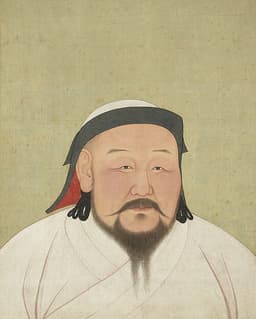
Kublai Khan
Emperor · Medieval
74.3Total
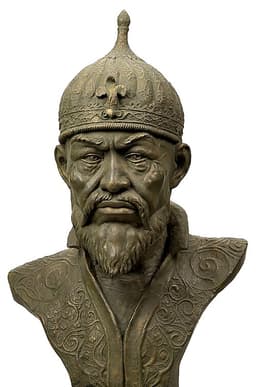
Timur
Emperor · Medieval
65.6Total
Basic Information
Born
1215
1336
Died
1294
1405
Era
Medieval
Medieval
Nationality
Mongolia
Timurid Empire
Occupation
Emperor
Emperor
Civilization
Eastern
Middle Eastern
Score Comparison
Military (10%)
77.5
79.0
Political (20%)
79.2
70.0
Influence (20%)
75.0
70.0
Legacy (20%)
70.0
40.0
Leadership (15%)
72.0
79.8
Strategy (15%)
76.0
77.6
TOTAL
74.3
65.6
Kublai Khan — Complete Timeline
1260 AD
Adoption of Tibetan Buddhism as State ReligionCultural◆ Major
Kublai Khan appointed the Tibetan lama Drog
Tibetan BuddhismReligionMongol-Tibet Relations
Impact: regional
1271 AD
Proclamation of the Yuan DynastyPolitical Action◆ Major
Kublai Khan officially proclaimed the Yuan dynasty, adopting a Chinese-style dynastic name. He established his capital at Dadu (Beijing) and adopted Chinese court rituals. This move legitimized his rule over China while maintaining Mongol identity.
Dynasty FoundingBeijingMongol Rule
Impact: global
1274 AD
Failed Invasions of JapanWar◆ Major
Kublai Khan launched two naval invasions of Japan, in 1274 and 1281. Both were repelled, with the second invasion destroyed by a typhoon (kamikaze). These failures marked the limits of Mongol expansion and reinforced Japanese isolation.
Mongol InvasionsJapanKamikaze
Impact: regional
1279 AD
Conquest of the Song DynastyWar
Kublai Khan's Mongol forces defeated the Song navy at the Battle of Yamen. The last Song emperor drowned, ending the Song dynasty. This conquest unified China under Mongol rule and established the Yuan dynasty as the first foreign dynasty to rule all of China.
Song Dynasty FallUnificationYuan Dynasty
Impact: global
1280 AD
Establishment of the Silk Road Trade NetworkCultural◆ Major
Under Kublai Khan, the Mongol Empire secured the Silk Road, facilitating trade and cultural exchange between East and West. Marco Polo visited his court. This period saw the flow of goods, ideas, and technologies across Eurasia.
Silk RoadTradeCultural Exchange
Impact: globalconstructive
Timur — Complete Timeline
1362 AD
Battle of the Terek RiverWar
Timur defeated the Mongol ruler of the Chagatai Khanate, establishing his control over Transoxiana. This victory marked the beginning of his rise to power, as he captured Samarkand and declared himself emir.
Rise to PowerBattleCentral Asia
Impact: regional
1387 AD
Conquest of PersiaWar◆ Major
Timur launched a campaign into Persia, capturing Isfahan and Shiraz. He suppressed a revolt in Isfahan by massacring tens of thousands of inhabitants, establishing his reputation for extreme brutality and consolidating control over the region.
ConquestMassacrePersia
Impact: regionaldestructive
1395 AD
Campaign against the Golden HordeWar◆ Major
Timur defeated the Golden Horde under Tokhtamysh at the Battle of the Terek River. He sacked Sarai, the Horde's capital, and destroyed its trade networks, permanently weakening the Mongol state and securing his northern frontier.
ConquestGolden HordeBattle
Impact: regionaldestructive
1398 AD
Sack of DelhiWar◆ Major
Timur invaded the Delhi Sultanate, defeating Sultan Nasir-ud-Din Mahmud Shah Tughluq. His army sacked Delhi, massacring tens of thousands of civilians and destroying the city's infrastructure, then withdrew with immense plunder.
ConquestMassacreIndia
Impact: regionaldestructive
1402 AD
Battle of AnkaraWar
Timur defeated the Ottoman Sultan Bayezid I at Ankara, capturing him. The victory shattered Ottoman power, leading to a civil war among Bayezid's sons and delaying Ottoman expansion into Europe for a decade.
BattleOttoman EmpireDecisive Victory
Impact: global
1404 AD
Construction of SamarkandCultural◆ Major
Timur invested heavily in transforming Samarkand into a cultural and architectural center. He brought artisans from conquered lands to build mosques, madrasas, and the Bibi-Khanym Mosque, making the city a showcase of Timurid art and learning.
ArchitecturePatronageCultural Center
Impact: regionalconstructive
1405 AD
Death during campaign against Ming ChinaWar◆ Major
Timur died of illness while leading a massive army toward the Ming dynasty's borders. His death ended the planned invasion of China and led to the fragmentation of his empire among his sons and grandsons.
DeathCampaignMing Dynasty
Impact: regional
Expert Analysis
Kublai Khan vs Timur
The Two Sons of the Steppe
On a spring morning in 1274, Kublai Khan stood on a dock in Korea, watching his massive invasion fleet depart for Japan. He was sixty years old, a grandfather who had spent decades transforming from a Mongol warlord into a Chinese emperor. He wore silk robes, not leather armor. He had chosen a capital in Beijing, not Karakorum. He had embraced Buddhism, not the shamanism of his ancestors. As the ships vanished over the horizon, he could not have known that a typhoon would soon scatter them, that the sea itself would reject his ambition. Three decades later and two thousand miles west, another man would stand before the walls of Delhi, his sword still wet, his horsemen already counting the dead. Timur was not yet sixty, but he was already a legend. He would never build a dynasty that outlasted him. He would never learn to rule what he had conquered. But in that moment, as the smoke rose from the sacked city, he felt no doubt. The difference between these two men—one who united China and one who only shattered it—is the difference between empire and destruction.
Origins
Kublai Khan was born in 1215, the grandson of Genghis Khan, into a world where the Mongol Empire was still young and hungry. He grew up in the shadow of conquest, but also in the shadow of his grandfather's vision: that the Mongols were not just raiders but rulers. His mother, Sorghaghtani Beki, was a Nestorian Christian princess who ensured her sons received education in multiple languages and cultures. Kublai learned Chinese, studied Confucian texts, and absorbed the administrative traditions of the civilizations his family had conquered. He was raised to rule, not merely to fight.
Timur was born in 1336, nearly a century after Kublai, in the ruins of the Chagatai Khanate. His world was one of fragmentation and decay. The Mongol Empire had splintered; the Silk Road was unsafe; the great cities of Central Asia were in decline. Timur came from a minor noble family of the Barlas tribe, and he carried a limp from an early wound—the source of his Persian nickname, "Timur the Lame." He had no imperial lineage, no inherited legitimacy. He clawed his way upward through banditry, betrayal, and battlefield brilliance. Where Kublai inherited a world, Timur had to steal one.
Rise to Power
Kublai’s path to power was a civil war. In 1260, after the death of his brother Möngke Khan, Kublai and his younger brother Ariq Böke both claimed the Mongol throne. Kublai won, but the war fractured the empire permanently. The Golden Horde, the Ilkhanate, and the Chagatai Khanate all drifted toward independence. Kublai chose to focus eastward. He understood that the real prize was not the steppe but China—the richest, most populous civilization on earth.
Timur’s rise was a series of gambles. In 1362, he defeated the Mongol ruler of the Chagatai Khanate at the Battle of the Terek River, but he never claimed the title of khan. Instead, he ruled through puppet khans, knowing his Turco-Mongol followers would not accept a crippled outsider as their sovereign. He was a general who became a king by never quite becoming a king. Where Kublai legitimized himself through lineage and bureaucracy, Timur legitimized himself through terror and victory.
Leadership & Governance
Kublai Khan’s reign was a paradox. He was a Mongol who built a Chinese dynasty. In 1271, he proclaimed the Yuan Dynasty, adopting the name "Yuan" from the I Ching, the ancient Chinese classic. He moved his capital to Khanbaliq (modern Beijing), built canals, standardized currency, and patronized scholars. He appointed the Tibetan lama Phagpa as his imperial preceptor in 1260, making Tibetan Buddhism the state religion—a masterstroke that linked his rule to both Buddhist spirituality and Tibetan political networks. The Silk Road flourished under his protection; Marco Polo arrived at his court; trade and ideas flowed from Persia to Korea.
But Kublai was also a Mongol. He distrusted his Chinese subjects, staffed his government with Central Asians and Mongols, and never fully adopted Confucian governance. His invasions of Japan in 1274 and 1281 were catastrophic failures, costing tens of thousands of lives and achieving nothing. He spent his final years in grief and obesity, his empire already showing cracks.
Timur governed through fear and spectacle. He conquered Persia in 1387, crushing a revolt in Isfahan by building towers of 70,000 human skulls. He defeated the Golden Horde in 1395, sacking their capital Sarai and ending their dominance over Russia. He crushed the Ottoman Sultan Bayezid I at the Battle of Ankara in 1402, capturing him and throwing the Ottoman Empire into a decade-long civil war. His sack of Delhi in 1398 was one of history’s great atrocities: his army massacred tens of thousands, looted the city for days, and carried away elephants, gold, and artisans.
Yet Timur was not merely a destroyer. He transformed his capital, Samarkand, into a jewel of Islamic architecture, importing craftsmen from every conquered land. He patronized Persian literature and astronomy. He understood that conquest without culture was meaningless—but he never understood that governance without institutions was impossible. He left no stable administrative system, no succession plan, no dynasty that could survive his death.
Triumph & Tragedy
Kublai’s greatest triumph was the conquest of the Song Dynasty in 1279. At the Battle of Yamen, the last Song emperor drowned, and China was unified under Mongol rule for the first time. It was a staggering achievement: a nomadic people had conquered the most sophisticated civilization on earth and made it their own.
His greatest tragedy was the failure of the Japanese invasions. The Mongol fleet was destroyed by a typhoon—the famous *kamikaze*, or "divine wind"—that the Japanese believed was sent by their gods. Kublai never understood why he had failed. He had done everything right: built the ships, trained the crews, coordinated the armies. But the sea was not the steppe, and the typhoon was not an enemy he could outflank.
Timur’s greatest triumph was the Battle of Ankara. He captured the Ottoman sultan, shattered his army, and delayed the Ottoman conquest of Constantinople by fifty years. For a moment, Timur was the most powerful man in the Islamic world.
His greatest tragedy was his death in 1405, while marching to invade Ming China. He was seventy years old, still leading his army, still dreaming of conquest. He died of illness on the road, and his empire died with him. Within decades, the Timurid Empire had fragmented. His descendants would rule in India as the Mughals, but the empire he built was already dust.
Character & Destiny
Kublai was a builder. He wanted to create something that would last—a Mongol-Chinese synthesis that could endure for centuries. He was pragmatic, patient, and willing to compromise. He learned from his enemies. He adapted. He understood that ruling required more than violence.
Timur was a destroyer. He wanted to be remembered, not to be succeeded. He was brilliant, charismatic, and utterly ruthless. He had no patience for compromise, no interest in adaptation. He conquered for the glory of conquest, for the pleasure of seeing cities burn and kings kneel. He built Samarkand, but he built it with the bones of his enemies.
Their personalities shaped their destinies. Kublai’s empire lasted nearly a century. Timur’s lasted barely a generation. Kublai is remembered as a founder; Timur is remembered as a scourge.
Legacy
Kublai Khan left a mixed legacy. He unified China, but his dynasty was overthrown by the native Ming within a century. He fostered trade and cultural exchange, but his invasions of Japan and Southeast Asia were disastrous. He is remembered in the West through Marco Polo’s tales, in China as a foreign conqueror who became a Chinese emperor, and in Mongolia as a great khan who abandoned the steppe.
Timur left a legacy of terror and beauty. His name is synonymous with cruelty in Persia, India, and Turkey. But his capital, Samarkand, remains one of the world’s great cities. His descendants founded the Mughal Empire, which ruled India for three centuries. He is remembered as a genius of war and a monster of peace.
Conclusion
Kublai and Timur were both sons of the steppe, both heirs to Genghis Khan’s legacy. But one learned to rule, and the other only learned to conquer. Kublai understood that empire requires institutions, compromise, and patience. Timur understood only that power is the ability to inflict pain. In the end, Kublai built a dynasty; Timur built a monument. The difference is not just in their achievements but in their souls. One wanted to create a world; the other wanted to leave a scar. History remembers both, but it honors only one.
Rankings
🥇
Kublai KhanLeader
Mil: 77.5Pol: 79.2Inf: 75.0
74.3
🥈
Timur
Mil: 79.0Pol: 70.0Inf: 70.0
65.6
+8.7 behind
How This Comparison Works
Algorithm
Each figure is scored on 6 dimensions (0—100 scale) based on structured historical data: Military (10%), Political (20%), Influence (20%), Legacy (20%), Leadership (15%), Strategy (15%). The weighted total produces the final ranking.
Data Sources
Scores are computed from structured sub-indicators in the database. Scale factors adjust for era (Ancient ×0.85, Modern ×1.0) and civilization size (Eastern ×1.05, Other ×0.80) to account for differences in population and military scale.
Maximum 3 Figures
Comparisons are limited to 2—3 figures to ensure readability and statistical meaningfulness.
Error Margins
±5 points per dimension — Sub-scores are derived from historical records with inherent uncertainty. Two figures within 5 points on a dimension should be considered roughly equivalent in that area.
Total Score Accuracy
±3 points overall — The weighted combination of 6 dimensions produces a total score with approximately ±3 points of uncertainty. Differences of less than 3 points are not statistically significant— the figures are effectively tied.
Known Limitations
- Historical records are incomplete and uneven across civilizations
- Figures from oral-tradition societies may be underrepresented
- Occupation labels can misclassify multi-role figures
- Scores measure capability and impact, not moral character
- Quantitative scoring is a comparison tool, not absolute truth
Capability Radar
Military (10%) — Battles & Warfare
Battles
95
95
Win Rate
90
92
Expansion
95
96
Political (20%) — Governance & Reform
Reform
88
78
Diplomacy
85
70
Economy
90
82
Influence (20%) — Cultural & Global Reach
Cultural
85
88
Global
85
85
Legacy (20%) — Historical Impact
Historical
90
90
Longevity
80
75
Leadership (15%) — Power & Stability
Tenure
90
85
Stability
80
65
Strategy (15%) — Tactics & Innovation
Strategy
92
93
Tactics
85
94
Reform
88
80
Similar Comparisons
Comments & Discussion
KHAN'S SOFT SKILLS6/16/2026
People focus on Kublai's failed invasions, but his real genius was administrative. He reformed China's tax system from haphazard tribute into structured revenue, tripled agricultural output through irrigation projects, and created the first paper currency that actually stabilized an economy. Timur's legacy is just skull pyramids and temporary terror. Economic historians should rank Kublai above any Mongol leader except Genghis himself.
数字硬汉6/16/2026
数据无情:忽必烈统治了35年,帝国GDP占全球30%,人口超过8000万。帖木儿?他的"帝国"在1405年他死后立刻崩溃,总面积不到忽必烈的一半,统治时间只有忽必烈的三分之一。帖木儿的征服战役平均每场屠杀20万人,可哪个城市的经济在他走后恢复过?破坏者的遗产除了废墟,什么都没有。
TURKIC REVISIONIST6/16/2026
Stop romanticizing Kublai as a "Chinese emperor." He was a Mongol conqueror who ruled through brutal sinicization. He forced Mongols to adopt sedentary lifestyles, banned Mongolian language in formal courts, and massacred Southern Song resisters by the hundreds of thousands. Timur at least preserved Turkic-Mongol identity and decentralized power among tribal chiefs. Kublai's "great dynasty" was a cultural betrayal that diluted Mongol martial tradition for Confucian bureaucracy.
草原遗民6/16/2026
从游牧视角看,忽必烈输得彻底。他放弃和林,迁都北京,把蒙古战士变成征税官。帖木儿虽然残暴,但他保持游牧军团制度,每战必亲率骑兵冲锋。1279年崖山之后,元军主力全是汉人步兵。帖木儿1398年攻德里的军队,核心仍是突厥-蒙古骑兵。谁是草原之子?答案写在你的血统里,不在宫殿的龙椅上。
CLASSICS CONNOISSEUR6/16/2026
The fundamental difference is imperial consciousness. Kublai studied Chinese classics, commissioned histories, and saw himself as continuing the Mandate of Heaven. His Yuan dynasty compiled the Song, Liao, and Jin histories—a monumental intellectual project. Timur? His greatest inscription is "I am the Sword of Allah and the Scourge of God." Kublai built libraries; Timur burned them. One saw himself as a steward of civilization; the other, its annihilation.