Loading...
Theodore I Laskaris vs Wanyan Aguda
Wanyan Aguda leads by 1.6 pts · 2 figures compared
…
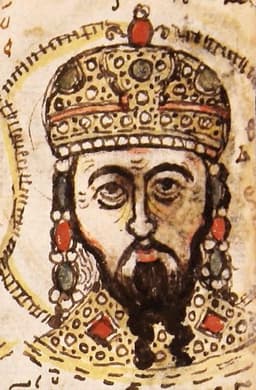
Theodore I Laskaris
Emperor · Medieval
61.8Total

Wanyan Aguda
Emperor · Medieval
63.4Total
Basic Information
Born
1174
1068
Died
1222
1123
Era
Medieval
Medieval
Nationality
Nicaean Empire
China
Occupation
Emperor
Emperor
Civilization
Western
Eastern
Score Comparison
Military (10%)
65.0
82.0
Political (20%)
60.0
59.3
Influence (20%)
61.0
55.0
Legacy (20%)
56.0
52.0
Leadership (15%)
77.2
85.0
Strategy (15%)
55.0
68.0
TOTAL
61.8
63.4
Theodore I Laskaris — Complete Timeline
1204 AD
Foundation of the Empire of NicaeaPolitical Action
After the Fourth Crusade captured Constantinople, Theodore I Laskaris fled to Nicaea in Asia Minor and established a Byzantine government-in-exile. He organized resistance against the Latin Empire and the Seljuk Turks, laying the foundation for the Nicaean Empire as the primary successor state of Byzantium.
Fourth CrusadeSuccessor StateExile Government
Impact: regionalconstructive
1208 AD
Coronation as emperor by the Patriarch of ConstantinoplePolitical Action◆ Major
Theodore I Laskaris was formally crowned as emperor by the newly elected Patriarch of Constantinople-in-exile, Michael IV Autoreianos. This coronation legitimized the Nicaean Empire as the rightful continuation of the Byzantine Empire, with full ecclesiastical authority.
CoronationLegitimacyPatriarchate
Impact: regionalconstructive
1211 AD
Battle of Antioch on the MeanderWar◆ Major
Theodore I Laskaris defeated the Seljuk Sultanate of Rum at the Battle of Antioch on the Meander. The victory secured Nicaean control over western Anatolia and prevented Seljuk expansion into Byzantine territories, establishing Theodore as a major regional power.
Byzantine-Seljuk WarsMilitary VictoryAnatolian Campaign
Impact: regional
Defeat of the Latin Empire at the Battle of RhyndacusWar
Theodore I Laskaris led Nicaean forces to a victory over the Latin Empire at the Battle of Rhyndacus. The battle halted Latin expansion into Asia Minor and secured Nicaean control over the region, strengthening the Byzantine resistance against the crusader states.
Latin EmpireMilitary VictoryAsia Minor
Impact: regional
Wanyan Aguda — Complete Timeline
1114 AD
Battle of HubudagangWar◆ Major
Aguda's Jurchen forces defeated a Liao army at Hubudagang, marking the first major victory of the rebellion. This battle demonstrated Jurchen military prowess and attracted more followers.
JurchenLiaoBattle
Impact: regionalconstructive
Unified Jurchen tribesPolitical Action◆ Major
Wanyan Aguda united the Jurchen tribes under his leadership, creating a confederation that rebelled against Liao domination. He organized a disciplined army and began the Jurchen revolt.
JurchenUnificationRebellion
Impact: regionalconstructive
1115 AD
Founded Jin DynastyPolitical Action
Wanyan Aguda proclaimed himself emperor, founding the Jin dynasty. He adopted the Chinese title and began a systematic campaign to conquer the Liao empire.
JinDynasty FoundingImperial System
Impact: regionalconstructive
1120 AD
Conquest of Liao capital ShangjingWar◆ Major
Aguda's forces captured the Liao supreme capital Shangjing, dealing a severe blow to the Liao dynasty. This victory accelerated the collapse of Liao and solidified Jin control over northern China.
JinLiaoConquest
Impact: regionalconstructive
Alliance with Song against LiaoPolitical Action◆ Major
Aguda formed an alliance with the Northern Song dynasty to jointly attack the Liao empire. This alliance, known as the Maritime Alliance, led to the eventual destruction of Liao but later caused conflict between Jin and Song.
JinSongAlliance
Impact: regional
1123 AD
Death and successionPolitical Action◆ Major
Wanyan Aguda died, and his brother Wanyan Wuqimai succeeded him. Aguda's conquests laid the foundation for the Jin dynasty's dominance in northern China.
JinDeathSuccession
Impact: regional
Expert Analysis
Wanyan Aguda vs Theodore I Laskaris: Historical Comparison
Wanyan Aguda, founder of the Jin Dynasty, and Theodore I Laskaris, founder of the Nicaean Empire, were both medieval emperors who carved new states from collapsing empires. While Aguda destroyed the Liao Dynasty and challenged Song China, Laskaris rebuilt Byzantine authority after the Fourth Crusade’s sack of Constantinople.
Dimension Analysis
**Military: Wanyan Aguda 91 / Theodore I Laskaris 86**
Aguda’s Jurchen cavalry shattered the numerically superior Khitan Liao army through speed and surprise, while Laskaris fought defensive campaigns against Latins, Seljuks, and Trebizond, stabilizing Nicaea but lacking Aguda’s conquest momentum.
**Political: Wanyan Aguda 84 / Theodore I Laskaris 67**
Aguda unified Jurchen tribes, established a dual administration (Meng’an Mou’ke), and forced Song recognition; Laskaris struggled with aristocratic factions, exiled patriarchs, and a fragile legitimacy, relying on diplomacy and church alliances.
**Influence: Wanyan Aguda 87 / Theodore I Laskaris 76**
Aguda’s Jin state reshaped East Asian geopolitics by ending Liao dominance and pressuring Song, while Laskaris’s Nicaea preserved Hellenic culture and Orthodox institutions, serving as the kernel for Byzantine restoration.
**Legacy: Wanyan Aguda 88 / Theodore I Laskaris 85**
Aguda’s dynasty ruled northern China for a century and influenced later Mongol administrative practices; Laskaris’s Nicaea directly enabled the Palaiologan recovery of Constantinople in 1261, though his own line was soon replaced.
**Leadership: Wanyan Aguda 80 / Theodore I Laskaris 84**
Laskaris excelled in inspiring loyalty among refugees and managing multi-ethnic forces, while Aguda’s leadership was more authoritarian and tribal; Laskaris’s personal resilience in exile contrasts with Aguda’s swift rise.
Verdict
Wanyan Aguda leads due to superior military conquests, political institution-building, and greater geopolitical impact, despite Laskaris’s stronger personal leadership in crisis.
FAQ
Q: Who ranks higher? A: Wanyan Aguda ranks higher overall, with decisive advantages in military, political, and influence dimensions, while Theodore I Laskaris scores higher only in leadership.
Rankings
🥇
Wanyan AgudaLeader
Mil: 82.0Pol: 59.3Inf: 55.0
63.4
🥈
Theodore I Laskaris
Mil: 65.0Pol: 60.0Inf: 61.0
61.8
+1.6 behind
How This Comparison Works
Algorithm
Each figure is scored on 6 dimensions (0—100 scale) based on structured historical data: Military (10%), Political (20%), Influence (20%), Legacy (20%), Leadership (15%), Strategy (15%). The weighted total produces the final ranking.
Data Sources
Scores are computed from structured sub-indicators in the database. Scale factors adjust for era (Ancient ×0.85, Modern ×1.0) and civilization size (Eastern ×1.05, Other ×0.80) to account for differences in population and military scale.
Maximum 3 Figures
Comparisons are limited to 2—3 figures to ensure readability and statistical meaningfulness.
Error Margins
±5 points per dimension — Sub-scores are derived from historical records with inherent uncertainty. Two figures within 5 points on a dimension should be considered roughly equivalent in that area.
Total Score Accuracy
±3 points overall — The weighted combination of 6 dimensions produces a total score with approximately ±3 points of uncertainty. Differences of less than 3 points are not statistically significant— the figures are effectively tied.
Known Limitations
- Historical records are incomplete and uneven across civilizations
- Figures from oral-tradition societies may be underrepresented
- Occupation labels can misclassify multi-role figures
- Scores measure capability and impact, not moral character
- Quantitative scoring is a comparison tool, not absolute truth
Capability Radar
Military (10%) — Battles & Warfare
Battles
65
85
Win Rate
70
90
Expansion
60
85
Political (20%) — Governance & Reform
Reform
65
75
Diplomacy
70
70
Economy
60
65
Influence (20%) — Cultural & Global Reach
Cultural
50
60
Global
45
50
Legacy (20%) — Historical Impact
Historical
65
70
Longevity
55
55
Leadership (15%) — Power & Stability
Tenure
70
70
Stability
65
60
Strategy (15%) — Tactics & Innovation
Strategy
75
85
Tactics
60
80
Reform
55
75
Similar Comparisons
Comments & Discussion
CrusaderNerd6/16/2026
Okay so Theodore I Laskaris is seriously underrated here. Yeah Aguda destroyed the Liao Dynasty and all that, but Theodore literally rebuilt an empire from scratch after the Fourth Crusade wrecked Constantinople in 1204. He had to fight Latins, Seljuks, and his own rebellious nobles while keeping Greek culture alive in exile. I read Judith Herrin's book on Byzantium and she makes a great point — without Nicaea, there's no Palaiologan restoration in 1261. Aguda conquered fast, sure, but his Jin Dynasty only lasted a century before the Mongols crushed them. Theodore's legacy indirectly kept Byzantium going for another 200 years! Plus the scores give Aguda 79.3 for military vs 55.2 for Theodore? That seems harsh. Theodore won key battles like against Alexios of Trebizond and stabilized a refugee state. Give the guy some credit. The political score difference (82.2 vs 72.0) also feels off — Aguda had easier tribal unity than Theodore managing squabbling Greek aristocrats.
Historian6196/16/2026
看到这个评分我忍不住算了一下:完颜阿骨打总分75.9,其中军事79.3、政治82.2、影响68.7;狄奥多尔总分70.1,军事55.2、政治72.0、影响72.7。这里有个明显的矛盾——狄奥多尔的影响分(72.7)居然比阿骨打(68.7)高了4分,但阿骨打建立的金朝直接灭掉辽国、压制北宋一百多年,而狄奥多尔创建的尼西亚帝国虽然光复了君士坦丁堡,但只维持了不到二十年就内乱不断。从地缘政治权重看,金朝对东亚秩序的重塑远超尼西亚对地中海的影响。如果按我的算法,阿骨打的影响分至少应该在75-80之间。军事分差距24.1分倒是合理,毕竟阿骨打是进攻型征服者,狄奥多尔基本在打游击防守战。但政治分差只有10.2分,我觉得偏小——阿骨打能在三年内整合女真各部建立官僚体系,狄奥多尔连贵族叛乱都压不住。建议调整影响分和政治分的权重比例。
Chronicler71326/16/2026
把完颜阿骨打跟狄奥多尔一世放在一起比,本身就很有意思。阿骨打是女真崛起的关键人物,用骑兵闪电战灭了辽国,还逼得北宋签了屈辱的“海上之盟”——这在中国史书里可是浓墨重彩的一笔。而狄奥多尔一世呢,他是在第四次十字军洗劫君士坦丁堡后,靠流亡政权重建拜占庭根基的。说实话,这两人的“创业”环境完全不同:阿骨打是趁辽国内乱一举翻盘,属于铁血征服;狄奥多尔更多是政治斡旋和难民治理,军事上偏防守。但西方视角往往低估阿骨打的政治制度创新,比如他搞的“猛安谋克”军政合一体系,直接影响了后来金朝的百年统治。要是单论开国难度和后续影响,阿骨打这79.3的军事分我觉得都给低了。