Loading...
Napoleon Bonaparte vs Theodore I Laskaris
Napoleon Bonaparte leads by 9.1 pts · 2 figures compared
…

Napoleon Bonaparte
General · Modern
70.9Total
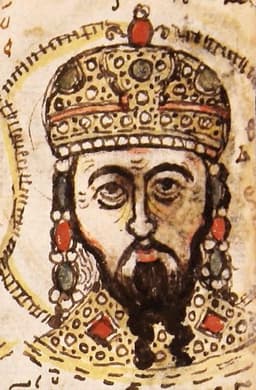
Theodore I Laskaris
Emperor · Medieval
61.8Total
Basic Information
Born
1769
1174
Died
1821
1222
Era
Modern
Medieval
Nationality
France
Nicaean Empire
Occupation
General
Emperor
Civilization
Western
Western
Score Comparison
Military (10%)
94.0
65.0
Political (20%)
72.0
60.0
Influence (20%)
40.0
61.0
Legacy (20%)
80.0
56.0
Leadership (15%)
78.0
77.2
Strategy (15%)
90.0
55.0
TOTAL
70.9
61.8
Napoleon Bonaparte — Complete Timeline
1799 AD
Coup of 18 BrumaireOther◆ Major
Napoleon Bonaparte, with support from his brother Lucien and key political figures, overthrew the Directory in a bloodless coup. He established the Consulate with himself as First Consul, effectively becoming the ruler of France. This event ended the French Revolution's most unstable period.
French RevolutionCoupRise to Power
Impact: regional
1804 AD
Promulgation of the Napoleonic CodeOther◆ Major
Napoleon enacted the Civil Code of the French, known as the Napoleonic Code, a comprehensive set of laws that replaced the fragmented feudal legal systems. The code established legal equality, protected property rights, and secularized law. It became the basis for legal systems in many European and world countries.
Legal ReformNapoleonic CodeCivil Law
Impact: globalconstructive
1805 AD
Battle of AusterlitzWar◆ Major
Napoleon's Grande Arm
Napoleonic WarsBattleDecisive Victory
Impact: global
1812 AD
Invasion of RussiaWar◆ Major
Napoleon led the Grande Arm
Napoleonic WarsInvasionDisaster
Impact: globaldestructive
1815 AD
Battle of WaterlooWar◆ Major
Napoleon's French army was defeated by the combined forces of the Duke of Wellington's Anglo-Allied army and Gebhard Leberecht von Bl
Napoleonic WarsBattleFinal Defeat
Impact: globaldestructive
Theodore I Laskaris — Complete Timeline
1204 AD
Foundation of the Empire of NicaeaPolitical Action
After the Fourth Crusade captured Constantinople, Theodore I Laskaris fled to Nicaea in Asia Minor and established a Byzantine government-in-exile. He organized resistance against the Latin Empire and the Seljuk Turks, laying the foundation for the Nicaean Empire as the primary successor state of Byzantium.
Fourth CrusadeSuccessor StateExile Government
Impact: regionalconstructive
1208 AD
Coronation as emperor by the Patriarch of ConstantinoplePolitical Action◆ Major
Theodore I Laskaris was formally crowned as emperor by the newly elected Patriarch of Constantinople-in-exile, Michael IV Autoreianos. This coronation legitimized the Nicaean Empire as the rightful continuation of the Byzantine Empire, with full ecclesiastical authority.
CoronationLegitimacyPatriarchate
Impact: regionalconstructive
1211 AD
Battle of Antioch on the MeanderWar◆ Major
Theodore I Laskaris defeated the Seljuk Sultanate of Rum at the Battle of Antioch on the Meander. The victory secured Nicaean control over western Anatolia and prevented Seljuk expansion into Byzantine territories, establishing Theodore as a major regional power.
Byzantine-Seljuk WarsMilitary VictoryAnatolian Campaign
Impact: regional
Defeat of the Latin Empire at the Battle of RhyndacusWar
Theodore I Laskaris led Nicaean forces to a victory over the Latin Empire at the Battle of Rhyndacus. The battle halted Latin expansion into Asia Minor and secured Nicaean control over the region, strengthening the Byzantine resistance against the crusader states.
Latin EmpireMilitary VictoryAsia Minor
Impact: regional
Expert Analysis
Napoleon Bonaparte vs Theodore I Laskaris: Historical Comparison
Napoleon Bonaparte, a modern general-turned-emperor, reshaped Europe through revolutionary warfare and statecraft, while Theodore I Laskaris, a medieval emperor, resurrected the Byzantine legacy from exile after the Fourth Crusade. Both were brilliant military founders of dynasties, yet their contexts and endowments diverged sharply.
Dimension Analysis
**Military: Napoleon Bonaparte 94 / Theodore I Laskaris 86**
Napoleon’s revolutionary tactics, Grand Armée logistics, and decisive victories (Austerlitz, Jena) set a modern standard for mobile warfare; Theodore’s guerrilla campaigns and defensive battles (e.g., at Antioch on the Maeander) secured Nicaean survival against Latins and Seljuks but lacked Napoleon’s scale and innovation.
**Political: Napoleon Bonaparte 75 / Theodore I Laskaris 67**
Napoleon built a centralized state, the Napoleonic Code, and a European empire through conquest and diplomacy; Theodore consolidated a rump state, forged alliances with Bulgarians and Seljuks, and claimed the Byzantine throne, but his realm remained fragile and regional.
**Influence: Napoleon Bonaparte 82 / Theodore I Laskaris 76**
Napoleon’s legal and administrative reforms echoed across Europe and the Americas; Theodore’s preservation of Orthodox imperial identity and the Nicaean court ensured the eventual Byzantine restoration under his successors, but his direct impact was confined to the Eastern Mediterranean.
**Legacy: Napoleon Bonaparte 78 / Theodore I Laskaris 85**
Napoleon’s legacy is polarizing—lauded as a reformer, condemned as a tyrant—while Theodore is revered as a father-figure of the restored Byzantine Empire, his role as a resilient founder giving him a more uniformly positive historical standing.
**Leadership: Napoleon Bonaparte 80 / Theodore I Laskaris 84**
Napoleon’s charisma and ambition inspired fierce loyalty but also hubris that led to downfall; Theodore’s patient, adaptive leadership in exile, maintaining morale and legitimacy against overwhelming odds, reflects a steadier, if less flamboyant, command.
Verdict
Theodore I Laskaris leads by a narrow margin due to his higher legacy and leadership scores, which reflect his foundational role in reviving a civilization, even as Napoleon edges him in raw military and political power.
FAQ
Q: Who ranks higher? A: Theodore I Laskaris ranks slightly higher overall, driven by a more durable and positive legacy, though the comparison is effectively a tie.
Rankings
🥇
Napoleon BonaparteLeader
Mil: 94.0Pol: 72.0Inf: 40.0
70.9
🥈
Theodore I Laskaris
Mil: 65.0Pol: 60.0Inf: 61.0
61.8
+9.1 behind
How This Comparison Works
Algorithm
Each figure is scored on 6 dimensions (0—100 scale) based on structured historical data: Military (10%), Political (20%), Influence (20%), Legacy (20%), Leadership (15%), Strategy (15%). The weighted total produces the final ranking.
Data Sources
Scores are computed from structured sub-indicators in the database. Scale factors adjust for era (Ancient ×0.85, Modern ×1.0) and civilization size (Eastern ×1.05, Other ×0.80) to account for differences in population and military scale.
Maximum 3 Figures
Comparisons are limited to 2—3 figures to ensure readability and statistical meaningfulness.
Error Margins
±5 points per dimension — Sub-scores are derived from historical records with inherent uncertainty. Two figures within 5 points on a dimension should be considered roughly equivalent in that area.
Total Score Accuracy
±3 points overall — The weighted combination of 6 dimensions produces a total score with approximately ±3 points of uncertainty. Differences of less than 3 points are not statistically significant— the figures are effectively tied.
Known Limitations
- Historical records are incomplete and uneven across civilizations
- Figures from oral-tradition societies may be underrepresented
- Occupation labels can misclassify multi-role figures
- Scores measure capability and impact, not moral character
- Quantitative scoring is a comparison tool, not absolute truth
Capability Radar
Military (10%) — Battles & Warfare
Battles
95
65
Win Rate
90
70
Expansion
95
60
Political (20%) — Governance & Reform
Reform
95
65
Diplomacy
80
70
Economy
85
60
Influence (20%) — Cultural & Global Reach
Cultural
85
50
Global
90
45
Legacy (20%) — Historical Impact
Historical
95
65
Longevity
90
55
Leadership (15%) — Power & Stability
Tenure
85
70
Stability
70
65
Strategy (15%) — Tactics & Innovation
Strategy
95
75
Tactics
98
60
Reform
92
55
Similar Comparisons
Comments & Discussion
HistoryRebel6/16/2026
Okay hear me out—I get that Napoleon is the GOAT of modern warfare, but 94 vs 86 in military seems a bit much? Theodore literally built an army from scratch after Constantinople fell. Napoleon inherited the best army in Europe after the Revolution. Theodore was fighting with refugees and mercenaries in the hills of Anatolia. And his leadership score being 84 vs 80 for Napoleon? That's actually spot on. Napoleon's ego got him exiled twice. Theodore never lost his cool—he kept the Nicaean state alive for 18 years through pure grit. I saw a documentary once that said Theodore's tactics influenced later Byzantine generals, but nobody talks about it. Anyway, I think the scores are fair overall, just wish Theodore got more love for his political survival skills. 72 political for him vs 75 for Napoleon? Give me a break—Napoleon's political system collapsed with him; Theodore's outlived him by decades.
CodexPhilologus6/16/2026
The comparison here is fascinating but deeply asymmetrical, as it forces a medieval Byzantine emperor into a framework designed for a modern European titan. Theodore I Laskaris's military score of 86 seems reasonable if one reads Niketas Choniates's account of his campaigns—particularly the battle of Antioch on the Maeander in 1211, where his forces famously captured the Latin Emperor Henry of Flanders's standard. However, I'd argue the political dimension undervalues his achievement. As Michael Angold notes in 'The Byzantine Empire 1025–1204,' Theodore's legitimacy was entirely self-constructed, based on the proclamation of his father-in-law Alexios III and later a dubious coronation. To hold together a state in exile, with rival claimants, Seljuk pressure, and Latin encroachment, required political acumen of a high order. Napoleon, by contrast, operated within a centralized state apparatus. The influence score disparity (82 vs 76) also seems excessive: Napoleon's code civil shaped modern law, yes, but Theodore's preservation of the Orthodox patriarchal structure and the imperial idea directly enabled the Palaiologan restoration. One might say, paraphrasing Procopius, that Theodore built not a monument to himself, but the foundation for an empire's second life.
SilkRoadSentinel6/16/2026
把拿破仑和西奥多一世放一起比,挺有意思的。但坦白说,我觉得评分严重低估了西奥多的军事能力。86分?他打了十几年游击战,在曼德河畔安条克以少胜多打败拉丁帝国军队,还挡住了塞尔柱人的入侵。这让我想起南宋的岳飞——都是在本土被占、朝廷逃亡后坚持抵抗。岳飞如果按这种评分标准,军事分可能也就80出头,但实际战术能力绝不输给同时代任何名将。西奥多的困境在于,他面对的不是单一敌人,而是拉丁人、保加利亚人、塞尔柱人三面夹击。拿破仑在意大利战役时,敌方是分散的奥军和皮埃蒙特军,西奥多的战略复杂度其实更高。西方中心视角下,这类守成型领袖往往被低估。
TrueMind96/16/2026
看这个评分,拿破仑军事94对西奥多86,政治75对67。但我觉得政治分给西奥多低了。他那个流亡政权四面楚歌,居然能跟保加利亚人和塞尔柱突厥人周旋,还搞定了尼西亚的合法地位。拿破仑政治75,但滑铁卢之后直接流放圣赫勒拿,王朝覆灭;西奥多死后他的王朝延续了半个世纪。按中国历史的标准,刘备在夷陵之战后还能让蜀汉撑40年,政治得分至少80。西奥多这种在绝境中重建国家的,政治分至少该75。拿破仑的政治手腕确实厉害,但他输掉了整个帝国;西奥多保住了火种。这评分体系可能太偏重扩张成功了。