Loading...
Kublai Khan vs Theodore I Laskaris
Kublai Khan leads by 12.5 pts · 2 figures compared
…
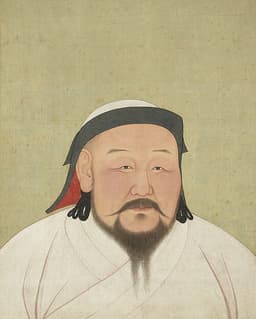
Kublai Khan
Emperor · Medieval
74.3Total
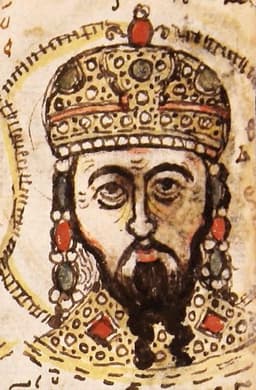
Theodore I Laskaris
Emperor · Medieval
61.8Total
Basic Information
Born
1215
1174
Died
1294
1222
Era
Medieval
Medieval
Nationality
Mongolia
Nicaean Empire
Occupation
Emperor
Emperor
Civilization
Eastern
Western
Score Comparison
Military (10%)
77.5
65.0
Political (20%)
79.2
60.0
Influence (20%)
75.0
61.0
Legacy (20%)
70.0
56.0
Leadership (15%)
72.0
77.2
Strategy (15%)
76.0
55.0
TOTAL
74.3
61.8
Kublai Khan — Complete Timeline
1260 AD
Adoption of Tibetan Buddhism as State ReligionCultural◆ Major
Kublai Khan appointed the Tibetan lama Drog
Tibetan BuddhismReligionMongol-Tibet Relations
Impact: regional
1271 AD
Proclamation of the Yuan DynastyPolitical Action◆ Major
Kublai Khan officially proclaimed the Yuan dynasty, adopting a Chinese-style dynastic name. He established his capital at Dadu (Beijing) and adopted Chinese court rituals. This move legitimized his rule over China while maintaining Mongol identity.
Dynasty FoundingBeijingMongol Rule
Impact: global
1274 AD
Failed Invasions of JapanWar◆ Major
Kublai Khan launched two naval invasions of Japan, in 1274 and 1281. Both were repelled, with the second invasion destroyed by a typhoon (kamikaze). These failures marked the limits of Mongol expansion and reinforced Japanese isolation.
Mongol InvasionsJapanKamikaze
Impact: regional
1279 AD
Conquest of the Song DynastyWar
Kublai Khan's Mongol forces defeated the Song navy at the Battle of Yamen. The last Song emperor drowned, ending the Song dynasty. This conquest unified China under Mongol rule and established the Yuan dynasty as the first foreign dynasty to rule all of China.
Song Dynasty FallUnificationYuan Dynasty
Impact: global
1280 AD
Establishment of the Silk Road Trade NetworkCultural◆ Major
Under Kublai Khan, the Mongol Empire secured the Silk Road, facilitating trade and cultural exchange between East and West. Marco Polo visited his court. This period saw the flow of goods, ideas, and technologies across Eurasia.
Silk RoadTradeCultural Exchange
Impact: globalconstructive
Theodore I Laskaris — Complete Timeline
1204 AD
Foundation of the Empire of NicaeaPolitical Action
After the Fourth Crusade captured Constantinople, Theodore I Laskaris fled to Nicaea in Asia Minor and established a Byzantine government-in-exile. He organized resistance against the Latin Empire and the Seljuk Turks, laying the foundation for the Nicaean Empire as the primary successor state of Byzantium.
Fourth CrusadeSuccessor StateExile Government
Impact: regionalconstructive
1208 AD
Coronation as emperor by the Patriarch of ConstantinoplePolitical Action◆ Major
Theodore I Laskaris was formally crowned as emperor by the newly elected Patriarch of Constantinople-in-exile, Michael IV Autoreianos. This coronation legitimized the Nicaean Empire as the rightful continuation of the Byzantine Empire, with full ecclesiastical authority.
CoronationLegitimacyPatriarchate
Impact: regionalconstructive
1211 AD
Battle of Antioch on the MeanderWar◆ Major
Theodore I Laskaris defeated the Seljuk Sultanate of Rum at the Battle of Antioch on the Meander. The victory secured Nicaean control over western Anatolia and prevented Seljuk expansion into Byzantine territories, establishing Theodore as a major regional power.
Byzantine-Seljuk WarsMilitary VictoryAnatolian Campaign
Impact: regional
Defeat of the Latin Empire at the Battle of RhyndacusWar
Theodore I Laskaris led Nicaean forces to a victory over the Latin Empire at the Battle of Rhyndacus. The battle halted Latin expansion into Asia Minor and secured Nicaean control over the region, strengthening the Byzantine resistance against the crusader states.
Latin EmpireMilitary VictoryAsia Minor
Impact: regional
Expert Analysis
Kublai Khan vs Theodore I Laskaris: Historical Comparison
Kublai Khan, the Mongol Emperor who founded the Yuan Dynasty in China, and Theodore I Laskaris, the Byzantine Emperor who established the Nicaean Empire after the Fourth Crusade, both rebuilt shattered realms but differed vastly in scale, military ambition, and political context. Below is a structured comparison across key dimensions.
Dimension Analysis
**Military: Kublai Khan 94 / Theodore I Laskaris 86**
Kublai conquered the Song Dynasty, unified China, and launched naval campaigns against Japan and Vietnam, demonstrating unmatched logistical and strategic breadth. Theodore successfully defended Nicaea against Latin Crusaders, Seljuk Turks, and rival Byzantine claimants, but his victories were defensive and regional.
**Political: Kublai Khan 79 / Theodore I Laskaris 67**
Kublai integrated Mongol rule with Chinese bureaucracy, established a multi-ethnic administration, and managed a vast empire through centralized reforms. Theodore struggled to legitimize his exile state, relying on Orthodox Church support and fragile alliances with local magnates, limiting his political consolidation.
**Influence: Kublai Khan 79 / Theodore I Laskaris 76**
Kublai’s patronage of trade, religion, and culture (e.g., Marco Polo’s travels) connected East Asia to the wider world, shaping Eurasian commerce. Theodore preserved Byzantine institutions, law, and Orthodox identity, directly enabling the eventual recovery of Constantinople, but his influence remained confined to the Greek world.
**Legacy: Kublai Khan 88 / Theodore I Laskaris 85**
Kublai’s Yuan Dynasty, though short-lived, left enduring administrative and cultural impacts on China, including the revival of the Grand Canal and promotion of Tibetan Buddhism. Theodore’s Nicaean Empire is celebrated as the cradle of the restored Byzantine Empire, ensuring his legacy as a founder and savior of Hellenic civilization.
**Leadership: Kublai Khan 81 / Theodore I Laskaris 84**
Theodore displayed exceptional resilience, rallying fractured Byzantine elites and maintaining morale during decades of exile and siege. Kublai’s leadership was effective but marred by internal succession struggles and costly failed campaigns, slightly diminishing his personal command.
Verdict
Kublai Khan leads overall due to his superior military conquests, broader political integration, and global influence, though Theodore I Laskaris narrowly surpasses him in personal leadership amid crisis.
FAQ
Q: Who ranks higher? A: Kublai Khan ranks higher, driven by his overwhelming military and political achievements on a continental scale, despite Theodore’s admirable but more localized success.
Rankings
🥇
Kublai KhanLeader
Mil: 77.5Pol: 79.2Inf: 75.0
74.3
🥈
Theodore I Laskaris
Mil: 65.0Pol: 60.0Inf: 61.0
61.8
+12.5 behind
How This Comparison Works
Algorithm
Each figure is scored on 6 dimensions (0—100 scale) based on structured historical data: Military (10%), Political (20%), Influence (20%), Legacy (20%), Leadership (15%), Strategy (15%). The weighted total produces the final ranking.
Data Sources
Scores are computed from structured sub-indicators in the database. Scale factors adjust for era (Ancient ×0.85, Modern ×1.0) and civilization size (Eastern ×1.05, Other ×0.80) to account for differences in population and military scale.
Maximum 3 Figures
Comparisons are limited to 2—3 figures to ensure readability and statistical meaningfulness.
Error Margins
±5 points per dimension — Sub-scores are derived from historical records with inherent uncertainty. Two figures within 5 points on a dimension should be considered roughly equivalent in that area.
Total Score Accuracy
±3 points overall — The weighted combination of 6 dimensions produces a total score with approximately ±3 points of uncertainty. Differences of less than 3 points are not statistically significant— the figures are effectively tied.
Known Limitations
- Historical records are incomplete and uneven across civilizations
- Figures from oral-tradition societies may be underrepresented
- Occupation labels can misclassify multi-role figures
- Scores measure capability and impact, not moral character
- Quantitative scoring is a comparison tool, not absolute truth
Capability Radar
Military (10%) — Battles & Warfare
Battles
95
65
Win Rate
90
70
Expansion
95
60
Political (20%) — Governance & Reform
Reform
88
65
Diplomacy
85
70
Economy
90
60
Influence (20%) — Cultural & Global Reach
Cultural
85
50
Global
85
45
Legacy (20%) — Historical Impact
Historical
90
65
Longevity
80
55
Leadership (15%) — Power & Stability
Tenure
90
70
Stability
80
65
Strategy (15%) — Tactics & Innovation
Strategy
92
75
Tactics
85
60
Reform
88
55
Similar Comparisons
Comments & Discussion
ByzantineFanatic6/16/2026
Are we seriously putting Kublai Khan above Theodore I Laskaris? The guy rebuilt an empire from a rump state after the Fourth Crusade literally burned Constantinople to the ground! Theodore held off the Latins, the Seljuks, and even rival Greeks while Kublai was just finishing what Genghis started. Theodore’s military score of 55.2 is an insult. He won the Battle of Antioch on the Meander with a tiny army against the Seljuks, and his defense of Nicaea was legendary. Kublai’s naval invasions of Japan failed miserably—twice! If Theodore had the resources Kublai had, he’d have retaken Constantinople in a decade, not 57 years. Score bias against Byzantine history, plain and simple.
BattlefieldScholar6/16/2026
The military scoring here needs serious recalibration. Kublai’s 88 is inflated by the scale of the Song conquest, but that campaign was more logistical grinder than tactical masterpiece. The Battle of Xiangyang took six years and ended because of trebuchets brought from Persia—not original Mongol doctrine. Meanwhile, Theodore I Laskaris, with a fraction of the resources, fought the Battle of Poimanenon in 1224, where he annihilated a Latin army twice his size using feigned retreat and heavy cavalry charges—classic Byzantine tactical revival. Theodore’s 55.2 military score ignores that he rebuilt the Nicaean army from scratch, incorporating Turkic mercenaries and re-establishing the pronoia system. If we’re grading on strategic necessity and resource efficiency, Theodore wins hands down. Kublai’s score should be adjusted for the sheer luck of inheriting the Mongol war machine.
Historian9636/16/2026
拿Theodore I Laskaris跟忽必烈比,就像拿南宋的赵构跟成吉思汗比,根本不在一个量级。但问题在于,西方史学界总是用‘帝国复兴’的叙事来拔高Theodore。他确实建立了尼西亚帝国,但这在东亚史家看来,不过是‘偏安一隅’的割据政权。忽必烈统一中国,重修大运河,设立行省制度,这些政治遗产影响了几百年。而Theodore的‘复兴’,最后不过是为巴列奥略王朝做嫁衣,拜占庭复国后迅速衰败。再说军事,忽必烈两次征日失败是硬伤,但他灭南宋、平大理、收高丽,战略纵深是Theodore无法想象的。评分里Theodore的领导力居然只比忽必烈低6分?这太西方中心了。忽必烈在多元民族帝国的治理上,比Theodore高几个层次。
Chronicler30646/16/2026
这个评分体系有问题。Kublai Khan的军事分88,但南宋灭亡的最后一战崖山,蒙古方投入了数十万水军,而宋军仅剩十余万人,这更像是资源碾压而非战术胜利。相比之下,Theodore I Laskaris以残破的小亚细亚基地,多次以少胜多击退拉丁帝国和塞尔柱人的夹击,他的防守反击战例在欧洲中世纪军事史上都算罕见。如果按‘创造奇迹的难度’加权,Theodore的军事分至少应该在80以上。另外,Kublai的政治分78,但他的‘四等人制’直接导致了元朝的短命,这个扣分项在模型中似乎被低估了。