Loading...
Tamar of Georgia vs Yuwen Yong
Tamar of Georgia leads by 4.3 pts · 2 figures compared
…
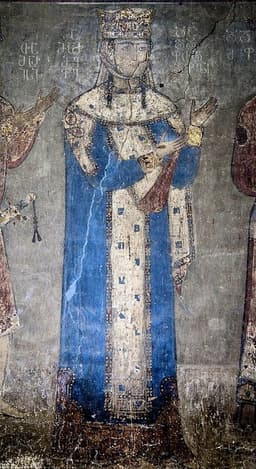
Tamar of Georgia
Emperor · Medieval
71.5Total
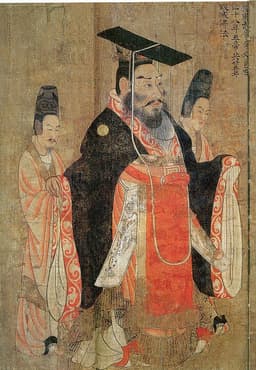
Yuwen Yong
Emperor · Medieval
67.2Total
Basic Information
Born
1160
543
Died
1213
578
Era
Medieval
Medieval
Nationality
Georgia
China
Occupation
Emperor
Emperor
Civilization
Western
Eastern
Score Comparison
Military (10%)
78.0
78.0
Political (20%)
72.0
78.0
Influence (20%)
82.0
58.0
Legacy (20%)
55.0
54.0
Leadership (15%)
80.0
85.0
Strategy (15%)
66.3
69.1
TOTAL
71.5
67.2
Tamar of Georgia — Complete Timeline
1184 AD
Coronation as Queen RegnantPolitical Action
Tamar was crowned as the first female ruler of Georgia after her father George III's death. Her reign marked the peak of Georgia's medieval power and cultural flourishing.
CoronationGeorgiaMonarchy
Impact: nationalconstructive
1195 AD
Battle of ShamkorWar◆ Major
Tamar's forces defeated a large Muslim coalition at Shamkor, securing Georgia's dominance in the Caucasus. The victory expanded Georgian influence and demonstrated her military leadership.
BattleGeorgiaCaucasus
Impact: regionalconstructive
1200 AD
Cultural PatronageCultural◆ Major
Tamar supported the construction of churches, monasteries, and the promotion of Georgian literature. Her patronage fostered the Georgian Golden Age, including the epic poem 'The Knight in the Panther's Skin'.
CulturePatronageGeorgia
Impact: nationalconstructive
Yuwen Yong — Complete Timeline
574 AD
Suppression of Buddhism in Northern ZhouReform◆ Major
Emperor Wu of Northern Zhou (Yuwen Yong) ordered the suppression of Buddhism, confiscating monastic lands, forcing monks and nuns to return to lay life, and destroying temples. He aimed to increase state revenue and military manpower, strengthening the state.
Northern ZhouBuddhist PersecutionReform
Impact: nationaldestructive
577 AD
Conquest of Northern QiWar
Emperor Wu led a successful campaign against the rival Northern Qi dynasty, conquering its territory and unifying northern China under Northern Zhou. This victory ended the division of the north and set the stage for the Sui dynasty's unification of all China.
Northern ZhouUnificationNorthern Qi
Impact: regionalconstructive
578 AD
Death during campaign against the TurksWar◆ Major
Emperor Wu died of illness while leading a campaign against the G
Northern ZhouMilitary CampaignDeath
Impact: regionaltragic
Expert Analysis
Tamar of Georgia vs Yuwen Yong
### The Iron Emperor and the Golden Queen
One ruled with a sword that shattered idols; the other with a scepter that raised cathedrals. In the same medieval centuries, while Europe and Asia were still taking shape, two rulers emerged from opposite ends of the known world—Yuwen Yong, Emperor Wu of Northern Zhou, and Queen Tamar of Georgia. Both inherited fragile realms and left them transformed. But their paths could not have been more different: one unified a fractured land by crushing a religion, the other forged a golden age by embracing one. What drove these divergent outcomes? The answer lies not just in their deeds, but in the worlds that shaped them.
### Origins
Yuwen Yong was born in 543 into a world of constant war. Northern China, divided among rival dynasties, was a landscape of blood and steel. His family, the Yuwen clan, were military aristocrats of the Xianbei—nomadic descendants who had settled into Chinese court life. Yuwen Yong grew up in a camp, learning horsemanship and strategy before he could read. His era demanded ruthlessness. By contrast, Tamar of Georgia, born in 1160, entered a kingdom already Christian for centuries, perched between the Black Sea and the Caucasus Mountains. Her father, King George III, had consolidated power but left a realm surrounded by Muslim empires. Tamar was raised in the shadow of icons and chronicles, taught that a queen’s duty was both to rule and to protect the faith. Their beginnings were mirrors of their civilizations: one forged in the crucible of Chinese disunity, the other in the fragile glory of a Christian frontier.
### Rise to Power
Yuwen Yong did not inherit a throne—he seized it. His elder brother, Emperor Ming, was poisoned by a powerful regent, Yuwen Hu, who had dominated the court for years. Yuwen Yong played the role of a docile puppet, waiting and watching. In 572, he struck: during a routine audience, he personally killed Yuwen Hu with a ceremonial mace. This was a ruler who understood that power must be taken, not given. Tamar’s rise was more complex. Her father, George III, crowned her co-ruler in 1178 to secure the succession, then died in 1184. As Georgia’s first queen regnant, Tamar faced immediate opposition from nobles who questioned female rule. She did not kill her rivals—she outmaneuvered them, marrying a Russian prince, Yuri Bogolyubsky, to secure allies, then divorcing him when he became a threat. Her path was one of patience and diplomacy, not assassination.
### Leadership & Governance
Yuwen Yong’s leadership was defined by two obsessions: unity and control. In 574, he ordered the suppression of Buddhism across Northern Zhou. Monasteries were confiscated, monks forced back into lay life, statues melted for coin. This was not mere bigotry—Buddhist institutions had grown wealthy and independent, draining tax revenue and military manpower. Yuwen Yong saw them as a rival state within his state. His campaign was brutal but effective: it filled his treasury and strengthened his army. In 577, he conquered the rival Northern Qi dynasty, unifying northern China after decades of division. His strategy was meticulous—he used spies, feints, and decisive cavalry charges. But his governance was harsh; he trusted no one, and his court was a place of fear.
Tamar ruled differently. She saw religion not as a threat but as a foundation. She patronized churches and monasteries, commissioning the golden age of Georgian fresco painting and literature. The epic poem *The Knight in the Panther’s Skin* was written during her reign. Yet she was no pacifist. In 1195, at the Battle of Shamkor, her armies crushed a Muslim coalition, securing Georgia’s dominance in the Caucasus. She led from the rear, but her generals knew she was the source of their mandate. Her political wisdom lay in balancing noble factions, rewarding loyalty, and projecting an image of divine favor. Where Yuwen Yong ruled through iron, Tamar ruled through gold and incense.
### Triumph & Tragedy
Yuwen Yong’s greatest triumph was his conquest of Northern Qi in 577. At 34, he had done what no northern ruler had achieved in decades: unified the Yellow River plain. His army was disciplined, his logistics flawless. But tragedy struck in 578. While campaigning against the Göktürks, he fell ill and died—some say of exhaustion, others of poison. He was only 35. His son, a weak and cruel boy, lost the empire within three years. Yuwen Yong’s life’s work collapsed like a sandcastle.
Tamar’s triumph was more diffuse. The Battle of Shamkor in 1195 was her greatest military victory, but her true achievement was the cultural efflorescence that followed. Churches rose, poems were written, and Georgia became a beacon of Christian civilization in a Muslim sea. Her tragedy was quieter: she outlived her husband and saw her successors struggle to maintain her legacy. She died in 1213, likely of natural causes, but the Mongol invasions that began just a decade later would erase much of what she built.
### Character & Destiny
Yuwen Yong was a man of relentless will. His character was forged in suspicion—he had seen his brother murdered, had played the fool to survive. He trusted no one, and that distrust became his destiny. By centralizing power so absolutely, he left no room for anyone else to rule. When he died, the empire had no ballast. Tamar, by contrast, was a woman who learned to delegate. She surrounded herself with capable generals and clerics, and her reign was a partnership, not a solo performance. Her character—pious, patient, and pragmatic—allowed her to build something that outlasted her immediate presence. One man’s iron grip shattered; a woman’s web of alliances endured, at least for a time.
### Legacy
Yuwen Yong is remembered in Chinese history as a unifier and a destroyer. His suppression of Buddhism was later reversed, but his conquest of the north paved the way for the Sui and Tang dynasties. His legacy is ambiguous: a necessary tyrant, a tragic hero. Tamar is revered as Georgia’s greatest monarch. She is a saint in the Georgian Orthodox Church, her image on coins and monuments. Her reign is called the Golden Age, a time when Georgia was both strong and beautiful. Yet both rulers share a common fate: their empires crumbled soon after they died. The difference is in memory. Yuwen Yong is a footnote in a longer Chinese story; Tamar is the heart of Georgia’s national identity.
### Conclusion
Standing at the edge of history, Yuwen Yong and Tamar of Georgia seem like opposites—the hammer and the harp. But they faced the same fundamental challenge: how to hold a fragile kingdom together in a violent age. One answered with force, the other with faith. One destroyed temples, the other built them. Yet both understood that power must be earned, not inherited, and that a ruler’s greatest enemy is not the foreign army but the chaos within. Their lives remind us that greatness takes many forms—and that the same ambition can lead to a throne or a tomb.
Rankings
🥇
Tamar of GeorgiaLeader
Mil: 78.0Pol: 72.0Inf: 82.0
71.5
🥈
Yuwen Yong
Mil: 78.0Pol: 78.0Inf: 58.0
67.2
+4.3 behind
How This Comparison Works
Algorithm
Each figure is scored on 6 dimensions (0—100 scale) based on structured historical data: Military (10%), Political (20%), Influence (20%), Legacy (20%), Leadership (15%), Strategy (15%). The weighted total produces the final ranking.
Data Sources
Scores are computed from structured sub-indicators in the database. Scale factors adjust for era (Ancient ×0.85, Modern ×1.0) and civilization size (Eastern ×1.05, Other ×0.80) to account for differences in population and military scale.
Maximum 3 Figures
Comparisons are limited to 2—3 figures to ensure readability and statistical meaningfulness.
Error Margins
±5 points per dimension — Sub-scores are derived from historical records with inherent uncertainty. Two figures within 5 points on a dimension should be considered roughly equivalent in that area.
Total Score Accuracy
±3 points overall — The weighted combination of 6 dimensions produces a total score with approximately ±3 points of uncertainty. Differences of less than 3 points are not statistically significant— the figures are effectively tied.
Known Limitations
- Historical records are incomplete and uneven across civilizations
- Figures from oral-tradition societies may be underrepresented
- Occupation labels can misclassify multi-role figures
- Scores measure capability and impact, not moral character
- Quantitative scoring is a comparison tool, not absolute truth
Capability Radar
Military (10%) — Battles & Warfare
Battles
75
75
Win Rate
85
80
Expansion
75
80
Political (20%) — Governance & Reform
Reform
80
85
Diplomacy
75
70
Economy
85
75
Influence (20%) — Cultural & Global Reach
Cultural
80
40
Global
60
40
Legacy (20%) — Historical Impact
Historical
75
65
Longevity
70
50
Leadership (15%) — Power & Stability
Tenure
85
60
Stability
70
70
Strategy (15%) — Tactics & Innovation
Strategy
80
75
Tactics
70
70
Reform
65
85
Similar Comparisons
Comments & Discussion
马踏北周6/16/2026
Yuwen Yong didn't just suppress Buddhism—he systematically dismantled an entire economic and military power structure. Over 40,000 temples demolished, 3 million monks and nuns forced back into taxpaying, conscripted labor. That's not anti-clericalism; that's a brutal fiscal policy. Tamar patronized churches because she needed Orthodox loyalty against Muslim neighbors. Different resources, different strategies. One broke idols to feed armies; the other built cathedrals to buy allies.
Tamar's Glorious Reassessment6/16/2026
Everyone romanticizes Tamar's "golden age," but let's talk about the dark side of her religious patronage. Georgia's monasteries became tax-exempt feudal lords, swallowing land and labor while the crown grew dependent on church legitimacy. By the 13th century, ecclesiastical estates controlled nearly a third of Georgia's arable land. Yuwen Yong saw that trap coming six centuries earlier and smashed it. Tamar's piety bought short-term glory but mortgaged her kingdom's economic future.
铁血破虚妄6/16/2026
I'm tired of this "tolerant vs intolerant" framing. Yuwen Yong wasn't a fanatic—he was a realist. Northern Zhou faced depopulation, constant warfare, and a Buddhist establishment that owned vast tax-free lands while claiming exemption from military service. His crackdown freed up resources for border defense and internal consolidation. Tamar's Georgia, by contrast, could afford religious display because its external threats were manageable. Different strategic calculus, not moral superiority.
Classics Curmudgeon6/16/2026
The comparison ignores real institutional differences. Yuwen Yong's suppression mirrored earlier Chinese debates about monastic wealth (see Emperor Wu of Liang's disaster), but his Arabian-style iconoclasm? That's uniquely Xianbei—nomadic pragmatism clashing with settled Buddhist bureaucracy. Tamar operated in a Byzantine framework where emperor and patriarch were symbiotic, not adversarial. She built Gelati Academy; he built the Sixteen Garrisons system. Two different concepts of statecraft ent
反方辩手6/16/2026
You call Tamar a "golden age" ruler, yet her reign ended with the Khwarezmian invasion that she failed to foresee or prevent. Yuwen Yong's Northern Zhou not only survived him but formed the foundation for the Sui dynasty's reunification of China. Tamar's Georgian Golden Age lasted barely a generation after her death; Yuwen Yong's institutional reforms shaped Chinese governance for centuries. One built a sandcastle of cultural glory; the other forged an iron framework that outlasted his dynasty.