Loading...
Taejo of Joseon vs Yuwen Yong
Taejo of Joseon leads by 3.2 pts · 2 figures compared
…
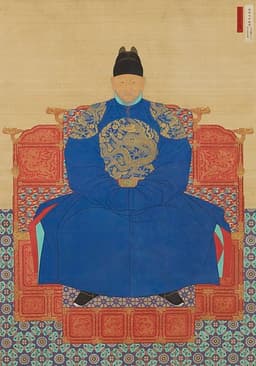
Taejo of Joseon
Emperor · Medieval
70.4Total
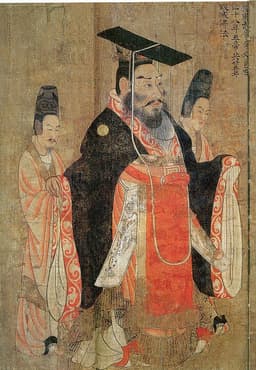
Yuwen Yong
Emperor · Medieval
67.2Total
Basic Information
Born
1335
543
Died
1408
578
Era
Medieval
Medieval
Nationality
Korea
China
Occupation
Emperor
Emperor
Civilization
Eastern
Eastern
Score Comparison
Military (10%)
74.7
78.0
Political (20%)
65.0
78.0
Influence (20%)
65.0
58.0
Legacy (20%)
80.0
54.0
Leadership (15%)
72.0
85.0
Strategy (15%)
61.2
69.1
TOTAL
70.4
67.2
Taejo of Joseon — Complete Timeline
1380 AD
Battle of HwangsanWar
General Yi Seong-gye defeated a Japanese pirate (wokou) force at Hwangsan. This victory enhanced his military reputation and demonstrated his capability as a commander.
WokouGoryeo Military
1388 AD
Wihwado RetreatPolitical Action
General Yi Seong-gye, ordered to invade the Ming dynasty's Liaodong region, turned his army back at Wihwado Island. This act of defiance against the Goryeo court led to a coup that eventually brought him to power.
CoupGoryeo-Ming RelationsPower Shift
Impact: national
1391 AD
Land Reform and the Gwajeon LawReform◆ Major
Taejo implemented the Gwajeon Law, a land reform that redistributed land from the old Goryeo aristocracy to his supporters and the state. This weakened the old elite and strengthened the new Joseon ruling class.
Land ReformSocial ChangeJoseon
Impact: nationalconstructive
1392 AD
Founding of the Joseon DynastyPolitical Action
Yi Seong-gye deposed the last Goryeo king and founded the Joseon dynasty, with its capital at Hanyang (modern Seoul). He established a new ruling class based on Confucian ideology, replacing the Buddhist-influenced Goryeo system.
Joseon DynastyConfucianismKorean History
Impact: regionalconstructive
1394 AD
Promulgation of the Gyeongguk DaejeonReform◆ Major
Taejo of Joseon ordered the compilation of the Gyeongguk Daejeon, a comprehensive legal code that established the administrative and social structure of the Joseon dynasty. This code remained in effect for centuries.
Legal CodeGovernanceConfucianism
Impact: nationalconstructive
Yuwen Yong — Complete Timeline
574 AD
Suppression of Buddhism in Northern ZhouReform◆ Major
Emperor Wu of Northern Zhou (Yuwen Yong) ordered the suppression of Buddhism, confiscating monastic lands, forcing monks and nuns to return to lay life, and destroying temples. He aimed to increase state revenue and military manpower, strengthening the state.
Northern ZhouBuddhist PersecutionReform
Impact: nationaldestructive
577 AD
Conquest of Northern QiWar
Emperor Wu led a successful campaign against the rival Northern Qi dynasty, conquering its territory and unifying northern China under Northern Zhou. This victory ended the division of the north and set the stage for the Sui dynasty's unification of all China.
Northern ZhouUnificationNorthern Qi
Impact: regionalconstructive
578 AD
Death during campaign against the TurksWar◆ Major
Emperor Wu died of illness while leading a campaign against the G
Northern ZhouMilitary CampaignDeath
Impact: regionaltragic
Expert Analysis
Yuwen Yong vs Taejo of Joseon
The Two Founders: How Yi Seong-gye and Yuwen Yong Built Empires on the Ashes of the Old
In the autumn of 1388, on the muddy banks of the Yalu River, a Korean general faced a choice that would echo through centuries. Yi Seong-gye, a man who had never lost a battle, held orders from his king to invade the mighty Ming dynasty of China. He had seen the Ming armies, knew their strength, and understood that this campaign was suicide. As his officers watched, he made the decision that would define him: he turned his army around. Five hundred years earlier and a thousand miles west, another general-turned-emperor, Yuwen Yong, faced no such dilemma. When he took the throne of Northern Zhou in 560, he inherited a fractured China and a Buddhist clergy so wealthy it threatened the state. Where Yi Seong-gye retreated to build, Yuwen Yong attacked to destroy. Their stories are not just tales of conquest, but of two very different visions of what a ruler should be.
Origins
Yi Seong-gye was born in 1335 into a minor military family in the northeastern frontier of Goryeo, a kingdom bleeding from a century of Mongol domination and internal decay. His father served as a local magistrate, but the young Yi grew up among soldiers and archers, learning the brutal realities of border warfare against Jurchen tribes and Japanese pirates. The Goryeo court, paralyzed by factionalism and corruption, seemed a distant, irrelevant world. For Yi, loyalty was to his men and his land, not to a dynasty that had lost its way.
Yuwen Yong, born in 543, came from a different world entirely. His family were Xianbei warriors who had served as generals for the Western Wei dynasty, one of the successor states to the fallen Northern Wei empire. His father died when he was young, and his elder brother became emperor—only to be poisoned by a cousin. Yuwen Yong grew up in a court where every banquet could be a trap, every smile a dagger. He learned to conceal his intelligence, to play the fool, and to wait. Where Yi Seong-gye was forged in open battle, Yuwen Yong was tempered in the shadows of a palace where survival meant never revealing your hand.
Rise to Power
Yi Seong-gye’s path was carved by victories. In 1380, at the Battle of Hwangsan, he annihilated a force of Japanese wokou pirates who had been terrorizing the southern coast. The battle was not just a military triumph—it was a spectacle. Yi personally led charges, his arrows finding their marks with a precision that became legend. The Goryeo court, desperate for heroes, showered him with titles and commands. But with each victory, he accumulated not just power, but a following of loyal officers who saw in him a leader who actually won.
The turning point came in 1388, with the Wihwado Retreat. King U of Goryeo, under the influence of anti-Ming officials, ordered Yi to invade Liaodong. Yi knew the Ming were too strong, the logistics impossible, and the war unwinnable. At Wihwado Island, he halted his army and addressed his officers: “The country is in chaos. The king listens to evil advisors. I will not lead my men to death for a foolish cause.” He turned back, not to rebel, but to “cleanse the court.” Within four years, that cleansing led to the throne.
Yuwen Yong’s rise was quieter, more patient. He became emperor of Northern Zhou in 560 at age seventeen, but real power lay with his cousin Yuwen Hu, a regent who had already murdered two emperors. For twelve years, Yuwen Yong played the docile puppet, never challenging his cousin, never showing ambition. He studied military treatises, cultivated loyal generals in secret, and waited. In 572, during a routine visit to the regent’s residence, Yuwen Yong struck. He killed Yuwen Hu with his own hands, then executed the entire faction in a single bloody day. He had learned that in a court of knives, the patient hand wins.
Leadership & Governance
The differences in their rule reflected the differences in their rise. Yi Seong-gye, having overthrown a dynasty, understood that legitimacy came not from blood but from order. In 1391, he implemented the Gwajeon Law, a land reform that confiscated estates from the old Goryeo aristocracy and redistributed them to his supporters—but also to common soldiers and peasants. It was a masterstroke: it broke the power of the old nobility, created a new class of loyal landowners, and stabilized the tax base. He then moved the capital to Hanyang (modern Seoul), a site chosen by geomancers for its harmony, and began building a Confucian bureaucracy based on merit, not birth. In 1394, he ordered the compilation of the Gyeongguk Daejeon, a legal code that would govern Korea for centuries. His state was built on paper and law as much as on swords.
Yuwen Yong ruled differently. He saw the state as an instrument of will, and his greatest reform was destruction. In 574, he ordered the suppression of Buddhism in Northern Zhou. Monks were defrocked, temples turned into barracks, and vast monastic lands confiscated. It was not religious hatred—Yuwen Yong himself had studied Buddhist texts—but statecraft. Buddhism had grown so wealthy and powerful that it rivaled the throne. By crushing it, he seized resources, manpower, and authority. He then turned outward. In 577, he conquered the rival Northern Qi dynasty in a lightning campaign, unifying northern China for the first time in decades. His military strategy was aggressive, direct, and brilliant—he personally led charges, shared the hardships of his soldiers, and demanded absolute discipline.
Triumph & Tragedy
Yi Seong-gye’s greatest triumph was not a battle but a foundation. He built a dynasty that would last 518 years, longer than any Chinese dynasty after the Han. The Joseon dynasty became a model of Confucian governance, producing a golden age of culture, science, and literature. Yet his tragedy was personal. His fifth son, Yi Bang-won, had helped him seize power, but the father favored a younger son as heir. The resulting conflict led to the Princes’ Rebellion, in which Yi Bang-won murdered his half-brothers and forced his father to abdicate. Taejo spent his final years as a retired king, watching his son rule with a ruthlessness he had hoped to avoid.
Yuwen Yong’s triumph was equally immense. At his death in 578, he had unified northern China, crushed the Buddhist establishment, and built an army that seemed unstoppable. His tragedy was timing. While leading a campaign against the Göktürks, he fell ill and died at age thirty-five, leaving a seven-year-old son as heir. Within three years, his dynasty was overthrown by his own general, Yang Jian, who founded the Sui dynasty and completed the unification of China. Yuwen Yong’s empire was a bridge, not a destination.
Character & Destiny
Yi Seong-gye was a man of contradictions: a brilliant general who hated war, a revolutionary who wanted stability. His retreat at Wihwado was not cowardice but wisdom—he understood that some battles are lost before they are fought. His character was shaped by the frontier, where survival depended on pragmatism, not ideology. He built a state that lasted because he built it for the long term, not for his own glory.
Yuwen Yong was a man of iron will and hidden depths. He played the fool for twelve years, then struck with surgical precision. He destroyed Buddhism not out of hatred but out of calculation. His conquest of Northern Qi was a masterpiece of strategy, but his early death revealed the fragility of his achievement. He built a state that depended on his personal authority, and when he died, it crumbled. His character was shaped by the court, where everything was a mask—and he wore the best mask of all.
Legacy
Today, Yi Seong-gye is remembered as the founder of Korea’s longest dynasty, a national hero whose face appears on the 100 won coin. The Joseon dynasty’s Confucian values, its alphabet (Hangul), and its cultural achievements are still central to Korean identity. His land reforms and legal codes shaped Korean society for half a millennium. He is a symbol of renewal, of the possibility of building something new from the ruins of the old.
Yuwen Yong is less known. He is a footnote in Chinese history, a bridge between the Northern and Southern dynasties and the Sui unification. His suppression of Buddhism is remembered as a brutal act, and his early death robbed him of the chance to complete his work. Yet without him, the Sui and Tang dynasties might never have unified China. He was the necessary destroyer, the man who cleared the ground for others to build.
Conclusion
Two men, two paths, two legacies. Yi Seong-gye turned his army around and built a dynasty; Yuwen Yong drove his army forward and built a moment. One founded a civilization; the other founded a foundation. Their stories remind us that history judges not by intention but by endurance. The general who retreated left a kingdom that lasted five centuries; the general who conquered left a dynasty that vanished in three years. Perhaps the greatest strategic decision is knowing when not to fight—and the greatest tragedy is dying before you can finish what you started. In the end, both men were architects, but only one built for the ages.
Rankings
🥇
Taejo of JoseonLeader
Mil: 74.7Pol: 65.0Inf: 65.0
70.4
🥈
Yuwen Yong
Mil: 78.0Pol: 78.0Inf: 58.0
67.2
+3.2 behind
How This Comparison Works
Algorithm
Each figure is scored on 6 dimensions (0—100 scale) based on structured historical data: Military (10%), Political (20%), Influence (20%), Legacy (20%), Leadership (15%), Strategy (15%). The weighted total produces the final ranking.
Data Sources
Scores are computed from structured sub-indicators in the database. Scale factors adjust for era (Ancient ×0.85, Modern ×1.0) and civilization size (Eastern ×1.05, Other ×0.80) to account for differences in population and military scale.
Maximum 3 Figures
Comparisons are limited to 2—3 figures to ensure readability and statistical meaningfulness.
Error Margins
±5 points per dimension — Sub-scores are derived from historical records with inherent uncertainty. Two figures within 5 points on a dimension should be considered roughly equivalent in that area.
Total Score Accuracy
±3 points overall — The weighted combination of 6 dimensions produces a total score with approximately ±3 points of uncertainty. Differences of less than 3 points are not statistically significant— the figures are effectively tied.
Known Limitations
- Historical records are incomplete and uneven across civilizations
- Figures from oral-tradition societies may be underrepresented
- Occupation labels can misclassify multi-role figures
- Scores measure capability and impact, not moral character
- Quantitative scoring is a comparison tool, not absolute truth
Capability Radar
Military (10%) — Battles & Warfare
Battles
75
75
Win Rate
80
80
Expansion
65
80
Political (20%) — Governance & Reform
Reform
85
85
Diplomacy
70
70
Economy
65
75
Influence (20%) — Cultural & Global Reach
Cultural
80
40
Global
60
40
Legacy (20%) — Historical Impact
Historical
85
65
Longevity
80
50
Leadership (15%) — Power & Stability
Tenure
70
60
Stability
75
70
Strategy (15%) — Tactics & Innovation
Strategy
75
75
Tactics
70
70
Reform
60
85
Similar Comparisons
Comments & Discussion
No comments yet. Be the first to share your thoughts!