Loading...
Taejo of Joseon vs Timur
Taejo of Joseon leads by 4.8 pts · 2 figures compared
…
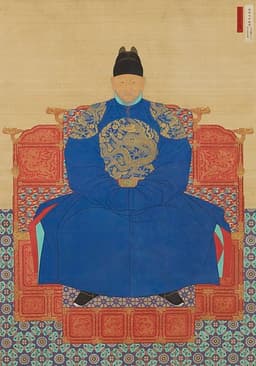
Taejo of Joseon
Emperor · Medieval
70.4Total
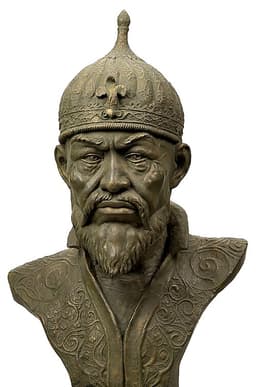
Timur
Emperor · Medieval
65.6Total
Basic Information
Born
1335
1336
Died
1408
1405
Era
Medieval
Medieval
Nationality
Korea
Timurid Empire
Occupation
Emperor
Emperor
Civilization
Eastern
Middle Eastern
Score Comparison
Military (10%)
74.7
79.0
Political (20%)
65.0
70.0
Influence (20%)
65.0
70.0
Legacy (20%)
80.0
40.0
Leadership (15%)
72.0
79.8
Strategy (15%)
61.2
77.6
TOTAL
70.4
65.6
Taejo of Joseon — Complete Timeline
1380 AD
Battle of HwangsanWar
General Yi Seong-gye defeated a Japanese pirate (wokou) force at Hwangsan. This victory enhanced his military reputation and demonstrated his capability as a commander.
WokouGoryeo Military
1388 AD
Wihwado RetreatPolitical Action
General Yi Seong-gye, ordered to invade the Ming dynasty's Liaodong region, turned his army back at Wihwado Island. This act of defiance against the Goryeo court led to a coup that eventually brought him to power.
CoupGoryeo-Ming RelationsPower Shift
Impact: national
1391 AD
Land Reform and the Gwajeon LawReform◆ Major
Taejo implemented the Gwajeon Law, a land reform that redistributed land from the old Goryeo aristocracy to his supporters and the state. This weakened the old elite and strengthened the new Joseon ruling class.
Land ReformSocial ChangeJoseon
Impact: nationalconstructive
1392 AD
Founding of the Joseon DynastyPolitical Action
Yi Seong-gye deposed the last Goryeo king and founded the Joseon dynasty, with its capital at Hanyang (modern Seoul). He established a new ruling class based on Confucian ideology, replacing the Buddhist-influenced Goryeo system.
Joseon DynastyConfucianismKorean History
Impact: regionalconstructive
1394 AD
Promulgation of the Gyeongguk DaejeonReform◆ Major
Taejo of Joseon ordered the compilation of the Gyeongguk Daejeon, a comprehensive legal code that established the administrative and social structure of the Joseon dynasty. This code remained in effect for centuries.
Legal CodeGovernanceConfucianism
Impact: nationalconstructive
Timur — Complete Timeline
1362 AD
Battle of the Terek RiverWar
Timur defeated the Mongol ruler of the Chagatai Khanate, establishing his control over Transoxiana. This victory marked the beginning of his rise to power, as he captured Samarkand and declared himself emir.
Rise to PowerBattleCentral Asia
Impact: regional
1387 AD
Conquest of PersiaWar◆ Major
Timur launched a campaign into Persia, capturing Isfahan and Shiraz. He suppressed a revolt in Isfahan by massacring tens of thousands of inhabitants, establishing his reputation for extreme brutality and consolidating control over the region.
ConquestMassacrePersia
Impact: regionaldestructive
1395 AD
Campaign against the Golden HordeWar◆ Major
Timur defeated the Golden Horde under Tokhtamysh at the Battle of the Terek River. He sacked Sarai, the Horde's capital, and destroyed its trade networks, permanently weakening the Mongol state and securing his northern frontier.
ConquestGolden HordeBattle
Impact: regionaldestructive
1398 AD
Sack of DelhiWar◆ Major
Timur invaded the Delhi Sultanate, defeating Sultan Nasir-ud-Din Mahmud Shah Tughluq. His army sacked Delhi, massacring tens of thousands of civilians and destroying the city's infrastructure, then withdrew with immense plunder.
ConquestMassacreIndia
Impact: regionaldestructive
1402 AD
Battle of AnkaraWar
Timur defeated the Ottoman Sultan Bayezid I at Ankara, capturing him. The victory shattered Ottoman power, leading to a civil war among Bayezid's sons and delaying Ottoman expansion into Europe for a decade.
BattleOttoman EmpireDecisive Victory
Impact: global
1404 AD
Construction of SamarkandCultural◆ Major
Timur invested heavily in transforming Samarkand into a cultural and architectural center. He brought artisans from conquered lands to build mosques, madrasas, and the Bibi-Khanym Mosque, making the city a showcase of Timurid art and learning.
ArchitecturePatronageCultural Center
Impact: regionalconstructive
1405 AD
Death during campaign against Ming ChinaWar◆ Major
Timur died of illness while leading a massive army toward the Ming dynasty's borders. His death ended the planned invasion of China and led to the fragmentation of his empire among his sons and grandsons.
DeathCampaignMing Dynasty
Impact: regional
Expert Analysis
Taejo of Joseon vs Timur
# The Conqueror and the Founder
In the winter of 1405, as a massive army of 200,000 men trudged toward the borders of Ming China, their commander lay dying in a tent near Otrar. Timur the Lame, the "Scourge of God," had crushed empires from Delhi to Ankara, but he could not conquer fever. Eleven years earlier, on the other side of Asia, a Korean general named Yi Seong-gye had made a decision that would change his world forever. Standing on an island in the Yalu River, he chose to turn his army around rather than invade China. One man spent his life marching forward, leaving mountains of skulls; the other knew when to stop, building a dynasty that would endure for five centuries. What made these two contemporaries—born barely a year apart—choose such different paths?
Origins
Timur was born in 1336 near Samarkand, into the Barlas tribe, a Mongol clan that had adopted Turkic language and Islam. He came of age in a world of shattered Mongol unity, where local warlords fought for scraps of Genghis Khan’s legacy. A childhood wound to his right leg and hand earned him the name *Timur-e Lang*—Timur the Lame—but also forged a relentless ambition to prove himself greater than his physical limitations. He never forgot that he was born a commoner in a world that worshipped aristocratic bloodlines.
Yi Seong-gye, born in 1335 in Hamgyong Province, was the son of a minor Goryeo official named Yi Ja-chun. His family had risen from humble origins through military service, and young Yi grew up on the northeastern frontier, where Korean and Jurchen cultures mixed. Unlike Timur, who was raised on stories of Mongol conquest, Yi absorbed Confucian teachings about duty and order. His world was one of crumbling institutions: the Goryeo dynasty had grown corrupt, its Buddhist monks wealthy, its defenses weak against Japanese pirates and Mongol pressure. Where Timur saw chaos as an opportunity, Yi saw it as a sickness to be cured.
Rise to Power
Timur’s ascent followed the logic of the steppe: he began as a bandit chief, allied with the powerful Amir Husayn, then betrayed and defeated him in 1362 at the Battle of the Terek River. This victory gave him control of Transoxiana, but he never claimed the title of khan—he was too conscious of his non-royal blood. Instead, he ruled through a puppet khan and styled himself *amir*, a general. His legitimacy came from conquest alone.
Yi Seong-gye’s rise was different. He gained fame not by betraying allies but by defending his homeland. In 1380, at the Battle of Hwangsan, he annihilated a Japanese pirate force that had terrorized Korea’s coast. His reputation grew as a general who protected the people, not one who plundered them. The turning point came in 1388, when King U of Goryeo ordered him to invade Ming China’s Liaodong region. Yi marched north, stopped at Wihwado Island, and asked his officers: should we obey a foolish king or save our country? They chose to retreat. This Wihwado Retreat was not a betrayal—it was a moral pivot. Yi refused to waste Korean lives on a hopeless war.
Leadership & Governance
Timur ruled through terror and spectacle. After conquering Isfahan in 1387, he suppressed a revolt by building towers of 70,000 human skulls. His campaigns were meticulously planned logistical nightmares, moving armies across deserts and mountains with a precision that awed even his enemies. At the Battle of Ankara in 1402, he defeated the Ottoman Sultan Bayezid I, capturing him and shattering Ottoman power for a decade. Timur’s military genius was undeniable—his scores reflect a 90 in military and 85 in strategy—but his political wisdom was crude. He conquered but could not govern; his empire was a network of tribute and fear.
Yi Seong-gye, by contrast, understood that a dynasty is built on institutions, not bones. After founding the Joseon dynasty in 1392, he moved the capital to Hanyang (modern Seoul) and implemented the Gwajeon Law in 1391, redistributing land from the old Goryeo aristocracy to his supporters. He ordered the compilation of the Gyeongguk Daejeon, a legal code that established a Confucian bureaucracy. His military score of 67.1 is lower than Timur’s, but his political score of 76.1 and leadership of 81.6 reveal a man who knew that lasting power comes from systems, not swords.
Triumph & Tragedy
Timur’s greatest triumph was the Battle of Ankara, where he captured the Ottoman sultan and humiliated a rising power. His sack of Delhi in 1398 brought him unimaginable wealth—90 captured war elephants, mountains of gold. But his tragedy was the same as his triumph: he could not stop. His final campaign, against the Ming dynasty, was a march into the unknown. He died of illness in 1405, his army stranded, his invasion aborted. He left no successor, only quarreling sons and grandsons who tore his empire apart within decades.
Yi Seong-gye’s triumph was the creation of Joseon itself, a dynasty that would rule Korea until 1910. His tragedy was personal: he abdicated in 1398 after a bloody succession struggle between his sons. His fifth son, Yi Bang-won, murdered his own half-brothers to secure power. The founder lived his final years watching his family tear itself apart, a Confucian father who had built a Confucian state but could not control his own house.
Character & Destiny
Timur’s character was shaped by his lameness and his illegitimacy. He compensated with cruelty and grandeur, building Samarkand into a wonder of the world—its turquoise domes, its astronomers, its artisans kidnapped from conquered cities. He was a patron of culture and a monster, a man who wept at poetry while ordering massacres. His destiny was to be remembered as a force of nature, a "Scourge of God" in the European imagination.
Yi Seong-gye’s character was defined by restraint. He could have become a warlord, but he chose to be a reformer. He could have invaded China, but he chose to build a wall. His Confucian values gave him a framework for power that Timur lacked: he knew that a ruler’s duty is to serve the people, not his own ambition. His destiny was to be remembered as a founder, not a destroyer.
Legacy
Timur’s legacy is ambiguous. His empire collapsed, but his descendants—including Babur, who founded the Mughal dynasty in India—carried his bloodline across centuries. Samarkand remains a monument to his ambition. Yet his name is synonymous with destruction: historians estimate his campaigns killed 17 million people. His scores reflect this: 65 in both influence and legacy, a conqueror who shook the world but built nothing that outlasted his own death.
Yi Seong-gye’s legacy is clear. Joseon lasted 518 years, leaving Korea with its Confucian bureaucracy, its Hangul alphabet (developed under his grandson Sejong the Great), and its capital Seoul. His political score of 76.1 and legacy score of 85.0 speak to a man who understood that true power is not the fear you inspire but the order you leave behind.
Conclusion
Timur and Yi Seong-gye were born a year apart, both rose from modest origins, both faced the temptation of endless conquest. One chose to build towers of skulls; the other chose to build a nation. Their lives ask a haunting question: what makes a leader great? Is it the size of the empire he conquers, or the length of the dynasty he founds? Timur’s name echoes through history as a thunderclap; Yi’s name is written in the laws and streets of a country that still exists. Perhaps the most profound difference between them is this: Timur died trying to reach China, while Yi died having already built a Korea that would outlast every empire he never invaded.
Rankings
🥇
Taejo of JoseonLeader
Mil: 74.7Pol: 65.0Inf: 65.0
70.4
🥈
Timur
Mil: 79.0Pol: 70.0Inf: 70.0
65.6
+4.8 behind
How This Comparison Works
Algorithm
Each figure is scored on 6 dimensions (0—100 scale) based on structured historical data: Military (10%), Political (20%), Influence (20%), Legacy (20%), Leadership (15%), Strategy (15%). The weighted total produces the final ranking.
Data Sources
Scores are computed from structured sub-indicators in the database. Scale factors adjust for era (Ancient ×0.85, Modern ×1.0) and civilization size (Eastern ×1.05, Other ×0.80) to account for differences in population and military scale.
Maximum 3 Figures
Comparisons are limited to 2—3 figures to ensure readability and statistical meaningfulness.
Error Margins
±5 points per dimension — Sub-scores are derived from historical records with inherent uncertainty. Two figures within 5 points on a dimension should be considered roughly equivalent in that area.
Total Score Accuracy
±3 points overall — The weighted combination of 6 dimensions produces a total score with approximately ±3 points of uncertainty. Differences of less than 3 points are not statistically significant— the figures are effectively tied.
Known Limitations
- Historical records are incomplete and uneven across civilizations
- Figures from oral-tradition societies may be underrepresented
- Occupation labels can misclassify multi-role figures
- Scores measure capability and impact, not moral character
- Quantitative scoring is a comparison tool, not absolute truth
Capability Radar
Military (10%) — Battles & Warfare
Battles
75
95
Win Rate
80
92
Expansion
65
96
Political (20%) — Governance & Reform
Reform
85
78
Diplomacy
70
70
Economy
65
82
Influence (20%) — Cultural & Global Reach
Cultural
80
88
Global
60
85
Legacy (20%) — Historical Impact
Historical
85
90
Longevity
80
75
Leadership (15%) — Power & Stability
Tenure
70
85
Stability
75
65
Strategy (15%) — Tactics & Innovation
Strategy
75
93
Tactics
70
94
Reform
60
80
Similar Comparisons
Comments & Discussion
The Skull Collector6/16/2026
Timur’s body count is staggering—Delhi saw 100,000 prisoners executed before a single battle. But what’s the point of conquest if you can’t hold land? He burned cities faster than he could build them, while Yi Seong-gye understood that founding a dynasty requires more than just blood—you need bureaucracy, tax records, and loyal officials. Timur ruled in terror, but terror dies with the tyrant. Yi’s Joseon outlived his bones by 500 years. Who’s the real conqueror?
折戟之锤6/16/2026
拿中亚的草原骑兵和半岛的山地弓箭手比?笑死人了。Yi Seong-gye的威化岛回军不过是政治作秀,他明明想和明朝开战,只是发现鞑靼人先动手了才假装高尚。Timur至少真会撕碎你,韩国将军只会玩儒家式的公关。别拿节俭当德性,统治者的本质是一样的——看谁手里的刀更利。
Data Skeptic6/16/2026
Let’s talk numbers: “200,000 men”? Timur’s army probably numbered 80,000 at best. Medieval chroniclers loved inflating troop counts to make their patrons look epic. Meanwhile, Yi’s population records show Joseon had maybe 3 million people in 1400—he couldn’t have fielded more than 30,000 at Wihwado. Comparing them on “territory conquered” is absurd when one fought in steppe logistics and the other in Korean hill warfare. Different games entirely.
古卷校对员6/16/2026
Timur把伊尔汗国的金印熔了重铸,Yi Seong-gye却跪着接过明朝的册封。一个烧掉整个阿勒颇,一个在景福宫里修书院。你们说他俩是同时代的征服者?Timur是蒙古体系的掘墓人,Yi是儒学官僚的重塑师。前者用马蹄丈量世界,后者用墨斗丈量人心。谁更"伟大"?不过是野蛮人和书生的区别。
History Buff6/16/2026
Fun fact: both men died during winter campaigns—Timur in February 1405, Yi in June 1408 (after abdicating). But the real contrast is their legacies. Timur’s empire shattered within a century; his descendants bickered while the Mughals, Safavids, and Uzbeks carved it up. Yi’s Joseon, thanks to his merger of Confucian ideals with military power, kept Korea stable for 518 years. One built a sandcastle at high tide, the other a lighthouse. Patience outlasts fury.