Loading...
Subutai vs Thomas Randolph
Subutai leads by 8.2 pts · 2 figures compared
…
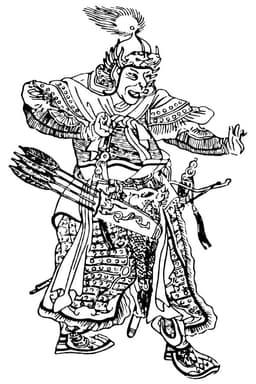
Subutai
General · Medieval
67.6Total

Thomas Randolph
General · Medieval
59.4Total
Basic Information
Born
1175
1278
Died
1248
1332
Era
Medieval
Medieval
Nationality
Mongol Empire
Scotland
Occupation
General
General
Civilization
Eastern
Western
Score Comparison
Military (10%)
88.0
74.7
Political (20%)
68.0
68.0
Influence (20%)
62.0
51.0
Legacy (20%)
55.0
45.8
Leadership (15%)
70.0
73.2
Strategy (15%)
88.9
65.4
TOTAL
67.6
59.4
Subutai — Complete Timeline
1220 AD
The Great Raid (with Jebe)War◆ Major
Subutai and Jebe led a 20,000-man army on a reconnaissance-in-force through the Caucasus and into the Russian steppes. They defeated a coalition of Rus' princes at the Battle of the Kalka River in 1223, demonstrating Mongol military reach.
CaucasusKalka RiverRus'
Impact: regional
1221 AD
Battle of the Indus RiverWar◆ Major
Subutai commanded the Mongol army that defeated the Khwarezmian forces of Jalal al-Din at the Indus River. The victory destroyed the last major resistance in the Khwarezmian Empire, allowing the Mongols to control Persia and Central Asia.
Khwarezmian EmpireJalal al-DinCentral Asia
Impact: global
1234 AD
Conquest of the Jin DynastyWar◆ Major
Subutai served as the primary commander in the final campaign against the Jin Dynasty of northern China. He directed the siege of Kaifeng and the capture of the Jin emperor, completing the Mongol conquest of northern China.
Jin DynastyChinaSiege of Kaifeng
Impact: global
1241 AD
Battle of MohiWar◆ Major
Subutai led the Mongol invasion of Hungary, defeating King B
Mongol Invasion of EuropeHungaryBéla IV
Impact: regional
Battle of LegnicaWar
While Subutai commanded the main army in Hungary, a Mongol detachment under his overall strategy defeated a Polish-German army at Legnica. The victory eliminated the Polish threat and secured the Mongols' northern flank during the invasion of Hungary.
PolandLegnicaMongol Invasion of Europe
Impact: regional
Thomas Randolph — Complete Timeline
1314 AD
Battle of BannockburnWar
Randolph commanded a schiltron (spear formation) at Bannockburn, holding the left flank against English cavalry. His steadfast defense helped secure the Scottish victory over Edward II.
BattleScottish IndependenceVictory
Impact: national
Capture of Edinburgh CastleWar◆ Major
Randolph led a night assault on Edinburgh Castle, scaling the rock with a small force. The capture of this strategic fortress from the English was a major achievement in the Wars of Independence.
SiegeCastleScottish Independence
Impact: national
1319 AD
Battle of MytonWar
Randolph defeated an English army at Myton-on-Swale, Yorkshire, in a battle known as the 'Chapter of Myton'. The English force, composed largely of clergy and militia, was routed, securing the Scottish border.
BattleBorder WarfareVictory
Impact: regional
1328 AD
Treaty of Edinburgh–NorthamptonPolitical Action
Randolph, as regent of Scotland, negotiated and signed the Treaty of Edinburgh
TreatyDiplomacyIndependence
Impact: nationalconstructive
1329 AD
Regency of ScotlandPolitical Action◆ Major
After the death of Robert the Bruce, Randolph became regent of Scotland for the infant King David II. He governed Scotland effectively, maintaining peace and stability during the early years of David II's reign.
RegencyGovernmentLeadership
Impact: nationalconstructive
Expert Analysis
Origins
Subutai (c. 1175–1248) was born into the Uriankhai clan of reindeer herders in the Siberian steppes. He joined Genghis Khan's service as a teenager, quickly rising due to his tactical acumen. His early experiences in nomadic warfare shaped his mastery of mobility and encirclement. Thomas Randolph (c. 1285–1332) was born into the Scottish nobility, a nephew of Robert the Bruce. He was initially a supporter of the Bruces but later captured by the English and switched sides temporarily before returning to the Bruce cause. His early military training came from the Scottish wars of independence.
Rise to Power
Subutai's rise began with his appointment as a commander of a tümen (10,000 men) under Genghis Khan. He proved himself in the conquest of the Khwarezmian Empire (1219–1221), particularly at the Battle of the Indus River (1221) where he defeated Jalal al-Din. His most famous independent command was the Great Raid (1220–1223) with Jebe, where a force of 20,000 Mongols swept through the Caucasus and defeated a Rus'-Kipchak coalition at the Battle of the Kalka River (1223). Thomas Randolph's rise came through his loyalty to Robert the Bruce. He was captured at the Battle of Methven (1306) and forced to switch allegiance, but later returned to Bruce. His key turning point was the capture of Edinburgh Castle (1314) via a night assault, which boosted his reputation. At Bannockburn (1314), he commanded the left flank, holding off English cavalry with his schiltron.
Leadership & Governance
Subutai's leadership style was characterized by delegation and strategic vision. He commanded through a system of trusted subordinates and used sophisticated intelligence networks. His governance approach was purely military; he did not administer conquered territories but left that to Mongol governors. In contrast, Thomas Randolph became regent of Scotland (1329–1332) after Bruce's death, governing effectively. He negotiated the Treaty of Edinburgh–Northampton (1328), which recognized Scotland's independence. Subutai's military score of 88.0 far exceeds Randolph's 74.7, reflecting his unmatched conquests. However, Randolph's political score (68.0) matches Subutai's, demonstrating his diplomatic skills.
Triumph & Tragedy
Subutai's greatest triumphs include the conquest of the Jin Dynasty (1234), where he directed the siege of Kaifeng, and the Battle of Mohi (1241), where he annihilated the Hungarian army. His greatest failure was the inability to conquer Western Europe due to the death of Ögedei Khan (1241), which forced a withdrawal. Randolph's triumphs include the capture of Edinburgh Castle (1314) and the Battle of Myton (1319), where he defeated an English army. His greatest failure was his early capture and temporary defection to the English, which stained his loyalty. As regent, he maintained peace but faced internal strife.
Character & Destiny
Subutai was known for his calculated ruthlessness and strategic patience. He often used feigned retreats and encirclements, as at Mohi. His character of relentless pursuit shaped his destiny to conquer vast territories. Randolph was brave but politically pragmatic, as shown by his negotiated treaty. His destiny was to safeguard Scotland's independence, but his early death in 1332 led to instability. Subutai's strategy score of 88.9 dwarfs Randolph's 65.4, illustrating his superior tactical genius.
Legacy
Subutai's legacy lies in his military innovations, which influenced later Mongol campaigns and were studied by modern strategists. He conquered more territory than any other commander in history, including parts of China, Central Asia, and Eastern Europe. Randolph's legacy is as a guardian of Scottish independence. The Treaty of Edinburgh–Northampton ended the First War of Scottish Independence. His regency maintained stability, but his death led to the Second War. Subutai's influence score of 62.0 is higher than Randolph's 51.0, reflecting his global impact.
Conclusion
Subutai had greater impact than Thomas Randolph. His military achievements (88.0 vs 74.7) and strategic mastery (88.9 vs 65.4) transformed world history, enabling the Mongol Empire to become the largest contiguous land empire. Randolph's contributions were vital to Scotland but limited in scope. Subutai's total score of 67.6 exceeds Randolph's 59.4, a clear 8.2-point gap. While Randolph secured Scottish independence, Subutai reshaped Eurasia.
Rankings
🥇
SubutaiLeader
Mil: 88.0Pol: 68.0Inf: 62.0
67.6
🥈
Thomas Randolph
Mil: 74.7Pol: 68.0Inf: 51.0
59.4
+8.2 behind
How This Comparison Works
Algorithm
Each figure is scored on 6 dimensions (0—100 scale) based on structured historical data: Military (10%), Political (20%), Influence (20%), Legacy (20%), Leadership (15%), Strategy (15%). The weighted total produces the final ranking.
Data Sources
Scores are computed from structured sub-indicators in the database. Scale factors adjust for era (Ancient ×0.85, Modern ×1.0) and civilization size (Eastern ×1.05, Other ×0.80) to account for differences in population and military scale.
Maximum 3 Figures
Comparisons are limited to 2—3 figures to ensure readability and statistical meaningfulness.
Error Margins
±5 points per dimension — Sub-scores are derived from historical records with inherent uncertainty. Two figures within 5 points on a dimension should be considered roughly equivalent in that area.
Total Score Accuracy
±3 points overall — The weighted combination of 6 dimensions produces a total score with approximately ±3 points of uncertainty. Differences of less than 3 points are not statistically significant— the figures are effectively tied.
Known Limitations
- Historical records are incomplete and uneven across civilizations
- Figures from oral-tradition societies may be underrepresented
- Occupation labels can misclassify multi-role figures
- Scores measure capability and impact, not moral character
- Quantitative scoring is a comparison tool, not absolute truth
Capability Radar
Military (10%) — Battles & Warfare
Battles
95
65
Win Rate
98
70
Expansion
98
55
Political (20%) — Governance & Reform
Reform
60
55
Diplomacy
75
65
Economy
55
50
Influence (20%) — Cultural & Global Reach
Cultural
60
45
Global
80
40
Legacy (20%) — Historical Impact
Historical
85
55
Longevity
75
50
Leadership (15%) — Power & Stability
Tenure
70
60
Stability
65
58
Strategy (15%) — Tactics & Innovation
Strategy
99
72
Tactics
97
68
Reform
85
40
Similar Comparisons
Comments & Discussion
No comments yet. Be the first to share your thoughts!