Loading...
Bohemond I of Antioch vs Subutai
Subutai leads by 12.4 pts · 2 figures compared
…
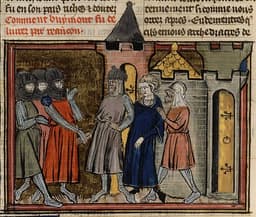
Bohemond I of Antioch
General · Medieval
55.2Total
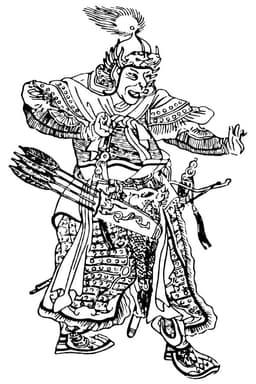
Subutai
General · Medieval
67.6Total
Basic Information
Born
1054
1175
Died
1111
1248
Era
Medieval
Medieval
Nationality
Italy
Mongol Empire
Occupation
General
General
Civilization
Western
Eastern
Score Comparison
Military (10%)
76.0
88.0
Political (20%)
45.1
68.0
Influence (20%)
53.3
62.0
Legacy (20%)
46.7
55.0
Leadership (15%)
61.1
70.0
Strategy (15%)
66.3
88.9
TOTAL
55.2
67.6
Bohemond I of Antioch — Complete Timeline
1098 AD
Capture of AntiochWar
Bohemond led the capture of Antioch during the First Crusade. He negotiated with a traitor inside the city to open a gate, allowing the crusaders to enter. He then claimed the city for himself, becoming Prince of Antioch.
CrusadeSiegeCrusader States
Impact: regional
1104 AD
Battle of HarranWar◆ Major
Bohemond and Baldwin of Edessa were defeated by a combined Seljuk force at the Battle of Harran. Bohemond was captured and held for ransom, weakening the Principality of Antioch.
Crusader StatesBattleDefeat
Impact: regionaltragic
1107 AD
Campaign against the Byzantine EmpireWar◆ Major
After his release, Bohemond launched a campaign against the Byzantine Empire, besieging Dyrrhachium. He was forced to surrender in 1108 and sign the Treaty of Devol, which made Antioch a vassal of Byzantium.
Byzantine EmpireWarTreaty
Impact: regional
1108 AD
Treaty of DevolPolitical Action◆ Major
Bohemond signed the Treaty of Devol with Byzantine Emperor Alexios I Komnenos. The treaty recognized Bohemond as Prince of Antioch but made him a vassal of the Byzantine Empire, a humiliation that ended his ambitions.
TreatyByzantine EmpireCrusader States
Impact: regional
Subutai — Complete Timeline
1220 AD
The Great Raid (with Jebe)War◆ Major
Subutai and Jebe led a 20,000-man army on a reconnaissance-in-force through the Caucasus and into the Russian steppes. They defeated a coalition of Rus' princes at the Battle of the Kalka River in 1223, demonstrating Mongol military reach.
CaucasusKalka RiverRus'
Impact: regional
1221 AD
Battle of the Indus RiverWar◆ Major
Subutai commanded the Mongol army that defeated the Khwarezmian forces of Jalal al-Din at the Indus River. The victory destroyed the last major resistance in the Khwarezmian Empire, allowing the Mongols to control Persia and Central Asia.
Khwarezmian EmpireJalal al-DinCentral Asia
Impact: global
1234 AD
Conquest of the Jin DynastyWar◆ Major
Subutai served as the primary commander in the final campaign against the Jin Dynasty of northern China. He directed the siege of Kaifeng and the capture of the Jin emperor, completing the Mongol conquest of northern China.
Jin DynastyChinaSiege of Kaifeng
Impact: global
1241 AD
Battle of MohiWar◆ Major
Subutai led the Mongol invasion of Hungary, defeating King B
Mongol Invasion of EuropeHungaryBéla IV
Impact: regional
Battle of LegnicaWar
While Subutai commanded the main army in Hungary, a Mongol detachment under his overall strategy defeated a Polish-German army at Legnica. The victory eliminated the Polish threat and secured the Mongols' northern flank during the invasion of Hungary.
PolandLegnicaMongol Invasion of Europe
Impact: regional
Expert Analysis
Origins
Bohemond I of Antioch was born in 1054 in southern Italy, the eldest son of Robert Guiscard, the Norman Duke of Apulia and Calabria. His family was part of the Norman expansion into Byzantine territories. Bohemond's early life was shaped by warfare against the Byzantine Empire, where he gained military experience under his father. He was tall, blond, and charismatic, but his inheritance was limited, driving him to seek fortune in the East.
Subutai was born around 1175 in Mongolia, likely of the Uriankhai clan, a reindeer-herding people. He joined Genghis Khan as a teenager and quickly rose through the ranks due to his tactical genius. Unlike Bohemond, Subutai came from a non-noble background, but his skills in warfare and loyalty earned him a position as one of Genghis Khan's most trusted generals. He was illiterate but possessed a photographic memory for terrain and troop movements.
Rise to Power
Bohemond's rise began with the First Crusade in 1096. He joined the crusade after Pope Urban II's call, seeing an opportunity to carve out his own principality. His military reputation preceded him, and he quickly became a leader among the crusaders. The turning point was the Siege of Antioch (1097-1098). Bohemond negotiated with a traitor inside the city, Firouz, an Armenian guard, who opened the gates in June 1098. The crusaders captured Antioch, but were then besieged by a Muslim relief army. Bohemond led a sortie that defeated the enemy, securing his control over the city. He proclaimed himself Prince of Antioch in 1099, despite oaths to the Byzantine Emperor.
Subutai's rise was under Genghis Khan. He first distinguished himself in the campaign against the Merkits (1204-1208). His strategic brilliance was recognized, and he was appointed as a commander of a tumen (10,000 men). His major breakthrough came during the conquest of the Khwarezmian Empire (1219-1221). Subutai and Jebe led a 20,000-man army on a diversionary raid through the Caucasus, defeating the Georgians and then a coalition of Russian princes at the Battle of the Kalka River (1223). This raid, known as the Great Raid, covered over 8,000 kilometers and demonstrated his ability to operate independently.
Leadership & Governance
Bohemond's leadership style was aggressive and opportunistic. He was a skilled field commander but often prioritized personal gain over strategic objectives. As Prince of Antioch, he focused on expanding his territory, often at the expense of alliances. His governance was typical of Norman feudalism, with a strong emphasis on military control. He imposed heavy taxes to fund his campaigns, leading to discontent among his subjects. His diplomatic skills were weak; he alienated the Byzantine Empire, resulting in the Treaty of Devol (1108), which made Antioch a vassal state under Byzantine suzerainty.
Subutai's leadership was methodical and disciplined. He was known for his meticulous planning and use of intelligence. He commanded through a system of delegated command, allowing subordinates flexibility. His governance was minimal, as the Mongols typically left local rulers in place as long as they paid tribute. He was instrumental in developing the Mongol war machine, emphasizing mobility, coordination, and psychological warfare. Subutai's political acumen was higher than Bohemond's, as he navigated the complex Mongol court and served under multiple khans.
Triumph & Tragedy
Bohemond's greatest triumph was the capture of Antioch, which established him as a major crusader prince. He also successfully defended the city against a counter-siege. However, his greatest failure was the Battle of Harran (1104), where he and Baldwin of Edessa were defeated by the Seljuks. Bohemond was captured and held for ransom for three years, crippling his principality. His subsequent campaign against the Byzantine Empire (1107-1108) ended in defeat, forcing him to sign the humiliating Treaty of Devol. He died in 1111 in Apulia, having failed to expand his power.
Subutai's triumphs were numerous. He conquered the Jin Dynasty (1234), capturing Kaifeng and ending the dynasty. He also led the invasion of Europe (1241-1242), crushing the Hungarian army at the Battle of Mohi and a Polish-German army at Legnica. His strategy of feigned retreat and encirclement was devastating. However, his greatest failure was the withdrawal from Europe after the death of Ögedei Khan in 1241, which prevented a full conquest. Also, his campaigns in the Caucasus and against the Bulgars faced logistical challenges, though he adapted well.
Character & Destiny
Bohemond was ambitious, bold, and charismatic, but also rash and greedy. His decision to break his oath to the Byzantine Emperor soured relations and led to his eventual defeat. His personality was suited for a short-term conqueror but not a long-term ruler. He scored 45.1 in political skills, reflecting his inability to build lasting alliances. His military score of 76.0 shows competence but not genius.
Subutai was patient, calculating, and ruthless. He was a master of strategy (scoring 88.9) and logistics. His ability to coordinate multiple armies across vast distances was unparalleled. He served under Genghis, Ögedei, and Güyük khans, adapting to changing political landscapes. His character was that of a consummate professional soldier, focused on mission success. His leadership score of 70.0 reflects his effectiveness in commanding large armies.
Legacy
Bohemond's legacy is mixed. He is remembered as a key figure of the First Crusade and the founder of the Principality of Antioch, which lasted until 1268. However, his principality remained a vassal of Byzantium, limiting its independence. His influence on subsequent crusades was minimal. His legacy score of 46.7 reflects this limited impact.
Subutai's legacy is immense. He is considered one of the greatest military commanders in history, having conquered more territory than any other general. His tactics and strategies influenced later Mongol campaigns and were studied by modern military leaders. The Mongol Empire's expansion under his command reshaped Eurasia, from China to Europe. His influence score of 62.0 and legacy score of 55.0 are modest compared to his achievements, partly because history often credits Genghis Khan. Nonetheless, his military innovations in mobility and combined arms were centuries ahead of their time.
Conclusion
Subutai had a greater impact than Bohemond I. Subutai's total score of 67.6 significantly exceeds Bohemond's 55.2, a gap of 12.4 points. Subutai's military and strategic scores (88.0 and 88.9) dwarf Bohemond's (76.0 and 66.3). While Bohemond captured one city, Subutai conquered entire empires and changed the course of history across two continents. Subutai's legacy in military tactics continues to be studied, whereas Bohemond's principality was a footnote in crusader history. Therefore, Subutai is the more consequential figure.
Rankings
🥇
SubutaiLeader
Mil: 88.0Pol: 68.0Inf: 62.0
67.6
🥈
Bohemond I of Antioch
Mil: 76.0Pol: 45.1Inf: 53.3
55.2
+12.4 behind
How This Comparison Works
Algorithm
Each figure is scored on 6 dimensions (0—100 scale) based on structured historical data: Military (10%), Political (20%), Influence (20%), Legacy (20%), Leadership (15%), Strategy (15%). The weighted total produces the final ranking.
Data Sources
Scores are computed from structured sub-indicators in the database. Scale factors adjust for era (Ancient ×0.85, Modern ×1.0) and civilization size (Eastern ×1.05, Other ×0.80) to account for differences in population and military scale.
Maximum 3 Figures
Comparisons are limited to 2—3 figures to ensure readability and statistical meaningfulness.
Error Margins
±5 points per dimension — Sub-scores are derived from historical records with inherent uncertainty. Two figures within 5 points on a dimension should be considered roughly equivalent in that area.
Total Score Accuracy
±3 points overall — The weighted combination of 6 dimensions produces a total score with approximately ±3 points of uncertainty. Differences of less than 3 points are not statistically significant— the figures are effectively tied.
Known Limitations
- Historical records are incomplete and uneven across civilizations
- Figures from oral-tradition societies may be underrepresented
- Occupation labels can misclassify multi-role figures
- Scores measure capability and impact, not moral character
- Quantitative scoring is a comparison tool, not absolute truth
Capability Radar
Military (10%) — Battles & Warfare
Battles
75
95
Win Rate
70
98
Expansion
65
98
Political (20%) — Governance & Reform
Reform
40
60
Diplomacy
65
75
Economy
35
55
Influence (20%) — Cultural & Global Reach
Cultural
45
60
Global
45
80
Legacy (20%) — Historical Impact
Historical
60
85
Longevity
50
75
Leadership (15%) — Power & Stability
Tenure
55
70
Stability
30
65
Strategy (15%) — Tactics & Innovation
Strategy
75
99
Tactics
80
97
Reform
30
85
Similar Comparisons
Comments & Discussion
No comments yet. Be the first to share your thoughts!