Loading...
Li Keyong vs Thomas Randolph
Thomas Randolph leads by 5.8 pts · 2 figures compared
…
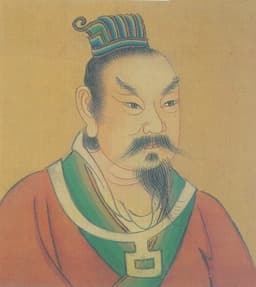
Li Keyong
General · Medieval
53.6Total

Thomas Randolph
General · Medieval
59.4Total
Basic Information
Born
856
1278
Died
908
1332
Era
Medieval
Medieval
Nationality
China
Scotland
Occupation
General
General
Civilization
Eastern
Western
Score Comparison
Military (10%)
76.0
74.7
Political (20%)
39.4
68.0
Influence (20%)
51.0
51.0
Legacy (20%)
44.2
45.8
Leadership (15%)
65.0
73.2
Strategy (15%)
65.4
65.4
TOTAL
53.6
59.4
Li Keyong — Complete Timeline
883 AD
Became Prince of JinPolitical Action◆ Major
Li Keyong was appointed Prince of Jin by the Tang court for his role in suppressing the Huang Chao rebellion. He established a power base in Shanxi and became a major warlord during the late Tang period.
AppointmentWarlordTang Dynasty
Impact: regionalconstructive
901 AD
Defeated by Zhu Wen at the Battle of the Yellow RiverWar◆ Major
Li Keyong was defeated by the forces of Zhu Wen (later Emperor Taizu of Later Liang) at the Yellow River. This defeat weakened his position and allowed Zhu Wen to dominate the Central Plains.
BattleDefeatZhu Wen
Impact: regionaldestructive
908 AD
Death from illnessOther◆ Major
Li Keyong died of illness. His son Li Cunxu succeeded him and later founded the Later Tang dynasty, fulfilling Li Keyong's ambition to restore Tang rule.
DeathSuccessionLater Tang
Impact: regionaltragic
Thomas Randolph — Complete Timeline
1314 AD
Battle of BannockburnWar
Randolph commanded a schiltron (spear formation) at Bannockburn, holding the left flank against English cavalry. His steadfast defense helped secure the Scottish victory over Edward II.
BattleScottish IndependenceVictory
Impact: national
Capture of Edinburgh CastleWar◆ Major
Randolph led a night assault on Edinburgh Castle, scaling the rock with a small force. The capture of this strategic fortress from the English was a major achievement in the Wars of Independence.
SiegeCastleScottish Independence
Impact: national
1319 AD
Battle of MytonWar
Randolph defeated an English army at Myton-on-Swale, Yorkshire, in a battle known as the 'Chapter of Myton'. The English force, composed largely of clergy and militia, was routed, securing the Scottish border.
BattleBorder WarfareVictory
Impact: regional
1328 AD
Treaty of Edinburgh–NorthamptonPolitical Action
Randolph, as regent of Scotland, negotiated and signed the Treaty of Edinburgh
TreatyDiplomacyIndependence
Impact: nationalconstructive
1329 AD
Regency of ScotlandPolitical Action◆ Major
After the death of Robert the Bruce, Randolph became regent of Scotland for the infant King David II. He governed Scotland effectively, maintaining peace and stability during the early years of David II's reign.
RegencyGovernmentLeadership
Impact: nationalconstructive
Expert Analysis
Origins
Li Keyong (856-908) was born into the Shatuo Turk tribe, a group that had migrated into northern China. His father, Li Guochang, was a general under the Tang dynasty. Li Keyong inherited his father's military command and was known for his distinctive eyesight—he could see in the dark—earning him the nickname "Dragon Eyes." He was illiterate but possessed a sharp tactical mind.
Thomas Randolph (c. 1285-1332) was born in Scotland, the son of a minor noble. He was a nephew of Robert the Bruce, though the exact relationship is debated. Randolph grew up in the shadow of the Scottish Wars of Independence and initially fought on the side of the English before switching allegiance to Bruce after being captured and persuaded.
Rise to Power
Li Keyong rose to prominence by suppressing the Huang Chao Rebellion in 882-884. For his service, the Tang court appointed him Prince of Jin in 895, granting him control over Shanxi. He amassed a loyal army of Shatuo cavalry and became a major power broker during the Tang collapse. His rivalry with Zhu Wen defined his later years, culminating in the Battle of the Yellow River in 901, where he was defeated.
Thomas Randolph rose through his kinship with Robert the Bruce. After Bannockburn in 1314, where he commanded a schiltron on the left flank, Bruce entrusted him with key military missions. He captured Edinburgh Castle in 1314 via a night assault, scaling the rock with a small force. By 1320, he was a leading diplomat, negotiating the Treaty of Edinburgh–Northampton in 1328, which recognized Scottish independence. Upon Bruce's death in 1329, Randolph became regent for the infant David II.
Leadership & Governance
Li Keyong governed his territory as a warlord, relying on personal loyalty and military force. He maintained a feudal structure with his Shatuo warriors as the elite. He attempted to restore Tang rule but failed to build a stable administration. His leadership score is 65.0, reflecting his tactical skill but poor governance.
Thomas Randolph, as regent, demonstrated political acumen with a score of 68.0. He maintained peace with England after the treaty, managed internal factions, and upheld Bruce's legacy. He defeated an English invasion at the Battle of Myton in 1319, called the "Chapter of Myton" because many English clergy were killed. His governance was effective but short-lived, as he died in 1332 during the Second War of Scottish Independence.
Triumph & Tragedy
Li Keyong's greatest success was establishing a power base in Shanxi that enabled his son to found the Later Tang dynasty. His tragedy was his defeat by Zhu Wen and his failure to restore the Tang. He died of illness in 908, leaving his ambitions unfulfilled. His military score is 76.0, but his political score is only 39.4.
Thomas Randolph's triumphs include Bannockburn, capturing Edinburgh Castle, and negotiating Scottish independence. His tragedy is that his regency ended with his death in battle at the Battle of Dupplin Moor in 1332, where he was defeated by Edward Balliol. His military score is 74.7, close to Li Keyong's, but his political score is much higher at 68.0.
Character & Destiny
Li Keyong was a fierce warrior known for his personal courage and loyalty to the Tang dynasty. He was superstitious and relied on omens. His character was shaped by his tribal background, leading to a focus on personal bonds over institutions. This limited his political effectiveness.
Thomas Randolph was pragmatic and disciplined. He switched sides from the English to the Scottish cause, showing adaptability. He was a skilled diplomat and administrator, as seen in his regency. His loyalty to Bruce was unwavering, but his early death cut short his potential.
Legacy
Li Keyong's legacy is primarily through his son Li Cunxu, who founded the Later Tang dynasty in 923. He is remembered as a founding father of the Shatuo dynasties in northern China. His military tactics influenced later Chinese warfare.
Thomas Randolph is remembered as a key figure in Scottish independence. The Treaty of Edinburgh–Northampton was a diplomatic triumph that secured Scotland's sovereignty for decades. His capture of Edinburgh Castle became a symbol of Scottish resistance. He is honored in Scottish history as a loyal regent.
Conclusion
Thomas Randolph had a greater overall impact than Li Keyong, with a total score of 59.4 versus 53.6. While Li Keyong's military achievements (76.0) slightly edged Randolph's (74.7), Randolph's political and leadership scores (68.0 and 73.2) far exceeded Li Keyong's (39.4 and 65.0). Randolph's diplomatic success in securing Scottish independence had lasting consequences, whereas Li Keyong's ambition was only realized posthumously by his son. Randolph's legacy is more directly tied to a nation's survival, while Li Keyong's impact was more localized and fleeting.
Rankings
🥇
Thomas RandolphLeader
Mil: 74.7Pol: 68.0Inf: 51.0
59.4
🥈
Li Keyong
Mil: 76.0Pol: 39.4Inf: 51.0
53.6
+5.8 behind
How This Comparison Works
Algorithm
Each figure is scored on 6 dimensions (0—100 scale) based on structured historical data: Military (10%), Political (20%), Influence (20%), Legacy (20%), Leadership (15%), Strategy (15%). The weighted total produces the final ranking.
Data Sources
Scores are computed from structured sub-indicators in the database. Scale factors adjust for era (Ancient ×0.85, Modern ×1.0) and civilization size (Eastern ×1.05, Other ×0.80) to account for differences in population and military scale.
Maximum 3 Figures
Comparisons are limited to 2—3 figures to ensure readability and statistical meaningfulness.
Error Margins
±5 points per dimension — Sub-scores are derived from historical records with inherent uncertainty. Two figures within 5 points on a dimension should be considered roughly equivalent in that area.
Total Score Accuracy
±3 points overall — The weighted combination of 6 dimensions produces a total score with approximately ±3 points of uncertainty. Differences of less than 3 points are not statistically significant— the figures are effectively tied.
Known Limitations
- Historical records are incomplete and uneven across civilizations
- Figures from oral-tradition societies may be underrepresented
- Occupation labels can misclassify multi-role figures
- Scores measure capability and impact, not moral character
- Quantitative scoring is a comparison tool, not absolute truth
Capability Radar
Military (10%) — Battles & Warfare
Battles
75
65
Win Rate
70
70
Expansion
65
55
Political (20%) — Governance & Reform
Reform
35
55
Diplomacy
55
65
Economy
30
50
Influence (20%) — Cultural & Global Reach
Cultural
45
45
Global
30
40
Legacy (20%) — Historical Impact
Historical
55
55
Longevity
40
50
Leadership (15%) — Power & Stability
Tenure
60
60
Stability
40
58
Strategy (15%) — Tactics & Innovation
Strategy
68
72
Tactics
72
68
Reform
40
40
Similar Comparisons
Comments & Discussion
No comments yet. Be the first to share your thoughts!