Loading...
Baiju vs Subutai
Subutai leads by 17.1 pts · 2 figures compared
…

Baiju
General · Medieval
50.5Total
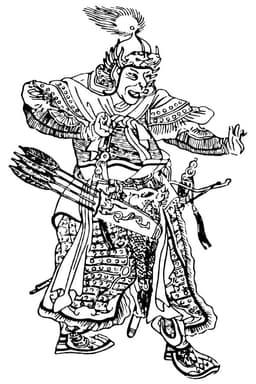
Subutai
General · Medieval
67.6Total
Basic Information
Born
1201
1175
Died
1260
1248
Era
Medieval
Medieval
Nationality
Mongol Empire
Mongol Empire
Occupation
General
General
Civilization
Eastern
Eastern
Score Comparison
Military (10%)
67.3
88.0
Political (20%)
30.8
68.0
Influence (20%)
54.1
62.0
Legacy (20%)
43.3
55.0
Leadership (15%)
54.2
70.0
Strategy (15%)
66.3
88.9
TOTAL
50.5
67.6
Baiju — Complete Timeline
1242 AD
Invasion of the Sultanate of RumWar
Baiju led a Mongol invasion of the Seljuk Sultanate of Rum after the Seljuks failed to pay tribute. He captured the city of Erzurum and devastated the region, forcing the Seljuk sultan Kaykhusraw II to prepare for a decisive battle.
ErzurumKaykhusraw IIInvasion
Impact: regionaldestructive
1243 AD
Battle of Köse DağWar◆ Major
Baiju commanded the Mongol army that defeated the Seljuk Sultanate of Rum at the Battle of K
SeljukAnatoliaKöse Dağ
Impact: regional
1256 AD
Suppression of the Rebellion in AnatoliaWar
Baiju suppressed a rebellion by the Seljuk vassals and local Turkish beyliks in Anatolia. He defeated the rebel forces and reasserted Mongol control over the region, executing the Seljuk sultan Kaykaus II and replacing him with a pro-Mongol ruler.
AnatoliaRebellionKaykaus II
Impact: regionaldestructive
1257 AD
Campaign against the Abbasid CaliphateWar◆ Major
Baiju participated in the Mongol campaign against the Abbasid Caliphate under Hulagu Khan. He led a contingent of troops from Anatolia and helped in the siege of Baghdad in 1258, which resulted in the destruction of the city and the end of the Abbasid Caliphate.
BaghdadAbbasidHulagu
Impact: globaldestructive
Subutai — Complete Timeline
1220 AD
The Great Raid (with Jebe)War◆ Major
Subutai and Jebe led a 20,000-man army on a reconnaissance-in-force through the Caucasus and into the Russian steppes. They defeated a coalition of Rus' princes at the Battle of the Kalka River in 1223, demonstrating Mongol military reach.
CaucasusKalka RiverRus'
Impact: regional
1221 AD
Battle of the Indus RiverWar◆ Major
Subutai commanded the Mongol army that defeated the Khwarezmian forces of Jalal al-Din at the Indus River. The victory destroyed the last major resistance in the Khwarezmian Empire, allowing the Mongols to control Persia and Central Asia.
Khwarezmian EmpireJalal al-DinCentral Asia
Impact: global
1234 AD
Conquest of the Jin DynastyWar◆ Major
Subutai served as the primary commander in the final campaign against the Jin Dynasty of northern China. He directed the siege of Kaifeng and the capture of the Jin emperor, completing the Mongol conquest of northern China.
Jin DynastyChinaSiege of Kaifeng
Impact: global
1241 AD
Battle of MohiWar◆ Major
Subutai led the Mongol invasion of Hungary, defeating King B
Mongol Invasion of EuropeHungaryBéla IV
Impact: regional
Battle of LegnicaWar
While Subutai commanded the main army in Hungary, a Mongol detachment under his overall strategy defeated a Polish-German army at Legnica. The victory eliminated the Polish threat and secured the Mongols' northern flank during the invasion of Hungary.
PolandLegnicaMongol Invasion of Europe
Impact: regional
Expert Analysis
Origins
Baiju was a Mongol commander who served under the Mongol Empire in the 13th century. His exact birth year is unknown, but he emerged as a general during the reign of Ögedei Khan. He was likely of the Baarin tribe, a Mongol clan. His early life is poorly documented, but he rose as a military leader in the western campaigns.
Subutai was born in 1175 in the Uriankhai clan, a reindeer-herding people of the Siberian steppes. He joined Genghis Khan as a teenager and quickly proved his tactical genius. Unlike Baiju, Subutai's early training involved hunting and warfare, and he became one of Genghis Khan's most trusted commanders.
Rise to Power
Baiju rose to prominence in 1243 when he led the Mongol army against the Seljuk Sultanate of Rum. At the Battle of Köse Dağ, he decisively defeated the Seljuks, forcing them to become vassals. This victory established Baiju as the primary Mongol commander in Persia and Anatolia. He later participated in Hulagu's campaign against the Abbasid Caliphate, leading troops from Anatolia.
Subutai's rise began under Genghis Khan. He first distinguished himself in the campaign against the Merkits and Naimans. His major breakthrough came in 1219 during the invasion of the Khwarezmian Empire, where he and Jebe pursued Sultan Muhammad II across Persia. In 1220-1223, Subutai and Jebe led a 20,000-man Great Raid through the Caucasus and into Russia, defeating a coalition of Rus' and Cumans at the Battle of the Kalka River (1223). This reconnaissance expanded Mongol knowledge of Europe.
Leadership & Governance
Baiju's leadership focused on maintaining Mongol control in Anatolia. After Köse Dağ, he demanded tribute from the Seljuks and suppressed rebellions. In 1256, he captured Erzurum after the Seljuks failed to pay tribute. He governed through local vassals, but his authority was limited compared to higher-ranking Mongol princes. His political score of 30.8 reflects his role as a regional commander rather than a strategic leader.
Subutai was a master of strategy and logistics. He commanded armies across Asia and Europe, often operating independently. His leadership style emphasized speed, deception, and encirclement. At the Battle of Mohi (1241), he used a feigned retreat to draw Hungarian forces out, then encircled and destroyed them. Subutai's political score of 68.0 indicates he managed relationships with Mongol leaders effectively, serving under both Genghis and Ögedei Khan. He was known for his ability to coordinate multiple armies over vast distances.
Triumph & Tragedy
Baiju's greatest triumph was the Battle of Köse Dağ (1243), where he defeated the Seljuk Sultanate of Rum with a smaller army. This victory secured Mongol dominance in Anatolia for decades. However, his later campaigns were less successful. During the invasion of the Abbasid Caliphate, he played a supporting role. His failure to fully subdue local Turkish beyliks led to ongoing rebellions. Baiju's legacy is overshadowed by his superiors like Hulagu.
Subutai's triumphs are numerous. He conquered the Jin Dynasty of northern China (1234), directed the siege of Kaifeng, and captured the Jin emperor. His European campaign in 1241-1242 saw victories at Legnica and Mohi, devastating Poland and Hungary. However, his greatest tragedy was the death of Ögedei Khan in 1241, which forced the Mongols to withdraw from Europe, halting his conquests. Subutai also faced political intrigue, though he managed to survive under multiple khans.
Character & Destiny
Baiju was a capable but cautious commander. He followed orders from higher authorities like Batu and Hulagu. His decisions were influenced by the need to maintain Mongol control in a rebellious region. He lacked the strategic vision of Subutai, focusing on local campaigns. His destiny was to be a regional enforcer rather than a world conqueror.
Subutai was bold and innovative. He constantly sought to outmaneuver his enemies, using intelligence and speed. His character was marked by loyalty to Genghis Khan and his successors, but he also had a streak of independence. His destiny was shaped by his ability to adapt to different theaters of war, from China to Europe. Historians consider him one of the greatest military commanders in history.
Legacy
Baiju's legacy is limited. He is remembered for the Battle of Köse Dağ and his role in Mongol rule over Anatolia. However, his impact was overshadowed by later Mongol leaders like Hulagu and Timur. He scored 43.3 in legacy, reflecting his minor place in history.
Subutai's legacy is immense. He conquered more territory than any commander in history, spanning from China to Hungary. His tactics influenced military thought for centuries. He scored 55.0 in legacy, but his military and strategy scores (88.0 and 88.9) place him among the greatest generals. Subutai's campaigns demonstrated the effectiveness of Mongol warfare.
Conclusion
Subutai had a greater impact than Baiju by a significant margin. Subutai's total score of 67.6 surpasses Baiju's 50.5 by 17.1 points. Subutai's military and strategy scores (88.0 and 88.9) dwarf Baiju's (67.3 and 66.3). While Baiju was a competent regional commander, Subutai was a world-historical figure who shaped the course of multiple civilizations. Subutai's conquests directly affected the development of Russia, Eastern Europe, China, and the Middle East. Baiju's influence was confined to Anatolia. Therefore, Subutai is the superior general in terms of impact and legacy.
Rankings
🥇
SubutaiLeader
Mil: 88.0Pol: 68.0Inf: 62.0
67.6
🥈
Baiju
Mil: 67.3Pol: 30.8Inf: 54.1
50.5
+17.1 behind
How This Comparison Works
Algorithm
Each figure is scored on 6 dimensions (0—100 scale) based on structured historical data: Military (10%), Political (20%), Influence (20%), Legacy (20%), Leadership (15%), Strategy (15%). The weighted total produces the final ranking.
Data Sources
Scores are computed from structured sub-indicators in the database. Scale factors adjust for era (Ancient ×0.85, Modern ×1.0) and civilization size (Eastern ×1.05, Other ×0.80) to account for differences in population and military scale.
Maximum 3 Figures
Comparisons are limited to 2—3 figures to ensure readability and statistical meaningfulness.
Error Margins
±5 points per dimension — Sub-scores are derived from historical records with inherent uncertainty. Two figures within 5 points on a dimension should be considered roughly equivalent in that area.
Total Score Accuracy
±3 points overall — The weighted combination of 6 dimensions produces a total score with approximately ±3 points of uncertainty. Differences of less than 3 points are not statistically significant— the figures are effectively tied.
Known Limitations
- Historical records are incomplete and uneven across civilizations
- Figures from oral-tradition societies may be underrepresented
- Occupation labels can misclassify multi-role figures
- Scores measure capability and impact, not moral character
- Quantitative scoring is a comparison tool, not absolute truth
Capability Radar
Military (10%) — Battles & Warfare
Battles
60
95
Win Rate
65
98
Expansion
60
98
Political (20%) — Governance & Reform
Reform
20
60
Diplomacy
45
75
Economy
25
55
Influence (20%) — Cultural & Global Reach
Cultural
30
60
Global
35
80
Legacy (20%) — Historical Impact
Historical
40
85
Longevity
30
75
Leadership (15%) — Power & Stability
Tenure
40
70
Stability
35
65
Strategy (15%) — Tactics & Innovation
Strategy
60
99
Tactics
55
97
Reform
30
85
Similar Comparisons
Comments & Discussion
No comments yet. Be the first to share your thoughts!