Loading...
Subhan Quli Khan vs Taksin
Taksin leads by 13.2 pts · 2 figures compared
…

Subhan Quli Khan
Emperor · Modern
54.6Total
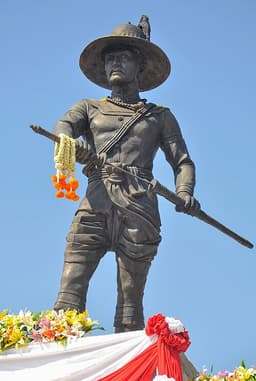
Taksin
Emperor · Modern
67.8Total
Basic Information
Born
1625
1734
Died
1702
1782
Era
Modern
Modern
Nationality
Khanate of Bukhara
Thailand
Occupation
Emperor
Emperor
Civilization
Eastern
Eastern
Score Comparison
Military (10%)
40.0
81.2
Political (20%)
68.0
70.0
Influence (20%)
53.3
62.0
Legacy (20%)
42.5
56.0
Leadership (15%)
79.8
85.0
Strategy (15%)
45.0
69.1
TOTAL
54.6
67.8
Subhan Quli Khan — Complete Timeline
1681 AD
Accession to the throne of BukharaPolitical Action◆ Major
Subhan Quli Khan became the Jani-Begid ruler of the Khanate of Bukhara after the death of his brother Abd al-Aziz Khan. His reign was the longest of the Ashtarkhanid dynasty, lasting over two decades.
Jani-BegidsAccessionBukhara
Impact: regional
1700 AD
Long reign and stabilityPolitical Action◆ Major
Subhan Quli Khan ruled Bukhara for 21 years, a period of relative stability. He maintained the khanate's borders and avoided major conflicts, though the state's power continued to decline gradually.
Jani-BegidsReignStability
Impact: regionalconstructive
1702 AD
Death and successionPolitical Action◆ Major
Subhan Quli Khan died in 1702, ending his long reign. His death led to a succession struggle among his sons, further weakening the Ashtarkhanid dynasty and paving the way for future instability.
Jani-BegidsDeathSuccession
Impact: regionaltragic
Taksin — Complete Timeline
1767 AD
Fall of AyutthayaWar
Burmese forces sacked and destroyed the city of Ayutthaya, ending the 417-year-old Ayutthaya kingdom. General Taksin escaped the fall and began organizing resistance against the Burmese occupation.
Burmese WarAyutthaya FallThai History
Impact: regionaltragic
Battle of Bang KungWar◆ Major
Taksin led a naval and land force to defeat a Burmese garrison at Bang Kung. This victory allowed him to establish a base at Chanthaburi and begin the reconquest of Siam.
Burmese WarResistanceThai Independence
Impact: national
1768 AD
Founding of the Thonburi KingdomPolitical Action
Taksin established Thonburi as the new capital of Siam, founding the Thonburi kingdom. He was crowned king and began the process of reunifying the country after the fall of Ayutthaya.
Thonburi KingdomThai HistoryReunification
Impact: nationalconstructive
1770 AD
Reunification of SiamWar◆ Major
King Taksin defeated rival warlords and regional powers, reunifying Siam under his rule. He also repelled Burmese invasions and expanded Thai influence into Laos and Cambodia.
ReunificationBurmese WarThai Expansion
Impact: regionalconstructive
1782 AD
Deposition and ExecutionPolitical Action◆ Major
King Taksin was deposed in a coup led by General Chao Phraya Chakri (later Rama I). He was executed shortly after, ending the Thonburi kingdom. The Chakri dynasty then established the Rattanakosin kingdom with Bangkok as its capital.
CoupChakri DynastyThonburi End
Impact: nationaltragic
Expert Analysis
Origins
Subhan Quli Khan was born around 1640 into the Ashtarkhanid dynasty, a branch of the Jani-Begids ruling the Khanate of Bukhara. His father was Nadir Muhammad Khan, and his elder brother Abd al-Aziz Khan preceded him. Little is known of his early education, but as a prince, he would have been trained in administration and military command. He grew up in a period of relative peace and stability in Transoxiana, though the dynasty faced internal rivalries.
Taksin was born in 1734 in Ayutthaya, Siam (now Thailand), to a Chinese father and a Siamese mother. He initially served as a royal page and later became the governor of Tak province, earning the title Phraya Taksin. His early career was marked by military service under King Ekkathat, defending the kingdom against Burmese invasions. He received a traditional Buddhist education and was known for his ambition and strategic acumen.
Rise to Power
Subhan Quli Khan rose to power after the death of his brother Abd al-Aziz Khan in 1681. He was chosen as the next ruler by the nobility, likely due to his non-confrontational approach and ability to maintain stability. His accession was smooth, without major opposition, reflecting the dynasty's preference for continuity. He ruled from 1681 to 1702, focusing on internal consolidation rather than expansion.
Taksin's rise was dramatic. In 1767, Burmese forces sacked Ayutthaya, ending the 417-year-old kingdom. Taksin escaped with a small force and gathered supporters. He established a base at Chanthaburi after the Battle of Bang Kung in 1768, where he defeated a Burmese garrison. He then proclaimed himself king and founded the Thonburi Kingdom, using his military prowess to reunify Siam over the next few years. His rise was a direct response to national crisis.
Leadership & Governance
Subhan Quli Khan's leadership style was passive and conservative. He maintained the existing administrative structure, relying on local governors and the Islamic clergy. He avoided major reforms or military campaigns, focusing on keeping the peace. His governance score of 68.0 reflects stability but lack of innovation. For example, he did not expand trade routes or modernize the army, leading to stagnation.
Taksin was an active and authoritarian leader. He centralized power, reorganized the military, and promoted trade with China. He implemented strict laws and punished corruption. His leadership score of 85.0 indicates strong command. However, his harsh methods alienated the nobility, leading to his eventual downfall. He also promoted Buddhism as a unifying force, building temples and supporting monks.
Triumph & Tragedy
Subhan Quli Khan's greatest success was his long reign of 21 years without major wars or internal collapse. He maintained the Khanate's borders and preserved the dynasty. His greatest failure was his inability to address underlying weaknesses, such as economic decline and succession issues. After his death in 1702, a power struggle among his sons weakened the dynasty, leading to its eventual collapse.
Taksin's triumph was reunifying Siam after its near destruction. He defeated multiple rivals and repelled Burmese invasions, restoring Thai independence. His military score of 81.2 reflects his battlefield successes. However, his tragedy was his deposition and execution in 1782 by General Chao Phraya Chakri (later Rama I), who founded the Chakri dynasty. Taksin's paranoia and harsh rule led to a coup, ending his kingdom.
Character & Destiny
Subhan Quli Khan was cautious and prudent, avoiding risks. His character favored stability over ambition, which shaped a peaceful but unremarkable reign. Historical assessments view him as a caretaker ruler who failed to innovate. His destiny was to be overshadowed by more dynamic successors.
Taksin was bold, charismatic, and ruthless. His decisiveness saved Siam, but his growing mental instability (some sources suggest megalomania) led to his downfall. He executed many officials and claimed divine status. His character both built and destroyed his kingdom. Historians note his military genius but criticize his governance style.
Legacy
Subhan Quli Khan's legacy is limited. He is remembered as a long-reigning but passive ruler. The Khanate of Bukhara continued its decline, and his reign did not produce lasting institutions. His influence score of 53.3 reflects minimal impact beyond his lifetime.
Taksin's legacy is profound. He is celebrated as a national hero in Thailand, with statues and holidays. The Thonburi Kingdom lasted only 15 years, but his reunification laid the foundation for the Chakri dynasty and modern Thailand. His military strategies are studied, and his role in restoring Thai independence is pivotal. His legacy score of 56.0 is higher than Subhan Quli Khan's 42.5.
Conclusion
Taksin had a greater impact than Subhan Quli Khan. While Subhan Quli Khan maintained stability, Taksin rescued a nation from collapse and set it on a path to recovery. Taksin's total score of 67.8 surpasses Subhan Quli Khan's 54.6 by 13.2 points. His military, leadership, and strategy scores are significantly higher. Subhan Quli Khan's reign was passive and ultimately inconsequential, whereas Taksin's actions directly shaped the future of Siam. Taksin's legacy as a unifier and national hero outweighs Subhan Quli Khan's quiet tenure.
Rankings
🥇
TaksinLeader
Mil: 81.2Pol: 70.0Inf: 62.0
67.8
🥈
Subhan Quli Khan
Mil: 40.0Pol: 68.0Inf: 53.3
54.6
+13.2 behind
How This Comparison Works
Algorithm
Each figure is scored on 6 dimensions (0—100 scale) based on structured historical data: Military (10%), Political (20%), Influence (20%), Legacy (20%), Leadership (15%), Strategy (15%). The weighted total produces the final ranking.
Data Sources
Scores are computed from structured sub-indicators in the database. Scale factors adjust for era (Ancient ×0.85, Modern ×1.0) and civilization size (Eastern ×1.05, Other ×0.80) to account for differences in population and military scale.
Maximum 3 Figures
Comparisons are limited to 2—3 figures to ensure readability and statistical meaningfulness.
Error Margins
±5 points per dimension — Sub-scores are derived from historical records with inherent uncertainty. Two figures within 5 points on a dimension should be considered roughly equivalent in that area.
Total Score Accuracy
±3 points overall — The weighted combination of 6 dimensions produces a total score with approximately ±3 points of uncertainty. Differences of less than 3 points are not statistically significant— the figures are effectively tied.
Known Limitations
- Historical records are incomplete and uneven across civilizations
- Figures from oral-tradition societies may be underrepresented
- Occupation labels can misclassify multi-role figures
- Scores measure capability and impact, not moral character
- Quantitative scoring is a comparison tool, not absolute truth
Capability Radar
Military (10%) — Battles & Warfare
Battles
40
75
Win Rate
45
80
Expansion
35
72
Political (20%) — Governance & Reform
Reform
50
68
Diplomacy
45
60
Economy
55
62
Influence (20%) — Cultural & Global Reach
Cultural
40
60
Global
20
50
Legacy (20%) — Historical Impact
Historical
35
65
Longevity
30
55
Leadership (15%) — Power & Stability
Tenure
70
65
Stability
60
55
Strategy (15%) — Tactics & Innovation
Strategy
40
82
Tactics
35
78
Reform
30
70
Similar Comparisons
Comments & Discussion
No comments yet. Be the first to share your thoughts!