Loading...
Soeharto vs Yitzhak Rabin
Yitzhak Rabin leads by 4.4 pts · 2 figures compared
…
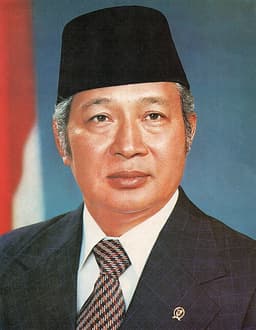
Soeharto
General · Modern
62.0Total
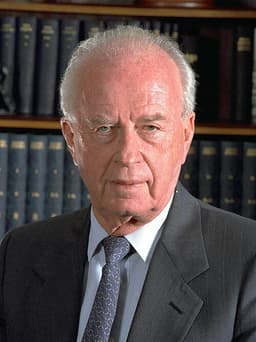
Yitzhak Rabin
General · Modern
66.4Total
Basic Information
Born
1921
1922
Died
—
—
Era
Modern
Modern
Nationality
Indonesia
Israel
Occupation
General
General
Civilization
Eastern
Middle Eastern
Score Comparison
Military (10%)
55.0
61.7
Political (20%)
70.0
82.0
Influence (20%)
55.0
68.0
Legacy (20%)
58.0
55.0
Leadership (15%)
78.0
78.0
Strategy (15%)
60.0
55.0
TOTAL
62.0
66.4
Soeharto — Complete Timeline
1966 AD
Assumed Power via SupersemarPolitical Action
Soeharto received the Supersemar order from President Sukarno, granting him authority to restore order after the 30 September Movement. This marked the beginning of his rise to power.
Power TransitionSupersemarIndonesia
Impact: national
1967 AD
Inaugurated as Acting PresidentPolitical Action◆ Major
Soeharto was inaugurated as acting president, replacing Sukarno. He formally became president in 1968, beginning the New Order regime that lasted 32 years.
PresidencyNew OrderIndonesia
Impact: national
1975 AD
Invasion of East TimorWar◆ Major
Soeharto ordered the invasion of East Timor following its declaration of independence. The occupation resulted in widespread human rights abuses and an estimated 100,000-200,000 deaths.
InvasionEast TimorHuman Rights
Impact: regionaldestructive
1998 AD
Resignation Amidst Economic CrisisPolitical Action
Soeharto resigned as president after massive protests triggered by the Asian Financial Crisis. His resignation ended the New Order regime and led to democratic reforms.
ResignationCrisisReformasi
Impact: nationaltragic
Yitzhak Rabin — Complete Timeline
1967 AD
Chief of Staff during the Six-Day WarWar
As Chief of Staff of the Israel Defense Forces, Rabin commanded the Israeli military during the Six-Day War against Egypt, Jordan, and Syria. Israel captured the Sinai Peninsula, Gaza Strip, West Bank, East Jerusalem, and Golan Heights, reshaping the region.
Six-Day WarTerritorial ExpansionMilitary Victory
Impact: global
1993 AD
Signing of the Oslo AccordsPolitical Action
As prime minister, Rabin signed the Oslo Accords with PLO Chairman Yasser Arafat on the White House lawn. The agreement established the Palestinian Authority and set a framework for Palestinian self-governance in the West Bank and Gaza Strip.
Peace ProcessPalestiniansOslo
Impact: globalconstructive
1995 AD
Assassination at Peace RallyPolitical Action
Rabin was assassinated by Israeli extremist Yigal Amir after a peace rally in Tel Aviv. The assassination shocked Israel and the world, derailing the Oslo peace process and leading to a period of political instability.
AssassinationPeace ProcessPolitical Violence
Impact: globaltragic
Expert Analysis
Yitzhak Rabin vs Soeharto
# The General’s Dilemma: Yitzhak Rabin and Soeharto
On a balmy November evening in 1995, Yitzhak Rabin stood before a crowd of 100,000 Israelis in Tel Aviv’s Kings of Israel Square, singing a peace song he had once banned. Moments later, a young extremist’s bullet ended his life. Five thousand miles away, in a different world entirely, another general-president, Soeharto, would die in a Jakarta hospital in 2008, surrounded by family, having outlived his regime by a decade. Both men rose from military command to political power. Both led nations through war and transformation. But one died as a martyr for peace, the other as a symbol of authoritarian stagnation. What drove such different outcomes? The answer lies not in their shared uniforms, but in the worlds they sought to shape.
Origins
Yitzhak Rabin was born in 1922 in Jerusalem, the son of Jewish immigrants from Eastern Europe. His mother, Rosa, was a labor activist; his father, Nehemiah, a volunteer in the Jewish Legion. Rabin grew up in a socialist Zionist household, where the dream of a Jewish state was not abstract—it was a daily struggle. He joined the Palmach, the elite strike force of the pre-state Jewish community, at 18. The desert and the rifle were his classrooms.
Soeharto was born a year earlier, in 1921, in a small village in Java, then part of the Dutch East Indies. His father was a low-level Javanese aristocrat who struggled with debt; his mother, a peasant. Soeharto’s childhood was marked by poverty and frequent moves. He grew up in a world of rice paddies, shadow puppets, and the quiet hierarchy of Javanese tradition. Unlike Rabin, who was forged in the crucible of ideological struggle, Soeharto was shaped by the need to survive and to please.
Rise to Power
Rabin’s path was direct and military. He fought in Israel’s War of Independence in 1948, rose through the ranks, and by 1964 became Chief of Staff of the Israel Defense Forces. His defining moment came in 1967, when he commanded the Six-Day War—a lightning campaign that captured the Sinai, Gaza, the West Bank, and the Golan Heights. Rabin was not a politician then; he was a general who delivered a stunning victory. But the war also created the occupied territories that would haunt him—and Israel—for decades.
Soeharto’s rise was more circuitous, more Javanese. He served in the Dutch colonial army, then the Japanese occupation forces, then the Indonesian independence struggle. He was competent, unambitious on the surface, but always watching. The turning point came in 1965, after a failed coup that killed six generals. Soeharto, then commander of the strategic reserve, crushed the coup and then used the ensuing chaos to dismantle President Sukarno’s regime. In 1966, he received the Supersemar order—a single piece of paper that transferred executive authority. By 1967, he was acting president. The path was not a battlefield; it was a shadow play of political maneuvering, mass killings (an estimated 500,000 communists and leftists died), and the careful cultivation of an image as the nation’s savior.
Leadership & Governance
Rabin’s leadership was pragmatic, restless, and ultimately transformative. As prime minister in the 1990s, he did not seek to be loved; he sought to solve problems. He reversed decades of Israeli policy by negotiating with the Palestine Liberation Organization, signing the Oslo Accords in 1993 on the White House lawn. “We say to you today in a loud and clear voice: Enough of blood and tears. Enough,” he told the world. His military background gave him the credibility to make concessions—he was the man who had won the Six-Day War, so no one could call him weak. But his political wisdom was imperfect: he failed to build a broad consensus for peace, relying on a narrow coalition and trusting that results would speak for themselves.
Soeharto’s leadership was the opposite: stable, controlling, and corrupt. His “New Order” regime brought economic growth and political stability to Indonesia after the chaos of Sukarno’s Guided Democracy. He opened the country to foreign investment, built infrastructure, and reduced poverty. But his system was built on patronage, nepotism, and military repression. The invasion of East Timor in 1975, which he ordered, led to decades of occupation and perhaps 200,000 deaths. Soeharto’s political wisdom was in survival—he balanced factions, co-opted rivals, and ensured that no one could challenge him. But his reform achievements were hollow: growth came at the cost of justice, and stability masked deep corruption.
Triumph & Tragedy
Rabin’s greatest triumph was the Oslo Accords—a handshake with Yasser Arafat that seemed to open a door to peace. His greatest tragedy was his assassination in 1995 at the hands of Yigal Amir, a Jewish extremist who believed Rabin was betraying Israel. The tragedy was not just the death, but the division it exposed: a nation torn between those who saw peace as survival and those who saw it as surrender.
Soeharto’s greatest triumph was the economic development of Indonesia during the 1970s and 1980s, when annual growth averaged 7 percent. His greatest tragedy was the Asian Financial Crisis of 1997-1998, which unraveled his system overnight. The rupiah collapsed, unemployment soared, and the protests that followed forced him to resign in 1998 after 32 years in power. His tragedy was not a bullet, but a slow erosion of legitimacy.
Character & Destiny
Rabin was blunt, introverted, and haunted by war. He once said, “Peace is not made with friends. Peace is made with enemies.” His character drove him to take risks, but also to neglect the emotional and political groundwork needed to sustain those risks. He believed in facts, not symbols—and that made him vulnerable to the power of symbols wielded by his enemies.
Soeharto was reserved, calculating, and deeply Javanese in his belief in harmony and hierarchy. He rarely raised his voice, never lost his temper, and governed through a network of family and cronies. His character made him a master of survival, but also blind to the need for change. He could not see that economic development without political freedom breeds its own rebellion.
Legacy
Rabin is remembered as a martyr for peace. His name is enshrined in Israeli memory as a leader who dared to choose a different path. The Oslo Accords remain unfinished, but Rabin’s legacy is a question that still haunts the Middle East: what if he had lived?
Soeharto’s legacy is more ambiguous. In Indonesia, he is remembered as the father of development who also built a corrupt, repressive system. His New Order brought stability, but it also stifled democracy and justice. The country that emerged after his fall is more open, more chaotic, and more hopeful—but it still grapples with the institutions he left behind.
Conclusion
Both men were generals who became politicians, but their fates diverged because of the choices they made when power was in their hands. Rabin chose to risk peace, and it cost him his life. Soeharto chose to cling to power, and it cost him his legacy. The difference was not in their uniforms or their nations, but in their willingness to see beyond themselves. One saw a future he might not live to enjoy; the other saw only a present he could control. History, in the end, judges not by how long one rules, but by what one dares to leave behind.
Rankings
🥇
Yitzhak RabinLeader
Mil: 61.7Pol: 82.0Inf: 68.0
66.4
🥈
Soeharto
Mil: 55.0Pol: 70.0Inf: 55.0
62.0
+4.4 behind
How This Comparison Works
Algorithm
Each figure is scored on 6 dimensions (0—100 scale) based on structured historical data: Military (10%), Political (20%), Influence (20%), Legacy (20%), Leadership (15%), Strategy (15%). The weighted total produces the final ranking.
Data Sources
Scores are computed from structured sub-indicators in the database. Scale factors adjust for era (Ancient ×0.85, Modern ×1.0) and civilization size (Eastern ×1.05, Other ×0.80) to account for differences in population and military scale.
Maximum 3 Figures
Comparisons are limited to 2—3 figures to ensure readability and statistical meaningfulness.
Error Margins
±5 points per dimension — Sub-scores are derived from historical records with inherent uncertainty. Two figures within 5 points on a dimension should be considered roughly equivalent in that area.
Total Score Accuracy
±3 points overall — The weighted combination of 6 dimensions produces a total score with approximately ±3 points of uncertainty. Differences of less than 3 points are not statistically significant— the figures are effectively tied.
Known Limitations
- Historical records are incomplete and uneven across civilizations
- Figures from oral-tradition societies may be underrepresented
- Occupation labels can misclassify multi-role figures
- Scores measure capability and impact, not moral character
- Quantitative scoring is a comparison tool, not absolute truth
Capability Radar
Military (10%) — Battles & Warfare
Battles
35
65
Win Rate
40
70
Expansion
20
50
Political (20%) — Governance & Reform
Reform
55
65
Diplomacy
65
85
Economy
70
60
Influence (20%) — Cultural & Global Reach
Cultural
50
55
Global
55
70
Legacy (20%) — Historical Impact
Historical
60
75
Longevity
55
60
Leadership (15%) — Power & Stability
Tenure
85
70
Stability
75
40
Strategy (15%) — Tactics & Innovation
Strategy
45
75
Tactics
30
60
Reform
60
55
Similar Comparisons
Comments & Discussion
1. 历史的围棋手6/16/2026
把拉宾和苏哈托放在一起比较?简直是对拉宾的侮辱。拉宾从军人走向和平,冒着生命危险推动奥斯陆协议;苏哈托却在34年统治中建立了一个腐败家族王朝。看看数据:印尼在他治下经济增长年均只有6%,而拉宾的和平进程让以色列GDP增长率在1994年达到7.7%。一个牺牲于理想,一个死在贪婪的床上。
2. IronSwordsman6/16/2026
As a military historian, I see the key difference in how each man used force. Rabin, after commanding victory in 1967, learned that military dominance has limits—he ordered the First Intifada crackdown but saw its futility. Soeharto, by contrast, built his regime on the 1965-66 mass killings, using terror as governance. One evolved, the other calcified. Their endings reflect these choices.
3. 数据拆弹手6/16/2026
别被表面叙事骗了。拉宾的和平进程没有降低恐怖袭击:1994年以色列有73人死于自杀式爆炸,比1993年翻倍。苏哈托在1997年亚洲金融危机前创造了连续30年GDP增长5%以上的纪录,贫困率从60%降到11%。数据从不说谎——两位将军都是实用主义者,只是选择了不同盟友:拉宾选美国,苏哈托选日本和世界银行。
4. ClassicsGrad6/16/2026
Drawing parallels from Aristotle: Rabin embodied the tragic hero who sought *eudaimonia* through peace, falling to a lone assassin’s bullet—a classic peripeteia. Soeharto represents the tyrant Aristotle warned about, who rules through fear and ends ignobly. Reading Thucydides, I see Rabin as a Pericles figure: trying to lead his nation beyond war. Soeharto? A corrupt oligarch in Javanese royal garb.