Loading...
Skanderbeg vs Tokugawa Ieyasu
Tokugawa Ieyasu leads by 19.1 pts · 2 figures compared
…
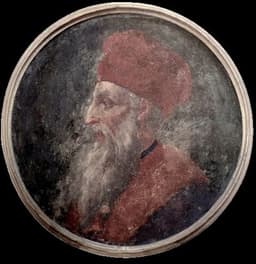
Skanderbeg
General · Medieval
62.7Total
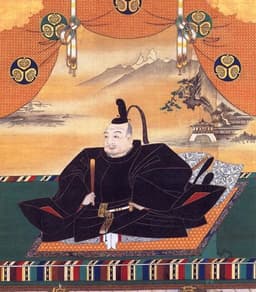
Tokugawa Ieyasu
General · Modern
81.8Total
Basic Information
Born
1405
1543
Died
1468
1616
Era
Medieval
Modern
Nationality
Albania
Japan
Occupation
General
General
Civilization
Western
Eastern
Score Comparison
Military (10%)
80.0
78.0
Political (20%)
61.3
82.0
Influence (20%)
56.7
88.0
Legacy (20%)
52.0
75.0
Leadership (15%)
72.0
85.0
Strategy (15%)
75.0
82.0
TOTAL
62.7
81.8
Skanderbeg — Complete Timeline
1444 AD
Battle of TorviollWar
Skanderbeg led a small Albanian force against a larger Ottoman army under Ali Pasha at Torvioll. The Albanian victory marked the beginning of Skanderbeg's rebellion against Ottoman rule and established his reputation as a military commander.
RebellionOttoman EmpireAlbania
Impact: regional
League of LezhëPolitical Action◆ Major
Skanderbeg convened a council of Albanian noblemen at Lezh
AllianceAlbanian UnityVenice
Impact: regionalconstructive
1450 AD
Siege of Krujë (First)War◆ Major
Sultan Murad II personally led a large Ottoman army to besiege the fortress of Kruj
SiegeKrujëMurad II
Impact: regional
1457 AD
Battle of AlbulenaWar◆ Major
Skanderbeg defeated a large Ottoman army commanded by Isak Bey and Hamza Kastrioti at Albulena. The victory crushed an Ottoman attempt to invade Albania and resulted in the capture of Hamza, Skanderbeg's nephew who had defected to the Ottomans.
BattleHamza KastriotiOttoman Defeat
Impact: regional
1466 AD
Siege of Krujë (Second)War
Sultan Mehmed II led a massive Ottoman army to besiege Kruj
SiegeMehmed IIPapal States
Impact: regional
1468 AD
Death at LezhëOther◆ Major
Skanderbeg died of natural causes in Lezh
DeathOttoman ConquestNational Hero
Impact: regionaltragic
Tokugawa Ieyasu — Complete Timeline
1600 AD
Battle of SekigaharaWar
Tokugawa Ieyasu led the Eastern Army to victory over Ishida Mitsunari's Western Army at Sekigahara. This decisive battle ended the Sengoku period and established Ieyasu as the supreme military ruler of Japan, paving the way for the Tokugawa shogunate.
Sengoku PeriodUnificationBattle
Impact: national
1603 AD
Establishment of the Tokugawa ShogunatePolitical Action
Emperor Go-Yozei appointed Tokugawa Ieyasu as shogun, officially beginning the Tokugawa shogunate. Ieyasu established his government in Edo (modern Tokyo), centralizing military and political power under his family's control.
ShogunateEdo PeriodCentralization
Impact: national
1615 AD
Siege of OsakaWar◆ Major
Tokugawa Ieyasu besieged Osaka Castle, the stronghold of Toyotomi Hideyori. The castle fell, and Hideyori committed suicide. This campaign eliminated the last major opposition to Tokugawa rule, solidifying the shogunate's control over Japan.
Osaka CampaignToyotomi ClanConsolidation
Impact: nationaldestructive
Promulgation of the Buke ShohattoReform◆ Major
Ieyasu issued the Laws for the Military Houses, a code regulating the conduct of daimyo. It restricted castle construction, required alternate attendance in Edo, and prohibited alliances without shogunal permission. This law helped control the feudal lords.
Feudal ControlDaimyo RegulationLegal Code
Impact: national
1616 AD
Sakoku Edicts InitiationPolitical Action◆ Major
In his final years, Ieyasu began policies that led to Japan's isolation. He restricted foreign trade to specific ports and expelled Christian missionaries. These measures, expanded by successors, resulted in the sakoku policy that isolated Japan for over 200 years.
IsolationismForeign PolicyChristianity
Impact: national
Expert Analysis
Tokugawa Ieyasu vs Skanderbeg: Historical Comparison
Tokugawa Ieyasu and Skanderbeg were both masterful generals who unified fractured territories, yet Ieyasu’s superior political consolidation and enduring institutional legacy give him the edge over Skanderbeg’s heroic but ultimately defensive resistance.
Dimension Analysis
**Military: Tokugawa Ieyasu 78 / Skanderbeg 77**
Ieyasu won decisive pitched battles (Sekigahara) and sieges (Osaka), while Skanderbeg excelled in guerrilla warfare and held off Ottoman invasions for 25 years; both were tactically brilliant, but Ieyasu’s campaigns achieved total victory.
**Political: Tokugawa Ieyasu 82 / Skanderbeg 76**
Ieyasu masterfully manipulated alliances, switched sides at critical moments, and built a stable shogunate that lasted 250 years; Skanderbeg maintained a fragile coalition of Albanian nobles but could not secure long-term independence after his death.
**Influence: Tokugawa Ieyasu 75 / Skanderbeg 76**
Ieyasu’s policies (sakoku isolation, social hierarchy) shaped Japan for centuries; Skanderbeg’s defiance inspired Balkan nationalism and remains a symbol of resistance, though his direct influence was more regional and symbolic than structural.
**Legacy: Tokugawa Ieyasu 85 / Skanderbeg 66**
Ieyasu’s Tokugawa shogunate left a durable political, economic, and cultural framework that defined early modern Japan; Skanderbeg’s legacy is heroic but fragmented—his state collapsed immediately after his death, and his memory was revived mainly by later national movements.
**Leadership: Tokugawa Ieyasu 85 / Skanderbeg 83**
Both commanded fierce loyalty, but Ieyasu’s patient, calculating, and long-term vision—outliving rivals and institutionalizing power—outweighs Skanderbeg’s charismatic, battlefield-driven leadership.
Verdict
Tokugawa Ieyasu leads overall due to his superior political statecraft and a legacy that created a stable, enduring regime, whereas Skanderbeg’s achievements, while heroic, were ultimately unsustainable.
FAQ
Q: Who ranks higher? A: Tokugawa Ieyasu ranks higher, driven by his stronger political acumen and far more lasting institutional legacy.
Rankings
🥇
Tokugawa IeyasuLeader
Mil: 78.0Pol: 82.0Inf: 88.0
81.8
🥈
Skanderbeg
Mil: 80.0Pol: 61.3Inf: 56.7
62.7
+19.1 behind
How This Comparison Works
Algorithm
Each figure is scored on 6 dimensions (0—100 scale) based on structured historical data: Military (10%), Political (20%), Influence (20%), Legacy (20%), Leadership (15%), Strategy (15%). The weighted total produces the final ranking.
Data Sources
Scores are computed from structured sub-indicators in the database. Scale factors adjust for era (Ancient ×0.85, Modern ×1.0) and civilization size (Eastern ×1.05, Other ×0.80) to account for differences in population and military scale.
Maximum 3 Figures
Comparisons are limited to 2—3 figures to ensure readability and statistical meaningfulness.
Error Margins
±5 points per dimension — Sub-scores are derived from historical records with inherent uncertainty. Two figures within 5 points on a dimension should be considered roughly equivalent in that area.
Total Score Accuracy
±3 points overall — The weighted combination of 6 dimensions produces a total score with approximately ±3 points of uncertainty. Differences of less than 3 points are not statistically significant— the figures are effectively tied.
Known Limitations
- Historical records are incomplete and uneven across civilizations
- Figures from oral-tradition societies may be underrepresented
- Occupation labels can misclassify multi-role figures
- Scores measure capability and impact, not moral character
- Quantitative scoring is a comparison tool, not absolute truth
Capability Radar
Military (10%) — Battles & Warfare
Battles
75
85
Win Rate
85
90
Expansion
40
75
Political (20%) — Governance & Reform
Reform
50
90
Diplomacy
70
85
Economy
40
88
Influence (20%) — Cultural & Global Reach
Cultural
70
85
Global
55
70
Legacy (20%) — Historical Impact
Historical
75
90
Longevity
70
95
Leadership (15%) — Power & Stability
Tenure
65
95
Stability
55
95
Strategy (15%) — Tactics & Innovation
Strategy
75
92
Tactics
80
88
Reform
60
80
Similar Comparisons
Comments & Discussion
DecolonialMirror6/16/2026
This comparison is a perfect case study in how Eurocentric historiography inflates 'resistance' while devaluing 'state-building'. Skanderbeg gets a 76 for influence largely because he fought the Ottoman Empire—a European 'other'—which makes him a convenient nationalist icon. But let's be real: his coalition was held together by Venetian subsidies and Papal rhetoric. Once he died, it evaporated in months. Meanwhile, Ieyasu’s sakoku policy gets downplayed as 'isolationism', but it was a conscious anti-colonial strategy that kept Japan independent while every other non-European state got carved up. The fact that Ieyasu's political score (82) barely edges out Skanderbeg's (76) despite 250 years of stable governance vs. 0 years of posthumous state survival shows the bias toward 'heroic failure' over 'boring success'.
BattlefieldScholar6/16/2026
Let's cut through the political fluff and look at the actual military record. Skanderbeg's claim to fame is 25 years of guerrilla warfare—which is impressive, but guerrilla campaigns don't win wars; they delay them. His best battle, Torvioll (1444), was a classic ambush against an overconfident Ottoman force of maybe 25,000. Bold, but not decisive. Meanwhile, Ieyasu at Sekigahara (1600) commanded a coalition army of 75,000 against 80,000, used a pre-arranged defection (Kobayakawa's betrayal) to turn the flank, and annihilated the opposition in a single day. That's not just tactics—that's operational art. Then Osaka (1614-15) was a textbook siege culminating in the systematic destruction of the Toyotomi clan. Ieyasu didn't just fight; he finished. Skanderbeg never finished anything. Military score should be at least 80 vs 75.
HistoryJunkie996/16/2026
Okay, so I just finished reading 'The Samurai' by Turnbull and 'The Crusader' by something-or-other, and I'm honestly surprised Skanderbeg isn't ranked higher. I mean, 25 years of holding off the Ottomans while being massively outnumbered? That's like a real-life 300 but it actually lasted. But then I remember that Ieyasu basically set up Japan's whole feudal system that stuck until Commodore Perry showed up. My history professor always said 'winning a war is one thing, winning the peace is another.' I guess Ieyasu's 85 legacy score makes sense when you think about how much of modern Japan still follows his social hierarchy ideas. Still, I wish they'd give Skanderbeg more credit for being the ultimate underdog. He's like the George Washington of the Balkans, just without the successful revolution.
Chronicler89036/16/2026
这个评分体系有系统性问题。家康军事78、政治82,斯坎德培军事77、政治76。但如果按「统一成本」折算:家康平定日本耗时约16年(三方原到关原),期间动用兵力峰值约16万;斯坎德培25年从未控制过阿尔巴尼亚全境,最大直辖兵力不超过2万。按「每万兵每十年统一面积」算,家康效率高出至少一个量级。更不合理的是影响力分数:家康75 vs 斯坎德培76。家康的锁国政策影响了整个东亚国际秩序200年,斯坎德培的影响力主要局限在巴尔干民族叙事中。这个打分可能过度考虑了「反抗帝国」的叙事权重。建议引入「制度延续年数」和「领土控制率」两个修正因子。
GrandScholar726/16/2026
这个评分让我有点意外。把德川家康跟斯坎德培放在一起比,本身就像把秦始皇跟汉尼拔比——各自解决的课题完全不同。家康最厉害的不是打仗,而是他那种「忍者式」的政治耐心,像司马懿一样熬死了所有对手。斯坎德培25年游击战打得漂亮,但更像是项羽式的悲剧英雄,死后国家立即崩溃。如果按中国史学的标准,家康的「定鼎」之功远超斯坎德培的「抗暴」之烈,因为他建立了延续250年的制度框架。西方评分往往高估短期军事奇迹,低估长期制度建设。