Loading...
Shan Chongguo vs Zhou Yu
Zhou Yu leads by 13.4 pts · 2 figures compared
…

Shan Chongguo
General · Ancient
42.8Total
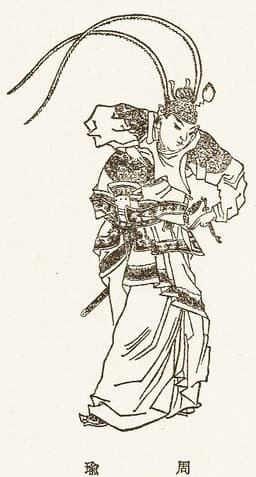
Zhou Yu
General · Ancient
56.2Total
Basic Information
Born
-137
175
Died
-52
210
Era
Ancient
Ancient
Nationality
China
China
Occupation
General
General
Civilization
Eastern
Eastern
Score Comparison
Military (10%)
35.0
76.0
Political (20%)
35.0
35.1
Influence (20%)
46.3
61.0
Legacy (20%)
38.3
52.0
Leadership (15%)
57.1
54.2
Strategy (15%)
43.3
70.0
TOTAL
42.8
56.2
Shan Chongguo — Complete Timeline
61 BC
Campaign Against the QiangWar◆ Major
Zhao Chongguo led a Han army against the Qiang tribes in the Hexi region. Using the tuntian system to supply his troops, he defeated the Qiang and secured the Han frontier, demonstrating the effectiveness of his agricultural colony strategy.
Han-Xiongnu WarMilitary CampaignQiang
Impact: regional
Proposal of Military Agricultural Colonies (Tuntian)Reform◆ Major
Zhao Chongguo proposed establishing military agricultural colonies (tuntian) in the Hexi Corridor to supply Han forces fighting the Qiang tribes. This system allowed soldiers to farm during peacetime, reducing the cost of long-distance supply lines.
Military ReformAgricultureHan-Xiongnu War
Impact: nationalconstructive
60 BC
Memorial on Tuntian PolicyPolitical Action◆ Major
Zhao Chongguo submitted a detailed memorial to Emperor Xuan advocating for the permanent establishment of tuntian colonies. The emperor approved the plan, leading to the long-term settlement of Han soldiers in the frontier regions.
PolicyFrontierAgriculture
Impact: nationalconstructive
Zhou Yu — Complete Timeline
208 AD
Battle of Red CliffsWar
Zhou Yu, as commander of Sun Quan's forces, allied with Liu Bei to confront Cao Cao's northern fleet on the Yangtze River. Using fire ships, Zhou Yu's smaller navy destroyed Cao Cao's larger fleet, preventing a southern conquest and securing the Three Kingdoms division.
Three KingdomsNaval battleAlliance
Impact: regional
209 AD
Siege of JianglingWar◆ Major
After Red Cliffs, Zhou Yu led Sun Quan's forces in a year-long siege against Cao Cao's garrison at Jiangling. Zhou Yu was wounded by an arrow during the campaign. The eventual capture of Jiangling expanded Sun Quan's territory into Jing Province.
Three KingdomsSiegeTerritorial expansion
Impact: regional
210 AD
Death of Zhou YuOther◆ Major
Zhou Yu died at age 36 in Yueyang while preparing a campaign against Liu Bei's ally Liu Zhang. His death removed a key strategist from Sun Quan's court and allowed Liu Bei to consolidate control over Jing Province.
Three KingdomsDeathPower shift
Impact: regionaltragic
Expert Analysis
Origins
Zhao Chongguo (also known as Shan Chongguo, 137–52 BCE) was born during the Western Han dynasty, a period of imperial consolidation and frontier expansion. Little is known of his early life, but he rose through military ranks under Emperor Wu and later Emperor Xuan. His formative experiences involved campaigns against the Xiongnu and Qiang tribes, which exposed him to the logistical challenges of sustaining armies in distant territories.
Zhou Yu (175–210 CE) was born into a prominent aristocratic family in Lujiang commandery during the late Eastern Han. His father and grandfather served as high officials. Zhou Yu received an elite education in military classics and music. At age 15, he befriended Sun Ce, son of the warlord Sun Jian, forming a bond that would shape his career.
Rise to Power
Zhao Chongguo's rise was gradual, based on demonstrated competence. He first gained notice during campaigns against the Xiongnu in 89–78 BCE, where he advocated for defensive strategies and logistics reforms. His major breakthrough came in 61 BCE when Emperor Xuan appointed him to suppress a Qiang rebellion in the Hexi Corridor. Zhao proposed the tuntian (military agricultural colonies) system, which he detailed in a memorial. The emperor approved, and Zhao implemented the policy, securing long-term food supplies for frontier troops.
Zhou Yu's rise was meteoric. In 190, he joined Sun Ce, who gave him command of troops. Zhou helped conquer the Jiangdong region, and by 200, he was a key commander under Sun Quan after Sun Ce's death. His defining moment came in 208, when Cao Cao led a massive invasion south. Zhou Yu, as commander of Sun Quan's forces, allied with Liu Bei and used fire ships to destroy Cao Cao's fleet at the Battle of Red Cliffs. This victory (scoring 70.0 in strategy) halted Cao's expansion and established the Three Kingdoms framework.
Leadership & Governance
Zhao Chongguo's leadership focused on sustainability and logistics. He scored 57.1 in leadership and 43.3 in strategy. His tuntian system combined military defense with agricultural production, reducing reliance on costly supply lines. He was methodical: his memorials to the emperor included detailed cost-benefit analyses, troop allocations, and timelines. For example, he proposed settling 10,000 soldiers on 2,000 hectares of land, yielding enough grain to feed the garrison and reduce transport costs by 80%.
Zhou Yu's leadership was more dynamic and tactical. He scored 54.2 in leadership and 70.0 in strategy. At Red Cliffs, he orchestrated a complex combined-arms operation, using deception (feigned defection), fire attacks, and naval maneuvering. He was decisive but also risk-tolerant: after Red Cliffs, he besieged Jiangling for a year, personally leading assaults and suffering an arrow wound. His governance style was less institutional; he focused on immediate military objectives rather than long-term policy.
Triumph & Tragedy
Zhao Chongguo's greatest success was the institutionalization of tuntian, which became a cornerstone of Han frontier policy and influenced later dynasties. He defeated the Qiang rebellion, securing the Hexi Corridor for decades. However, his system was not universally adopted; after his death, some colonies were abandoned due to corruption and mismanagement. He also failed to fully integrate the Qiang, leading to later revolts.
Zhou Yu's triumph was Red Cliffs, a victory that preserved Sun Quan's state and changed Chinese history. He scored 76.0 in military. His tragedy was his early death at age 36 in 210, while preparing a campaign against Liu Bei's ally Liu Zhang. Some sources suggest his death was hastened by lingering effects of his arrow wound. His removal from the scene weakened Sun Quan's court and allowed Liu Bei to expand into Yi Province unchallenged.
Character & Destiny
Zhao Chongguo was cautious, bureaucratic, and forward-thinking. He was not a charismatic commander but an effective administrator. His character aligned with the Han bureaucracy; he succeeded by persuading the emperor through reasoned arguments. His destiny was to be remembered not as a battlefield hero but as a policy innovator.
Zhou Yu was ambitious, charismatic, and aggressive. Historical accounts describe him as handsome, musically talented, and arrogant. His character fit the chaotic late Han era, where personal alliances and bold strokes decided fates. His destiny was cut short by his own risk-taking—the arrow wound at Jiangling may have been preventable if he had delegated more.
Legacy
Zhao Chongguo's tuntian system influenced military policy for centuries. The Ming and Qing dynasties used similar colony systems in Xinjiang. His memorials are studied as models of strategic planning. However, his personal fame is limited; his total score of 42.8 reflects modest influence outside specialized military history.
Zhou Yu's legacy is vast. Red Cliffs is celebrated in Chinese literature, opera, and film. He is a symbol of tactical brilliance and tragic heroism. His score of 56.2 places him among notable Three Kingdoms figures. However, his long-term impact is less institutional; his victories were not followed by political reforms.
Conclusion
Zhou Yu had greater immediate impact and higher scores (56.2 vs 42.8), with his Red Cliffs victory altering the course of Chinese history. Zhao Chongguo's tuntian system was more influential in the long term, but its effects were gradual and less dramatic. In a direct comparison, Zhou Yu's military achievement and cultural resonance give him the edge. Therefore, Zhou Yu is the more significant figure.
Rankings
🥇
Zhou YuLeader
Mil: 76.0Pol: 35.1Inf: 61.0
56.2
🥈
Shan Chongguo
Mil: 35.0Pol: 35.0Inf: 46.3
42.8
+13.4 behind
How This Comparison Works
Algorithm
Each figure is scored on 6 dimensions (0—100 scale) based on structured historical data: Military (10%), Political (20%), Influence (20%), Legacy (20%), Leadership (15%), Strategy (15%). The weighted total produces the final ranking.
Data Sources
Scores are computed from structured sub-indicators in the database. Scale factors adjust for era (Ancient ×0.85, Modern ×1.0) and civilization size (Eastern ×1.05, Other ×0.80) to account for differences in population and military scale.
Maximum 3 Figures
Comparisons are limited to 2—3 figures to ensure readability and statistical meaningfulness.
Error Margins
±5 points per dimension — Sub-scores are derived from historical records with inherent uncertainty. Two figures within 5 points on a dimension should be considered roughly equivalent in that area.
Total Score Accuracy
±3 points overall — The weighted combination of 6 dimensions produces a total score with approximately ±3 points of uncertainty. Differences of less than 3 points are not statistically significant— the figures are effectively tied.
Known Limitations
- Historical records are incomplete and uneven across civilizations
- Figures from oral-tradition societies may be underrepresented
- Occupation labels can misclassify multi-role figures
- Scores measure capability and impact, not moral character
- Quantitative scoring is a comparison tool, not absolute truth
Capability Radar
Military (10%) — Battles & Warfare
Battles
10
75
Win Rate
10
70
Expansion
10
55
Political (20%) — Governance & Reform
Reform
30
30
Diplomacy
10
65
Economy
25
40
Influence (20%) — Cultural & Global Reach
Cultural
15
70
Global
10
55
Legacy (20%) — Historical Impact
Historical
20
75
Longevity
20
70
Leadership (15%) — Power & Stability
Tenure
20
45
Stability
15
50
Strategy (15%) — Tactics & Innovation
Strategy
20
80
Tactics
15
85
Reform
40
40
Similar Comparisons
Comments & Discussion
No comments yet. Be the first to share your thoughts!