Loading...
Ma Chao vs Zhou Yu
Zhou Yu leads by 4.9 pts · 2 figures compared
…

Ma Chao
General · Ancient
51.3Total
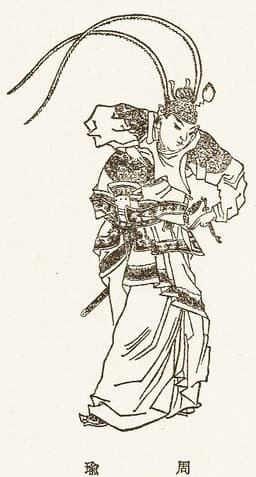
Zhou Yu
General · Ancient
56.2Total
Basic Information
Born
176
175
Died
222
210
Era
Ancient
Ancient
Nationality
China
China
Occupation
General
General
Civilization
Eastern
Eastern
Score Comparison
Military (10%)
67.5
76.0
Political (20%)
35.0
35.1
Influence (20%)
51.8
61.0
Legacy (20%)
45.8
52.0
Leadership (15%)
62.6
54.2
Strategy (15%)
55.0
70.0
TOTAL
51.3
56.2
Ma Chao — Complete Timeline
211 AD
Ma Chao's Revolt in Liang ProvinceWar◆ Major
Ma Chao, allied with Qiang and Hu tribes, led a rebellion against Cao Cao in Liang Province. He captured the city of Chang'an and threatened Cao Cao's western flank, forcing Cao Cao to personally lead a campaign against him.
RebellionLiang ProvinceCao Cao
Impact: regional
Battle of Tong PassWar◆ Major
Cao Cao's army faced Ma Chao's coalition at Tong Pass. Ma Chao's cavalry repeatedly charged Cao Cao's forces, nearly killing Cao Cao himself. However, Cao Cao used a feint to cross the Yellow River and outflank Ma Chao, forcing him to retreat.
BattleCavalryStrategic Retreat
Impact: regional
214 AD
Ma Chao's Defection to Zhang LuPolitical Action
After his defeat by Cao Cao, Ma Chao fled to Hanzhong and sought refuge with the warlord Zhang Lu. Zhang Lu gave him command of troops but grew suspicious of him, leading Ma Chao to eventually leave and join Liu Bei.
DefectionRefugeAlliance Shift
Impact: regional
Ma Chao's Service under Liu BeiPolitical Action◆ Major
Ma Chao surrendered to Liu Bei and was given command of troops. He played a key role in Liu Bei's conquest of Yi Province, and later was appointed General of the Vanguard. He was enfeoffed as Marquis of Taitai.
ServiceShu HanMarquis
Impact: regionalconstructive
Zhou Yu — Complete Timeline
208 AD
Battle of Red CliffsWar
Zhou Yu, as commander of Sun Quan's forces, allied with Liu Bei to confront Cao Cao's northern fleet on the Yangtze River. Using fire ships, Zhou Yu's smaller navy destroyed Cao Cao's larger fleet, preventing a southern conquest and securing the Three Kingdoms division.
Three KingdomsNaval battleAlliance
Impact: regional
209 AD
Siege of JianglingWar◆ Major
After Red Cliffs, Zhou Yu led Sun Quan's forces in a year-long siege against Cao Cao's garrison at Jiangling. Zhou Yu was wounded by an arrow during the campaign. The eventual capture of Jiangling expanded Sun Quan's territory into Jing Province.
Three KingdomsSiegeTerritorial expansion
Impact: regional
210 AD
Death of Zhou YuOther◆ Major
Zhou Yu died at age 36 in Yueyang while preparing a campaign against Liu Bei's ally Liu Zhang. His death removed a key strategist from Sun Quan's court and allowed Liu Bei to consolidate control over Jing Province.
Three KingdomsDeathPower shift
Impact: regionaltragic
Expert Analysis
Origins
Ma Chao (176-222) was born into a powerful military family in the late Eastern Han dynasty. His father, Ma Teng, was a warlord controlling parts of Liang Province. Ma Chao grew up among the Qiang and Hu tribes, learning cavalry warfare and developing strong tribal alliances. He was known for his personal bravery and skill with a spear.
Zhou Yu (175-210) was born into a wealthy and influential family in Lujiang Commandery. His father, Zhou Yi, served as a governor. Zhou Yu received a classical education and became a close friend of Sun Ce, the founder of the Wu kingdom. He was renowned for his musical talent and strategic mind from a young age.
Rise to Power
Ma Chao rose to prominence after his father Ma Teng was executed by Cao Cao in 211. In response, Ma Chao formed a coalition with the Qiang and Hu tribes, as well as other northwestern warlords like Han Sui. He led a revolt in Liang Province, capturing Chang'an and threatening Cao Cao's heartland. His rebellion culminated in the Battle of Tong Pass (211), where his cavalry repeatedly charged Cao Cao's forces and nearly killed the warlord. However, internal divisions and Cao Cao's strategy led to Ma Chao's defeat.
Zhou Yu's rise began when he joined Sun Ce's campaigns to conquer the Jiangdong region. He quickly became Sun Ce's chief military advisor and helped establish the foundation of the Wu kingdom. After Sun Ce's death in 200, Zhou Yu remained loyal to Sun Quan and became the commander of Wu's forces. His defining moment came in 208 when he orchestrated the alliance with Liu Bei and led the naval forces at the Battle of Red Cliffs. Using fire ships, Zhou Yu destroyed Cao Cao's fleet and forced his retreat, securing a major victory that shaped the Three Kingdoms period.
Leadership & Governance
Ma Chao's leadership was characterized by personal valor and reliance on tribal alliances. He scored 62.6 in leadership, reflecting his ability to inspire loyalty among his Qiang and Hu troops. However, his political score of 35.0 indicates poor governance skills. He often alienated allies, such as when he turned against Han Sui, leading to the coalition's collapse. After his defeat, he fled to Zhang Lu and later defected to Liu Bei, but his independent power diminished.
Zhou Yu's leadership (54.2) was more strategic and collaborative. He effectively commanded a diverse coalition at Red Cliffs, coordinating with Liu Bei's forces. His political score (35.1) is similar to Ma Chao's, indicating limited political maneuvering outside his military role. Zhou Yu was known for his meticulous planning and ability to adapt, as seen in the Siege of Jiangling (209-210), where he persisted despite being wounded by an arrow.
Triumph & Tragedy
Ma Chao's greatest triumph was his revolt in Liang Province, where he captured Chang'an and nearly killed Cao Cao. His cavalry tactics were highly effective, and he scored 67.5 in military prowess. However, his greatest failure was his inability to maintain alliances, leading to his defeat at Tong Pass. Afterward, he lost his power base and became a general under Liu Bei, but never regained his former influence. His personal tragedy was the execution of his entire family by Cao Cao after the revolt.
Zhou Yu's triumph was the Battle of Red Cliffs, a masterful use of fire ships and naval tactics that secured his legacy as a brilliant strategist (strategy score: 70.0). He also successfully besieged Jiangling, expanding Wu's territory. However, his early death at age 36 in 210 prevented him from achieving further victories. His failure was his inability to fully capitalize on Red Cliffs, as he died before executing his plan to conquer Yi Province, leaving Wu without his strategic guidance.
Character & Destiny
Ma Chao was impulsive and proud, traits that contributed to both his early successes and ultimate downfall. His willingness to fight Cao Cao directly reflected his aggressive nature, but his lack of political acumen and tendency to mistrust allies cost him. His destiny was to become a minor figure in Liu Bei's regime, overshadowed by his earlier reputation.
Zhou Yu was composed and strategic, known for his calm demeanor and musical talent. His decision-making at Red Cliffs demonstrated foresight and adaptability. However, his ambition to expand Wu's territory led to conflicts with Liu Bei, and his death at a young age cut short his potential. His character shaped a legacy of unfulfilled promise.
Legacy
Ma Chao's legacy is mixed. He is remembered as a fierce warrior and a symbol of resistance against Cao Cao, but his political failures limited his long-term impact. His influence score of 51.8 reflects his role in the Three Kingdoms narratives, but his specific contributions faded. He is often depicted in folklore as a tragic hero.
Zhou Yu's legacy is stronger. His victory at Red Cliffs is considered one of the most important battles in Chinese history, and he is celebrated as a master of naval warfare. His influence score of 61.0 and legacy score of 52.0 highlight his enduring reputation. However, popular culture often misrepresents him as jealous of Zhuge Liang, overshadowing his true achievements.
Conclusion
While Ma Chao was a formidable cavalry general whose revolt challenged Cao Cao, his overall impact was limited by his political failures and eventual subordination. Zhou Yu, with a higher total score of 56.2 compared to Ma Chao's 51.3, demonstrated superior strategic acumen and achieved a decisive victory that shaped the course of the Three Kingdoms. His Red Cliffs triumph had lasting consequences, while Ma Chao's rebellion was ultimately crushed. Therefore, Zhou Yu had the greater impact on history.
Rankings
🥇
Zhou YuLeader
Mil: 76.0Pol: 35.1Inf: 61.0
56.2
🥈
Ma Chao
Mil: 67.5Pol: 35.0Inf: 51.8
51.3
+4.9 behind
How This Comparison Works
Algorithm
Each figure is scored on 6 dimensions (0—100 scale) based on structured historical data: Military (10%), Political (20%), Influence (20%), Legacy (20%), Leadership (15%), Strategy (15%). The weighted total produces the final ranking.
Data Sources
Scores are computed from structured sub-indicators in the database. Scale factors adjust for era (Ancient ×0.85, Modern ×1.0) and civilization size (Eastern ×1.05, Other ×0.80) to account for differences in population and military scale.
Maximum 3 Figures
Comparisons are limited to 2—3 figures to ensure readability and statistical meaningfulness.
Error Margins
±5 points per dimension — Sub-scores are derived from historical records with inherent uncertainty. Two figures within 5 points on a dimension should be considered roughly equivalent in that area.
Total Score Accuracy
±3 points overall — The weighted combination of 6 dimensions produces a total score with approximately ±3 points of uncertainty. Differences of less than 3 points are not statistically significant— the figures are effectively tied.
Known Limitations
- Historical records are incomplete and uneven across civilizations
- Figures from oral-tradition societies may be underrepresented
- Occupation labels can misclassify multi-role figures
- Scores measure capability and impact, not moral character
- Quantitative scoring is a comparison tool, not absolute truth
Capability Radar
Military (10%) — Battles & Warfare
Battles
55
75
Win Rate
45
70
Expansion
40
55
Political (20%) — Governance & Reform
Reform
5
30
Diplomacy
25
65
Economy
5
40
Influence (20%) — Cultural & Global Reach
Cultural
40
70
Global
20
55
Legacy (20%) — Historical Impact
Historical
45
75
Longevity
40
70
Leadership (15%) — Power & Stability
Tenure
20
45
Stability
10
50
Strategy (15%) — Tactics & Innovation
Strategy
50
80
Tactics
60
85
Reform
10
40
Similar Comparisons
Comments & Discussion
No comments yet. Be the first to share your thoughts!