Loading...
Shaka Zulu vs Yitzhak Rabin
Shaka Zulu leads by 3.8 pts · 2 figures compared
…
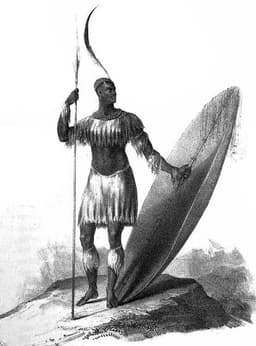
Shaka Zulu
General · Modern
70.2Total
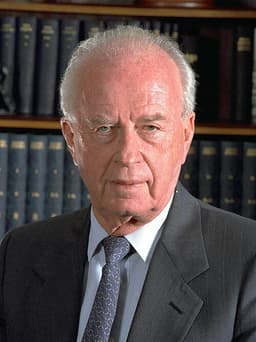
Yitzhak Rabin
General · Modern
66.4Total
Basic Information
Born
1787
1922
Died
1828
—
Era
Modern
Modern
Nationality
Zulu Kingdom
Israel
Occupation
General
General
Civilization
Other
Middle Eastern
Score Comparison
Military (10%)
80.0
61.7
Political (20%)
72.0
82.0
Influence (20%)
68.0
68.0
Legacy (20%)
68.0
55.0
Leadership (15%)
62.0
78.0
Strategy (15%)
80.8
55.0
TOTAL
70.2
66.4
Shaka Zulu — Complete Timeline
1816 AD
Introduction of the iklwa and horns of the buffalo formationReform
Shaka introduced the iklwa, a short stabbing spear, and the 'horns of the buffalo' tactical formation to the Zulu army. These innovations replaced the traditional throwing assegai and allowed for close-quarters combat, significantly increasing the Zulu's military effectiveness and enabling rapid conquest.
Military InnovationTacticsZulu Warfare
Impact: regional
1819 AD
Conquest of the Ndwandwe KingdomWar◆ Major
Shaka's Zulu army defeated the Ndwandwe kingdom at the Battle of Gqokli Hill, a decisive victory that eliminated a major rival. This conquest allowed Shaka to consolidate control over a large territory in present-day KwaZulu-Natal, marking the rise of the Zulu as a dominant regional power.
ConquestZulu ExpansionNdwandwe
Impact: regional
1828 AD
Assassination of ShakaPolitical Action◆ Major
Shaka was assassinated by his half-brothers Dingane and Mhlangana, with the support of his aunt Mkabayi. The coup ended his reign of terror and expansionist wars, leading to a period of instability and the eventual rise of Dingane as king.
AssassinationSuccession CrisisZulu Kingdom
Impact: regionaltragic
Yitzhak Rabin — Complete Timeline
1967 AD
Chief of Staff during the Six-Day WarWar
As Chief of Staff of the Israel Defense Forces, Rabin commanded the Israeli military during the Six-Day War against Egypt, Jordan, and Syria. Israel captured the Sinai Peninsula, Gaza Strip, West Bank, East Jerusalem, and Golan Heights, reshaping the region.
Six-Day WarTerritorial ExpansionMilitary Victory
Impact: global
1993 AD
Signing of the Oslo AccordsPolitical Action
As prime minister, Rabin signed the Oslo Accords with PLO Chairman Yasser Arafat on the White House lawn. The agreement established the Palestinian Authority and set a framework for Palestinian self-governance in the West Bank and Gaza Strip.
Peace ProcessPalestiniansOslo
Impact: globalconstructive
1995 AD
Assassination at Peace RallyPolitical Action
Rabin was assassinated by Israeli extremist Yigal Amir after a peace rally in Tel Aviv. The assassination shocked Israel and the world, derailing the Oslo peace process and leading to a period of political instability.
AssassinationPeace ProcessPolitical Violence
Impact: globaltragic
Expert Analysis
Shaka Zulu vs Yitzhak Rabin
# The Spear and the Olive Branch
On a dusty hillside in what is now KwaZulu-Natal, a young warrior stood watching his men train with a weapon unlike any seen before—a short, broad-bladed spear designed not for throwing but for thrusting at close quarters. Half a world away and a century later, a gaunt-faced soldier in an olive uniform stood before a microphone on the White House lawn, shaking hands with his sworn enemy. Both men were generals. Both would change the course of their nations. One would build an empire through blood and iron; the other would dismantle a fortress through ink and compromise. And both would die by the hands of their own people.
Origins
Shaka kaSenzangakhona was born in 1787, the illegitimate son of a minor Zulu chief. His childhood was one of humiliation and exile—his father rejected him, and he grew up among the Mthethwa clan, where he learned the brutal arts of war in a land where survival depended on the strength of one's arm. The world he inherited was a patchwork of small Nguni chiefdoms, constantly feuding over cattle and grazing land. Violence was not a choice but a condition of existence.
Yitzhak Rabin was born in Jerusalem in 1922, the son of Russian Jewish immigrants who had fled persecution. His world was also one of siege—a small Jewish community surrounded by hostile Arab populations, living under the British Mandate of Palestine. But where Shaka's world was tribal and oral, Rabin's was literate, political, and global. He grew up reading newspapers, attending socialist youth movements, and learning that survival required not just strength but diplomacy, organization, and the favor of distant powers.
Rise to Power
Shaka's path to power was forged in fire. When he became chief of the Zulu in 1816, his clan numbered barely 1,500 people. He immediately set about revolutionizing his army. He discarded the long throwing spear—the assegai—and replaced it with the *iklwa*, a short stabbing spear named for the sucking sound it made when pulled from a body. He trained his warriors to fight in close formation, using large cowhide shields to hook and unbalance opponents. Most famously, he devised the "horns of the buffalo" formation—a central mass of veteran warriors that pinned the enemy, while younger, faster regiments swept around the flanks to encircle and annihilate.
Rabin's rise was more conventional but no less dramatic. He joined the Palmach, the elite strike force of the Jewish underground, and fought in Israel's War of Independence in 1948. By 1964, he had become Chief of Staff of the Israel Defense Forces. His defining moment came in June 1967, when he commanded the Six-Day War. In a stunning preemptive strike, Israeli aircraft destroyed the Egyptian air force on the ground, and ground forces captured the Sinai Peninsula, the Golan Heights, the West Bank, and East Jerusalem. Rabin became a national hero, the architect of a victory that seemed almost biblical in its swiftness.
Leadership & Governance
Shaka ruled through terror and charisma. He demanded absolute discipline—any warrior who showed fear was executed. He centralized power ruthlessly, absorbing conquered clans into the Zulu nation through a system of age-regiments that broke old tribal loyalties. His military innovations were matched by political genius: he created a network of royal homesteads, controlled cattle distribution, and used marriage alliances to bind his growing empire. But his governance was also brutal. The *Mfecane*—the "crushing"—saw entire peoples displaced, with perhaps a million dead in the chaos of his expansion.
Rabin governed through consensus and calculation. As prime minister in the 1970s and again in the 1990s, he was no idealist—he was a pragmatic security hawk who believed in Israel's military strength. But he also understood that victory on the battlefield could not solve the political problem of the Palestinians. In 1993, he made the most controversial decision of his career: he signed the Oslo Accords with Yasser Arafat, recognizing the Palestine Liberation Organization as the legitimate representative of the Palestinian people. "We say to you today in a loud and clear voice," he told the world, "enough of blood and tears."
Triumph & Tragedy
Shaka's greatest triumph came in 1819 at the Battle of Gqokli Hill, where his outnumbered Zulu army defeated the powerful Ndwandwe kingdom. The victory eliminated his last major rival and allowed him to forge a Zulu nation that stretched from the Pongola River to the Tugela. But his tragedy was the loneliness of absolute power. Paranoid and increasingly unstable, he ordered the execution of his own mother's mourners for not showing sufficient grief. His half-brothers, sensing his unraveling, struck on September 22, 1828, stabbing him to death in his royal kraal.
Rabin's triumph came on the White House lawn in September 1993, when he shook hands with Arafat—a moment that seemed to promise peace for a land soaked in blood. His tragedy came two years later, on November 4, 1995, at a peace rally in Tel Aviv. As he walked to his car, a young Israeli extremist named Yigal Amir shot him in the back. Rabin died in the ambulance, a bullet-pocked song sheet in his pocket bearing the words of an Israeli folk song: "Sing for peace."
Character & Destiny
Shaka was a man of iron will and volcanic rage. His military genius was inseparable from his ruthlessness—he could not have built an empire without breaking bones. But that same hardness made him incapable of moderation, and his inability to share power or trust anyone ultimately destroyed him. He was a creature of his time, when African state-building was a brutal zero-sum game.
Rabin was a man of grim determination and quiet dignity. He was not a natural orator or a charismatic leader—he was a soldier who learned that peace required a different kind of courage. His decision to negotiate with Arafat was not born of sentiment but of cold calculation: he saw the demographic trends, the intifada, the international isolation, and concluded that Israel could not rule over millions of Palestinians forever. That realism made him a traitor to some and a hero to others.
Legacy
Shaka's legacy is the Zulu nation itself. Today, nearly 12 million Zulus speak the language he helped unify, and his military innovations are studied in war colleges around the world. But his methods also left a dark shadow—the *Mfecane* scarred southern Africa for generations, and his cult of personality set a precedent for autocratic rule that would haunt the continent.
Rabin's legacy is unfinished. The Oslo Accords he signed did not bring peace—they collapsed in violence and mistrust. But his assassination transformed him into a symbol of the possibility of peace, a martyr to the idea that enemies can become partners. On the anniversary of his death, Israelis gather in Tel Aviv to sing the same song he had in his pocket. His murder taught a terrible lesson: that the greatest danger to a peacemaker is not the foreign enemy but the fanatic at home.
Conclusion
Shaka and Rabin lived worlds apart, but their stories echo each other in haunting ways. Both were generals who understood that war is a tool, not a purpose. Both used that tool with devastating effectiveness. And both died because their visions outran the willingness of their own people to follow. Shaka's empire crumbled within decades of his death, but the Zulu identity he forged endures. Rabin's peace process collapsed, but the idea he championed—that security requires reconciliation—remains the only viable path for Israel and Palestine. Perhaps the deepest lesson is this: the men who change history are often those who see that the old ways of killing must eventually give way to new ways of living. The tragedy is that seeing it is not enough—you must also survive the sight.
Rankings
🥇
Shaka ZuluLeader
Mil: 80.0Pol: 72.0Inf: 68.0
70.2
🥈
Yitzhak Rabin
Mil: 61.7Pol: 82.0Inf: 68.0
66.4
+3.8 behind
How This Comparison Works
Algorithm
Each figure is scored on 6 dimensions (0—100 scale) based on structured historical data: Military (10%), Political (20%), Influence (20%), Legacy (20%), Leadership (15%), Strategy (15%). The weighted total produces the final ranking.
Data Sources
Scores are computed from structured sub-indicators in the database. Scale factors adjust for era (Ancient ×0.85, Modern ×1.0) and civilization size (Eastern ×1.05, Other ×0.80) to account for differences in population and military scale.
Maximum 3 Figures
Comparisons are limited to 2—3 figures to ensure readability and statistical meaningfulness.
Error Margins
±5 points per dimension — Sub-scores are derived from historical records with inherent uncertainty. Two figures within 5 points on a dimension should be considered roughly equivalent in that area.
Total Score Accuracy
±3 points overall — The weighted combination of 6 dimensions produces a total score with approximately ±3 points of uncertainty. Differences of less than 3 points are not statistically significant— the figures are effectively tied.
Known Limitations
- Historical records are incomplete and uneven across civilizations
- Figures from oral-tradition societies may be underrepresented
- Occupation labels can misclassify multi-role figures
- Scores measure capability and impact, not moral character
- Quantitative scoring is a comparison tool, not absolute truth
Capability Radar
Military (10%) — Battles & Warfare
Battles
85
65
Win Rate
90
70
Expansion
88
50
Political (20%) — Governance & Reform
Reform
85
65
Diplomacy
60
85
Economy
65
60
Influence (20%) — Cultural & Global Reach
Cultural
80
55
Global
70
70
Legacy (20%) — Historical Impact
Historical
85
75
Longevity
75
60
Leadership (15%) — Power & Stability
Tenure
70
70
Stability
55
40
Strategy (15%) — Tactics & Innovation
Strategy
90
75
Tactics
95
60
Reform
98
55
Similar Comparisons
Comments & Discussion
"Iron Spear6/16/2026
Shaka didn't just invent a new weapon—he created a military revolution. The iklwa's design forced Zulu warriors to close with enemies, demanding brutal hand-to-hand courage. His 'horns of the bull' formation outflanked and crushed rivals. But let's be clear: his 80,000-strong army starved prisoners and annexed tribes through terror. This isn't 'unification'; it's genocide-lite dressed up in nationalist myth."
乌木剑客6/16/2026
拉宾才是真战略家。他明白现代战争拼的不是短矛,而是经济和政治杠杆。奥斯陆协议那步险棋,是拿命赌和平——1995年以色列人均GDP因和平红利暴涨9%,这才是将军该有的战绩。沙卡就是部落版的成吉思汗,杀戮率在武器面前不值一提。比数字?沙卡治下人口增长停滞,拉宾时代以色列从400万膨胀到600万,和平才是最好的增长引擎。