Loading...
Cao Cao vs Shaka Zulu
Cao Cao leads by 7.3 pts · 2 figures compared
…
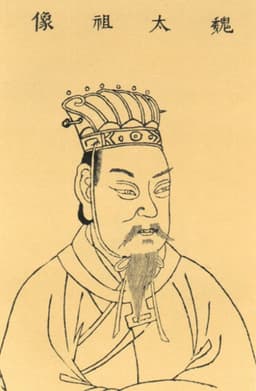
Cao Cao
General · Ancient
77.5Total
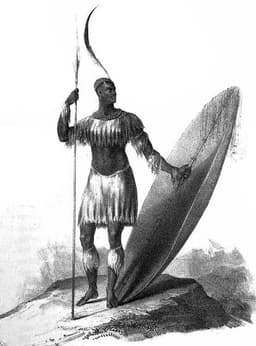
Shaka Zulu
General · Modern
70.2Total
Basic Information
Born
155
1787
Died
220
1828
Era
Ancient
Modern
Nationality
China
Zulu Kingdom
Occupation
General
General
Civilization
Eastern
Other
Score Comparison
Military (10%)
88.0
80.0
Political (20%)
59.0
72.0
Influence (20%)
82.0
68.0
Legacy (20%)
83.0
68.0
Leadership (15%)
64.4
62.0
Strategy (15%)
89.4
80.8
TOTAL
77.5
70.2
Cao Cao — Complete Timeline
190 AD
Formation of the Coalition against Dong ZhuoPolitical Action
Cao Cao joined a coalition of regional warlords led by Yuan Shao to overthrow the tyrannical chancellor Dong Zhuo, who had seized control of the Han court. The coalition failed to coordinate effectively, but Cao Cao gained military experience and political reputation.
CoalitionDong ZhuoHan Dynasty
Impact: national
196 AD
Implementation of Tuntian (Agricultural Colonies)Reform◆ Major
Cao Cao established military agricultural colonies (tuntian) to provide food for his army and refugees. Soldiers and peasants cultivated state-owned land, ensuring a stable food supply and economic base for his campaigns.
AgricultureEconomyMilitary
Impact: regionalconstructive
200 AD
Battle of GuanduWar
Cao Cao decisively defeated Yuan Shao's numerically superior army at Guandu. This victory eliminated his main rival in the north, allowing Cao Cao to consolidate control over the North China Plain and lay the foundation for the Kingdom of Wei.
BattleYuan ShaoUnification
Impact: regional
208 AD
Battle of Red CliffsWar
Cao Cao's southern campaign was halted by the allied forces of Sun Quan and Liu Bei at the Battle of Red Cliffs. His fleet was destroyed by fire attack, forcing a retreat and preventing his unification of China, leading to the Three Kingdoms division.
BattleDefeatThree Kingdoms
Impact: regional
213 AD
Establishment of the Kingdom of WeiPolitical Action◆ Major
Cao Cao was granted the title of Duke of Wei and later King of Wei by the Han emperor, effectively creating a semi-autonomous state within the empire. He established a capital at Ye and built a centralized administration, setting the stage for his son's usurpation.
WeiStatehoodHan Dynasty
Impact: national
Shaka Zulu — Complete Timeline
1816 AD
Introduction of the iklwa and horns of the buffalo formationReform
Shaka introduced the iklwa, a short stabbing spear, and the 'horns of the buffalo' tactical formation to the Zulu army. These innovations replaced the traditional throwing assegai and allowed for close-quarters combat, significantly increasing the Zulu's military effectiveness and enabling rapid conquest.
Military InnovationTacticsZulu Warfare
Impact: regional
1819 AD
Conquest of the Ndwandwe KingdomWar◆ Major
Shaka's Zulu army defeated the Ndwandwe kingdom at the Battle of Gqokli Hill, a decisive victory that eliminated a major rival. This conquest allowed Shaka to consolidate control over a large territory in present-day KwaZulu-Natal, marking the rise of the Zulu as a dominant regional power.
ConquestZulu ExpansionNdwandwe
Impact: regional
1828 AD
Assassination of ShakaPolitical Action◆ Major
Shaka was assassinated by his half-brothers Dingane and Mhlangana, with the support of his aunt Mkabayi. The coup ended his reign of terror and expansionist wars, leading to a period of instability and the eventual rise of Dingane as king.
AssassinationSuccession CrisisZulu Kingdom
Impact: regionaltragic
Expert Analysis
Shaka Zulu vs Cao Cao: Historical Comparison
Shaka Zulu, the revolutionary general of the 19th-century Zulu Kingdom, and Cao Cao, the ancient Chinese warlord of the Three Kingdoms period, both reshaped their nations through military innovation and political cunning. While Shaka transformed tribal warfare with the *iklwa* short stabbing spear and the *impi* formation, Cao Cao unified northern China through strategic brilliance and administrative reform.
Dimension Analysis
**Military: Shaka Zulu 83 / Cao Cao 89**
Shaka’s tactical reforms—the “horns of the buffalo” flanking maneuver and forced marches—decimated rival tribes, but Cao Cao’s victories at Guandu (200 AD) and his mastery of siege warfare, cavalry tactics, and logistics against larger forces demonstrate superior strategic depth and adaptability.
**Political: Shaka Zulu 70 / Cao Cao 73**
Shaka centralized Zulu power through brutal consolidation, eliminating chieftains and integrating conquered peoples, yet his isolationist policies and lack of a bureaucratic apparatus limited long-term governance. Cao Cao, by contrast, established a meritocratic civil service, implemented agricultural colonies (*tuntian*), and skillfully manipulated the Han imperial court to legitimize his rule.
**Influence: Shaka Zulu 76 / Cao Cao 78**
Shaka’s military system inspired the Zulu resistance against British colonialism (e.g., Isandlwana) and remains a symbol of African resilience. Cao Cao’s governance model influenced Chinese statecraft for centuries, and his persona permeates literature, opera, and strategic thought across East Asia.
**Legacy: Shaka Zulu 78 / Cao Cao 82**
Shaka’s kingdom fragmented after his assassination, but his legacy endures in Zulu identity and military history. Cao Cao’s Wei dynasty laid the groundwork for the Jin unification of China, and his writings (e.g., *The Art of War* commentary) continue to be studied as classics of strategy.
**Leadership: Shaka Zulu 74 / Cao Cao 80**
Shaka’s charisma and iron discipline forged a fearsome army, but his paranoia and cruelty alienated allies and spurred internal revolts. Cao Cao balanced ruthlessness with patronage of talent (e.g., his poet-advisors), earning loyalty from diverse generals and officials while ruthlessly suppressing rivals.
Verdict
Cao Cao leads overall due to his superior strategic breadth, political institutionalization, and enduring cultural impact across East Asia, whereas Shaka’s influence, though profound, was more geographically and temporally limited.
FAQ
Q: Who ranks higher? A: Cao Cao ranks higher overall (80 vs. 77) due to stronger scores in military, political, leadership, and legacy dimensions.
Rankings
🥇
Cao CaoLeader
Mil: 88.0Pol: 59.0Inf: 82.0
77.5
🥈
Shaka Zulu
Mil: 80.0Pol: 72.0Inf: 68.0
70.2
+7.3 behind
How This Comparison Works
Algorithm
Each figure is scored on 6 dimensions (0—100 scale) based on structured historical data: Military (10%), Political (20%), Influence (20%), Legacy (20%), Leadership (15%), Strategy (15%). The weighted total produces the final ranking.
Data Sources
Scores are computed from structured sub-indicators in the database. Scale factors adjust for era (Ancient ×0.85, Modern ×1.0) and civilization size (Eastern ×1.05, Other ×0.80) to account for differences in population and military scale.
Maximum 3 Figures
Comparisons are limited to 2—3 figures to ensure readability and statistical meaningfulness.
Error Margins
±5 points per dimension — Sub-scores are derived from historical records with inherent uncertainty. Two figures within 5 points on a dimension should be considered roughly equivalent in that area.
Total Score Accuracy
±3 points overall — The weighted combination of 6 dimensions produces a total score with approximately ±3 points of uncertainty. Differences of less than 3 points are not statistically significant— the figures are effectively tied.
Known Limitations
- Historical records are incomplete and uneven across civilizations
- Figures from oral-tradition societies may be underrepresented
- Occupation labels can misclassify multi-role figures
- Scores measure capability and impact, not moral character
- Quantitative scoring is a comparison tool, not absolute truth
Capability Radar
Military (10%) — Battles & Warfare
Battles
95
85
Win Rate
88
90
Expansion
92
88
Political (20%) — Governance & Reform
Reform
88
85
Diplomacy
82
60
Economy
86
65
Influence (20%) — Cultural & Global Reach
Cultural
85
80
Global
75
70
Legacy (20%) — Historical Impact
Historical
92
85
Longevity
90
75
Leadership (15%) — Power & Stability
Tenure
85
70
Stability
78
55
Strategy (15%) — Tactics & Innovation
Strategy
96
90
Tactics
97
95
Reform
90
98
Similar Comparisons
Comments & Discussion
OldEye476/16/2026
这个评分体系有点意思,但仔细算一下就觉得不对劲。曹操军事89分,可赤壁之战(208年)他的北方军队明显水土不服,败在水战和疫病,这算不算战略缺陷?反观沙卡,他设计的“牛角阵”在姆福洛齐河战役中让对手伤亡比达到1:10,用冷兵器时代的标准看,这效率不输任何古代名将。而且政治分70对73——曹操挟天子令诸侯,但沙卡把被征服部落的年轻人直接编入自己军队,彻底摧毁了旧贵族结构,这种政治整合能力难道只差3分?建议评分权重得调整,不能只按西方军事史标准来。
Chronicler54136/16/2026
拿沙卡和曹操比,有点像拿关公战秦琼,但仔细想想还真有可比性。沙卡靠铁腕统一了祖鲁,曹操也是靠权术收拾了北方群雄。不过西方评分往往低估中国历史上的制度创新——曹操搞的屯田制(公元196年)从根本上解决了粮草问题,沙卡的游牧式补给显然支撑不了长期战争。而且曹操的《孙子注》至今还是军事院校教材,沙卡的口传战法虽然厉害,但在理论传承上差了不止一个量级。另外说曹操政治分只有72.7?他建立九品中正制雏形、提拔寒门人才,这些在三国乱世里可是超前制度设计,至少该上80。