Loading...
This comparison has not been analyzed yet.
One-time AI generation (~1 minute). Scores and timeline are already available below.
Seongjong of Goryeo vs Tughril
Tughril leads by 3.1 pts · 2 figures compared
…
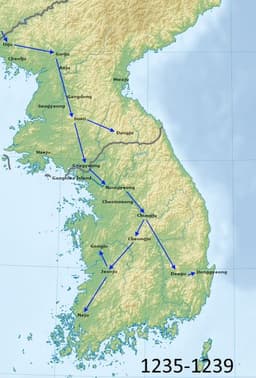
Seongjong of Goryeo
Emperor · Medieval
58.6Total
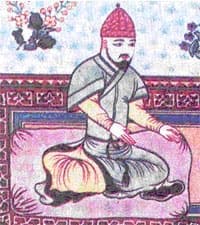
Tughril
Emperor · Medieval
61.7Total
Basic Information
Born
961
990
Died
997
1063
Era
Medieval
Medieval
Nationality
Korea
Seljuk Empire
Occupation
Emperor
Emperor
Civilization
Eastern
Middle Eastern
Score Comparison
Military (10%)
50.0
78.0
Political (20%)
70.0
45.0
Influence (20%)
58.0
68.0
Legacy (20%)
50.0
55.0
Leadership (15%)
78.0
66.0
Strategy (15%)
43.7
65.4
TOTAL
58.6
61.7
Seongjong of Goryeo — Complete Timeline
990 AD
Establishment of Confucian Academies and SchoolsCultural◆ Major
King Seongjong founded national Confucian academies and local schools throughout Goryeo, promoting Confucian learning and ethics. This educational reform strengthened the civil service examination system and fostered a Confucian scholar-official class that shaped Goryeo governance.
EducationConfucianismGoryeo
Impact: nationalprogressive
995 AD
Promulgation of the Goryeo Code of LawsReform◆ Major
Seongjong issued a comprehensive legal code based on Confucian principles, systematizing Goryeo's laws and administrative regulations. This code provided a legal framework for governance, criminal justice, and social order, influencing Korean law for centuries.
Legal ReformConfucianismGoryeo
Impact: nationalconstructive
Tughril — Complete Timeline
1040 AD
Battle of DandanaqanWar
Tughril led the Seljuk Turks to a decisive victory over the Ghaznavid Empire at Dandanaqan in Khorasan. This battle ended Ghaznavid control over the region and established the Seljuk Empire as a major power in Persia and Central Asia.
BattleSeljuk EmpireGhaznavids
Impact: regional
1048 AD
Campaigns Against the Byzantine EmpireWar
Tughril launched raids into Byzantine Anatolia, capturing cities such as Erzurum. These campaigns weakened Byzantine control in the east and paved the way for later Seljuk expansion, though they did not result in permanent conquest at this time.
Byzantine WarsRaidsAnatolia
Impact: regional
1055 AD
Conquest of BaghdadWar◆ Major
Tughril entered Baghdad at the invitation of the Abbasid caliph Al-Qa'im, who sought protection from the Buyid dynasty. Tughril overthrew the Buyids and was granted the title of Sultan, becoming the de facto ruler of the Islamic world while preserving the caliph as a figurehead.
ConquestBaghdadSultanate
Impact: regional
1063 AD
Marriage to the Abbasid PrincessPolitical Action
Tughril married the daughter of the Abbasid caliph Al-Qa'im, solidifying the alliance between the Seljuk sultans and the caliphate. This union legitimized Seljuk rule and established a precedent for future sultan-caliph relations.
MarriageAllianceCaliphate
Impact: regionalconstructive
This comparison has not been analyzed yet.
One-time AI generation (~1 minute). Scores and timeline are already available below.
Rankings
🥇
TughrilLeader
Mil: 78.0Pol: 45.0Inf: 68.0
61.7
🥈
Seongjong of Goryeo
Mil: 50.0Pol: 70.0Inf: 58.0
58.6
+3.1 behind
How This Comparison Works
Algorithm
Each figure is scored on 6 dimensions (0—100 scale) based on structured historical data: Military (10%), Political (20%), Influence (20%), Legacy (20%), Leadership (15%), Strategy (15%). The weighted total produces the final ranking.
Data Sources
Scores are computed from structured sub-indicators in the database. Scale factors adjust for era (Ancient ×0.85, Modern ×1.0) and civilization size (Eastern ×1.05, Other ×0.80) to account for differences in population and military scale.
Maximum 3 Figures
Comparisons are limited to 2—3 figures to ensure readability and statistical meaningfulness.
Error Margins
±5 points per dimension — Sub-scores are derived from historical records with inherent uncertainty. Two figures within 5 points on a dimension should be considered roughly equivalent in that area.
Total Score Accuracy
±3 points overall — The weighted combination of 6 dimensions produces a total score with approximately ±3 points of uncertainty. Differences of less than 3 points are not statistically significant— the figures are effectively tied.
Known Limitations
- Historical records are incomplete and uneven across civilizations
- Figures from oral-tradition societies may be underrepresented
- Occupation labels can misclassify multi-role figures
- Scores measure capability and impact, not moral character
- Quantitative scoring is a comparison tool, not absolute truth
Capability Radar
Military (10%) — Battles & Warfare
Battles
20
75
Win Rate
20
80
Expansion
10
80
Political (20%) — Governance & Reform
Reform
80
60
Diplomacy
70
75
Economy
70
60
Influence (20%) — Cultural & Global Reach
Cultural
60
65
Global
30
70
Legacy (20%) — Historical Impact
Historical
55
75
Longevity
50
70
Leadership (15%) — Power & Stability
Tenure
75
70
Stability
75
65
Strategy (15%) — Tactics & Innovation
Strategy
15
75
Tactics
15
70
Reform
25
65
Similar Comparisons
Comments & Discussion
No comments yet. Be the first to share your thoughts!