Loading...
Hojo Ujitsuna vs Tughril
Tughril leads by 9.0 pts · 2 figures compared
…
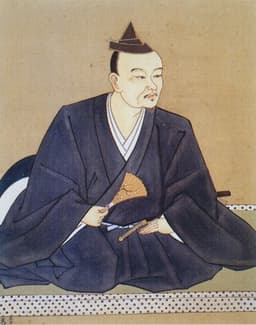
Hojo Ujitsuna
Emperor · Medieval
52.7Total
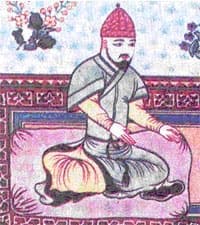
Tughril
Emperor · Medieval
61.7Total
Basic Information
Born
1487
990
Died
1541
1063
Era
Medieval
Medieval
Nationality
Japan
Seljuk Empire
Occupation
Emperor
Emperor
Civilization
Eastern
Middle Eastern
Score Comparison
Military (10%)
45.0
78.0
Political (20%)
68.0
45.0
Influence (20%)
53.3
68.0
Legacy (20%)
45.8
55.0
Leadership (15%)
53.2
66.0
Strategy (15%)
52.5
65.4
TOTAL
52.7
61.7
Hojo Ujitsuna — Complete Timeline
1524 AD
Capture of Edo CastleWar◆ Major
Hojo Ujitsuna captured Edo Castle from the Uesugi clan, expanding Hojo control into the Kanto region. This victory established the Hojo as a major power in the area and laid the foundation for their future dominance.
ConquestEdo CastleKanto
Impact: regional
1526 AD
Siege of Odawara CastleWar◆ Major
Hojo Ujitsuna successfully defended Odawara Castle against a siege by the Uesugi and their allies. The defense solidified Odawara as the Hojo stronghold and demonstrated Ujitsuna's military capability.
SiegeDefenseOdawara
Impact: regional
1537 AD
Expansion into Musashi ProvinceWar
Hojo Ujitsuna led campaigns into Musashi Province, capturing several castles from the Uesugi. This expansion significantly increased Hojo territory and influence in the Kanto region.
ExpansionMusashiUesugi Conflict
Impact: regional
Tughril — Complete Timeline
1040 AD
Battle of DandanaqanWar
Tughril led the Seljuk Turks to a decisive victory over the Ghaznavid Empire at Dandanaqan in Khorasan. This battle ended Ghaznavid control over the region and established the Seljuk Empire as a major power in Persia and Central Asia.
BattleSeljuk EmpireGhaznavids
Impact: regional
1048 AD
Campaigns Against the Byzantine EmpireWar
Tughril launched raids into Byzantine Anatolia, capturing cities such as Erzurum. These campaigns weakened Byzantine control in the east and paved the way for later Seljuk expansion, though they did not result in permanent conquest at this time.
Byzantine WarsRaidsAnatolia
Impact: regional
1055 AD
Conquest of BaghdadWar◆ Major
Tughril entered Baghdad at the invitation of the Abbasid caliph Al-Qa'im, who sought protection from the Buyid dynasty. Tughril overthrew the Buyids and was granted the title of Sultan, becoming the de facto ruler of the Islamic world while preserving the caliph as a figurehead.
ConquestBaghdadSultanate
Impact: regional
1063 AD
Marriage to the Abbasid PrincessPolitical Action
Tughril married the daughter of the Abbasid caliph Al-Qa'im, solidifying the alliance between the Seljuk sultans and the caliphate. This union legitimized Seljuk rule and established a precedent for future sultan-caliph relations.
MarriageAllianceCaliphate
Impact: regionalconstructive
Expert Analysis
Origins
Hojo Ujitsuna (1487–1541) was born into the Hojo clan of Izu Province, Japan. His father, Hojo Soun, had established the clan's base at Odawara Castle. Ujitsuna inherited a small but growing domain and was trained in military and political affairs from a young age. His background was rooted in the chaos of the Sengoku period, where local lords vied for control.
Tughril (c. 990–1063) was born into the Seljuk tribe of Oghuz Turks in the steppes of Central Asia. His grandfather, Seljuk, had converted to Islam and led the tribe into Transoxiana. Tughril and his brother Chaghri grew up as nomadic warriors, learning horsemanship and archery. Their early life was marked by tribal warfare and service under the Karakhanids and Ghaznavids.
Rise to Power
Ujitsuna rose by expanding Hojo territory through strategic marriages and military campaigns. In 1524, he captured Edo Castle from the Uesugi clan, a major victory that established Hojo control in the Kanto region (score: Military 45.0). He later defended Odawara Castle against a Uesugi siege in 1526, solidifying his reputation. His expansion into Musashi Province in the 1530s added several castles, increasing Hojo territory significantly.
Tughril's rise began with the Battle of Dandanaqan in 1040, where he and Chaghri defeated the Ghaznavid army, ending Ghaznavid control over Khorasan (score: Military 78.0). This victory made Tughril the paramount leader of the Seljuks. In 1055, he entered Baghdad at the invitation of the Abbasid caliph Al-Qa'im, overthrew the Buyid dynasty, and became the de facto ruler of the Islamic world. His marriage to the caliph's daughter in 1062 legitimized his authority.
Leadership & Governance
Ujitsuna ruled as a daimyo, focusing on castle fortification and clan administration. He transformed Odawara into a fortress city, using advanced defensive techniques. His governance was based on alliances with local samurai and land redistribution. However, his political score of 68.0 reflects limited centralization compared to later unifiers like Oda Nobunaga.
Tughril governed as a sultan, establishing the Seljuk state with a blend of Persian bureaucracy and Turkish military power. He appointed viziers like al-Kunduri to manage administration. His political score of 45.0 indicates challenges in integrating nomadic traditions with sedentary rule. He maintained control through a loyal Turkic slave-soldier corps (ghulams).
Triumph & Tragedy
Ujitsuna's greatest success was capturing Edo Castle, which became the foundation of Hojo power. His defense of Odawara also proved his strategic skill. However, his failure to fully conquer the Kanto region left the Hojo vulnerable. He died in 1541, leaving the clan to his son Ujiyasu, who would face the combined forces of the Uesugi and Takeda.
Tughril's triumph was conquering Baghdad and restoring Sunni Abbasid caliphate authority. His campaigns against the Byzantine Empire captured cities like Erzurum, weakening Byzantine control in Anatolia (score: Strategy 65.4). His tragedy was the lack of a clear succession plan; he died without a son, leading to a power struggle between his nephew Alp Arslan and others.
Character & Destiny
Ujitsuna was cautious and methodical, preferring fortification and diplomacy over risky battles. His character shaped a steady but limited expansion. He scored 53.2 in Leadership, reflecting his ability to hold the clan together but not to inspire widespread loyalty.
Tughril was ambitious and decisive, leading from the front in battle. His charisma and military prowess earned him the title "Rukn al-Dawla" (Pillar of the State). However, his reliance on tribal support made his rule unstable. His Leadership score of 66.0 indicates stronger command but also greater risk.
Legacy
Ujitsuna's legacy is the consolidation of the Hojo domain, which lasted until 1590. His fortifications influenced Japanese castle design. He scored 45.8 in Legacy, as his achievements were overshadowed by later unifiers.
Tughril's legacy is the founding of the Seljuk Empire, which controlled much of the Middle East for over a century. He restored Sunni orthodoxy and initiated Turkic expansion into Anatolia, setting the stage for the Ottoman Empire. His Legacy score of 55.0 reflects his foundational role.
Conclusion
Tughril had greater impact, with a total score of 61.7 vs Ujitsuna's 52.7. Tughril's military victories (78.0) and strategic campaigns (65.4) reshaped the Islamic world, while Ujitsuna's regional influence was limited to Japan's Sengoku period. Tughril's founding of an empire that lasted centuries outweighs Ujitsuna's consolidation of a single clan. Thus, Tughril emerges as the more influential figure.
Rankings
🥇
TughrilLeader
Mil: 78.0Pol: 45.0Inf: 68.0
61.7
🥈
Hojo Ujitsuna
Mil: 45.0Pol: 68.0Inf: 53.3
52.7
+9.0 behind
How This Comparison Works
Algorithm
Each figure is scored on 6 dimensions (0—100 scale) based on structured historical data: Military (10%), Political (20%), Influence (20%), Legacy (20%), Leadership (15%), Strategy (15%). The weighted total produces the final ranking.
Data Sources
Scores are computed from structured sub-indicators in the database. Scale factors adjust for era (Ancient ×0.85, Modern ×1.0) and civilization size (Eastern ×1.05, Other ×0.80) to account for differences in population and military scale.
Maximum 3 Figures
Comparisons are limited to 2—3 figures to ensure readability and statistical meaningfulness.
Error Margins
±5 points per dimension — Sub-scores are derived from historical records with inherent uncertainty. Two figures within 5 points on a dimension should be considered roughly equivalent in that area.
Total Score Accuracy
±3 points overall — The weighted combination of 6 dimensions produces a total score with approximately ±3 points of uncertainty. Differences of less than 3 points are not statistically significant— the figures are effectively tied.
Known Limitations
- Historical records are incomplete and uneven across civilizations
- Figures from oral-tradition societies may be underrepresented
- Occupation labels can misclassify multi-role figures
- Scores measure capability and impact, not moral character
- Quantitative scoring is a comparison tool, not absolute truth
Capability Radar
Military (10%) — Battles & Warfare
Battles
45
75
Win Rate
50
80
Expansion
55
80
Political (20%) — Governance & Reform
Reform
45
60
Diplomacy
50
75
Economy
55
60
Influence (20%) — Cultural & Global Reach
Cultural
40
65
Global
20
70
Legacy (20%) — Historical Impact
Historical
45
75
Longevity
40
70
Leadership (15%) — Power & Stability
Tenure
50
70
Stability
50
65
Strategy (15%) — Tactics & Innovation
Strategy
60
75
Tactics
55
70
Reform
40
65
Similar Comparisons
Comments & Discussion
No comments yet. Be the first to share your thoughts!