Loading...
Kulottunga Chola I vs Tughril
Kulottunga Chola I leads by 2.0 pts · 2 figures compared
…
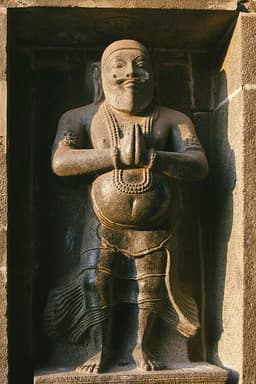
Kulottunga Chola I
Emperor · Medieval
63.7Total
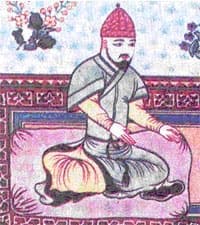
Tughril
Emperor · Medieval
61.7Total
Basic Information
Born
1025
990
Died
1122
1063
Era
Medieval
Medieval
Nationality
India
Seljuk Empire
Occupation
Emperor
Emperor
Civilization
Indian
Middle Eastern
Score Comparison
Military (10%)
77.2
78.0
Political (20%)
70.0
45.0
Influence (20%)
56.7
68.0
Legacy (20%)
52.0
55.0
Leadership (15%)
78.0
66.0
Strategy (15%)
65.9
65.4
TOTAL
63.7
61.7
Kulottunga Chola I — Complete Timeline
1070 AD
United the Chola and Chalukya dynasties through marriagePolitical Action◆ Major
Kulottunga Chola I, born as Rajendra Chalukya, ascended the Chola throne after his maternal uncle's death. He was the son of a Chalukya prince and a Chola princess, merging the two royal lines and ending the conflict between the dynasties.
Dynastic UnionChola-Chalukya
Impact: regionalconstructive
1075 AD
Conquered the Kalinga regionWar◆ Major
Kulottunga I led a military campaign into Kalinga (present-day Odisha), defeating the local rulers and incorporating the region into the Chola Empire. This expanded Chola influence along the eastern coast of India.
Kalinga WarTerritorial Expansion
Impact: regional
1077 AD
Established diplomatic relations with the Song Dynasty of ChinaPolitical Action◆ Major
Kulottunga I sent an embassy to the court of the Song Emperor Shenzong in China. The mission included gifts and trade proposals, strengthening maritime trade links between the Chola Empire and East Asia.
DiplomacyChina Trade
Impact: globalconstructive
1080 AD
Reformed the Chola administrative systemReform
Kulottunga I reorganized the Chola bureaucracy, introducing new revenue assessments and land surveys. He also standardized weights and measures across the empire, improving tax collection and economic efficiency.
AdministrationTax Reform
Impact: nationalconstructive
1090 AD
Lost control of the Vengi region to the Western ChalukyasWar
Kulottunga I's forces failed to hold the Vengi region (coastal Andhra) against the Western Chalukya king Vikramaditya VI. This loss reduced Chola territory and marked a setback in his later reign.
Territorial LossWestern Chalukya
Impact: regionaldestructive
Tughril — Complete Timeline
1040 AD
Battle of DandanaqanWar
Tughril led the Seljuk Turks to a decisive victory over the Ghaznavid Empire at Dandanaqan in Khorasan. This battle ended Ghaznavid control over the region and established the Seljuk Empire as a major power in Persia and Central Asia.
BattleSeljuk EmpireGhaznavids
Impact: regional
1048 AD
Campaigns Against the Byzantine EmpireWar
Tughril launched raids into Byzantine Anatolia, capturing cities such as Erzurum. These campaigns weakened Byzantine control in the east and paved the way for later Seljuk expansion, though they did not result in permanent conquest at this time.
Byzantine WarsRaidsAnatolia
Impact: regional
1055 AD
Conquest of BaghdadWar◆ Major
Tughril entered Baghdad at the invitation of the Abbasid caliph Al-Qa'im, who sought protection from the Buyid dynasty. Tughril overthrew the Buyids and was granted the title of Sultan, becoming the de facto ruler of the Islamic world while preserving the caliph as a figurehead.
ConquestBaghdadSultanate
Impact: regional
1063 AD
Marriage to the Abbasid PrincessPolitical Action
Tughril married the daughter of the Abbasid caliph Al-Qa'im, solidifying the alliance between the Seljuk sultans and the caliphate. This union legitimized Seljuk rule and established a precedent for future sultan-caliph relations.
MarriageAllianceCaliphate
Impact: regionalconstructive
Expert Analysis
Origins
Kulottunga Chola I (born 1025 CE as Rajendra Chalukya) was the son of a Chalukya prince and a Chola princess, uniting two rival dynasties. He grew up in the Chalukya court but was adopted by his maternal uncle, the Chola emperor Rajendra I. This dual heritage gave him a unique claim to both thrones. In contrast, Tughril (born c. 990 CE) was a Turkic chieftain from the Seljuk clan, leading nomadic Oghuz Turks in Central Asia. His early years involved tribal warfare and service under the Ghaznavids, who later turned against his family. While Kulottunga inherited a sophisticated bureaucracy, Tughril rose from a stateless background.
Rise to Power
Kulottunga ascended the Chola throne in 1070 CE after the death of his uncle, Adhirajendra, amid a succession crisis. He faced opposition from rival claimants but secured power through his lineage and military support. His key turning point was the conquest of Kalinga in 1096 CE, which expanded Chola influence into eastern India. Tughril's rise began with the Battle of Dandanaqan in 1040 CE, where he defeated the Ghaznavid sultan Mas'ud I, capturing Khorasan. This victory established the Seljuk Empire. In 1055 CE, Tughril entered Baghdad at the invitation of the Abbasid caliph, overthrowing the Buyids and becoming the de facto ruler of the Islamic world. Both used military prowess, but Kulottunga relied on dynastic legitimacy while Tughril exploited political vacuums.
Leadership & Governance
Kulottunga reformed the Chola administration by introducing land surveys, standardizing weights and measures, and revising revenue assessments. He maintained the traditional village autonomy but centralized tax collection. His diplomatic outreach to Song China (1077 CE) boosted maritime trade. Tughril, by contrast, governed through a tribal confederation, granting autonomy to vassals like the Kakuyids and Marwanids. He adopted the title 'Sultan' and married the caliph's daughter to legitimize his rule. Kulottunga scored 78.0 in leadership, reflecting his administrative reforms, while Tughril scored 66.0, as his governance relied more on military coercion. Kulottunga's system endured for decades; Tughril's empire fragmented after his death.
Triumph & Tragedy
Kulottunga's greatest triumph was uniting the Chola and Chalukya dynasties, creating a stable realm that lasted over a century. He successfully conquered Kalinga and established trade with China. However, his failure to hold Vengi against the Western Chalukya king Vikramaditya VI (c. 1075 CE) reduced Chola territory and prestige. Tughril's triumph was founding the Seljuk Empire and restoring Sunni orthodoxy in Baghdad. His raids into Byzantine Anatolia, capturing Erzurum, weakened Byzantium. Yet his tragedy was the lack of a succession plan: his nephews fought after his death, leading to civil war. Kulottunga's legacy score of 52.0 reflects his administrative impact, while Tughril's 55.0 acknowledges his political influence.
Character & Destiny
Kulottunga was pragmatic and diplomatic, preferring negotiation over war. He maintained peace with the Western Chalukyas through marriage alliances. His character is seen in his efficient bureaucracy and cultural patronage. Tughril was a bold military leader, decisive in battle but less skilled in governance. His invasion of Baghdad was a masterstroke, but his reliance on tribal loyalty proved unstable. Historical assessments note Kulottunga's patience and Tughril's ambition. Kulottunga scored 78.0 in military and 70.0 in politics, while Tughril scored 78.0 in military but only 45.0 in politics, reflecting his weaker state-building.
Legacy
Kulottunga's administrative reforms influenced later South Indian kingdoms, and his maritime policies boosted Chola trade. The Chola dynasty continued until the 13th century. Tughril's Seljuk Empire paved the way for the Turkic domination of the Middle East, influencing the Crusades and Ottoman rise. However, the Seljuk state dissolved within decades. Kulottunga's total score of 63.7 exceeds Tughril's 61.7, reflecting his more durable achievements. While Tughril's military impact was greater, Kulottunga's governance had longer reach.
Conclusion
Kulottunga Chola I had a greater overall impact due to his successful unification of dynasties, administrative reforms, and lasting legacy. Tughril founded an empire but failed to secure its continuity. With a total score of 63.7 against 61.7, Kulottunga's balanced leadership and statecraft outweigh Tughril's military conquests. The Chola emperor's system outlasted the Seljuk sultan's empire, making him the more effective ruler in historical terms.
Rankings
🥇
Kulottunga Chola ILeader
Mil: 77.2Pol: 70.0Inf: 56.7
63.7
🥈
Tughril
Mil: 78.0Pol: 45.0Inf: 68.0
61.7
+2.0 behind
How This Comparison Works
Algorithm
Each figure is scored on 6 dimensions (0—100 scale) based on structured historical data: Military (10%), Political (20%), Influence (20%), Legacy (20%), Leadership (15%), Strategy (15%). The weighted total produces the final ranking.
Data Sources
Scores are computed from structured sub-indicators in the database. Scale factors adjust for era (Ancient ×0.85, Modern ×1.0) and civilization size (Eastern ×1.05, Other ×0.80) to account for differences in population and military scale.
Maximum 3 Figures
Comparisons are limited to 2—3 figures to ensure readability and statistical meaningfulness.
Error Margins
±5 points per dimension — Sub-scores are derived from historical records with inherent uncertainty. Two figures within 5 points on a dimension should be considered roughly equivalent in that area.
Total Score Accuracy
±3 points overall — The weighted combination of 6 dimensions produces a total score with approximately ±3 points of uncertainty. Differences of less than 3 points are not statistically significant— the figures are effectively tied.
Known Limitations
- Historical records are incomplete and uneven across civilizations
- Figures from oral-tradition societies may be underrepresented
- Occupation labels can misclassify multi-role figures
- Scores measure capability and impact, not moral character
- Quantitative scoring is a comparison tool, not absolute truth
Capability Radar
Military (10%) — Battles & Warfare
Battles
75
75
Win Rate
80
80
Expansion
82
80
Political (20%) — Governance & Reform
Reform
72
60
Diplomacy
80
75
Economy
78
60
Influence (20%) — Cultural & Global Reach
Cultural
70
65
Global
55
70
Legacy (20%) — Historical Impact
Historical
72
75
Longevity
60
70
Leadership (15%) — Power & Stability
Tenure
85
70
Stability
75
65
Strategy (15%) — Tactics & Innovation
Strategy
78
75
Tactics
70
70
Reform
65
65
Similar Comparisons
Comments & Discussion
No comments yet. Be the first to share your thoughts!