Loading...
This comparison has not been analyzed yet.
One-time AI generation (~1 minute). Scores and timeline are already available below.
Sekgoma I vs Shah Jahan
Shah Jahan leads by 22.1 pts · 2 figures compared
…

Sekgoma I
Emperor · Modern
45.7Total
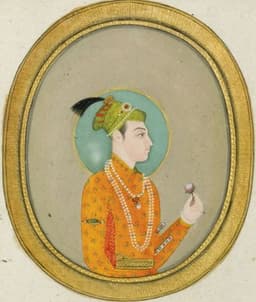
Shah Jahan
Emperor · Modern
67.8Total
Basic Information
Born
1815
1592
Died
1883
1666
Era
Modern
Modern
Nationality
Botswana
Mughal Empire
Occupation
Emperor
Emperor
Civilization
Other
Indian
Score Comparison
Military (10%)
50.0
75.0
Political (20%)
33.6
55.0
Influence (20%)
50.2
75.0
Legacy (20%)
40.8
68.0
Leadership (15%)
65.7
72.0
Strategy (15%)
30.3
55.0
TOTAL
45.7
67.8
Sekgoma I — Complete Timeline
1862 AD
Resistance to Christian MissionariesCultural
Sekgoma I expelled European Christian missionaries from his territory, rejecting their influence and the conversion of his subjects. This action preserved traditional Tswana religion but isolated the Bangwato from external alliances.
MissionariesReligionCultural Resistance
1872 AD
Exile and Return to PowerPolitical Action◆ Major
Sekgoma I was forced into exile by his son Khama III and British allies. He later returned and briefly regained control of part of the Bangwato territory before being defeated again, ending his effective rule.
ExilePower StruggleDefeat
Impact: regionaltragic
1875 AD
Conflict with Khama III over SuccessionPolitical Action◆ Major
Sekgoma I opposed the succession of his son Khama III, favoring another son instead. This led to a prolonged power struggle within the Bangwato tribe, resulting in Khama III eventually seizing power with British support.
Succession DisputeCivil ConflictBangwato
Impact: regionaldestructive
Shah Jahan — Complete Timeline
1632 AD
Construction of the Taj MahalCultural
Shah Jahan ordered the construction of the Taj Mahal in Agra as a mausoleum for his wife Mumtaz Mahal, who died in childbirth. The building took about 20 years to complete, employing thousands of artisans. The Taj Mahal is a masterpiece of Mughal architecture and a UNESCO World Heritage site.
ArchitectureMausoleumMumtaz Mahal
Impact: globalconstructive
1639 AD
Construction of the Red FortCultural◆ Major
Shah Jahan began construction of the Red Fort in Delhi, which became the main imperial residence of the Mughal emperors. The fort complex included palaces, halls of public and private audience, and gardens. It served as the political and ceremonial center of the Mughal Empire until 1857.
ArchitectureDelhiImperial Residence
Impact: nationalconstructive
1650 AD
Construction of the Jama MasjidCultural
Shah Jahan commissioned the Jama Masjid in Delhi, one of the largest mosques in India. The mosque was built with red sandstone and white marble, featuring three domes and two minarets. It could accommodate up to 25,000 worshippers and remains a major Islamic site.
MosqueArchitectureDelhi
Impact: nationalconstructive
1658 AD
Imprisonment by AurangzebPolitical Action◆ Major
Shah Jahan fell ill, and his son Aurangzeb seized the throne. Aurangzeb defeated his brothers in the war of succession and placed Shah Jahan under house arrest in the Agra Fort. Shah Jahan spent his final years confined to a room with a view of the Taj Mahal, where he died in 1666.
ImprisonmentSuccessionAurangzeb
Impact: nationaltragic
This comparison has not been analyzed yet.
One-time AI generation (~1 minute). Scores and timeline are already available below.
Rankings
🥇
Shah JahanLeader
Mil: 75.0Pol: 55.0Inf: 75.0
67.8
🥈
Sekgoma I
Mil: 50.0Pol: 33.6Inf: 50.2
45.7
+22.1 behind
How This Comparison Works
Algorithm
Each figure is scored on 6 dimensions (0—100 scale) based on structured historical data: Military (10%), Political (20%), Influence (20%), Legacy (20%), Leadership (15%), Strategy (15%). The weighted total produces the final ranking.
Data Sources
Scores are computed from structured sub-indicators in the database. Scale factors adjust for era (Ancient ×0.85, Modern ×1.0) and civilization size (Eastern ×1.05, Other ×0.80) to account for differences in population and military scale.
Maximum 3 Figures
Comparisons are limited to 2—3 figures to ensure readability and statistical meaningfulness.
Error Margins
±5 points per dimension — Sub-scores are derived from historical records with inherent uncertainty. Two figures within 5 points on a dimension should be considered roughly equivalent in that area.
Total Score Accuracy
±3 points overall — The weighted combination of 6 dimensions produces a total score with approximately ±3 points of uncertainty. Differences of less than 3 points are not statistically significant— the figures are effectively tied.
Known Limitations
- Historical records are incomplete and uneven across civilizations
- Figures from oral-tradition societies may be underrepresented
- Occupation labels can misclassify multi-role figures
- Scores measure capability and impact, not moral character
- Quantitative scoring is a comparison tool, not absolute truth
Capability Radar
Military (10%) — Battles & Warfare
Battles
20
65
Win Rate
25
70
Expansion
25
60
Political (20%) — Governance & Reform
Reform
20
65
Diplomacy
30
60
Economy
20
75
Influence (20%) — Cultural & Global Reach
Cultural
20
90
Global
10
80
Legacy (20%) — Historical Impact
Historical
25
85
Longevity
20
85
Leadership (15%) — Power & Stability
Tenure
40
70
Stability
25
55
Strategy (15%) — Tactics & Innovation
Strategy
20
65
Tactics
20
60
Reform
15
40
Similar Comparisons
Comments & Discussion
No comments yet. Be the first to share your thoughts!