Loading...
Alexander III of Russia vs Shah Jahan
Shah Jahan leads by 18.5 pts · 2 figures compared
…
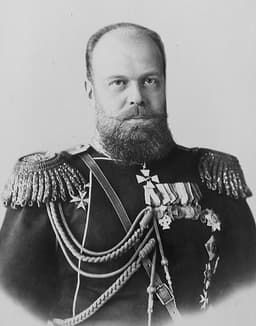
Alexander III of Russia
Emperor · Modern
49.3Total
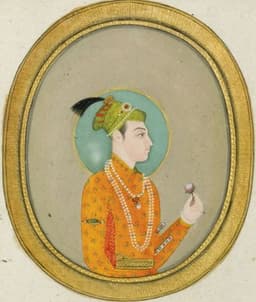
Shah Jahan
Emperor · Modern
67.8Total
Basic Information
Born
1845
1592
Died
1894
1666
Era
Modern
Modern
Nationality
Russia
Mughal Empire
Occupation
Emperor
Emperor
Civilization
Western
Indian
Score Comparison
Military (10%)
21.2
75.0
Political (20%)
53.8
55.0
Influence (20%)
53.3
75.0
Legacy (20%)
43.3
68.0
Leadership (15%)
79.8
72.0
Strategy (15%)
30.3
55.0
TOTAL
49.3
67.8
Alexander III of Russia — Complete Timeline
1881 AD
Reversal of Alexander II's ReformsReform
Upon ascending the throne, Alexander III issued the Manifesto on Unshakeable Autocracy, rejecting his father's reformist policies. He strengthened the power of the nobility, increased censorship, and expanded the powers of the secret police, reversing many liberalizing measures.
Counter-ReformsAutocracyReaction
Impact: nationaldestructive
1882 AD
May Laws of 1882Political Action◆ Major
Alexander III approved the May Laws, which imposed severe restrictions on Jewish residence, property ownership, and education. These laws confined Jews to the Pale of Settlement, limited their access to higher education, and fueled anti-Semitic discrimination.
Anti-SemitismMay LawsPale of Settlement
Impact: nationaldestructive
1891 AD
Construction of the Trans-Siberian RailwayInvention◆ Major
Alexander III initiated the construction of the Trans-Siberian Railway, linking European Russia to the Pacific port of Vladivostok. The project aimed to develop Siberia and strengthen Russian control over the Far East. It became the longest railway in the world.
Trans-Siberian RailwayInfrastructureSiberia
Impact: globalconstructive
1894 AD
Franco-Russian AlliancePolitical Action◆ Major
Alexander III finalized a military alliance with France, ending Russia's diplomatic isolation. The alliance committed both powers to mutual defense against the Triple Alliance of Germany, Austria-Hungary, and Italy. This pact shaped European alliances leading to World War I.
Franco-Russian AllianceDiplomacyTriple Alliance
Impact: global
Shah Jahan — Complete Timeline
1632 AD
Construction of the Taj MahalCultural
Shah Jahan ordered the construction of the Taj Mahal in Agra as a mausoleum for his wife Mumtaz Mahal, who died in childbirth. The building took about 20 years to complete, employing thousands of artisans. The Taj Mahal is a masterpiece of Mughal architecture and a UNESCO World Heritage site.
ArchitectureMausoleumMumtaz Mahal
Impact: globalconstructive
1639 AD
Construction of the Red FortCultural◆ Major
Shah Jahan began construction of the Red Fort in Delhi, which became the main imperial residence of the Mughal emperors. The fort complex included palaces, halls of public and private audience, and gardens. It served as the political and ceremonial center of the Mughal Empire until 1857.
ArchitectureDelhiImperial Residence
Impact: nationalconstructive
1650 AD
Construction of the Jama MasjidCultural
Shah Jahan commissioned the Jama Masjid in Delhi, one of the largest mosques in India. The mosque was built with red sandstone and white marble, featuring three domes and two minarets. It could accommodate up to 25,000 worshippers and remains a major Islamic site.
MosqueArchitectureDelhi
Impact: nationalconstructive
1658 AD
Imprisonment by AurangzebPolitical Action◆ Major
Shah Jahan fell ill, and his son Aurangzeb seized the throne. Aurangzeb defeated his brothers in the war of succession and placed Shah Jahan under house arrest in the Agra Fort. Shah Jahan spent his final years confined to a room with a view of the Taj Mahal, where he died in 1666.
ImprisonmentSuccessionAurangzeb
Impact: nationaltragic
Expert Analysis
Origins
Alexander III of Russia was born on March 10, 1845, in St. Petersburg, the second son of Emperor Alexander II and Empress Maria Alexandrovna. His early education was overseen by the conservative tutor Konstantin Pobedonostsev, who instilled in him a deep distrust of liberal reforms and a belief in autocratic rule. Alexander was not initially destined for the throne, as his elder brother Nicholas was the heir. However, Nicholas died in 1865, making Alexander the tsarevich. His formative years were marked by the assassination of his father in 1881, an event that profoundly shaped his reactionary policies.
Shah Jahan was born on January 5, 1592, in Lahore, as Prince Khurram, the third son of Emperor Jahangir and his wife Jagat Gosain. He was a grandson of Akbar the Great. His education included military training, Persian literature, and Islamic theology. He showed early promise as a military commander and was given the title Shah Jahan (King of the World) by his father after a successful campaign. His path to power was fraught with rivalry among brothers, culminating in a war of succession after Jahangir's death in 1627.
Rise to Power
Alexander III ascended the throne on March 13, 1881, following the assassination of his father, Alexander II. His first major act was the issuance of the Manifesto on Unshakeable Autocracy on April 29, 1881, which rejected his father's reformist policies and reaffirmed the absolute power of the tsar. He dismissed many liberal ministers and appointed conservatives like Konstantin Pobedonostsev and Dmitry Tolstoy. His rise was characterized by a deliberate reversal of reforms, including the curtailment of zemstvo (local government) powers, stricter censorship, and increased police surveillance. He also pursued a policy of Russification, suppressing minority languages and religions.
Shah Jahan rose to power after a bloody war of succession. In 1622, he rebelled against his father Jahangir but was eventually pardoned. Upon Jahangir's death in 1627, Shah Jahan fought against his brothers, notably Shahryar, and emerged victorious. He was crowned emperor on January 23, 1628, in Agra. His rise was supported by his father-in-law, Asaf Khan, and he eliminated potential rivals, including his brothers and their supporters. His military campaigns early in his reign, such as the capture of the fort of Daulatabad, consolidated his rule.
Leadership & Governance
Alexander III's leadership style was autocratic and paternalistic. He believed that the tsar must rule with absolute authority and that any concession to democracy would weaken the empire. His governance focused on maintaining order and stability through repression. He reversed many of Alexander II's reforms: he reduced the powers of the zemstvos, imposed strict censorship, and expanded the secret police (Okhrana). He also enacted the May Laws of 1882, which severely restricted Jewish rights, confining them to the Pale of Settlement and limiting their access to education and property. Economically, he pursued protectionist policies and encouraged industrial growth, notably initiating the Trans-Siberian Railway in 1891, which aimed to connect European Russia to the Pacific. His foreign policy was cautious and aimed at preserving peace, earning him the nickname "Peacemaker." He finalized the Franco-Russian Alliance in 1894, which ended Russia's diplomatic isolation.
Shah Jahan's leadership was marked by grand architectural projects and military expansion. He centralized administration and continued the Mughal tradition of religious tolerance, though he enforced Islamic law more strictly than his predecessors. His governance included the construction of infrastructure like roads and canals. He expanded the empire through campaigns in the Deccan and Central Asia, but his military expenditure was high. His most famous project, the Taj Mahal, built between 1632 and 1648, consumed vast resources. He also built the Red Fort in Delhi (1639-1648) and the Jama Masjid (1650-1656). His reign saw a flourishing of art and culture, but also the beginning of fiscal strain due to excessive building and military costs.
Triumph & Tragedy
Alexander III's greatest success was maintaining peace during his reign. He avoided major wars, focusing on internal consolidation. The Franco-Russian Alliance strengthened Russia's position in Europe. The Trans-Siberian Railway, though not completed until after his death, was a monumental infrastructure project that later facilitated Russian expansion. However, his greatest failure was his repressive policies. The May Laws institutionalized anti-Semitism and led to widespread suffering. His reversal of reforms alienated the intelligentsia and sowed the seeds of revolutionary unrest that culminated in the 1905 and 1917 revolutions. His score of 21.2 in military reflects his lack of major military campaigns, but his leadership score of 79.8 indicates his effective control over the state.
Shah Jahan's greatest triumph was the architectural legacy of the Taj Mahal, a world heritage site and symbol of love. His military campaigns expanded the Mughal Empire to its territorial zenith, and his patronage of arts led to a cultural golden age. However, his greatest tragedy was his imprisonment by his son Aurangzeb in 1658. After falling ill, his sons fought a war of succession, and Aurangzeb emerged victorious, placing Shah Jahan under house arrest in the Agra Fort for the last eight years of his life, where he could only gaze at the Taj Mahal. His military score of 75.0 reflects his successful campaigns, but his political score of 55.0 shows the instability of his succession.
Character & Destiny
Alexander III was known for his strong will, conservatism, and personal courage. He was a devoted family man but also ruthless in suppressing dissent. His character shaped his destiny: his reactionary policies created a police state that stifled reform, leading to long-term instability. Historians often note that his reign delayed necessary changes, making the eventual collapse more violent. His personal strength held the empire together during his life, but his refusal to adapt doomed the autocracy he sought to preserve.
Shah Jahan was ambitious, artistic, and sensitive. His love for Mumtaz Mahal inspired the Taj Mahal, but his grief after her death in 1631 led him to neglect some administrative duties. His character was marked by a blend of cruelty and refinement: he eliminated rivals ruthlessly but also patronized poets and architects. His destiny was shaped by his illness and the ambition of his son Aurangzeb, leading to his downfall. His legacy is forever tied to the monument he built, but his political miscalculations weakened the empire.
Legacy
Alexander III's legacy is mixed. He is remembered as the "Peacemaker" for avoiding war, but his internal policies are criticized for their repression. His Russification policies and anti-Semitic laws had lasting negative effects. The Trans-Siberian Railway became a vital artery for Russia. His scores reflect this: political 53.8, influence 53.3, legacy 43.3. He is often seen as a conservative reactionary who failed to adapt to changing times.
Shah Jahan's legacy is dominated by the Taj Mahal, which symbolizes Mughal architecture and cultural achievement. He is remembered as a great builder and patron of the arts. However, his reign also marked the beginning of the empire's decline due to financial strain and the war of succession. His scores are higher: military 75.0, influence 75.0, legacy 68.0. He is celebrated in India and globally as a cultural icon, but his political decisions contributed to the empire's eventual fragmentation.
Conclusion
Shah Jahan had a greater overall impact than Alexander III, as reflected in his total score of 67.8 versus Alexander's 49.3. While Alexander III maintained peace and built infrastructure, his repressive policies and reversal of reforms ultimately weakened Russia and led to revolution. Shah Jahan's architectural and cultural contributions have endured for centuries, drawing millions of visitors to the Taj Mahal annually. His military expansion and patronage of arts created a lasting legacy that transcends political boundaries. Alexander's influence was largely confined to his era and his country, whereas Shah Jahan's influence is global and timeless. Therefore, Shah Jahan emerges as the more significant historical figure.
Rankings
🥇
Shah JahanLeader
Mil: 75.0Pol: 55.0Inf: 75.0
67.8
🥈
Alexander III of Russia
Mil: 21.2Pol: 53.8Inf: 53.3
49.3
+18.5 behind
How This Comparison Works
Algorithm
Each figure is scored on 6 dimensions (0—100 scale) based on structured historical data: Military (10%), Political (20%), Influence (20%), Legacy (20%), Leadership (15%), Strategy (15%). The weighted total produces the final ranking.
Data Sources
Scores are computed from structured sub-indicators in the database. Scale factors adjust for era (Ancient ×0.85, Modern ×1.0) and civilization size (Eastern ×1.05, Other ×0.80) to account for differences in population and military scale.
Maximum 3 Figures
Comparisons are limited to 2—3 figures to ensure readability and statistical meaningfulness.
Error Margins
±5 points per dimension — Sub-scores are derived from historical records with inherent uncertainty. Two figures within 5 points on a dimension should be considered roughly equivalent in that area.
Total Score Accuracy
±3 points overall — The weighted combination of 6 dimensions produces a total score with approximately ±3 points of uncertainty. Differences of less than 3 points are not statistically significant— the figures are effectively tied.
Known Limitations
- Historical records are incomplete and uneven across civilizations
- Figures from oral-tradition societies may be underrepresented
- Occupation labels can misclassify multi-role figures
- Scores measure capability and impact, not moral character
- Quantitative scoring is a comparison tool, not absolute truth
Capability Radar
Military (10%) — Battles & Warfare
Battles
10
65
Win Rate
10
70
Expansion
10
60
Political (20%) — Governance & Reform
Reform
40
65
Diplomacy
70
60
Economy
50
75
Influence (20%) — Cultural & Global Reach
Cultural
30
90
Global
30
80
Legacy (20%) — Historical Impact
Historical
40
85
Longevity
30
85
Leadership (15%) — Power & Stability
Tenure
60
70
Stability
70
55
Strategy (15%) — Tactics & Innovation
Strategy
10
65
Tactics
10
60
Reform
20
40
Similar Comparisons
Comments & Discussion
No comments yet. Be the first to share your thoughts!