Loading...
Shah Jahan vs William III of England
William III of England leads by 2.5 pts · 2 figures compared
…
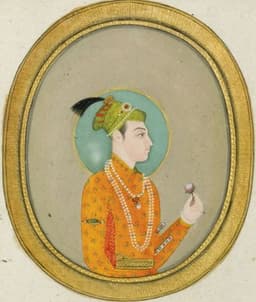
Shah Jahan
Emperor · Modern
67.8Total

William III of England
Emperor · Modern
70.3Total
Basic Information
Born
1592
1650
Died
1666
1702
Era
Modern
Modern
Nationality
Mughal Empire
England
Occupation
Emperor
Emperor
Civilization
Indian
Western
Score Comparison
Military (10%)
75.0
61.7
Political (20%)
55.0
75.0
Influence (20%)
75.0
82.0
Legacy (20%)
68.0
55.0
Leadership (15%)
72.0
80.0
Strategy (15%)
55.0
66.3
TOTAL
67.8
70.3
Shah Jahan — Complete Timeline
1632 AD
Construction of the Taj MahalCultural
Shah Jahan ordered the construction of the Taj Mahal in Agra as a mausoleum for his wife Mumtaz Mahal, who died in childbirth. The building took about 20 years to complete, employing thousands of artisans. The Taj Mahal is a masterpiece of Mughal architecture and a UNESCO World Heritage site.
ArchitectureMausoleumMumtaz Mahal
Impact: globalconstructive
1639 AD
Construction of the Red FortCultural◆ Major
Shah Jahan began construction of the Red Fort in Delhi, which became the main imperial residence of the Mughal emperors. The fort complex included palaces, halls of public and private audience, and gardens. It served as the political and ceremonial center of the Mughal Empire until 1857.
ArchitectureDelhiImperial Residence
Impact: nationalconstructive
1650 AD
Construction of the Jama MasjidCultural
Shah Jahan commissioned the Jama Masjid in Delhi, one of the largest mosques in India. The mosque was built with red sandstone and white marble, featuring three domes and two minarets. It could accommodate up to 25,000 worshippers and remains a major Islamic site.
MosqueArchitectureDelhi
Impact: nationalconstructive
1658 AD
Imprisonment by AurangzebPolitical Action◆ Major
Shah Jahan fell ill, and his son Aurangzeb seized the throne. Aurangzeb defeated his brothers in the war of succession and placed Shah Jahan under house arrest in the Agra Fort. Shah Jahan spent his final years confined to a room with a view of the Taj Mahal, where he died in 1666.
ImprisonmentSuccessionAurangzeb
Impact: nationaltragic
William III of England — Complete Timeline
1688 AD
Invasion of England (Glorious Revolution)War
William III landed at Torbay with a Dutch army of 15,000 men. He marched on London as James II's army disintegrated. James fled to France, and William was invited by Parliament to take the throne. This invasion established Protestant succession and parliamentary supremacy.
Glorious RevolutionInvasionConstitutional Change
Impact: nationalconstructive
Nine Years' War (War of the Grand Alliance)War◆ Major
William III led England into the Nine Years' War against France under Louis XIV. He fought campaigns in the Spanish Netherlands and Ireland. The war ended with the Treaty of Ryswick in 1697, which recognized William as king of England.
WarFranceEuropean Conflict
Impact: global
1689 AD
Signing of the Bill of RightsPolitical Action
William III accepted the Bill of Rights, which prohibited the monarch from suspending laws, levying taxes without Parliament, or maintaining a standing army in peacetime. This document established constitutional monarchy in England and limited royal prerogative.
Bill of RightsConstitutional MonarchyParliamentary Supremacy
Impact: nationalconstructive
1690 AD
Battle of the BoyneWar◆ Major
William III personally led his army to victory over James II's forces at the River Boyne in Ireland. This battle secured Protestant control of Ireland and solidified William's throne. It remains a key event in Irish Protestant history.
BattleIrelandProtestant-Catholic Conflict
Impact: regional
1702 AD
Death from PneumoniaOther◆ Major
William III died of pneumonia following a fall from his horse. He was buried in Westminster Abbey. His death ended the Stuart line and passed the throne to Mary's sister Anne, as William had no surviving children.
DeathSuccessionMonarchy
Impact: nationaltragic
Expert Analysis
Origins
Shah Jahan (1592–1666) was born as Prince Khurram in Lahore, the third son of Emperor Jahangir and a Rajput princess. He received a rigorous education in military arts, Persian literature, and court etiquette. His early life was marked by rebellion against his father, but he eventually reconciled and proved himself a capable commander.
William III (1650–1702) was born in The Hague, the son of William II of Orange and Mary Stuart. His father died before his birth, leaving him as a posthumous child. He was raised under the regency of his mother and later his grandmother, receiving a Calvinist education. His youth was shaped by the political turmoil of the Dutch Republic, which lacked a stadtholder after his father's death.
Rise to Power
Shah Jahan rose to power after a bitter war of succession following Jahangir's death in 1627. He defeated his brothers, including the popular Khusrau, and had his main rivals executed. He was crowned emperor in 1628, adopting the title Shah Jahan ("King of the World"). His reign began with the execution of his stepbrother Shahryar.
William III's rise was tied to the Glorious Revolution of 1688. Born into the House of Orange, he became stadtholder of several Dutch provinces in 1672 after the French invasion. He married Mary, daughter of James II of England, in 1677. In 1688, he was invited by English Protestants to invade England. He landed at Torbay with 15,000 troops; James II fled to France, and William and Mary were crowned joint monarchs in 1689.
Leadership & Governance
Shah Jahan governed as an absolute monarch, centralizing power and expanding the Mughal bureaucracy. He patronized architecture, commissioning the Taj Mahal (1632–1653) and the Red Fort (1639–1648). He also built the Jama Masjid in Delhi. His administration continued the mansabdari system, but his focus on monumental building strained the treasury. He was tolerant of Hindus, employing them in high offices, but his reign saw increasing Islamic orthodoxy.
William III governed as a constitutional monarch. He accepted the Bill of Rights (1689), which limited royal powers, prohibited standing armies without Parliament's consent, and guaranteed free elections and frequent Parliaments. This established England as a constitutional monarchy. William prioritized foreign policy, leading England into the Nine Years' War (1688–1697) against Louis XIV. He also secured the Protestant succession via the Act of Settlement (1701).
Triumph & Tragedy
Shah Jahan's greatest triumph was the Taj Mahal, a masterpiece of Mughal architecture that symbolizes eternal love. He also expanded the empire, capturing parts of the Deccan and securing northwestern frontiers. His tragedy was his deposition by his son Aurangzeb in 1658 after a debilitating illness. He spent his final years imprisoned in the Agra Fort, reportedly gazing at the Taj Mahal until his death in 1666.
William III's greatest triumph was the Glorious Revolution, which established parliamentary supremacy and Protestant rule in England. His victory at the Battle of the Boyne (1690) secured Ireland for the Protestant Ascendancy. His tragedy was his failure to achieve a decisive victory over Louis XIV; the Nine Years' War ended in a stalemate. He also suffered personal losses, including the death of his wife Mary in 1694. He died in 1702 from pneumonia after a fall from his horse.
Character & Destiny
Shah Jahan was known for his aesthetic sensibility, ambition, and ruthlessness. He executed rivals and family members to secure his throne. His obsession with building beautiful monuments reflected his desire for immortality, but his neglect of military campaigns and overcentralization sowed seeds of decline. Historians note his score of 55.0 in political acumen, reflecting his failure to manage succession.
William III was pragmatic, determined, and politically astute. He was a skilled diplomat and military commander, though his score of 61.7 in military reflects mixed outcomes. His Calvinist upbringing made him resilient but also cold and distant. He focused on containing French hegemony, often subordinating English interests to Dutch ones. His leadership score of 80.0 reflects his ability to forge coalitions and secure constitutional changes.
Legacy
Shah Jahan's legacy is overwhelmingly architectural. The Taj Mahal is one of the world's most iconic buildings, attracting millions of tourists. The Red Fort and Jama Masjid remain symbols of Mughal grandeur. However, his political legacy is limited; his reign marked the zenith of Mughal power but also the beginning of decline due to fiscal strain and succession conflicts. His influence score of 75.0 reflects his cultural impact, but his political legacy scores lower.
William III's legacy is foundational to modern British constitutional monarchy. The Bill of Rights and the Act of Settlement established parliamentary sovereignty and religious toleration (for Protestants). His wars against France helped shape the European balance of power. His legacy score of 55.0 is arguably too low, as his political reforms have endured for centuries. He is remembered as a champion of Protestantism and liberty, though his Dutch background sometimes draws criticism.
Conclusion
While Shah Jahan created enduring architectural wonders, William III's constitutional reforms had a more profound and lasting impact on governance and individual rights. William III's political score of 75.0 and leadership score of 80.0 outpace Shah Jahan's 55.0 and 72.0 respectively. William III's influence shaped the modern democratic state, whereas Shah Jahan's legacy is primarily aesthetic. Therefore, William III had greater historical impact. However, in terms of cultural influence and global recognition, Shah Jahan's Taj Mahal remains a universal symbol. The comparison highlights the contrast between cultural and political legacies.
Rankings
🥇
William III of EnglandLeader
Mil: 61.7Pol: 75.0Inf: 82.0
70.3
🥈
Shah Jahan
Mil: 75.0Pol: 55.0Inf: 75.0
67.8
+2.5 behind
How This Comparison Works
Algorithm
Each figure is scored on 6 dimensions (0—100 scale) based on structured historical data: Military (10%), Political (20%), Influence (20%), Legacy (20%), Leadership (15%), Strategy (15%). The weighted total produces the final ranking.
Data Sources
Scores are computed from structured sub-indicators in the database. Scale factors adjust for era (Ancient ×0.85, Modern ×1.0) and civilization size (Eastern ×1.05, Other ×0.80) to account for differences in population and military scale.
Maximum 3 Figures
Comparisons are limited to 2—3 figures to ensure readability and statistical meaningfulness.
Error Margins
±5 points per dimension — Sub-scores are derived from historical records with inherent uncertainty. Two figures within 5 points on a dimension should be considered roughly equivalent in that area.
Total Score Accuracy
±3 points overall — The weighted combination of 6 dimensions produces a total score with approximately ±3 points of uncertainty. Differences of less than 3 points are not statistically significant— the figures are effectively tied.
Known Limitations
- Historical records are incomplete and uneven across civilizations
- Figures from oral-tradition societies may be underrepresented
- Occupation labels can misclassify multi-role figures
- Scores measure capability and impact, not moral character
- Quantitative scoring is a comparison tool, not absolute truth
Capability Radar
Military (10%) — Battles & Warfare
Battles
65
75
Win Rate
70
70
Expansion
60
60
Political (20%) — Governance & Reform
Reform
65
80
Diplomacy
60
85
Economy
75
75
Influence (20%) — Cultural & Global Reach
Cultural
90
60
Global
80
70
Legacy (20%) — Historical Impact
Historical
85
75
Longevity
85
70
Leadership (15%) — Power & Stability
Tenure
70
70
Stability
55
65
Strategy (15%) — Tactics & Innovation
Strategy
65
78
Tactics
60
72
Reform
40
65
Similar Comparisons
Comments & Discussion
No comments yet. Be the first to share your thoughts!