Loading...
King Faisal I of Iraq vs Shah Jahan
Shah Jahan leads by 15.5 pts · 2 figures compared
…

King Faisal I of Iraq
Emperor · Modern
52.3Total
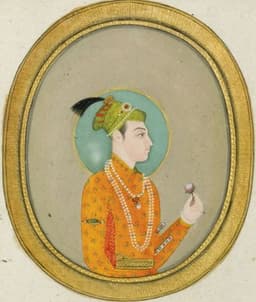
Shah Jahan
Emperor · Modern
67.8Total
Basic Information
Born
1885
1592
Died
1933
1666
Era
Modern
Modern
Nationality
Iraq
Mughal Empire
Occupation
Emperor
Emperor
Civilization
Middle Eastern
Indian
Score Comparison
Military (10%)
30.0
75.0
Political (20%)
45.0
55.0
Influence (20%)
55.0
75.0
Legacy (20%)
50.0
68.0
Leadership (15%)
74.0
72.0
Strategy (15%)
51.7
55.0
TOTAL
52.3
67.8
King Faisal I of Iraq — Complete Timeline
1918 AD
Arab Revolt and Capture of Damascus (1918)War◆ Major
Prince Faisal, leading Arab forces alongside British officer T.E. Lawrence, captured Damascus from the Ottoman Empire. This victory was a key moment in the Arab Revolt against Ottoman rule. Faisal established an Arab government in Syria, but his rule was short-lived due to French colonial ambitions.
Arab RevoltWorld War IDamascus
Impact: regionalconstructive
1920 AD
Proclamation as King of Syria and French Expulsion (1920)Political Action◆ Major
Faisal was proclaimed King of Syria by the Syrian National Congress. However, France, which had been granted a mandate over Syria, invaded and defeated his forces at the Battle of Maysalun. Faisal was expelled from Syria, ending his brief reign and leading to French colonial rule.
SyriaFrench MandateBattle of Maysalun
Impact: regionaltragic
1921 AD
Coronation as King of Iraq (1921)Political Action◆ Major
Faisal was crowned King of Iraq under British auspices, following a plebiscite organized by the British authorities. He was chosen as a compromise candidate acceptable to both the British and local Sunni and Shia leaders. His reign aimed to build a modern Iraqi state from three former Ottoman provinces.
CoronationIraqBritish Mandate
Impact: regionalconstructive
1932 AD
Independence of Iraq (1932)Political Action◆ Major
Under Faisal's leadership, Iraq achieved formal independence from the British Mandate and was admitted to the League of Nations. This was a major milestone for the country, though Britain retained significant influence through military bases and oil concessions. Faisal died the following year.
IndependenceLeague of NationsBritish Influence
Impact: regionalconstructive
Shah Jahan — Complete Timeline
1632 AD
Construction of the Taj MahalCultural
Shah Jahan ordered the construction of the Taj Mahal in Agra as a mausoleum for his wife Mumtaz Mahal, who died in childbirth. The building took about 20 years to complete, employing thousands of artisans. The Taj Mahal is a masterpiece of Mughal architecture and a UNESCO World Heritage site.
ArchitectureMausoleumMumtaz Mahal
Impact: globalconstructive
1639 AD
Construction of the Red FortCultural◆ Major
Shah Jahan began construction of the Red Fort in Delhi, which became the main imperial residence of the Mughal emperors. The fort complex included palaces, halls of public and private audience, and gardens. It served as the political and ceremonial center of the Mughal Empire until 1857.
ArchitectureDelhiImperial Residence
Impact: nationalconstructive
1650 AD
Construction of the Jama MasjidCultural
Shah Jahan commissioned the Jama Masjid in Delhi, one of the largest mosques in India. The mosque was built with red sandstone and white marble, featuring three domes and two minarets. It could accommodate up to 25,000 worshippers and remains a major Islamic site.
MosqueArchitectureDelhi
Impact: nationalconstructive
1658 AD
Imprisonment by AurangzebPolitical Action◆ Major
Shah Jahan fell ill, and his son Aurangzeb seized the throne. Aurangzeb defeated his brothers in the war of succession and placed Shah Jahan under house arrest in the Agra Fort. Shah Jahan spent his final years confined to a room with a view of the Taj Mahal, where he died in 1666.
ImprisonmentSuccessionAurangzeb
Impact: nationaltragic
Expert Analysis
Origins
King Faisal I of Iraq was born in 1885 in Mecca, part of the Hashemite family, descendants of the Prophet Muhammad. His father, Hussein bin Ali, was the Sharif of Mecca. Faisal was educated in Istanbul and developed a pan-Arab vision. Shah Jahan, born in 1592 in Lahore, was the fifth son of Mughal Emperor Jahangir and Rajput princess Manmati. He was groomed for leadership with education in statecraft, military, and arts, reflecting the Mughal court's sophistication.
Rise to Power
Faisal's rise came through the Arab Revolt (1916-1918), where he led Arab forces with British support, capturing Damascus in 1918. He was declared King of Syria in 1920 but was expelled by the French. The British then arranged for him to become King of Iraq in 1921 after a plebiscite. Shah Jahan rose after a succession struggle following Jahangir's death. He defeated his brothers in 1628 and crowned himself emperor, consolidating power with military campaigns and strategic marriages.
Leadership & Governance
Faisal governed a fragile, multi-ethnic Iraq, balancing Sunni, Shia, and Kurdish factions. He promoted education, infrastructure, and a sense of national identity, leading to Iraq's independence in 1932. His leadership score of 74.0 reflects his diplomatic skill. Shah Jahan ruled a vast empire with centralized authority. He expanded the Mughal territory, maintained a strong military (score 75.0), and fostered cultural patronage. His governance prioritized architecture and administration, but his later years saw rebellion from his son Aurangzeb.
Triumph & Tragedy
Faisal's greatest triumph was achieving Iraqi independence and League of Nations membership in 1932. However, his rule was plagued by ethnic tensions and British influence. Shah Jahan's triumph is the Taj Mahal, a masterpiece of architecture, and the construction of the Red Fort and Jama Masjid. His tragedy was his imprisonment by Aurangzeb in 1658, spending his final years under house arrest. Faisal died in 1933 of a heart attack, leaving a fragile state that later faced instability.
Character & Destiny
Faisal was pragmatic and diplomatic, often mediating between British interests and Arab aspirations. His character shaped Iraq's early statehood but also made him reliant on British support. Shah Jahan was a visionary ruler obsessed with legacy, but his indulgence in monumental projects strained the treasury. His decision to favor his son Dara Shikoh over Aurangzeb led to his downfall. Both leaders were shaped by their contexts: Faisal by colonialism, Shah Jahan by Mughal succession politics.
Legacy
Faisal's legacy is as the founder of modern Iraq and a symbol of Arab nationalism. His political score of 45.0 and influence score of 55.0 reflect his role in shaping the Middle East. Shah Jahan's legacy is monumental architecture and the Mughal Empire's cultural zenith. His influence score of 75.0 and legacy score of 68.0 highlight his enduring impact. While Faisal's work is political, Shah Jahan's is artistic.
Conclusion
Shah Jahan had a greater impact due to his enduring architectural achievements and the scale of his empire. His total score of 67.8 surpasses Faisal's 52.3 by 15.5 points. Faisal's political foundation was significant but ultimately fragile, whereas Shah Jahan's cultural contributions remain globally iconic. Therefore, Shah Jahan is the more influential figure.
Rankings
🥇
Shah JahanLeader
Mil: 75.0Pol: 55.0Inf: 75.0
67.8
🥈
King Faisal I of Iraq
Mil: 30.0Pol: 45.0Inf: 55.0
52.3
+15.5 behind
How This Comparison Works
Algorithm
Each figure is scored on 6 dimensions (0—100 scale) based on structured historical data: Military (10%), Political (20%), Influence (20%), Legacy (20%), Leadership (15%), Strategy (15%). The weighted total produces the final ranking.
Data Sources
Scores are computed from structured sub-indicators in the database. Scale factors adjust for era (Ancient ×0.85, Modern ×1.0) and civilization size (Eastern ×1.05, Other ×0.80) to account for differences in population and military scale.
Maximum 3 Figures
Comparisons are limited to 2—3 figures to ensure readability and statistical meaningfulness.
Error Margins
±5 points per dimension — Sub-scores are derived from historical records with inherent uncertainty. Two figures within 5 points on a dimension should be considered roughly equivalent in that area.
Total Score Accuracy
±3 points overall — The weighted combination of 6 dimensions produces a total score with approximately ±3 points of uncertainty. Differences of less than 3 points are not statistically significant— the figures are effectively tied.
Known Limitations
- Historical records are incomplete and uneven across civilizations
- Figures from oral-tradition societies may be underrepresented
- Occupation labels can misclassify multi-role figures
- Scores measure capability and impact, not moral character
- Quantitative scoring is a comparison tool, not absolute truth
Capability Radar
Military (10%) — Battles & Warfare
Battles
45
65
Win Rate
50
70
Expansion
35
60
Political (20%) — Governance & Reform
Reform
55
65
Diplomacy
70
60
Economy
40
75
Influence (20%) — Cultural & Global Reach
Cultural
50
90
Global
55
80
Legacy (20%) — Historical Impact
Historical
60
85
Longevity
45
85
Leadership (15%) — Power & Stability
Tenure
60
70
Stability
30
55
Strategy (15%) — Tactics & Innovation
Strategy
55
65
Tactics
40
60
Reform
30
40
Similar Comparisons
Comments & Discussion
No comments yet. Be the first to share your thoughts!