Loading...
Richard of Cornwall vs Vladimir the Great
Vladimir the Great leads by 16.9 pts · 2 figures compared
…

Richard of Cornwall
Emperor · Medieval
45.4Total
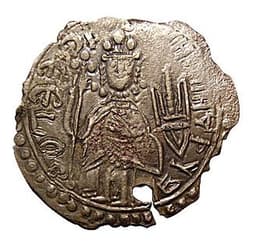
Vladimir the Great
Emperor · Medieval
62.3Total
Basic Information
Born
1209
958
Died
1272
1015
Era
Medieval
Medieval
Nationality
Holy Roman Empire
Kievan Rus
Occupation
Emperor
Emperor
Civilization
Western
Western
Score Comparison
Military (10%)
50.0
61.7
Political (20%)
40.8
70.0
Influence (20%)
51.8
40.0
Legacy (20%)
40.0
75.0
Leadership (15%)
55.3
72.0
Strategy (15%)
30.3
60.7
TOTAL
45.4
62.3
Richard of Cornwall — Complete Timeline
1257 AD
Elected King of GermanyPolitical Action◆ Major
Richard of Cornwall was elected King of Germany by a faction of prince-electors, opposing Alfonso X of Castile. This election was part of the Great Interregnum, with Richard receiving support from the English crown and the Papacy.
ElectionGreat InterregnumEnglish Influence
Impact: regional
Crowned King of GermanyPolitical Action◆ Major
Richard of Cornwall was crowned King of Germany in Aachen by the Archbishop of Cologne. His coronation was contested by Alfonso X, and Richard's authority was largely confined to the Rhineland and parts of southern Germany.
CoronationGreat InterregnumRival Claimant
Impact: regional
1262 AD
Returned to EnglandPolitical Action
Richard of Cornwall returned to England after spending several years in Germany. His departure weakened his influence in the Holy Roman Empire, and he never returned, leaving the German throne contested until the end of the Great Interregnum.
ReturnEnglandGreat Interregnum
Impact: regional
1272 AD
Died in EnglandOther◆ Major
Richard of Cornwall died at Berkhamsted Castle in England. His death ended his claim to the German throne, and he was succeeded by Rudolf of Habsburg, who ended the Great Interregnum.
DeathGreat InterregnumEnd of Claim
Impact: regional
Vladimir the Great — Complete Timeline
988 AD
Baptism of Vladimir the GreatCultural
Vladimir converted to Christianity and married Anna, sister of Byzantine Emperor Basil II, after capturing Chersonesus. He was baptized in Chersonesus, adopting the name Basil, and initiated the Christianization of Kievan Rus.
ConversionChristianizationByzantine Alliance
Impact: regionalprogressive
Mass Baptism of KievCultural
Vladimir ordered the mass baptism of the people of Kiev in the Dnieper River. Pagan idols were destroyed, and churches were built. This event established Christianity as the state religion of Kievan Rus.
ChristianizationMass BaptismState Religion
Impact: regionalprogressive
992 AD
Vladimir's Campaign Against the CroatsWar
Vladimir led a military campaign against the White Croats in the Carpathian region, expanding Kievan Rus' territory westward. This campaign secured control over important trade routes and tributary tribes.
Territorial ExpansionCarpathiansMilitary Campaign
Impact: regional
996 AD
Construction of the Church of the TithesCultural
Vladimir built the Church of the Tithes (Desyatynna Church) in Kiev, the first stone church in Kievan Rus. He dedicated a tenth of his income to its maintenance, symbolizing the institutionalization of Christianity.
Church BuildingArchitectureChristianity
Impact: nationalconstructive
Expert Analysis
Origins
Richard of Cornwall (1209-1272) was born as the second son of King John of England and Isabella of Angoulême. He was educated in England and France, and inherited the wealthy earldom of Cornwall. His background was that of a high-ranking English nobleman, with close ties to the Plantagenet dynasty.
Vladimir the Great (c. 958-1015) was born as the son of Prince Sviatoslav I of Kiev and his housekeeper Malusha. He was raised in Novgorod under the guardianship of his uncle Dobrynya. His early life was marked by a pagan upbringing and a struggle for power among his brothers after his father's death.
Rise to Power
Richard's rise came through election: in 1257, he was elected King of Germany by a faction of prince-electors opposing Alfonso X of Castile, during the Great Interregnum. He was crowned in Aachen by the Archbishop of Cologne in 1257. However, his authority was contested by Alfonso, and Richard's influence in Germany remained limited; he spent only a few years there before returning to England.
Vladimir rose to power through military conquest. After his father's death in 972, he fled to Scandinavia, returned with a Varangian army, and captured Novgorod in 978. He then killed his brother Yaropolk and became Grand Prince of Kiev in 980. His rise was brutal but effective, consolidating power over the Rus' principalities.
Leadership & Governance
Richard's governance was marked by absenteeism. He used his wealth from Cornwall to buy support, but his political score of 40.8 reflects his weak grip on the German throne. He focused more on his English estates and crusading finances. His leadership score of 55.3 indicates moderate effectiveness, but his strategy score of 30.3 highlights his poor long-term planning.
Vladimir centralized power in Kiev, reformed the legal code, and expanded trade. His political score of 70.0 reflects his ability to unite the Rus' lands. He implemented a dual system of local princes and royal deputies, improving administration. His leadership score of 72.0 shows his commanding presence, and his strategy score of 60.7 indicates calculated expansion.
Triumph & Tragedy
Richard's greatest triumph was his election as King of Germany, a rare honor for an English prince. He also successfully managed the lucrative Cornish tin mines. His tragedy was his ineffective reign: he never secured full control of Germany, and his claim died with him. His military score of 50.0 reflects his limited campaigning, notably his participation in the Barons' War in England.
Vladimir's greatest triumph was the Christianization of Kievan Rus in 988. By marrying Anna, sister of Byzantine Emperor Basil II, he secured a strategic alliance and adopted Byzantine culture. His mass baptism of Kiev established Orthodox Christianity as the state religion. His tragedy includes the brutal murder of his brother Yaropolk and the subsequent dynastic conflicts. His influence score of 40.0 may reflect the limited direct impact of his conversion beyond the Rus' region.
Character & Destiny
Richard was pragmatic and wealthy, but lacked ambition for the German throne; he saw it as a source of prestige rather than a responsibility. His character led him to prioritize English affairs, sealing his irrelevance in Germany. Historians view him as a capable administrator but a failed king.
Vladimir was ruthless and visionary. His conversion was politically motivated, but he enforced Christianity with zeal, destroying pagan idols. His destiny was to create a cultural shift that defined Eastern Europe. His total score of 62.3 versus Richard's 45.4 shows a clear advantage in impact.
Legacy
Richard's legacy is minimal: he is remembered as a minor figure in the Holy Roman Empire's interregnum. His political and legacy scores of 40.8 and 40.0 reflect his limited lasting influence. No major institutions or ideas survived from his reign.
Vladimir's legacy is monumental: he is venerated as a saint in the Orthodox Church, and his Christianization laid the foundation for Russian, Ukrainian, and Belarusian culture. His legacy score of 75.0 and influence score of 40.0 (perhaps understated) underscore his enduring impact. The Cyrillic alphabet, church architecture, and legal traditions all trace back to his era.
Conclusion
Vladimir the Great had a far greater impact than Richard of Cornwall. With a total score of 62.3 compared to Richard's 45.4, Vladimir's strategic, political, and legacy advantages are clear. Richard was a footnote in German history, while Vladimir shaped the religious and cultural identity of a vast region. The data supports the position that Vladimir's transformation of Kievan Rus into a Christian state was a pivotal event with lasting consequences, whereas Richard's kingship was a temporary anomaly.
Rankings
🥇
Vladimir the GreatLeader
Mil: 61.7Pol: 70.0Inf: 40.0
62.3
🥈
Richard of Cornwall
Mil: 50.0Pol: 40.8Inf: 51.8
45.4
+16.9 behind
How This Comparison Works
Algorithm
Each figure is scored on 6 dimensions (0—100 scale) based on structured historical data: Military (10%), Political (20%), Influence (20%), Legacy (20%), Leadership (15%), Strategy (15%). The weighted total produces the final ranking.
Data Sources
Scores are computed from structured sub-indicators in the database. Scale factors adjust for era (Ancient ×0.85, Modern ×1.0) and civilization size (Eastern ×1.05, Other ×0.80) to account for differences in population and military scale.
Maximum 3 Figures
Comparisons are limited to 2—3 figures to ensure readability and statistical meaningfulness.
Error Margins
±5 points per dimension — Sub-scores are derived from historical records with inherent uncertainty. Two figures within 5 points on a dimension should be considered roughly equivalent in that area.
Total Score Accuracy
±3 points overall — The weighted combination of 6 dimensions produces a total score with approximately ±3 points of uncertainty. Differences of less than 3 points are not statistically significant— the figures are effectively tied.
Known Limitations
- Historical records are incomplete and uneven across civilizations
- Figures from oral-tradition societies may be underrepresented
- Occupation labels can misclassify multi-role figures
- Scores measure capability and impact, not moral character
- Quantitative scoring is a comparison tool, not absolute truth
Capability Radar
Military (10%) — Battles & Warfare
Battles
20
65
Win Rate
25
70
Expansion
10
70
Political (20%) — Governance & Reform
Reform
15
80
Diplomacy
45
85
Economy
50
70
Influence (20%) — Cultural & Global Reach
Cultural
20
90
Global
20
85
Legacy (20%) — Historical Impact
Historical
25
90
Longevity
15
95
Leadership (15%) — Power & Stability
Tenure
40
75
Stability
30
65
Strategy (15%) — Tactics & Innovation
Strategy
20
65
Tactics
15
60
Reform
5
55
Similar Comparisons
Comments & Discussion
No comments yet. Be the first to share your thoughts!