Loading...
Al-Muayyad Shaykh vs Vladimir the Great
Vladimir the Great leads by 13.7 pts · 2 figures compared
…
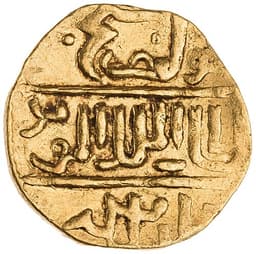
Al-Muayyad Shaykh
Emperor · Medieval
48.6Total
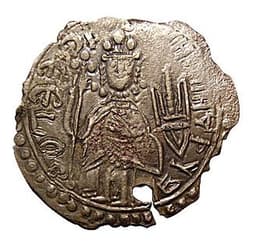
Vladimir the Great
Emperor · Medieval
62.3Total
Basic Information
Born
1369
958
Died
1421
1015
Era
Medieval
Medieval
Nationality
Egypt
Kievan Rus
Occupation
Emperor
Emperor
Civilization
Middle Eastern
Western
Score Comparison
Military (10%)
20.0
61.7
Political (20%)
48.0
70.0
Influence (20%)
52.5
40.0
Legacy (20%)
42.5
75.0
Leadership (15%)
64.0
72.0
Strategy (15%)
60.0
60.7
TOTAL
48.6
62.3
Al-Muayyad Shaykh — Complete Timeline
1412 AD
Suppression of the Revolt of the Emir of AleppoWar◆ Major
Al-Muayyad Shaykh led a military campaign to suppress the revolt of the Emir of Aleppo, who had rebelled against Mamluk authority. The campaign successfully restored control over the Syrian province, consolidating Shaykh's rule.
Mamluk SultanateRevoltSyria
Impact: regional
1414 AD
Suppression of the Revolt of the Emir of DamascusWar◆ Major
Al-Muayyad Shaykh suppressed a revolt led by the Emir of Damascus, who had declared independence. The sultan's forces besieged Damascus, defeated the rebels, and executed the emir, reasserting central control.
Mamluk SultanateRevoltDamascus
Impact: regional
1417 AD
Campaign against the Aq QoyunluWar◆ Major
Al-Muayyad Shaykh launched a military expedition against the Aq Qoyunlu confederation in eastern Anatolia. The campaign aimed to secure Mamluk borders and prevent Turkmen incursions, resulting in a Mamluk victory.
Mamluk SultanateAq QoyunluAnatolia
Impact: regional
Vladimir the Great — Complete Timeline
988 AD
Baptism of Vladimir the GreatCultural
Vladimir converted to Christianity and married Anna, sister of Byzantine Emperor Basil II, after capturing Chersonesus. He was baptized in Chersonesus, adopting the name Basil, and initiated the Christianization of Kievan Rus.
ConversionChristianizationByzantine Alliance
Impact: regionalprogressive
Mass Baptism of KievCultural
Vladimir ordered the mass baptism of the people of Kiev in the Dnieper River. Pagan idols were destroyed, and churches were built. This event established Christianity as the state religion of Kievan Rus.
ChristianizationMass BaptismState Religion
Impact: regionalprogressive
992 AD
Vladimir's Campaign Against the CroatsWar
Vladimir led a military campaign against the White Croats in the Carpathian region, expanding Kievan Rus' territory westward. This campaign secured control over important trade routes and tributary tribes.
Territorial ExpansionCarpathiansMilitary Campaign
Impact: regional
996 AD
Construction of the Church of the TithesCultural
Vladimir built the Church of the Tithes (Desyatynna Church) in Kiev, the first stone church in Kievan Rus. He dedicated a tenth of his income to its maintenance, symbolizing the institutionalization of Christianity.
Church BuildingArchitectureChristianity
Impact: nationalconstructive
Expert Analysis
Origins
Al-Muayyad Shaykh was born around 1360 as a Circassian slave, purchased and trained in the Mamluk military system of Egypt. He rose through the ranks of the Burji Mamluks, becoming a powerful emir. His early life was shaped by the rigorous military training and court politics of the Mamluk Sultanate.
Vladimir the Great was born around 958 in Kiev, the son of Prince Sviatoslav I of Kiev and his housekeeper Malusha. He was a prince of the Rurikid dynasty, raised in a pagan environment. His grandmother, Princess Olga, had converted to Christianity, but Vladimir initially adhered to Slavic paganism.
Rise to Power
Al-Muayyad Shaykh gained prominence as a commander under Sultan Barquq. In 1412, after a period of instability, he seized the sultanate, defeating rival emirs. He secured his rule by appointing loyalists to key positions and suppressing rebellions, such as the Revolt of the Emir of Aleppo in 1415.
Vladimir became Prince of Novgorod in 970 and later seized Kiev in 978 after a civil war against his brother Yaropolk. He consolidated power by expanding the realm, defeating the Pechenegs, and forming alliances through marriage. His conversion to Christianity in 988 was a strategic move to align with Byzantium.
Leadership & Governance
Al-Muayyad Shaykh governed with a focus on internal stability and military control. He suppressed revolts in Damascus (1416) and Aleppo, but his reign was marked by short-term campaigns rather than lasting reforms. His leadership score of 64.0 reflects competence but limited vision.
Vladimir the Great centralized the state, replaced local princes with his sons, and introduced Christianity. He built churches, established a metropolitanate under Constantinople, and promoted literacy. His political score of 70.0 and leadership score of 72.0 indicate effective governance and transformative policy.
Triumph & Tragedy
Al-Muayyad Shaykh's greatest success was maintaining Mamluk control despite multiple revolts. However, his failure to achieve lasting stability or expand territory left the sultanate vulnerable. His military score of 20.0 is low, reflecting limited strategic gains.
Vladimir's triumph was the Christianization of Kievan Rus, a cultural and religious transformation that shaped Eastern Europe. His tragedy was the subsequent fragmentation of the state after his death, as his sons fought for power. His legacy score of 75.0 underscores his long-term impact.
Character & Destiny
Al-Muayyad Shaykh was pragmatic and ruthless, prioritizing immediate survival over long-term planning. This character trait limited his influence, as he failed to build institutions. His total score of 48.6 reflects a competent but unremarkable reign.
Vladimir was ambitious and strategic, using religion to unify his realm. His conversion was a calculated move that earned him sainthood in the Orthodox Church. His character shaped the destiny of Kievan Rus, making him a foundational figure.
Legacy
Al-Muayyad Shaykh is remembered as a minor Mamluk sultan, his reign overshadowed by more dynamic rulers. His influence score of 52.5 reflects moderate impact within the Mamluk context.
Vladimir the Great is a national hero in Russia, Ukraine, and Belarus. The Christianization he initiated led to the development of Slavic Orthodox culture, literature, and art. His legacy endures in the Eastern Orthodox Church and the political identity of the region.
Conclusion
Vladimir the Great had greater impact, scoring 62.3 total compared to Al-Muayyad Shaykh's 48.6. While Shaykh maintained Mamluk power temporarily, Vladimir's religious and political transformation had centuries-long consequences. The score gap of 13.7 points reflects a clear difference in historical significance.
Rankings
🥇
Vladimir the GreatLeader
Mil: 61.7Pol: 70.0Inf: 40.0
62.3
🥈
Al-Muayyad Shaykh
Mil: 20.0Pol: 48.0Inf: 52.5
48.6
+13.7 behind
How This Comparison Works
Algorithm
Each figure is scored on 6 dimensions (0—100 scale) based on structured historical data: Military (10%), Political (20%), Influence (20%), Legacy (20%), Leadership (15%), Strategy (15%). The weighted total produces the final ranking.
Data Sources
Scores are computed from structured sub-indicators in the database. Scale factors adjust for era (Ancient ×0.85, Modern ×1.0) and civilization size (Eastern ×1.05, Other ×0.80) to account for differences in population and military scale.
Maximum 3 Figures
Comparisons are limited to 2—3 figures to ensure readability and statistical meaningfulness.
Error Margins
±5 points per dimension — Sub-scores are derived from historical records with inherent uncertainty. Two figures within 5 points on a dimension should be considered roughly equivalent in that area.
Total Score Accuracy
±3 points overall — The weighted combination of 6 dimensions produces a total score with approximately ±3 points of uncertainty. Differences of less than 3 points are not statistically significant— the figures are effectively tied.
Known Limitations
- Historical records are incomplete and uneven across civilizations
- Figures from oral-tradition societies may be underrepresented
- Occupation labels can misclassify multi-role figures
- Scores measure capability and impact, not moral character
- Quantitative scoring is a comparison tool, not absolute truth
Capability Radar
Military (10%) — Battles & Warfare
Battles
45
65
Win Rate
50
70
Expansion
30
70
Political (20%) — Governance & Reform
Reform
40
80
Diplomacy
50
85
Economy
45
70
Influence (20%) — Cultural & Global Reach
Cultural
30
90
Global
25
85
Legacy (20%) — Historical Impact
Historical
35
90
Longevity
20
95
Leadership (15%) — Power & Stability
Tenure
55
75
Stability
40
65
Strategy (15%) — Tactics & Innovation
Strategy
45
65
Tactics
40
60
Reform
35
55
Similar Comparisons
Comments & Discussion
No comments yet. Be the first to share your thoughts!