Loading...
Ranoji Scindia vs Yitzhak Rabin
Yitzhak Rabin leads by 9.4 pts · 2 figures compared
…
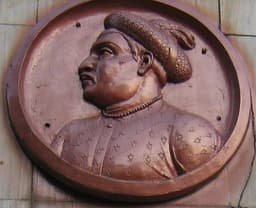
Ranoji Scindia
General · Modern
57.0Total
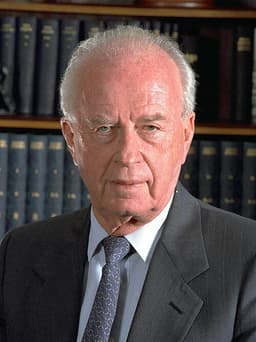
Yitzhak Rabin
General · Modern
66.4Total
Basic Information
Born
1700
1922
Died
1745
—
Era
Modern
Modern
Nationality
India
Israel
Occupation
General
General
Civilization
Indian
Middle Eastern
Score Comparison
Military (10%)
50.0
61.7
Political (20%)
54.7
82.0
Influence (20%)
58.0
68.0
Legacy (20%)
54.0
55.0
Leadership (15%)
65.0
78.0
Strategy (15%)
60.0
55.0
TOTAL
57.0
66.4
Ranoji Scindia — Complete Timeline
1726 AD
Appointed Subedar of MalwaPolitical Action◆ Major
Ranoji Scindia was appointed as the Maratha subedar of Malwa by Peshwa Baji Rao I. This gave him control over a large territory and laid the foundation for the Scindia dynasty of Gwalior.
Maratha EmpireMalwaScindia Dynasty
Impact: regionalconstructive
1737 AD
Battle of DelhiWar◆ Major
Ranoji Scindia participated in the Maratha raid on Delhi under Baji Rao I. The attack on the Mughal capital demonstrated Maratha power and led to the extraction of tribute.
Maratha-Mughal WarsDelhiRaid
Impact: national
1739 AD
Battle of VasaiWar
Ranoji Scindia fought alongside Malhar Rao Holkar in the siege of Vasai against the Portuguese. The victory ended Portuguese control in the Konkan region.
Maratha-Portuguese WarsSiegeKonkan
Impact: regional
1740 AD
Founded Gwalior as CapitalPolitical Action◆ Major
Ranoji Scindia established his capital at Gwalior, fortifying the Gwalior Fort and building a palace. This city became the center of Scindia power for over a century.
FoundingGwaliorScindia Dynasty
Impact: regionalconstructive
1745 AD
Death in BattleWar
Ranoji Scindia was killed in a battle against the Nizam of Hyderabad's forces near the Narmada River. His death occurred during a Maratha campaign to expand into the Deccan.
DeathBattleMaratha-Nizam Wars
Impact: regionaltragic
Yitzhak Rabin — Complete Timeline
1967 AD
Chief of Staff during the Six-Day WarWar
As Chief of Staff of the Israel Defense Forces, Rabin commanded the Israeli military during the Six-Day War against Egypt, Jordan, and Syria. Israel captured the Sinai Peninsula, Gaza Strip, West Bank, East Jerusalem, and Golan Heights, reshaping the region.
Six-Day WarTerritorial ExpansionMilitary Victory
Impact: global
1993 AD
Signing of the Oslo AccordsPolitical Action
As prime minister, Rabin signed the Oslo Accords with PLO Chairman Yasser Arafat on the White House lawn. The agreement established the Palestinian Authority and set a framework for Palestinian self-governance in the West Bank and Gaza Strip.
Peace ProcessPalestiniansOslo
Impact: globalconstructive
1995 AD
Assassination at Peace RallyPolitical Action
Rabin was assassinated by Israeli extremist Yigal Amir after a peace rally in Tel Aviv. The assassination shocked Israel and the world, derailing the Oslo peace process and leading to a period of political instability.
AssassinationPeace ProcessPolitical Violence
Impact: globaltragic
Expert Analysis
Yitzhak Rabin vs Ranoji Scindia
### The General and the Peacemaker
On a balmy November evening in 1995, a crowd in Tel Aviv sang of peace. Yitzhak Rabin, a man who had spent his life in uniform, joined them. Moments later, three bullets from a Jewish extremist ended his life and, for a generation, the hope he embodied. Nearly 250 years earlier and half a world away, another general, Ranoji Scindia, fell in battle against the Nizam of Hyderabad’s forces near the Narmada River. Both were warriors who built nations. One died trying to end war; the other died waging it. Their lives, separated by centuries and continents, pose a question that haunts history: When does the soldier’s work end?
### Origins: The Saber and the Plow
Ranoji Scindia was born around 1700 into a humble Maratha family that served as hereditary patils, or village headmen, in the Deccan. The Maratha Empire was then rising from the ashes of Mughal decline, a Hindu confederacy forged in guerrilla warfare. Ranoji’s world was one of horse, sword, and loyalty to a charismatic leader, the Peshwa Baji Rao I. He learned war young, in a land where power was taken, not given.
Yitzhak Rabin was born in Jerusalem in 1922, the son of Russian-Jewish immigrants who had come to Palestine to build a socialist utopia. His father was a laborer, his mother a nurse. Rabin grew up on a kibbutz, where the values of collective work and national survival were drilled into him. His world was one of tractors, not sabers, but the threat of annihilation was constant. For Ranoji, the enemy was the Mughal and the Portuguese. For Rabin, it was the entire Arab world.
### Rise to Power: The Commander and the Chief
Ranoji’s path was straightforward. He proved his valor in raids and battles, earning the trust of Baji Rao I. In 1726, the Peshwa appointed him subedar of Malwa, a vast territory in central India. This was not a democratic election; it was a feudal grant, a reward for service. Ranoji’s rise depended on his sword and his lord’s favor.
Rabin’s rise was equally meritocratic, but within a modern, institutional military. He joined the Palmach, the elite strike force of the Jewish community, and fought in the 1948 War of Independence. By 1964, he was Chief of Staff of the Israel Defense Forces. His great test came in June 1967, when he commanded the lightning preemptive strikes against Egypt, Jordan, and Syria. The Six-Day War was a masterpiece of strategy and timing, and Rabin, though a reserved and introspective man, became a national hero. He had won a war that many feared would be a second Holocaust.
### Leadership & Governance: The Builder and the Negotiator
Ranoji Scindia was a builder of a different sort. His military campaigns were part of the Maratha expansion that shattered Mughal power. He fought at the Battle of Delhi in 1737, a daring raid that showed the Mughal emperor his capital was no longer safe. He fought alongside Malhar Rao Holkar at the siege of Vasai in 1739, ending Portuguese power on the west coast. But Ranoji’s greatest achievement was not a battle; it was a capital. In 1740, he founded Gwalior, fortifying the ancient hill fortress and building a palace. He understood that a kingdom needed a heart, not just an army.
Rabin’s leadership was a study in transformation. As Prime Minister in the 1990s, he did the unthinkable: he shook hands with Yasser Arafat, the leader of the Palestine Liberation Organization, on the White House lawn in 1993. The Oslo Accords were a gamble. Rabin, the security hawk, had concluded that Israel could not rule over millions of Palestinians forever. “You don’t make peace with friends,” he once said. “You make peace with enemies.” This was a profound shift from the commander of 1967. He had learned that military victory, however brilliant, could not solve a political problem.
### Triumph & Tragedy: Victory and Its Price
Ranoji’s greatest moment was the founding of a dynasty. He died in battle in 1745, a warrior’s death that his culture admired. His tragedy was that he never saw the full flowering of what he built. The Scindia dynasty would go on to rule Gwalior for two centuries, but Ranoji himself fell before he could consolidate his gains.
Rabin’s triumph was the Oslo Accords. His tragedy was the backlash. Israeli extremists, including Yigal Amir, saw the peace process as a betrayal of Jewish sovereignty. On November 4, 1995, at a peace rally in Tel Aviv, Rabin was shot dead. The assassin was a religious Jew who believed he was saving his people. Rabin’s last words were to his wife: “It’s okay, Leah. It’s okay.” It was not okay. The peace process collapsed into the Second Intifada.
### Character & Destiny: The Pragmatist and the Founder
Ranoji was a man of his time: loyal, ambitious, and brutal when necessary. He rose by serving a greater cause, the Maratha empire, but his legacy was personal. He founded a dynasty that bore his name. His destiny was to be a founder, a builder of a house.
Rabin was a man out of his time. A soldier who became a peacemaker, he was pragmatic to a fault. He did not romanticize war or peace. He saw them as tools. “We have to fight terrorism as if there is no peace process,” he said, “and pursue peace as if there is no terrorism.” His destiny was to be a bridge, and like many bridges, he was destroyed by the forces he tried to connect.
### Legacy: Fortress and Fracture
Ranoji Scindia’s legacy is Gwalior Fort, a stone monument to Maratha power. His dynasty ruled until Indian independence, and his descendants still hold political influence. He is remembered as a founder, a loyal general, a builder.
Yitzhak Rabin’s legacy is a square in Tel Aviv, named after the peace rally where he died. It is a place of memory, not power. His assassination did not end the conflict, but it made him a symbol of the cost of compromise. He is remembered as a martyr for peace, a man who tried to turn a nation of warriors into a nation of neighbors.
### Conclusion
Ranoji and Rabin were both generals, but they inhabited different worlds. Ranoji’s world was one of expanding empires, where a soldier’s death was a badge of honor and peace was merely the interval between wars. Rabin’s world was one of nuclear weapons and nation-states, where the soldier’s ultimate duty might be to lay down his arms. Ranoji built a dynasty; Rabin tried to build a future. One died with his sword in his hand; the other with a song on his lips. History judges both as heroes, but of very different kinds. The question they leave us is not which one was greater, but which kind of hero the world needs more.
Rankings
🥇
Yitzhak RabinLeader
Mil: 61.7Pol: 82.0Inf: 68.0
66.4
🥈
Ranoji Scindia
Mil: 50.0Pol: 54.7Inf: 58.0
57.0
+9.4 behind
How This Comparison Works
Algorithm
Each figure is scored on 6 dimensions (0—100 scale) based on structured historical data: Military (10%), Political (20%), Influence (20%), Legacy (20%), Leadership (15%), Strategy (15%). The weighted total produces the final ranking.
Data Sources
Scores are computed from structured sub-indicators in the database. Scale factors adjust for era (Ancient ×0.85, Modern ×1.0) and civilization size (Eastern ×1.05, Other ×0.80) to account for differences in population and military scale.
Maximum 3 Figures
Comparisons are limited to 2—3 figures to ensure readability and statistical meaningfulness.
Error Margins
±5 points per dimension — Sub-scores are derived from historical records with inherent uncertainty. Two figures within 5 points on a dimension should be considered roughly equivalent in that area.
Total Score Accuracy
±3 points overall — The weighted combination of 6 dimensions produces a total score with approximately ±3 points of uncertainty. Differences of less than 3 points are not statistically significant— the figures are effectively tied.
Known Limitations
- Historical records are incomplete and uneven across civilizations
- Figures from oral-tradition societies may be underrepresented
- Occupation labels can misclassify multi-role figures
- Scores measure capability and impact, not moral character
- Quantitative scoring is a comparison tool, not absolute truth
Capability Radar
Military (10%) — Battles & Warfare
Battles
45
65
Win Rate
50
70
Expansion
55
50
Political (20%) — Governance & Reform
Reform
30
65
Diplomacy
45
85
Economy
35
60
Influence (20%) — Cultural & Global Reach
Cultural
30
55
Global
30
70
Legacy (20%) — Historical Impact
Historical
50
75
Longevity
55
60
Leadership (15%) — Power & Stability
Tenure
40
70
Stability
40
40
Strategy (15%) — Tactics & Innovation
Strategy
45
75
Tactics
40
60
Reform
35
55
Similar Comparisons
Comments & Discussion
SwordAndSacrifice6/16/2026
Rabin's death isn't the tragedy people think—it's the logical end of a general who forgot his trade. He spent decades as a soldier, then tried to negotiate with terrorists who never stopped plotting. Ranoji Scindia died doing what warriors do: fighting. Rabin died singing about peace while an extremist proved exactly why peace is impossible. The soldier's work never ends because human nature doesn't change. Real generals know that.
剑与犁6/16/2026
军事史盲才会把拉宾和辛迪亚相提并论。拉宾签《奥斯陆协议》时把以色列安全交给阿拉法特,这根本不是将军的作为。辛迪亚在纳尔默达河战役中战死,那是真正的将军之死。拉宾死于一个犹太极端分子之手,他的死不是悲剧,而是他背离军人本分的代价。和平不是靠唱歌换来的,是靠剑赢来的。
DataSkeptic6/16/2026
The whole comparison falls apart when you actually check the numbers. Rabin's assassination was a single event with zero military impact—Israel's security apparatus stayed intact. Scindia's death directly led to Maratha power struggles that shifted Deccan politics for decades. You're comparing a symbolic death to a strategic one. Rabin's legacy is overrated because his policies created the Second Intifada. Scindia's legacy is underrated because nobody studies the Maratha logistics system he buil
数据狂人6/16/2026
这个分析最大的漏洞是忽略势力对比。拉宾时代的以色列是中东最强军事力量,辛迪亚的马拉地联盟还在和莫卧儿残余势力苦战。拉宾可以赌和平,因为他背后有核武器。辛迪亚赌不起,他每次厮杀都是在为国家存亡玩命。把两个完全不同的战略环境硬扯在一起,这是历史爱好者的浪漫病。
ClassicalEchoes6/16/2026
You're missing the real parallel: both were betrayed by their own side's extremists. Rabin was murdered by a Jewish fundamentalist who thought peace was heresy. Ranoji Scindia died fighting the Nizam, but his real enemies were Maratha rivals who undermined his logistics. History's lesson isn't about peace vs. war—it's about how every faction has zealots who destroy their own best leaders. The soldier's work ends when his own people turn on him.
古典回声6/16/2026
拉宾死于犹太极端分子之手,辛迪亚死于马拉地内斗和后援不继,这才是真正可比之处。两人都不是被外敌所杀,而是死于内部背叛。历史反复证明:将军最大的敌人从来不在对面战场上,而在自己阵营里。拉宾的悲剧不是和平梦想破灭,是他忘了军人的首要职责——永远不要信任本阵营的狂热分子。辛迪亚也犯了同样的错。
RevisionistEdge6/16/2026
Let's be honest: