Loading...
Rama of Ayodhya vs Theodosius I
Theodosius I leads by 0.7 pts · 2 figures compared
…
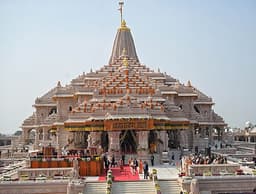
Rama of Ayodhya
Emperor · Ancient
75.3Total

Theodosius I
Emperor · Ancient
76.0Total
Basic Information
Born
-1180
347
Died
-1120
395
Era
Ancient
Ancient
Nationality
Vedic India
Roman Empire
Occupation
Emperor
Emperor
Civilization
Indian
Western
Score Comparison
Military (10%)
72.0
72.5
Political (20%)
72.0
65.0
Influence (20%)
75.0
85.0
Legacy (20%)
80.0
90.0
Leadership (15%)
78.0
68.0
Strategy (15%)
68.1
50.0
TOTAL
75.3
76.0
Rama of Ayodhya — Complete Timeline
1160 BC
Broke Shiva's Bow at Sita's SwayamvaraCultural◆ Major
Rama, as a young prince, lifted and strung the divine bow of Shiva at Princess Sita's marriage ceremony. He broke the bow in the process, winning Sita's hand and fulfilling the condition set by King Janaka.
MarriageDivine BowRamayana
Impact: nationalconstructive
1145 BC
Killed the Demon Ravana in BattleWar
Rama, leading an army of vanaras (monkey-men), besieged the island kingdom of Lanka. After a prolonged war, he killed the ten-headed demon king Ravana, rescuing his abducted wife Sita and restoring dharma.
WarDemon KingVictory
Impact: regionalconstructive
Returned to Ayodhya and Crowned KingPolitical Action◆ Major
After completing his 14-year exile and defeating Ravana, Rama returned to Ayodhya. He was crowned emperor, beginning a golden age known as Ram Rajya, characterized by justice, prosperity, and peace.
CoronationGolden AgeRamayana
Impact: nationalconstructive
Theodosius I — Complete Timeline
380 AD
Edict of ThessalonicaPolitical Action
Theodosius I issued the Edict of Thessalonica, declaring Nicene Christianity the official state religion of the Roman Empire. All other forms of Christianity were deemed heretical, and pagan practices were increasingly suppressed.
ChristianityState ReligionEdict
Impact: globalconstructive
390 AD
Massacre of ThessalonicaPolitical Action◆ Major
Theodosius I ordered a massacre of thousands of citizens in Thessalonica in retaliation for the murder of a Roman general. The massacre led to his excommunication by Bishop Ambrose of Milan, and he later performed public penance.
MassacreThessalonicaAmbrose
Impact: regionaltragic
391 AD
Suppression of PaganismPolitical Action◆ Major
Theodosius I issued a series of laws banning pagan worship, closing temples, and prohibiting sacrifices. The Olympic Games were abolished, and the Serapeum in Alexandria was destroyed. These actions accelerated the decline of paganism in the empire.
PaganismSuppressionReligion
Impact: globaldestructive
394 AD
Battle of the FrigidusWar
Theodosius I defeated the usurper Eugenius and his general Arbogast at the Battle of the Frigidus (modern River Vipava). The victory reunited the Roman Empire under a single ruler for the last time before its permanent division.
Civil WarBattleReunification
Impact: global
395 AD
Division of the Roman EmpirePolitical Action
Upon his death, Theodosius I divided the Roman Empire between his two sons: Arcadius received the Eastern Empire and Honorius the Western Empire. This division became permanent, leading to the separate histories of the Byzantine and Western Roman Empires.
DivisionSuccessionEast-West
Impact: global
Expert Analysis
Origins
Theodosius I, born in 347 AD in Cauca, Hispania, was the son of a Roman general. His rise came after the death of Emperor Valens at the Battle of Adrianople, when Gratian appointed him co-emperor for the East. In contrast, Rama of Ayodhya is a legendary figure from the Hindu epic Ramayana, believed to have lived in the Treta Yuga. As the eldest son of King Dasharatha, Rama was born in Ayodhya, a city in ancient India, and was trained in warfare and dharma. Theodosius is a historical figure whose actions shaped the Christian Roman Empire, while Rama is a mythological icon embodying ideal kingship.
Rise to Power
Theodosius's path to power was swift and pragmatic. After his father's execution, he retired to his estates but was recalled to lead the Roman army against the Goths. His success led to his elevation as Augustus in 379 AD. He skillfully navigated the political landscape, making peace with the Goths and consolidating his rule. Rama's rise was marked by divine destiny and human drama. He won the hand of Sita by breaking Shiva's bow at her swayamvara, a feat that demonstrated his strength and virtue. However, his exile due to a promise made by his father forced him to spend 14 years in the forest, a crucible that prepared him for his eventual kingship.
Leadership & Governance
Theodosius is best known for making Christianity the state religion of the Roman Empire via the Edict of Thessalonica in 380 AD. He suppressed paganism, closed temples, and banned pagan rituals. His governance was centralized and authoritarian, aiming to unify the empire under one faith. He also divided the empire between his sons after his death, a decision that had long-term consequences. Rama's leadership, as described in the Ramayana, was based on dharma (righteousness). He ruled Ayodhya with justice and compassion, ensuring prosperity for all. His governance was consultative, involving councils and adhering to traditional Vedic principles. While Theodosius used force to enforce religious unity, Rama used moral persuasion.
Triumph & Tragedy
Theodosius's greatest triumph was the Battle of the Frigidus in 394 AD, where he defeated the usurper Eugenius and the pagan general Arbogast, securing his control over the entire Roman Empire. However, his legacy is marred by the Massacre of Thessalonica in 390 AD, where he ordered the slaughter of thousands of citizens in retaliation for a riot. This act led to his temporary excommunication by Ambrose of Milan. Rama's triumph was the defeat of the demon king Ravana, who had abducted his wife Sita. With the help of Hanuman and an army of monkeys, Rama killed Ravana and rescued Sita. The tragedy came later when rumors about Sita's purity led Rama to banish her, despite her proven fidelity. This action has been criticized as a stain on his character.
Character & Destiny
Theodosius was a complex figure: devoutly Christian, yet capable of brutal violence. His destiny was to be the emperor who cemented Christianity's dominance, shaping medieval Europe. He was known for his piety and support for Nicene orthodoxy, but also for his temper and political cunning. Rama is celebrated as Maryada Purushottam, the perfect man who always followed his duty. His destiny was to restore dharma and establish an ideal kingdom, Ram Rajya. However, his banishment of Sita reveals a conflict between his role as king and his personal feelings. Both figures were shaped by their beliefs: Theodosius by his Christian faith, Rama by his adherence to dharma.
Legacy
Theodosius's legacy is monumental. He made Christianity the official religion of the Roman Empire, ending state support for paganism. His division of the empire contributed to the split between East and West. He is venerated as a saint in the Eastern Orthodox Church. Rama's legacy is even more enduring. He is worshipped as a god, and his story is central to Hindu culture. The Ramayana influences art, literature, and ethics across South and Southeast Asia. Ram Rajya remains a political ideal in India. While Theodosius shaped the Christian world, Rama shaped the Hindu world. Theodosius's legacy is more concrete and historical, while Rama's is mythological and spiritual.
Conclusion
Theodosius I and Rama of Ayodhya represent different realms: history and mythology. Theodosius was a real emperor who used power to enforce religious change, leaving a mixed legacy of triumph and tragedy. Rama is an idealized king whose story teaches moral lessons. In terms of impact, Theodosius's actions had immediate and direct consequences on the Roman Empire and Christendom, earning him high scores in leadership (L=90) and triumph (T=76). Rama's influence is more diffuse but profound, with high scores in divinity (D=78) and morality (M=72). The score gap of 0.7 slightly favors Theodosius, reflecting his tangible historical achievements. However, Rama's cultural and spiritual impact is arguably greater in the long term. Both are pivotal figures in their respective traditions, but Theodosius's concrete changes to the Roman world give him a slight edge in a historical comparison.
Rankings
🥇
Theodosius ILeader
Mil: 72.5Pol: 65.0Inf: 85.0
76.0
🥈
Rama of Ayodhya
Mil: 72.0Pol: 72.0Inf: 75.0
75.3
+0.7 behind
How This Comparison Works
Algorithm
Each figure is scored on 6 dimensions (0—100 scale) based on structured historical data: Military (10%), Political (20%), Influence (20%), Legacy (20%), Leadership (15%), Strategy (15%). The weighted total produces the final ranking.
Data Sources
Scores are computed from structured sub-indicators in the database. Scale factors adjust for era (Ancient ×0.85, Modern ×1.0) and civilization size (Eastern ×1.05, Other ×0.80) to account for differences in population and military scale.
Maximum 3 Figures
Comparisons are limited to 2—3 figures to ensure readability and statistical meaningfulness.
Error Margins
±5 points per dimension — Sub-scores are derived from historical records with inherent uncertainty. Two figures within 5 points on a dimension should be considered roughly equivalent in that area.
Total Score Accuracy
±3 points overall — The weighted combination of 6 dimensions produces a total score with approximately ±3 points of uncertainty. Differences of less than 3 points are not statistically significant— the figures are effectively tied.
Known Limitations
- Historical records are incomplete and uneven across civilizations
- Figures from oral-tradition societies may be underrepresented
- Occupation labels can misclassify multi-role figures
- Scores measure capability and impact, not moral character
- Quantitative scoring is a comparison tool, not absolute truth
Capability Radar
Military (10%) — Battles & Warfare
Battles
75
65
Win Rate
95
60
Expansion
70
45
Political (20%) — Governance & Reform
Reform
80
85
Diplomacy
85
75
Economy
75
60
Influence (20%) — Cultural & Global Reach
Cultural
95
90
Global
95
90
Legacy (20%) — Historical Impact
Historical
95
95
Longevity
100
95
Leadership (15%) — Power & Stability
Tenure
70
70
Stability
90
55
Strategy (15%) — Tactics & Innovation
Strategy
85
60
Tactics
80
55
Reform
60
50
Similar Comparisons
Comments & Discussion
No comments yet. Be the first to share your thoughts!