Loading...
Hammurabi vs Rama of Ayodhya
Rama of Ayodhya leads by 5.9 pts · 2 figures compared
…
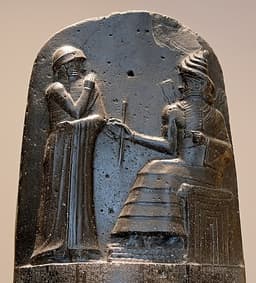
Hammurabi
Emperor · Ancient
69.4Total
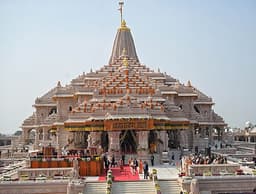
Rama of Ayodhya
Emperor · Ancient
75.3Total
Basic Information
Born
-1810
-1180
Died
-1750
-1120
Era
Ancient
Ancient
Nationality
Babylon
Vedic India
Occupation
Emperor
Emperor
Civilization
Middle Eastern
Indian
Score Comparison
Military (10%)
60.0
72.0
Political (20%)
62.7
72.0
Influence (20%)
68.0
75.0
Legacy (20%)
80.0
80.0
Leadership (15%)
80.0
78.0
Strategy (15%)
50.0
68.1
TOTAL
69.4
75.3
Hammurabi — Complete Timeline
1763 BC
Conquest of MesopotamiaWar◆ Major
Hammurabi conquered the city-states of Larsa, Mari, and Eshnunna, uniting most of Mesopotamia under Babylonian rule. This created the Babylonian Empire and made Babylon the dominant power in the region.
ConquestEmpireBabylon
Impact: regional
1754 BC
Promulgation of the Code of HammurabiCultural
Hammurabi issued a comprehensive legal code inscribed on a stele, containing 282 laws covering trade, property, family, and crime. The code established the principle of lex talionis (eye for an eye) and influenced later legal systems.
LawCodeMesopotamia
Impact: globalconstructive
1750 BC
Construction of Babylon's fortificationsOther
Hammurabi ordered the construction of extensive city walls, canals, and temples in Babylon. These projects strengthened the city's defenses and infrastructure, solidifying its status as a major urban center.
ConstructionInfrastructureBabylon
constructive
Rama of Ayodhya — Complete Timeline
1160 BC
Broke Shiva's Bow at Sita's SwayamvaraCultural◆ Major
Rama, as a young prince, lifted and strung the divine bow of Shiva at Princess Sita's marriage ceremony. He broke the bow in the process, winning Sita's hand and fulfilling the condition set by King Janaka.
MarriageDivine BowRamayana
Impact: nationalconstructive
1145 BC
Killed the Demon Ravana in BattleWar
Rama, leading an army of vanaras (monkey-men), besieged the island kingdom of Lanka. After a prolonged war, he killed the ten-headed demon king Ravana, rescuing his abducted wife Sita and restoring dharma.
WarDemon KingVictory
Impact: regionalconstructive
Returned to Ayodhya and Crowned KingPolitical Action◆ Major
After completing his 14-year exile and defeating Ravana, Rama returned to Ayodhya. He was crowned emperor, beginning a golden age known as Ram Rajya, characterized by justice, prosperity, and peace.
CoronationGolden AgeRamayana
Impact: nationalconstructive
Expert Analysis
Origins
Hammurabi was born around 1810 BCE in Babylon, a city-state in central Mesopotamia. His father, Sin-Muballit, was the fifth king of the First Babylonian Dynasty. Hammurabi inherited a small kingdom and spent his early years consolidating power. He was educated in the arts of war, administration, and law, typical for a Mesopotamian ruler.
Rama, according to the Ramayana, was born in Ayodhya (modern-day Uttar Pradesh, India) to King Dasharatha and Queen Kaushalya. His birth is dated to the Treta Yuga, roughly 5000 BCE in traditional chronology, but historically placed around 1000-500 BCE. He was trained in martial arts and scriptures under sages like Vashishtha. His early life was marked by his breaking of Shiva's bow at Sita's swayamvara, marrying her, and being appointed heir to the throne.
Rise to Power
Hammurabi ascended to the throne around 1792 BCE at age 18. He initially focused on building temples and defensive walls, avoiding conflict. However, after the death of Shamshi-Adad I of Assyria, Hammurabi began a series of military campaigns. In 1763 BCE, he conquered Larsa; in 1761 BCE, Mari; and by 1755 BCE, he controlled all of Mesopotamia. His rise was a calculated blend of diplomacy and warfare.
Rama's rise was thwarted by palace intrigue. His stepmother Kaikeyi demanded he be exiled for 14 years so her son Bharata could be king. Rama accepted the exile without protest, demonstrating his adherence to dharma. During exile, he befriended the monkey king Sugriva and built an army of vanaras. After the abduction of his wife Sita by Ravana, Rama led a war against Lanka, culminating in Ravana's death. He returned to Ayodhya and was crowned king, beginning Ram Rajya.
Leadership & Governance
Hammurabi's leadership was defined by his legal code. The Code of Hammurabi, inscribed on a stele around 1754 BCE, contains 282 laws covering trade, property, family, and crime. It established the principle of "lex talionis" (eye for an eye) and differentiated punishments based on social class. He also built extensive infrastructure: canals for irrigation, walls for defense, and temples for religious unity. His government centralized power through a bureaucracy of scribes and officials.
Rama's governance is idealized as Ram Rajya, a utopian state where justice, prosperity, and harmony prevail. He is portrayed as a just and compassionate king who prioritized the welfare of his subjects. His leadership style was consultative, seeking advice from sages and ministers. However, his decision to exile Sita due to public gossip reveals a flaw: his adherence to duty over personal affection. In terms of concrete reforms, the Ramayana provides few specifics, focusing instead on moral exemplars.
Triumph & Tragedy
Hammurabi's greatest success was the unification of Mesopotamia and the creation of a legal framework that influenced later cultures, including biblical law. His code provided stability and order. His tragedy was the empire's fragility; after his death, it quickly declined under his son Samsu-iluna, losing territories to the Hittites and Kassites.
Rama's triumph was the defeat of Ravana, symbolizing the victory of good over evil. His establishment of Ram Rajya became a golden age in Indian memory. His tragedy was personal: the loss of his wife Sita twice—first to abduction, then to exile. He never remarried and performed an ashvamedha yajna with a golden statue of Sita. His reign, though idealized, ended with his death by drowning in the Sarayu River.
Character & Destiny
Hammurabi was pragmatic and ambitious. He used both military force and diplomatic alliances to expand his realm. His code shows a desire for order and justice, but also a willingness to enforce harsh penalties. His character was that of a builder and organizer, not a conqueror of epic proportions. He scored 62.7 in political skill, reflecting his ability to navigate alliances, but only 50.0 in strategy, perhaps due to the posthumous collapse of his empire.
Rama is the embodiment of dharma, always choosing duty over personal desire. His character is consistent: he accepts exile, fights Ravana, and rules justly. However, his rigidity in following dharma led to personal tragedies. Historians note that his story served to reinforce social norms and the caste system. His influence score of 75.0 reflects his deep cultural impact, but his political score of 72.0 is based on idealized governance rather than historical records.
Legacy
Hammurabi's legacy is tangible: the Code of Hammurabi is one of the earliest and most complete legal codes. It influenced the development of law in the ancient Near East and beyond. His construction projects set standards for urban planning. However, his empire did not endure, and his name is less known to the general public compared to other ancient rulers.
Rama's legacy is immense and enduring. The Ramayana is a foundational text of Hinduism, and Rama is worshipped as a deity. His story has been retold across Asia, influencing art, literature, and politics. The concept of Ram Rajya is invoked in Indian political discourse. His total score of 75.3 reflects his high influence and legacy (both 80.0). However, the lack of historical evidence for his reign reduces his measurable impact on governance.
Conclusion
While both figures shaped ancient civilizations, Rama had a greater long-term influence on culture and religion, scoring 75.3 overall compared to Hammurabi's 69.4. However, Hammurabi's contributions to law and statecraft are historically verifiable and directly influenced subsequent legal systems. In terms of concrete, measurable impact on governance and society, Hammurabi's code is a more substantial achievement. But considering the breadth of cultural influence and the enduring moral framework, Rama's impact is broader. Therefore, while Hammurabi's legacy is more tangible, Rama's influence is more profound, making him the greater figure in terms of overall impact on human civilization.
Rankings
🥇
Rama of AyodhyaLeader
Mil: 72.0Pol: 72.0Inf: 75.0
75.3
🥈
Hammurabi
Mil: 60.0Pol: 62.7Inf: 68.0
69.4
+5.9 behind
How This Comparison Works
Algorithm
Each figure is scored on 6 dimensions (0—100 scale) based on structured historical data: Military (10%), Political (20%), Influence (20%), Legacy (20%), Leadership (15%), Strategy (15%). The weighted total produces the final ranking.
Data Sources
Scores are computed from structured sub-indicators in the database. Scale factors adjust for era (Ancient ×0.85, Modern ×1.0) and civilization size (Eastern ×1.05, Other ×0.80) to account for differences in population and military scale.
Maximum 3 Figures
Comparisons are limited to 2—3 figures to ensure readability and statistical meaningfulness.
Error Margins
±5 points per dimension — Sub-scores are derived from historical records with inherent uncertainty. Two figures within 5 points on a dimension should be considered roughly equivalent in that area.
Total Score Accuracy
±3 points overall — The weighted combination of 6 dimensions produces a total score with approximately ±3 points of uncertainty. Differences of less than 3 points are not statistically significant— the figures are effectively tied.
Known Limitations
- Historical records are incomplete and uneven across civilizations
- Figures from oral-tradition societies may be underrepresented
- Occupation labels can misclassify multi-role figures
- Scores measure capability and impact, not moral character
- Quantitative scoring is a comparison tool, not absolute truth
Capability Radar
Military (10%) — Battles & Warfare
Battles
65
75
Win Rate
70
95
Expansion
65
70
Political (20%) — Governance & Reform
Reform
90
80
Diplomacy
75
85
Economy
70
75
Influence (20%) — Cultural & Global Reach
Cultural
85
95
Global
80
95
Legacy (20%) — Historical Impact
Historical
90
95
Longevity
95
100
Leadership (15%) — Power & Stability
Tenure
80
70
Stability
75
90
Strategy (15%) — Tactics & Innovation
Strategy
60
85
Tactics
55
80
Reform
50
60
Similar Comparisons
Comments & Discussion
No comments yet. Be the first to share your thoughts!