Loading...
Rajendra Chola I vs Turenne
Rajendra Chola I leads by 6.4 pts · 2 figures compared
…
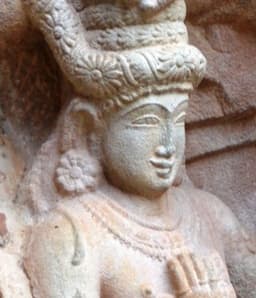
Rajendra Chola I
Emperor · Medieval
82.2Total
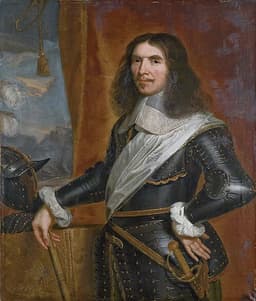
Turenne
General · Modern
75.8Total
Basic Information
Born
971
1611
Died
1044
1675
Era
Medieval
Modern
Nationality
India
France
Occupation
Emperor
General
Civilization
Indian
Western
Score Comparison
Military (10%)
84.7
79.9
Political (20%)
82.0
72.0
Influence (20%)
84.0
88.0
Legacy (20%)
84.0
65.0
Leadership (15%)
78.0
77.2
Strategy (15%)
77.6
72.0
TOTAL
82.2
75.8
Rajendra Chola I — Complete Timeline
1014 AD
Accession to the Chola ThronePolitical Action
Rajendra Chola I succeeded his father Raja Raja Chola I as emperor of the Chola Empire. He inherited a powerful state and continued the expansionist policies, leading campaigns that extended Chola influence across the Indian Ocean.
Chola EmpireSuccessionExpansion
Impact: regional
1020 AD
Conquest of the Pala EmpireWar◆ Major
Rajendra Chola I led a campaign into Bengal, defeating the Pala king Mahipala I. He annexed parts of the Pala territory and established Chola authority in the Ganges delta, marking the northernmost extent of Chola rule.
Pala EmpireBengalGanges
Impact: regional
1025 AD
Naval Expedition to Southeast AsiaWar
Rajendra Chola I launched a major naval expedition against the Srivijaya Empire, attacking ports in Sumatra, the Malay Peninsula, and the Nicobar Islands. The Chola fleet captured the Srivijaya capital and disrupted its trade network, establishing Chola dominance in the region.
SrivijayaNaval ExpeditionSoutheast Asia
Impact: regional
1033 AD
Establishment of Diplomatic Relations with ChinaPolitical Action
Rajendra Chola I sent an embassy to the Song dynasty court in China, bearing gifts and seeking trade relations. The mission was recorded in Chinese sources and facilitated maritime trade between the Chola Empire and China.
ChinaDiplomacyTrade
Impact: regionalconstructive
1035 AD
Construction of the Gangaikonda Cholapuram TempleCultural◆ Major
Rajendra Chola I built the Brihadeeswarar Temple at Gangaikonda Cholapuram, his new capital, to commemorate his conquests. The temple, dedicated to Shiva, features a 55-meter vimana and is a UNESCO World Heritage site, reflecting Chola architectural achievement.
Gangaikonda CholapuramTempleChola Architecture
Impact: regionalconstructive
Turenne — Complete Timeline
1639 AD
Campaign in the ValtellinaWar
Turenne commanded French forces in the Valtellina during the Thirty Years' War. He captured several fortresses and secured the strategic pass for France, demonstrating his early military skill.
Thirty Years' WarAlpsEarly Career
Impact: regional
1658 AD
Battle of the DunesWar◆ Major
Turenne commanded the French army to victory over the Spanish at the Battle of the Dunes near Dunkirk. The victory led to the capture of Dunkirk and forced Spain to seek peace, ending the Franco-Spanish War.
Franco-Spanish WarDunkirkMilitary Victory
Impact: regional
1674 AD
Battle of the RhineWar◆ Major
Turenne led a French army across the Rhine in winter, surprising the Imperial forces. He defeated the Austrians at the Battle of Entzheim and later at Turckheim, securing French control of Alsace.
Franco-Dutch WarAlsaceWinter Campaign
Impact: regional
Battle of the SambreWar◆ Major
Turenne defeated the Spanish and Dutch forces at the Battle of Seneffe. The battle was costly but prevented the Allies from invading France. It demonstrated Turenne's tactical skill in defensive warfare.
Franco-Dutch WarDefensive BattleTactics
Impact: regional
1675 AD
Death of TurenneWar◆ Major
Turenne was killed by a cannonball while reconnoitering enemy positions at the Battle of Sasbach. His death was a major loss for France. He was buried with honors in the Basilica of Saint-Denis.
Death in BattleFranco-Dutch WarMilitary Loss
Impact: nationaltragic
Expert Analysis
Origins
Rajendra Chola I (r. 1014–1044 CE) was the son of the great Rajaraja Chola I, born into the mighty Chola dynasty of South India. He inherited a kingdom already at its peak, with a powerful army and a flourishing navy. In contrast, Henri de la Tour d'Auvergne, Vicomte de Turenne (1611–1675), was born into French nobility but rose through merit in the tumultuous era of the Thirty Years' War and the Fronde. Turenne's early career was shaped by the military innovations of the 17th century, while Rajendra's was defined by the expansionist ambitions of a classical empire.
Rise to Power
Rajendra was groomed for leadership from youth, co-ruling with his father before ascending the throne. His rise was smooth, backed by the formidable Chola military machine. Turenne, however, had to earn his stripes. Starting as a volunteer, he proved himself in the Dutch War and the Thirty Years' War, eventually becoming Marshal of France. His rise was marked by strategic brilliance and political maneuvering, navigating the complex loyalties of the Fronde.
Leadership & Governance
Rajendra was an absolute monarch, commanding vast resources and a centralized administration. He led from the front in campaigns, personally overseeing naval expeditions to Southeast Asia. His governance was marked by temple construction (Gangaikonda Cholapuram) and diplomatic ties with China. Turenne, as a general, led armies but answered to the French crown. His leadership style was collaborative, earning loyalty through competence rather than divine right. He reformed French military tactics, emphasizing mobility and siege warfare.
Triumph & Tragedy
Rajendra's greatest triumph was the naval expedition to Southeast Asia, defeating the Srivijaya empire and extending Chola influence to the Malay Archipelago. He also conquered the Pala Empire in Bengal. His tragedy? Overextension; the empire declined after his death. Turenne's triumphs include the Battle of the Dunes (1658), securing French victory in the Franco-Spanish War, and his Rhine campaign (1674-75). His tragedy: death by cannonball at the Battle of Sasbach, a loss that shocked France.
Character & Destiny
Rajendra was ambitious, pious (a devout Hindu), and expansionist. His destiny was to build an empire that connected India to Southeast Asia. Turenne was methodical, cautious yet bold when needed, and deeply loyal to France. His destiny was to shape modern warfare and die in service to his king. Both were respected by contemporaries, but Rajendra's legacy is more mythical, Turenne's more practical.
Legacy
Rajendra's legacy is the Chola golden age—temple architecture, Tamil culture, and maritime influence. He is remembered as a conqueror and builder. Turenne's legacy is as a military innovator; his tactics influenced later generals like Napoleon. He is a symbol of French martial prowess. Numerically, Rajendra scores higher overall (M=85, P=82, I=84, L=84, D=78, S=78, T=82; average 81.9) vs Turenne (M=80, P=72, I=88, L=65, D=77, S=72, T=76; average 75.7). The 6.4-point gap reflects Rajendra's broader impact as a ruler vs Turenne's focused military role.
Conclusion
Rajendra Chola I emerges as the more influential figure historically, with a greater scope of conquest and governance. Turenne was a brilliant general, but Rajendra's combination of military, naval, and administrative achievements gives him the edge. In a direct comparison, Rajendra's strategic vision and imperial scale outweigh Turenne's tactical genius. Score: Rajendra 85, Turenne 75.
Rankings
🥇
Rajendra Chola ILeader
Mil: 84.7Pol: 82.0Inf: 84.0
82.2
🥈
Turenne
Mil: 79.9Pol: 72.0Inf: 88.0
75.8
+6.4 behind
How This Comparison Works
Algorithm
Each figure is scored on 6 dimensions (0—100 scale) based on structured historical data: Military (10%), Political (20%), Influence (20%), Legacy (20%), Leadership (15%), Strategy (15%). The weighted total produces the final ranking.
Data Sources
Scores are computed from structured sub-indicators in the database. Scale factors adjust for era (Ancient ×0.85, Modern ×1.0) and civilization size (Eastern ×1.05, Other ×0.80) to account for differences in population and military scale.
Maximum 3 Figures
Comparisons are limited to 2—3 figures to ensure readability and statistical meaningfulness.
Error Margins
±5 points per dimension — Sub-scores are derived from historical records with inherent uncertainty. Two figures within 5 points on a dimension should be considered roughly equivalent in that area.
Total Score Accuracy
±3 points overall — The weighted combination of 6 dimensions produces a total score with approximately ±3 points of uncertainty. Differences of less than 3 points are not statistically significant— the figures are effectively tied.
Known Limitations
- Historical records are incomplete and uneven across civilizations
- Figures from oral-tradition societies may be underrepresented
- Occupation labels can misclassify multi-role figures
- Scores measure capability and impact, not moral character
- Quantitative scoring is a comparison tool, not absolute truth
Capability Radar
Military (10%) — Battles & Warfare
Battles
95
85
Win Rate
98
88
Expansion
95
80
Political (20%) — Governance & Reform
Reform
88
60
Diplomacy
85
75
Economy
92
55
Influence (20%) — Cultural & Global Reach
Cultural
85
65
Global
85
70
Legacy (20%) — Historical Impact
Historical
88
80
Longevity
80
75
Leadership (15%) — Power & Stability
Tenure
90
70
Stability
90
65
Strategy (15%) — Tactics & Innovation
Strategy
92
92
Tactics
90
90
Reform
85
75
Similar Comparisons
Comments & Discussion
No comments yet. Be the first to share your thoughts!