Loading...
Charles de Gaulle vs Rajendra Chola I
Rajendra Chola I leads by 14.0 pts · 2 figures compared
…
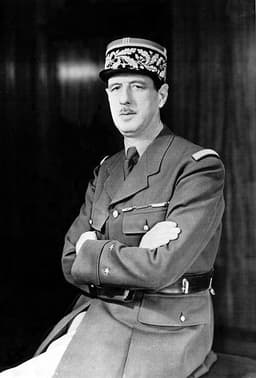
Charles de Gaulle
Politician · Modern
68.2Total
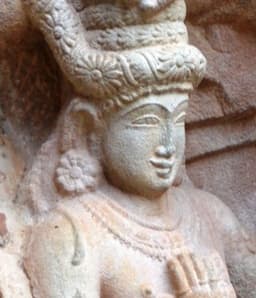
Rajendra Chola I
Emperor · Medieval
82.2Total
Basic Information
Born
1890
971
Died
1970
1044
Era
Modern
Medieval
Nationality
France
India
Occupation
Politician
Emperor
Civilization
Western
Indian
Score Comparison
Military (10%)
55.0
84.7
Political (20%)
75.0
82.0
Influence (20%)
65.0
84.0
Legacy (20%)
68.0
84.0
Leadership (15%)
78.0
78.0
Strategy (15%)
65.0
77.6
TOTAL
68.2
82.2
Charles de Gaulle — Complete Timeline
1940 AD
Appeal of 18 June 1940Political Action
From London, de Gaulle broadcast a radio appeal urging French resistance against Nazi occupation. He called on French soldiers and citizens to continue the fight, founding the Free French Forces and becoming the symbol of French defiance.
World War IIResistanceLeadership
Impact: nationalconstructive
1958 AD
Founding of the Fifth RepublicPolitical Action
De Gaulle returned to power during the Algerian crisis and oversaw the drafting of a new constitution. The Fifth Republic established a strong executive presidency, replacing the unstable parliamentary system of the Fourth Republic.
ConstitutionGovernment ReformPolitical System
Impact: nationalconstructive
1962 AD
End of the Algerian WarPolitical Action◆ Major
De Gaulle negotiated the
DecolonizationPeace TreatyAlgeria
Impact: regionalconstructive
1968 AD
May 1968 CrisisPolitical Action◆ Major
Mass student protests and general strikes paralyzed France, challenging de Gaulle's government. De Gaulle briefly fled to Germany, then returned to dissolve the National Assembly and call elections, which his party won, but his authority was weakened.
ProtestPolitical CrisisSocial Unrest
Impact: nationaldestructive
1969 AD
Resignation as PresidentPolitical Action
De Gaulle resigned after losing a referendum on regional reform and Senate restructuring. The defeat marked the end of his political career, as he withdrew from public life and died the following year.
ResignationPolitical DefeatReferendum
Impact: nationaltragic
Rajendra Chola I — Complete Timeline
1014 AD
Accession to the Chola ThronePolitical Action
Rajendra Chola I succeeded his father Raja Raja Chola I as emperor of the Chola Empire. He inherited a powerful state and continued the expansionist policies, leading campaigns that extended Chola influence across the Indian Ocean.
Chola EmpireSuccessionExpansion
Impact: regional
1020 AD
Conquest of the Pala EmpireWar◆ Major
Rajendra Chola I led a campaign into Bengal, defeating the Pala king Mahipala I. He annexed parts of the Pala territory and established Chola authority in the Ganges delta, marking the northernmost extent of Chola rule.
Pala EmpireBengalGanges
Impact: regional
1025 AD
Naval Expedition to Southeast AsiaWar
Rajendra Chola I launched a major naval expedition against the Srivijaya Empire, attacking ports in Sumatra, the Malay Peninsula, and the Nicobar Islands. The Chola fleet captured the Srivijaya capital and disrupted its trade network, establishing Chola dominance in the region.
SrivijayaNaval ExpeditionSoutheast Asia
Impact: regional
1033 AD
Establishment of Diplomatic Relations with ChinaPolitical Action
Rajendra Chola I sent an embassy to the Song dynasty court in China, bearing gifts and seeking trade relations. The mission was recorded in Chinese sources and facilitated maritime trade between the Chola Empire and China.
ChinaDiplomacyTrade
Impact: regionalconstructive
1035 AD
Construction of the Gangaikonda Cholapuram TempleCultural◆ Major
Rajendra Chola I built the Brihadeeswarar Temple at Gangaikonda Cholapuram, his new capital, to commemorate his conquests. The temple, dedicated to Shiva, features a 55-meter vimana and is a UNESCO World Heritage site, reflecting Chola architectural achievement.
Gangaikonda CholapuramTempleChola Architecture
Impact: regionalconstructive
Expert Analysis
Charles de Gaulle vs Rajendra Chola I
# The Emperor and the General: Two Paths to Immortality
On a June evening in 1940, a tall, awkward French general stood before a BBC microphone in London and told his countrymen that "the flame of French resistance must not go out." Nearly a thousand years earlier and half a world away, a South Indian emperor watched his war elephants splash through the Ganges, fulfilling a prophecy that no Chola king had ever reached the sacred river. Charles de Gaulle and Rajendra Chola I never met, never knew of each other's existence. Yet both men faced the same fundamental question: how does a leader forge a nation's soul when the world is collapsing around it?
Origins
Charles de Gaulle was born into a devoutly Catholic, nationalist family in Lille in 1890. His father taught philosophy and history, and young Charles grew up reading the works of Charles Péguy and Maurice Barrès, absorbing a vision of France as a sacred, eternal entity. The Franco-Prussian War, which ended in French humiliation when de Gaulle was a child, left an indelible scar. He entered the military academy of Saint-Cyr in 1909, where his classmates nicknamed him "the great asparagus" for his towering height and aloof manner. From the start, de Gaulle believed that France's greatness was not optional but essential—a conviction that would define his life.
Rajendra Chola I was born in 971 into a very different kind of certainty. His father, Raja Raja Chola I, had transformed the Chola Empire from a regional Tamil kingdom into a maritime superpower. Young Rajendra grew up in the shadow of the Brihadeeswarar Temple at Thanjavur, a monument so vast that its shadow still falls across centuries. Where de Gaulle inherited a sense of wounded national pride, Rajendra inherited an empire in full flower. His education was practical: military strategy, administrative governance, and the rituals of kingship that connected the Chola monarch to the divine.
Rise to Power
De Gaulle's path was slow, painful, and defined by catastrophe. He fought bravely at Verdun in 1916, was wounded, captured, and spent nearly three years as a prisoner of war. Between the wars, he wrote military treatises arguing for armored warfare and professional armies—ideas that France ignored and Germany used. When the Wehrmacht smashed through French defenses in 1940, de Gaulle was a 49-year-old brigadier general, a junior officer by any standard. But he possessed something more valuable than rank: clarity. On June 18, 1940, from London, he made a radio appeal that would become the founding myth of modern France. He was not speaking for the defeated government. He was speaking for France itself.
Rajendra Chola I ascended the throne in 1014, inheriting not a broken nation but a triumphant one. His father had already conquered Sri Lanka, the Maldives, and much of the Deccan plateau. Rajendra's challenge was not survival but expansion—how to take a great empire and make it greater. He was crowned co-regent in 1012, two years before his father's death, a smooth transition that de Gaulle could only envy.
Leadership & Governance
De Gaulle governed through the force of his personality and the power of his ideas. The Fifth Republic, which he founded in 1958, was designed around him—a strong executive who could stand above the squabbling of parties. He believed in "a certain idea of France": independent, dignified, and central to world affairs. His military strategy was often defensive and political rather than purely tactical. He withdrew France from NATO's integrated command, developed an independent nuclear deterrent, and insisted that France could not be just another American satellite.
Rajendra Chola I governed through conquest and institutional genius. His military campaigns were breathtaking in scope: he marched his army across 2,000 kilometers to Bengal in 1020, defeating the Pala king Mahipala I and earning the title *Gangaikonda*—"He who conquered the Ganges." But his true brilliance was organizational. He built a sophisticated bureaucracy, standardized weights and measures, and created a system of local self-government that amazed later European visitors. His naval expedition against the Srivijaya Empire in 1025 was one of the most ambitious amphibious operations in pre-modern history, projecting Chola power across the Bay of Bengal to Sumatra and the Malay Peninsula.
Triumph & Tragedy
De Gaulle's greatest triumph was also his most painful. In 1962, he ended the Algerian War by granting independence to Algeria, a decision that horrified the French military and the pied-noir settlers who had considered Algeria French soil. He survived assassination attempts, faced down a generals' putsch, and emerged as the man who had both lost an empire and saved France's soul. But the May 1968 crisis broke him. Student protests and a general strike paralyzed France, and de Gaulle—the man of iron will—briefly fled to Baden-Baden to consult with French generals. He recovered, won an election, but the magic was gone. In 1969, he resigned after losing a minor referendum on regional reform. "The French are calves," he once said. "They need a shepherd." In the end, the calves had grown tired of him.
Rajendra Chola I suffered no such reversal. His reign from 1014 to 1044 was a continuous arc of triumph. He built his new capital at Gangaikonda Cholapuram, constructing a temple that rivaled his father's masterpiece. He sent embassies to the Song dynasty court in China in 1033, establishing trade relations that enriched his empire for generations. There is no record of rebellion, no final defeat, no bitter resignation. He died as he had lived—an emperor whose will was law.
Character & Destiny
De Gaulle was a man of immense pride, cold intelligence, and theatrical self-awareness. He once wrote that "great men are those who take responsibility for the solitude that is their lot." He cultivated that solitude, standing aloof from ordinary human warmth. His decisions were driven by a vision of France that was almost mystical. When he said "I am France," it was not arrogance but conviction. That conviction allowed him to save France's honor in 1940, restore its stability in 1958, and end a brutal colonial war in 1962. But it also made him unable to adapt when France changed in 1968.
Rajendra Chola I's character is harder to read, filtered through inscriptions on temple walls and the accounts of foreign visitors. What emerges is a man of relentless ambition and practical genius. He did not need to imagine a nation—he was the nation. His decisions were driven by the logic of empire: expand or decline, conquer or be conquered. There was no moral ambiguity about Algeria, no student protests, no existential crises. The medieval world did not ask its rulers to be philosophers.
Legacy
De Gaulle's legacy is the Fifth Republic, which still governs France today. He gave France a constitution that could survive the chaos of parliamentary politics, a nuclear deterrent that guaranteed independence, and a foreign policy that insisted on French grandeur. But his true legacy is more subtle: he showed that a nation can be defeated, occupied, and humiliated—and still choose to be great. The price was a certain distance from reality, a certain theatricality that sometimes exasperated France's allies.
Rajendra Chola I's legacy is written in stone and water. The temple at Gangaikonda Cholapuram still stands, its shadow still falls. The Chola administrative system influenced Indian governance for centuries. His naval expedition reshaped Southeast Asian politics, and Chola bronzes remain among the world's greatest artistic achievements. But his empire did not survive. Within two centuries of his death, the Chola realm had fragmented, swallowed by newer powers.
Conclusion
One man built a nation that lasted. The other built an empire that dazzled and then dissolved. De Gaulle understood that true power is not territory but memory—the ability to make a people believe in themselves. Rajendra Chola I understood that power is action—the ability to project force across oceans and build monuments that defy time. Neither was wrong. They simply lived in different worlds, with different rules. The general who spoke to a microphone in London and the emperor who marched to the Ganges both answered the same question: what does it mean to lead? They answered differently, but their answers still echo.
Rankings
🥇
Rajendra Chola ILeader
Mil: 84.7Pol: 82.0Inf: 84.0
82.2
🥈
Charles de Gaulle
Mil: 55.0Pol: 75.0Inf: 65.0
68.2
+14.0 behind
How This Comparison Works
Algorithm
Each figure is scored on 6 dimensions (0—100 scale) based on structured historical data: Military (10%), Political (20%), Influence (20%), Legacy (20%), Leadership (15%), Strategy (15%). The weighted total produces the final ranking.
Data Sources
Scores are computed from structured sub-indicators in the database. Scale factors adjust for era (Ancient ×0.85, Modern ×1.0) and civilization size (Eastern ×1.05, Other ×0.80) to account for differences in population and military scale.
Maximum 3 Figures
Comparisons are limited to 2—3 figures to ensure readability and statistical meaningfulness.
Error Margins
±5 points per dimension — Sub-scores are derived from historical records with inherent uncertainty. Two figures within 5 points on a dimension should be considered roughly equivalent in that area.
Total Score Accuracy
±3 points overall — The weighted combination of 6 dimensions produces a total score with approximately ±3 points of uncertainty. Differences of less than 3 points are not statistically significant— the figures are effectively tied.
Known Limitations
- Historical records are incomplete and uneven across civilizations
- Figures from oral-tradition societies may be underrepresented
- Occupation labels can misclassify multi-role figures
- Scores measure capability and impact, not moral character
- Quantitative scoring is a comparison tool, not absolute truth
Capability Radar
Military (10%) — Battles & Warfare
Battles
60
95
Win Rate
55
98
Expansion
20
95
Political (20%) — Governance & Reform
Reform
95
88
Diplomacy
90
85
Economy
70
92
Influence (20%) — Cultural & Global Reach
Cultural
70
85
Global
80
85
Legacy (20%) — Historical Impact
Historical
85
88
Longevity
75
80
Leadership (15%) — Power & Stability
Tenure
85
90
Stability
75
90
Strategy (15%) — Tactics & Innovation
Strategy
85
92
Tactics
70
90
Reform
80
85
Similar Comparisons
Comments & Discussion
TheGreatAsparagus6/16/2026
De Gaulle's 1940 radio address was the single most important act of political theater in modern French history, but let's be honest—he was a mediocre field commander who got outmaneuvered twice. His true genius lay in propaganda and symbolic leadership. Rajendra Chola, meanwhile, personally led his army across 2,000 miles of hostile territory to reach the Ganges. One man talked; the other marched. I know who I'd follow into battle.
CholaConqueror6/16/2026
拿个麦克风喊几句就当民族英雄了?拉金德拉一世带着象兵跨过戈达瓦里河、征服三大陆地时才三十多岁。戴高乐1944年回巴黎时,靠的是盟军坦克开路。真正的领袖应该像朱罗王朝那样亲自挥舞弯刀,而不是躲在伦敦广播室。而且戴高乐还写了本《战争回忆录》给自己贴金,连战败都写得像战略撤退。拜托,我可不会把逃跑包装成胜利。
GaullistGalleon6/16/2026
You clearly don't understand strategic patience. De Gaulle's 1940 broadcast wasn't theater; it was the seed of France's postwar identity. While Rajendra conquered physical territory, de Gaulle conquered time itself—his Fifth Republic architecture still governs France today. Plus, he faced a nuclear-armed world, not just elephants and local rajas. Building a functioning democracy in 1958 after four republics failed is infinitely harder than sacking one more kingdom.
TamilTempest6/16/2026
拉金德拉一世不但攻城掠地,还把舰队派到东南亚建立商贸网络。戴高乐连阿尔及利亚都保不住,直接放弃了帝国。朱罗王朝的青铜艺术和水利系统至今还是奇迹,而戴高乐最著名的遗产就是巴黎那条堵成狗的高速公路。比较这两位,就像拿孔雀和秃鹫比羽毛。历史看的是实际贡献,不是演讲稿的长度。
SacredFlameSkeptic6/16/2026
Hold on—we're comparing a man who liberated a nuclear power with a medieval king whose achievements we only know through temple inscriptions (heavily biased ones at that). Rajendra's "conquest of the Ganges" was likely just a raid, not permanent occupation. De Gaulle's institutional legacy—presidential power, nuclear strike force, the entire Fifth Republic—is verifiable, documented, and still functioning. Give me archives over anecdata any day.