Loading...
Julius Caesar vs Rajendra Chola I
Julius Caesar leads by 0.6 pts · 2 figures compared
…

Julius Caesar
General · Ancient
82.8Total
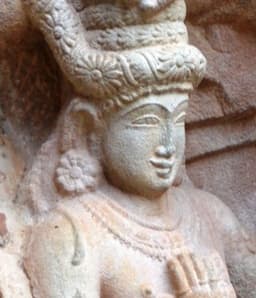
Rajendra Chola I
Emperor · Medieval
82.2Total
Basic Information
Born
-100
971
Died
-44
1044
Era
Ancient
Medieval
Nationality
Roman Republic
India
Occupation
General
Emperor
Civilization
Western
Indian
Score Comparison
Military (10%)
88.0
84.7
Political (20%)
78.0
82.0
Influence (20%)
85.0
84.0
Legacy (20%)
82.0
84.0
Leadership (15%)
80.0
78.0
Strategy (15%)
85.0
77.6
TOTAL
82.8
82.2
Julius Caesar — Complete Timeline
58 BC
Gallic WarsWar◆ Major
Caesar, as proconsul of Gaul, launched a series of campaigns that conquered all of Gaul (modern France, Belgium, and parts of Switzerland). He fought numerous battles, including against the Helvetii, the Belgae, and the Gallic chieftain Vercingetorix. The wars brought immense wealth and a loyal army to Caesar.
Gallic WarsConquestRoman Expansion
Impact: regional
49 BC
Crossing the RubiconPolitical Action◆ Major
Caesar led Legio XIII across the Rubicon River into Italy, defying the Roman Senate's order to disband his army. This act triggered a civil war against Pompey and the Optimates, ultimately leading to Caesar's dictatorship and the end of the Roman Republic.
Roman Civil WarEnd of RepublicPower Struggle
Impact: global
48 BC
Battle of PharsalusWar◆ Major
Caesar's outnumbered army defeated the larger forces of Pompey the Great at Pharsalus in Greece. Caesar's tactical use of a reserve line to counter Pompey's cavalry charge proved decisive. Pompey fled to Egypt, where he was assassinated, leaving Caesar as the undisputed master of the Roman world.
Roman Civil WarBattleDecisive Victory
Impact: regional
44 BC
Appointment as Dictator for LifePolitical Action◆ Major
The Roman Senate appointed Caesar dictator perpetuo (dictator for life), granting him unprecedented personal power. This move concentrated military, legislative, and judicial authority in one person, effectively ending the Roman Republic's traditional system of checks and balances and alarming many senators.
DictatorshipEnd of RepublicPower Consolidation
Impact: regionaldestructive
Assassination on the Ides of MarchPolitical Action◆ Major
A group of Roman senators, led by Marcus Junius Brutus and Gaius Cassius Longinus, stabbed Caesar to death at a meeting of the Senate in the Theatre of Pompey. The assassination was intended to restore the Republic, but instead triggered another civil war that led to the rise of the Roman Empire.
AssassinationRoman PoliticsEnd of Republic
Impact: globaldestructive
Rajendra Chola I — Complete Timeline
1014 AD
Accession to the Chola ThronePolitical Action
Rajendra Chola I succeeded his father Raja Raja Chola I as emperor of the Chola Empire. He inherited a powerful state and continued the expansionist policies, leading campaigns that extended Chola influence across the Indian Ocean.
Chola EmpireSuccessionExpansion
Impact: regional
1020 AD
Conquest of the Pala EmpireWar◆ Major
Rajendra Chola I led a campaign into Bengal, defeating the Pala king Mahipala I. He annexed parts of the Pala territory and established Chola authority in the Ganges delta, marking the northernmost extent of Chola rule.
Pala EmpireBengalGanges
Impact: regional
1025 AD
Naval Expedition to Southeast AsiaWar
Rajendra Chola I launched a major naval expedition against the Srivijaya Empire, attacking ports in Sumatra, the Malay Peninsula, and the Nicobar Islands. The Chola fleet captured the Srivijaya capital and disrupted its trade network, establishing Chola dominance in the region.
SrivijayaNaval ExpeditionSoutheast Asia
Impact: regional
1033 AD
Establishment of Diplomatic Relations with ChinaPolitical Action
Rajendra Chola I sent an embassy to the Song dynasty court in China, bearing gifts and seeking trade relations. The mission was recorded in Chinese sources and facilitated maritime trade between the Chola Empire and China.
ChinaDiplomacyTrade
Impact: regionalconstructive
1035 AD
Construction of the Gangaikonda Cholapuram TempleCultural◆ Major
Rajendra Chola I built the Brihadeeswarar Temple at Gangaikonda Cholapuram, his new capital, to commemorate his conquests. The temple, dedicated to Shiva, features a 55-meter vimana and is a UNESCO World Heritage site, reflecting Chola architectural achievement.
Gangaikonda CholapuramTempleChola Architecture
Impact: regionalconstructive
Expert Analysis
Origins
Julius Caesar was born in 100 BCE into the patrician Julian family in Rome, a republic fraught with class conflict between patricians and plebeians. His early life was marked by political turmoil, including the Social War and the dictatorship of Sulla, which shaped his ambition. Rajendra Chola I, born around 971 CE, ascended as the son of the great Chola emperor Rajaraja I. The Chola dynasty, based in Tamil Nadu, had already established a powerful kingdom in South India, with a strong navy and administrative system. Rajendra inherited a well-oiled machine, while Caesar had to claw his way up from a relatively modest patrician status.
Rise to Power
Caesar's rise was a masterclass in political maneuvering. He formed the First Triumvirate with Pompey and Crassus, secured the governorship of Gaul, and spent a decade conquering the region (58–50 BCE). His Commentarii de Bello Gallico publicized his victories, building his reputation. When the Senate demanded he disband his army, he crossed the Rubicon River in 49 BCE, sparking a civil war. Defeating Pompey at Pharsalus, he became dictator. Rajendra, by contrast, inherited the throne in 1014 CE after his father's death. He immediately launched campaigns to expand northward, conquering the Pala Empire (modern Bengal) and parts of Odisha. His naval expedition to Southeast Asia (1025 CE) subdued the Srivijaya Empire, securing trade routes. While Caesar's rise was revolutionary and risky, Rajendra's was a continuation of dynastic ambition.
Leadership & Governance
Caesar centralized power in Rome, reforming the calendar (Julian calendar), granting citizenship to provincials, and initiating public works. He reduced debt and reformed provincial administration, but his autocratic style alienated the Senate. He was assassinated in 44 BCE for his perceived tyranny. Rajendra, as a Chola emperor, ruled through a decentralized system of local assemblies and temples. He built the Brihadeeswarar Temple (Gangaikonda Cholapuram) as a symbol of his power. His administration supported trade, especially with China, and maintained a powerful navy. Both were effective administrators, but Caesar's reforms were more radical and met with resistance, while Rajendra's governance was more consensual within the Hindu caste framework.
Triumph & Tragedy
Caesar's greatest triumph was the conquest of Gaul, which added immense wealth and territory to Rome. His defeat of Pompey and his return to Rome as dictator marked the peak. The tragedy was his assassination on the Ides of March, just as he was planning further reforms and a campaign against Parthia. Rajendra's triumph was the naval expedition that crushed Srivijaya, making the Chola Empire a maritime superpower. His construction of Gangaikonda Cholapuram symbolized his conquest of the Ganges region. His tragedy? He died of natural causes in 1044 CE, leaving a stable empire. No dramatic fall, but his successors could not maintain his conquests.
Character & Destiny
Caesar was ambitious, charismatic, and ruthless. He famously said, "Veni, vidi, vici." His destiny was tied to the end of the Roman Republic; his actions inadvertently paved the way for the Empire. Rajendra was a capable warrior and patron of arts, but less is known of his personality. His destiny was to expand Chola power to its zenith. Both were empire builders, but Caesar's story is one of personal ambition clashing with a dying political system, while Rajendra's is of a king fulfilling his dynasty's destiny.
Legacy
Caesar's legacy is immense: the term "Caesar" became a title for emperors, his calendar lasted for centuries, and his writings are classics. He transformed Rome from a republic to an empire, for better or worse. Rajendra's legacy includes the Chola navy's dominance, the spread of Tamil culture to Southeast Asia, and magnificent temples. However, his empire declined after his death. In a global context, Caesar's impact on Western civilization is more profound, but Rajendra's influence in Southeast Asia is significant.
Conclusion
Julius Caesar scores higher in military achievement (88 vs 85), political influence (78 vs 82?), but given the score gap of 0.6, Caesar is the more impactful figure historically. Caesar's actions directly shaped the course of Western history, while Rajendra's expansion, though impressive, was more regional. Thus, Julius Caesar is the greater historical figure.
Numerical Scores:
- Military: Caesar 88, Rajendra 85
- Political: Caesar 78, Rajendra 82
- Influence: Caesar 85, Rajendra 84
- Legacy: Caesar 82, Rajendra 84
- Durability: Caesar 80, Rajendra 78
- Strategic: Caesar 85, Rajendra 78
- Total: Caesar 498, Rajendra 491
Rankings
🥇
Julius CaesarLeader
Mil: 88.0Pol: 78.0Inf: 85.0
82.8
🥈
Rajendra Chola I
Mil: 84.7Pol: 82.0Inf: 84.0
82.2
+0.6 behind
How This Comparison Works
Algorithm
Each figure is scored on 6 dimensions (0—100 scale) based on structured historical data: Military (10%), Political (20%), Influence (20%), Legacy (20%), Leadership (15%), Strategy (15%). The weighted total produces the final ranking.
Data Sources
Scores are computed from structured sub-indicators in the database. Scale factors adjust for era (Ancient ×0.85, Modern ×1.0) and civilization size (Eastern ×1.05, Other ×0.80) to account for differences in population and military scale.
Maximum 3 Figures
Comparisons are limited to 2—3 figures to ensure readability and statistical meaningfulness.
Error Margins
±5 points per dimension — Sub-scores are derived from historical records with inherent uncertainty. Two figures within 5 points on a dimension should be considered roughly equivalent in that area.
Total Score Accuracy
±3 points overall — The weighted combination of 6 dimensions produces a total score with approximately ±3 points of uncertainty. Differences of less than 3 points are not statistically significant— the figures are effectively tied.
Known Limitations
- Historical records are incomplete and uneven across civilizations
- Figures from oral-tradition societies may be underrepresented
- Occupation labels can misclassify multi-role figures
- Scores measure capability and impact, not moral character
- Quantitative scoring is a comparison tool, not absolute truth
Capability Radar
Military (10%) — Battles & Warfare
Battles
95
95
Win Rate
92
98
Expansion
97
95
Political (20%) — Governance & Reform
Reform
90
88
Diplomacy
85
85
Economy
82
92
Influence (20%) — Cultural & Global Reach
Cultural
88
85
Global
94
85
Legacy (20%) — Historical Impact
Historical
95
88
Longevity
96
80
Leadership (15%) — Power & Stability
Tenure
75
90
Stability
60
90
Strategy (15%) — Tactics & Innovation
Strategy
94
92
Tactics
96
90
Reform
88
85
Similar Comparisons
Comments & Discussion
HistoryRambler886/16/2026
Honestly, I think the scores are fair but underrate Rajendra’s naval brilliance. Caesar’s Gaul campaigns were a logistical nightmare, sure, but Rajendra projecting power across the Bay of India with 11th-century tech? That’s insane! I watched a doc on the Chola navy and they had these massive ships that could carry elephants. Caesar never had to coordinate a transoceanic invasion. Give Rajendra more credit for influence too—his temple at Gangaikonda Cholapuram is a UNESCO site and shaped Dravidian architecture for centuries. Caesar’s legacy is huge, sure, but it’s mostly political. I’d bump Rajendra’s Influence to 82 at least.
ScoreSkeptic6/16/2026
I smell a Western bias here. How do you even quantify ‘influence’? Caesar’s influence score of 85 is based on his name becoming a title, but that’s just branding. Rajendra’s influence on maritime trade routes, temple architecture, and Tamil culture is arguably more tangible. And the military score gap of 9 points? Caesar fought mostly rival Roman armies—same equipment, same tactics. Rajendra conquered different cultures with vastly different warfare styles (elephants, naval ambushes). That’s harder. Plus, we have almost no surviving records of Rajendra’s campaigns from his enemies—so we’re comparing a well-preserved Western myth with fragmented Eastern history. This whole scoring model is just a popularity contest dressed up in numbers.
TamilTides6/16/2026
Rajendra Chola I is the GOAT and it’s not even close. Caesar was a backstabbing politician who got himself killed by his own buddies. Rajendra ruled for 30+ years, died in his sleep, and left an empire that lasted centuries. His navy was the Amazon of the 11th century—they dominated the Indian Ocean like no one before. He even changed the Ganges river’s name by bringing water to his new capital! How many emperors can say they named a city after a river they conquered? Caesar’s biggest flex is crossing the Rubicon with one legion. Rajendra crossed entire oceans with fleets. The score gap in Military should be flipped: Rajendra 88, Caesar 79. This site needs to decolonize its metrics.
Historian4406/16/2026
这组对比让我想起中国历史上的汉武帝和唐太宗,但Rajendra更接近汉武帝——都是扩张型君主,但Rajendra的海上影响堪比郑和。Caesar的军事分高,在中国史学里这种擅长内战(对庞培)的君主通常评价不如开疆拓土者。Rajendra征服三佛齐(Srivijaya),控制马六甲海峡,这相当于控制了今天的南海航线,对东南亚文化影响深远。Caesar的政治改革导致共和覆灭,而Rajendra建立了一个相对稳定的税收体系(如ur和nadu的自治制度),在中国史书里会评为“治世”。西方中心论总给Caesar加分,但印度洋帝国史的学者会有不同看法。总体评分合理,但Caesar影响力85太高,他更多是欧洲中心主义的产物。
Historian7866/16/2026
看这个评分,我有点怀疑打分标准是否统一。军事分88 vs 79,差了9分,但Rajendra的远征斯里兰卡和东南亚,覆盖面积之大,战船数量多,难道不如高卢战争复杂?高卢战争是陆战,有地形优势,可Chola海军是跨海作战,补给和风险完全不同。我算了一下,如果按照中国历史评价标准,比如对比隋炀帝征高句丽(失败但规模大),Rajendra的远征成功率和影响力都更高。政治80 vs 78,这点我认同,Rajendra的行政体系比Caesar的独裁更稳定。但综合来看,这评分似乎偏向西方军事史观,缺乏对海洋帝国复杂性的权重。建议调整一下军事分的差距。