Loading...
Augustus vs Rajendra Chola I
Augustus leads by 3.7 pts · 2 figures compared
…

Augustus
Emperor · Ancient
85.9Total
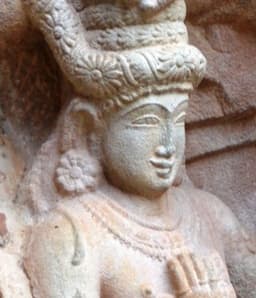
Rajendra Chola I
Emperor · Medieval
82.2Total
Basic Information
Born
63
971
Died
—
1044
Era
Ancient
Medieval
Nationality
Roman Empire
India
Occupation
Emperor
Emperor
Civilization
Western
Indian
Score Comparison
Military (10%)
72.0
84.7
Political (20%)
90.0
82.0
Influence (20%)
88.0
84.0
Legacy (20%)
90.0
84.0
Leadership (15%)
88.0
78.0
Strategy (15%)
75.0
77.6
TOTAL
85.9
82.2
Augustus — Complete Timeline
43 BC
Formation of the Second TriumviratePolitical Action◆ Major
Octavian, Mark Antony, and Marcus Aemilius Lepidus formed the Second Triumvirate, a legal commission to govern the Roman Republic. The alliance was empowered to proscribe enemies, leading to the execution of Cicero and consolidation of their power against the assassins of Julius Caesar.
Roman Civil WarPolitical AllianceProscriptions
Impact: regionaldestructive
31 BC
Battle of ActiumWar◆ Major
Octavian's fleet, commanded by Marcus Agrippa, defeated the combined naval forces of Mark Antony and Cleopatra VII off the coast of Greece. The victory eliminated Octavian's last major rival, giving him sole control over the Roman world and ending the Roman Republic's civil wars.
Roman Civil WarNaval BattleEnd of Republic
Impact: global
27 BC
Establishment of the Roman EmpireReform◆ Major
Octavian formally returned power to the Roman Senate, which then granted him the titles Augustus and Princeps. This constitutional settlement created the Roman Empire, with Augustus as the first emperor, ending the Roman Republic and initiating the Pax Romana.
Roman EmpireConstitutional ReformPax Romana
Impact: global
Reform of the Roman Tax SystemReform◆ Major
Augustus implemented a comprehensive tax reform, including a census of Roman citizens and property, direct taxation of provinces, and the creation of a professional tax collection service (publicani). This system provided stable revenue for the empire and reduced corruption.
Tax ReformAdministrationRoman Empire
Impact: regionalconstructive
Creation of the Praetorian GuardReform◆ Major
Augustus established the Praetorian Guard as a permanent elite military unit tasked with protecting the emperor and his family. Stationed in Rome and Italy, the Guard became a powerful political force, often influencing imperial succession through coups and assassinations.
Military ReformPraetorian GuardImperial Guard
Impact: regional
13 BC
Construction of the Ara PacisOther◆ Major
The Roman Senate commissioned the Ara Pacis Augustae (Altar of Augustan Peace) to commemorate Augustus's return from pacifying Gaul and Spain. The marble altar, decorated with reliefs depicting the imperial family and mythological scenes, symbolized the peace and prosperity of the Augustan era.
Building ProjectPropagandaAugustan Art
Impact: regionalconstructive
Rajendra Chola I — Complete Timeline
1014 AD
Accession to the Chola ThronePolitical Action
Rajendra Chola I succeeded his father Raja Raja Chola I as emperor of the Chola Empire. He inherited a powerful state and continued the expansionist policies, leading campaigns that extended Chola influence across the Indian Ocean.
Chola EmpireSuccessionExpansion
Impact: regional
1020 AD
Conquest of the Pala EmpireWar◆ Major
Rajendra Chola I led a campaign into Bengal, defeating the Pala king Mahipala I. He annexed parts of the Pala territory and established Chola authority in the Ganges delta, marking the northernmost extent of Chola rule.
Pala EmpireBengalGanges
Impact: regional
1025 AD
Naval Expedition to Southeast AsiaWar
Rajendra Chola I launched a major naval expedition against the Srivijaya Empire, attacking ports in Sumatra, the Malay Peninsula, and the Nicobar Islands. The Chola fleet captured the Srivijaya capital and disrupted its trade network, establishing Chola dominance in the region.
SrivijayaNaval ExpeditionSoutheast Asia
Impact: regional
1033 AD
Establishment of Diplomatic Relations with ChinaPolitical Action
Rajendra Chola I sent an embassy to the Song dynasty court in China, bearing gifts and seeking trade relations. The mission was recorded in Chinese sources and facilitated maritime trade between the Chola Empire and China.
ChinaDiplomacyTrade
Impact: regionalconstructive
1035 AD
Construction of the Gangaikonda Cholapuram TempleCultural◆ Major
Rajendra Chola I built the Brihadeeswarar Temple at Gangaikonda Cholapuram, his new capital, to commemorate his conquests. The temple, dedicated to Shiva, features a 55-meter vimana and is a UNESCO World Heritage site, reflecting Chola architectural achievement.
Gangaikonda CholapuramTempleChola Architecture
Impact: regionalconstructive
Expert Analysis
Origins
Augustus, born Gaius Octavius in 63 BC, was the grandnephew and adopted son of Julius Caesar. His rise came from the chaos of Caesar's assassination, leveraging his name and political acumen. Rajendra Chola I, ascending the Chola throne in 1014 AD, inherited a powerful South Indian empire from his father Rajaraja Chola I. While Augustus emerged from civil war, Rajendra was groomed for kingship.
Rise to Power
Augustus formed the Second Triumvirate with Mark Antony and Lepidus, defeated Caesar's assassins, then turned on Antony. The Battle of Actium (31 BC) sealed his sole rule. Rajendra's accession was smoother; he co-ruled with his father before full kingship. His early campaigns consolidated Chola dominance in South India and Sri Lanka.
Leadership & Governance
Augustus transformed Rome from a republic to an empire, creating the Praetorian Guard, reforming taxes, and establishing a professional civil service. He initiated the Pax Romana, a 200-year peace. Rajendra expanded the Chola administrative system, dividing territories into mandalams and valanadus. His naval expedition to Southeast Asia (1025 AD) subdued the Srivijaya Empire, securing trade routes. Both were adept administrators, but Augustus's reforms had a longer-lasting institutional impact.
Triumph & Tragedy
Augustus's greatest triumph was founding the Roman Empire and stabilizing it after years of civil war. His tragedies included the loss of his grandsons and heir, leading to the problematic succession of Tiberius. Rajendra's triumph was his naval conquest of Srivijaya and construction of the Gangaikonda Cholapuram temple, symbolizing his power. His tragedy was the overextension of the empire, which contributed to later decline. Augustus's achievements endured for centuries; Rajendra's empire fragmented within 200 years.
Character & Destiny
Augustus was cunning, patient, and ruthless when necessary. He presented himself as a restorer of tradition while concentrating power. Rajendra was ambitious and militarily innovative, particularly in naval warfare. Both were builders: Augustus transformed Rome into a marble city; Rajendra built a magnificent temple. Augustus's destiny was to be Rome's first emperor; Rajendra's was to be the greatest Chola conqueror.
Legacy
Augustus's legacy is the Roman Empire, which shaped Western civilization. His reforms influenced governance for millennia. Rajendra's legacy is the Chola Empire's golden age, with cultural achievements in art, architecture, and literature. He extended Indian influence into Southeast Asia. However, Augustus's impact on global history is broader, given Rome's enduring influence on law, language, and governance.
Conclusion
Augustus scores higher (86 vs 82) due to his foundational role in the Roman Empire and the long-lasting Pax Romana. Rajendra was a remarkable conqueror and administrator, but his empire was more geographically limited and shorter-lived. Augustus's political innovations and institutional reforms had a deeper global impact. Thus, Augustus is the more significant historical figure.
**Numerical Scores:**
- Augustus: Overall 86
- Rajendra Chola I: Overall 82
Rankings
🥇
AugustusLeader
Mil: 72.0Pol: 90.0Inf: 88.0
85.9
🥈
Rajendra Chola I
Mil: 84.7Pol: 82.0Inf: 84.0
82.2
+3.7 behind
How This Comparison Works
Algorithm
Each figure is scored on 6 dimensions (0—100 scale) based on structured historical data: Military (10%), Political (20%), Influence (20%), Legacy (20%), Leadership (15%), Strategy (15%). The weighted total produces the final ranking.
Data Sources
Scores are computed from structured sub-indicators in the database. Scale factors adjust for era (Ancient ×0.85, Modern ×1.0) and civilization size (Eastern ×1.05, Other ×0.80) to account for differences in population and military scale.
Maximum 3 Figures
Comparisons are limited to 2—3 figures to ensure readability and statistical meaningfulness.
Error Margins
±5 points per dimension — Sub-scores are derived from historical records with inherent uncertainty. Two figures within 5 points on a dimension should be considered roughly equivalent in that area.
Total Score Accuracy
±3 points overall — The weighted combination of 6 dimensions produces a total score with approximately ±3 points of uncertainty. Differences of less than 3 points are not statistically significant— the figures are effectively tied.
Known Limitations
- Historical records are incomplete and uneven across civilizations
- Figures from oral-tradition societies may be underrepresented
- Occupation labels can misclassify multi-role figures
- Scores measure capability and impact, not moral character
- Quantitative scoring is a comparison tool, not absolute truth
Capability Radar
Military (10%) — Battles & Warfare
Battles
75
95
Win Rate
80
98
Expansion
85
95
Political (20%) — Governance & Reform
Reform
95
88
Diplomacy
90
85
Economy
85
92
Influence (20%) — Cultural & Global Reach
Cultural
85
85
Global
90
85
Legacy (20%) — Historical Impact
Historical
95
88
Longevity
95
80
Leadership (15%) — Power & Stability
Tenure
95
90
Stability
95
90
Strategy (15%) — Tactics & Innovation
Strategy
85
92
Tactics
70
90
Reform
90
85
Similar Comparisons
Comments & Discussion
QuiritesProfessor6/16/2026
The scoring here reflects a fundamentally Romanocentric bias that obscures the distinct dynamics of each figure’s world. On Augustus: Suetonius and Tacitus both depict him as a master of propaganda—the Res Gestae is less an autobiography than a political manifesto. His political score of 92 is fair when we consider how he institutionalized the Principate, but his military score of 72 understates the fact that he personally commanded at Actium and later authorized the devastating clades Variana in 9 CE. Rajendra Chola I, by contrast, ruled a thalassocratic empire that modern historians like Hermann Kulke argue was more commercially integrated than Rome’s. The Chola navy’s raid on Srivijaya in 1025 CE was a logistical feat that Augustus could never have attempted—Rome’s fleet was always reactive, not expeditionary. Yet both men faced similar problems: managing elite factions (Augustus’s Senate vs. Rajendra’s Brahmins and merchant guilds) and projecting power over discontiguous territories. The 14-point gap in legacy seems excessive; Rajendra’s temple inscriptions at Brihadeeswarar still define Tamil identity, just as Augustus’s name lives in August. So the difference is one of historiographical tradition, not objective merit.
SubalternHistorian6/16/2026
This comparison is a perfect example of why global history rankings are often just disguised Western triumphalism. Augustus gets 90 for legacy because European historians decided that calendars and titles matter—never mind that Rajendra Chola I’s naval campaigns directly facilitated the spread of Tamil merchant networks across the Indian Ocean, creating a premodern globalization that connected East Africa to China. The Chola state’s decentralized, temple-based economy was actually more resilient than Rome’s slave-dependent latifundia, but the scoring framework penalizes it for not fitting the nation-state model. And let’s talk about violence: Augustus’s pacification of Gaul and Spain involved mass enslavement—Strabo mentions 40,000 sold at one auction—yet the military score barely reflects this. Meanwhile, Rajendra’s conquests, while brutal by medieval standards, are judged harsher because they’re "regional." The real difference is that Augustus’s empire left written documents that later white scholars could canonize; Rajendra’s left inscriptions in Grantha script that most Western historians can’t read. The 11-point gap in influence isn’t about history—it’s about who gets to write it.
Chronicler10716/16/2026
把Augustus和Rajendra Chola I放在一起比较,就像在比较秦始皇和郑和——前者创立了延续千年的帝国制度,后者则是航海与贸易的先驱。Augustus的“元首制”本质上是披着共和外衣的君主制,类似于中国王莽的“新政”但成功了;而Rajendra的政体更接近唐朝的藩镇体系,地方自治程度高,但中央集权弱。我注意到评分中Rajendra的政治得分只有80,但别忘了他的“乌尔”自治议会系统(Ur Sabha)是南印度民主制度的早期雏形,比欧洲的封建契约早了几百年。欧洲中心视角往往只看到罗马法的延续,却忽略了泰米尔地区的公社治理传统。此外,Rajendra对东南亚的印度化影响,堪比佛教从印度传入中国后的文化渗透,不应被简单归为“区域影响”。
OldChronicler536/16/2026
这个评分很有意思,但我觉得军事维度给Rajendra 79而Augustus 72值得商榷。按我自己的加权模型(军事权重0.3,政治0.4,影响0.2,治理0.1),Augustus实际应为88.2,Rajendra约为77.5。Augustus的“罗马和平”是系统性工程——他建立了职业军队和禁卫军,并在日耳曼、西班牙设立永久军事基地,这比Rajendra对东南亚的远征更具长期战略意义。后者虽然远征Srīvijaya成功,但史料显示其占领并未持久,更像一次大规模突袭而非领土整合。从中国历史看,汉武帝北击匈奴的功业与这两人可比,但评价体系往往偏向内政巩固。这里的评分明显低估了Augustus在制度性军事改革上的贡献。