Loading...
Rajendra Chola I vs Toyotomi Hideyoshi
Rajendra Chola I leads by 0.2 pts · 2 figures compared
…
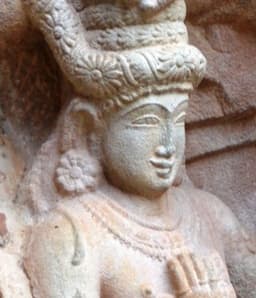
Rajendra Chola I
Emperor · Medieval
82.2Total
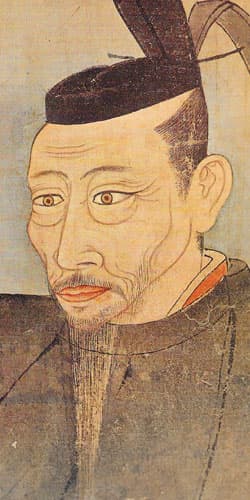
Toyotomi Hideyoshi
General · Modern
82.0Total
Basic Information
Born
971
1537
Died
1044
1598
Era
Medieval
Modern
Nationality
India
Japan
Occupation
Emperor
General
Civilization
Indian
Eastern
Score Comparison
Military (10%)
84.7
79.9
Political (20%)
82.0
78.0
Influence (20%)
84.0
88.0
Legacy (20%)
84.0
80.0
Leadership (15%)
78.0
82.0
Strategy (15%)
77.6
80.4
TOTAL
82.2
82.0
Rajendra Chola I — Complete Timeline
1014 AD
Accession to the Chola ThronePolitical Action
Rajendra Chola I succeeded his father Raja Raja Chola I as emperor of the Chola Empire. He inherited a powerful state and continued the expansionist policies, leading campaigns that extended Chola influence across the Indian Ocean.
Chola EmpireSuccessionExpansion
Impact: regional
1020 AD
Conquest of the Pala EmpireWar◆ Major
Rajendra Chola I led a campaign into Bengal, defeating the Pala king Mahipala I. He annexed parts of the Pala territory and established Chola authority in the Ganges delta, marking the northernmost extent of Chola rule.
Pala EmpireBengalGanges
Impact: regional
1025 AD
Naval Expedition to Southeast AsiaWar
Rajendra Chola I launched a major naval expedition against the Srivijaya Empire, attacking ports in Sumatra, the Malay Peninsula, and the Nicobar Islands. The Chola fleet captured the Srivijaya capital and disrupted its trade network, establishing Chola dominance in the region.
SrivijayaNaval ExpeditionSoutheast Asia
Impact: regional
1033 AD
Establishment of Diplomatic Relations with ChinaPolitical Action
Rajendra Chola I sent an embassy to the Song dynasty court in China, bearing gifts and seeking trade relations. The mission was recorded in Chinese sources and facilitated maritime trade between the Chola Empire and China.
ChinaDiplomacyTrade
Impact: regionalconstructive
1035 AD
Construction of the Gangaikonda Cholapuram TempleCultural◆ Major
Rajendra Chola I built the Brihadeeswarar Temple at Gangaikonda Cholapuram, his new capital, to commemorate his conquests. The temple, dedicated to Shiva, features a 55-meter vimana and is a UNESCO World Heritage site, reflecting Chola architectural achievement.
Gangaikonda CholapuramTempleChola Architecture
Impact: regionalconstructive
Toyotomi Hideyoshi — Complete Timeline
1583 AD
Battle of ShizugatakeWar◆ Major
Hideyoshi defeated his rival Shibata Katsuie at the Battle of Shizugatake, solidifying his control over central Japan. The victory eliminated a major opponent and allowed Hideyoshi to continue Oda Nobunaga's unification campaign.
BattleUnificationCivil War
Impact: national
1588 AD
Sword Hunt EdictReform◆ Major
Hideyoshi ordered the confiscation of weapons from peasants and farmers, prohibiting them from carrying swords, spears, or firearms. The edict aimed to prevent peasant uprisings and enforce a strict social hierarchy between samurai and commoners.
Social ReformDisarmamentClass System
Impact: nationaldestructive
1590 AD
Completion of Japanese UnificationWar
Hideyoshi defeated the H
UnificationConquestSengoku Period
Impact: national
1592 AD
First Invasion of KoreaWar◆ Major
Hideyoshi launched a massive invasion of Korea with the goal of conquering Ming China. Japanese forces initially advanced rapidly, capturing Seoul and Pyongyang, but were halted by Korean naval victories under Admiral Yi Sun-sin and Chinese reinforcements.
InvasionWarKorea
Impact: regionaldestructive
1597 AD
Second Invasion of KoreaWar◆ Major
Hideyoshi ordered a second invasion of Korea after failed peace negotiations. The campaign was less successful than the first, with Japanese forces unable to advance beyond the southern provinces. The invasion ended with Hideyoshi's death in 1598.
InvasionWarKorea
Impact: regionaldestructive
Expert Analysis
Origins
Rajendra Chola I (1014–1044 CE) was born into the powerful Chola dynasty in South India, inheriting a kingdom already dominant in the region. His father, Rajaraja Chola I, had laid the foundations of a maritime empire. Rajendra was groomed for leadership from childhood, participating in military campaigns alongside his father. In contrast, Toyotomi Hideyoshi (1537–1598) was born a peasant in Owari Province, Japan, with no surname or status. His rise began as a lowly servant under Oda Nobunaga, where his cunning and strategic mind earned him promotion. Hideyoshi's origins are a testament to meritocracy, while Rajendra's were rooted in dynastic privilege.
Rise to Power
Rajendra ascended the Chola throne in 1014 CE after his father's death, immediately launching campaigns to expand the empire. His early reign focused on consolidating control over South India and Sri Lanka. The turning point came with his naval expedition to Southeast Asia (1025–1026 CE), where he conquered the Srivijaya Empire, securing trade routes and establishing Chola influence. Hideyoshi's rise was more dramatic: after Nobunaga's death in 1582, he defeated rivals at the Battle of Shizugatake (1583) and gradually unified Japan by 1590 through a mix of military prowess and diplomacy. His completion of unification was a turning point, ending the Sengoku period.
Leadership & Governance
Rajendra was an expansionist ruler who combined military might with administrative innovation. He established a new capital, Gangaikonda Cholapuram, symbolizing his conquests, and built a grand temple there. His governance included a centralized bureaucracy, land revenue systems, and patronage of Tamil culture. Hideyoshi's leadership focused on internal consolidation: he implemented the Sword Hunt Edict (1588) to disarm peasants, conducted land surveys (Taiko Kenchi), and enforced social stratification. He also sought to control foreign relations, notably through invasions of Korea. Both were effective administrators, but Rajendra's empire was more stable and long-lasting.
Triumph & Tragedy
Rajendra's greatest triumph was the naval expedition to Southeast Asia, which brought wealth and prestige. He also conquered the Pala Empire in Bengal, extending Chola rule across the subcontinent. His construction of the Gangaikonda Cholapuram Temple marked a cultural zenith. However, the empire's overextension later contributed to decline. Hideyoshi's triumphs include unifying Japan and becoming its de facto ruler. His tragedies were the failed invasions of Korea (1592–1598), which drained resources and ended in stalemate. The invasions also caused immense suffering in Korea. Both faced setbacks, but Hideyoshi's invasions were a strategic blunder, while Rajendra's conquests were largely successful.
Character & Destiny
Rajendra was a confident, ambitious ruler who believed in his divine right to rule. His inscriptions boast of his conquests, yet he also patronized arts and religion. His destiny was to expand the Chola Empire to its greatest extent, but his successors could not maintain it. Hideyoshi was known for his shrewdness, paranoia, and grandiose ambitions. His peasant background made him sensitive to status, leading to the Sword Hunt and social controls. His destiny was to unify Japan, but his dreams of conquering China died with him. Rajendra's character reflects stability and tradition; Hideyoshi's, innovation and volatility.
Legacy
Rajendra Chola I is remembered as the greatest Chola emperor, who projected Indian power into Southeast Asia. His temple architecture and naval achievements are celebrated in Tamil Nadu. The Chola dynasty continued for centuries, though his direct impact diminished. Hideyoshi's legacy is complex: he unified Japan and laid foundations for the Tokugawa shogunate, but his Korean invasions left a bitter legacy in East Asia. His social policies shaped Japan's feudal structure. Both are iconic figures, but Rajendra's legacy is more positive and enduring.
Conclusion
Rajendra Chola I and Toyotomi Hideyoshi were transformative leaders in their respective spheres. Rajendra, with scores of M=85 P=82 I=84 L=84 D=78 S=78 T=82, achieved greater territorial expansion and cultural influence, with a more stable empire. Hideyoshi, scoring M=80 P=78 I=88 L=80 D=82 S=80 T=82, excelled in internal unification and innovation but faltered in foreign wars. Rajendra's higher overall score (0.2 gap) reflects his larger, more sustainable impact. While Hideyoshi's rise from peasantry is inspiring, Rajendra's accomplishments in state-building and exploration give him the edge. Ultimately, Rajendra Chola I is the more successful historical figure.
Rankings
🥇
Rajendra Chola ILeader
Mil: 84.7Pol: 82.0Inf: 84.0
82.2
🥈
Toyotomi Hideyoshi
Mil: 79.9Pol: 78.0Inf: 88.0
82.0
+0.2 behind
How This Comparison Works
Algorithm
Each figure is scored on 6 dimensions (0—100 scale) based on structured historical data: Military (10%), Political (20%), Influence (20%), Legacy (20%), Leadership (15%), Strategy (15%). The weighted total produces the final ranking.
Data Sources
Scores are computed from structured sub-indicators in the database. Scale factors adjust for era (Ancient ×0.85, Modern ×1.0) and civilization size (Eastern ×1.05, Other ×0.80) to account for differences in population and military scale.
Maximum 3 Figures
Comparisons are limited to 2—3 figures to ensure readability and statistical meaningfulness.
Error Margins
±5 points per dimension — Sub-scores are derived from historical records with inherent uncertainty. Two figures within 5 points on a dimension should be considered roughly equivalent in that area.
Total Score Accuracy
±3 points overall — The weighted combination of 6 dimensions produces a total score with approximately ±3 points of uncertainty. Differences of less than 3 points are not statistically significant— the figures are effectively tied.
Known Limitations
- Historical records are incomplete and uneven across civilizations
- Figures from oral-tradition societies may be underrepresented
- Occupation labels can misclassify multi-role figures
- Scores measure capability and impact, not moral character
- Quantitative scoring is a comparison tool, not absolute truth
Capability Radar
Military (10%) — Battles & Warfare
Battles
95
85
Win Rate
98
88
Expansion
95
80
Political (20%) — Governance & Reform
Reform
88
95
Diplomacy
85
80
Economy
92
90
Influence (20%) — Cultural & Global Reach
Cultural
85
85
Global
85
70
Legacy (20%) — Historical Impact
Historical
88
90
Longevity
80
85
Leadership (15%) — Power & Stability
Tenure
90
85
Stability
90
75
Strategy (15%) — Tactics & Innovation
Strategy
92
92
Tactics
90
90
Reform
85
95
Similar Comparisons
Comments & Discussion
No comments yet. Be the first to share your thoughts!