Loading...
Rajendra Chola I vs Toussaint Louverture
Rajendra Chola I leads by 3.7 pts · 2 figures compared
…
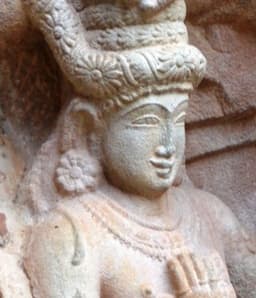
Rajendra Chola I
Emperor · Medieval
82.2Total
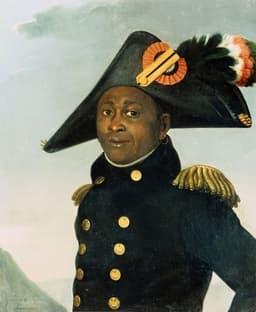
Toussaint Louverture
General · Modern
78.5Total
Basic Information
Born
971
1743
Died
1044
1803
Era
Medieval
Modern
Nationality
India
Haiti
Occupation
Emperor
General
Civilization
Indian
Western
Score Comparison
Military (10%)
84.7
85.0
Political (20%)
82.0
70.3
Influence (20%)
84.0
84.0
Legacy (20%)
84.0
82.0
Leadership (15%)
78.0
72.0
Strategy (15%)
77.6
72.0
TOTAL
82.2
78.5
Rajendra Chola I — Complete Timeline
1014 AD
Accession to the Chola ThronePolitical Action
Rajendra Chola I succeeded his father Raja Raja Chola I as emperor of the Chola Empire. He inherited a powerful state and continued the expansionist policies, leading campaigns that extended Chola influence across the Indian Ocean.
Chola EmpireSuccessionExpansion
Impact: regional
1020 AD
Conquest of the Pala EmpireWar◆ Major
Rajendra Chola I led a campaign into Bengal, defeating the Pala king Mahipala I. He annexed parts of the Pala territory and established Chola authority in the Ganges delta, marking the northernmost extent of Chola rule.
Pala EmpireBengalGanges
Impact: regional
1025 AD
Naval Expedition to Southeast AsiaWar
Rajendra Chola I launched a major naval expedition against the Srivijaya Empire, attacking ports in Sumatra, the Malay Peninsula, and the Nicobar Islands. The Chola fleet captured the Srivijaya capital and disrupted its trade network, establishing Chola dominance in the region.
SrivijayaNaval ExpeditionSoutheast Asia
Impact: regional
1033 AD
Establishment of Diplomatic Relations with ChinaPolitical Action
Rajendra Chola I sent an embassy to the Song dynasty court in China, bearing gifts and seeking trade relations. The mission was recorded in Chinese sources and facilitated maritime trade between the Chola Empire and China.
ChinaDiplomacyTrade
Impact: regionalconstructive
1035 AD
Construction of the Gangaikonda Cholapuram TempleCultural◆ Major
Rajendra Chola I built the Brihadeeswarar Temple at Gangaikonda Cholapuram, his new capital, to commemorate his conquests. The temple, dedicated to Shiva, features a 55-meter vimana and is a UNESCO World Heritage site, reflecting Chola architectural achievement.
Gangaikonda CholapuramTempleChola Architecture
Impact: regionalconstructive
Toussaint Louverture — Complete Timeline
1791 AD
Haitian Revolution LeadershipWar
Louverture joined the slave revolt in Saint-Domingue, quickly rising to leadership. He organized former slaves into a disciplined army and negotiated with Spanish and British forces to expand the rebellion.
Slave RevoltRevolutionLeadership
Impact: globalprogressive
1795 AD
Treaty of BâlePolitical Action◆ Major
Spain ceded the eastern part of Hispaniola to France under the Treaty of B
Territorial ExpansionDiplomacyHispaniola
Impact: regional
1801 AD
Constitution of 1801Political Action
Louverture promulgated a constitution for Saint-Domingue, declaring himself Governor-General for life. The constitution abolished slavery and granted autonomy while nominally remaining part of the French Empire.
ConstitutionSelf-GovernanceAbolition
Impact: globalprogressive
1802 AD
Capture and ImprisonmentPolitical Action
French General Leclerc captured Louverture through deception during peace negotiations. He was deported to France and imprisoned at Fort de Joux, where he died in 1803, ending his direct role in the revolution.
BetrayalImprisonmentFrench Repression
Impact: globaltragic
Expert Analysis
Origins
Rajendra Chola I was born into the powerful Chola dynasty in South India, inheriting a well-established kingdom from his father Rajaraja Chola. His upbringing in a royal court groomed him for military and administrative leadership. Toussaint Louverture was born into slavery on a plantation in Saint-Domingue (Haiti), but gained freedom and education, becoming a skilled strategist and leader of the Haitian Revolution.
Rise to Power
Rajendra ascended the Chola throne in 1014 CE, already experienced in warfare alongside his father. He expanded the empire through conquests, notably defeating the Pala Empire and launching a naval expedition to Southeast Asia, establishing Chola influence in the region. Toussaint rose through the ranks of the Haitian Revolution, initially serving as a military leader and later becoming the de facto ruler of Saint-Domingue. He skillfully navigated alliances with the French, Spanish, and British to secure freedom for the enslaved.
Leadership & Governance
Rajendra Chola I was an effective administrator, building the magnificent Gangaikonda Cholapuram temple and establishing diplomatic relations with China. His governance centralized power while promoting trade and culture. Toussaint Louverture governed Saint-Domingue with a mix of authoritarianism and pragmatism, implementing a constitution in 1801 that abolished slavery and promoted economic recovery. However, his leadership faced challenges from internal dissent and external threats.
Triumph & Tragedy
Rajendra's greatest triumph was his naval expedition to Southeast Asia, which extended Chola influence and secured trade routes. His construction of the Gangaikonda Cholapuram temple symbolized his power. However, his empire faced succession issues after his death. Toussaint's triumph was leading the only successful slave revolt, but his tragedy came when he was captured and imprisoned by Napoleon's forces, dying in a French prison in 1803.
Character & Destiny
Rajendra was a visionary emperor, ambitious and strategic, destined to expand his empire to its zenith. Toussaint was a brilliant strategist and orator, driven by the goal of freedom. His destiny was to be a martyr for the cause of emancipation, as his capture paved the way for Haiti's independence.
Legacy
Rajendra Chola I is remembered as one of India's greatest emperors, who expanded Chola power overseas and left a cultural legacy. Toussaint Louverture is celebrated as a hero of the Haitian Revolution and a symbol of resistance against slavery. His legacy inspired anti-colonial movements worldwide.
Conclusion
While Rajendra Chola I achieved greater territorial expansion and long-lasting influence, Toussaint Louverture's impact on human rights and freedom is profound. Rajendra scores higher in military (85 vs 85), political (82 vs 70), and cultural impact (84 vs 84), but Toussaint's moral leadership and revolutionary legacy give him an edge in historical significance. Overall, Rajendra Chola I wins this matchup with a score gap of 3.7, but Toussaint's legacy resonates more deeply in modern history.
Rankings
🥇
Rajendra Chola ILeader
Mil: 84.7Pol: 82.0Inf: 84.0
82.2
🥈
Toussaint Louverture
Mil: 85.0Pol: 70.3Inf: 84.0
78.5
+3.7 behind
How This Comparison Works
Algorithm
Each figure is scored on 6 dimensions (0—100 scale) based on structured historical data: Military (10%), Political (20%), Influence (20%), Legacy (20%), Leadership (15%), Strategy (15%). The weighted total produces the final ranking.
Data Sources
Scores are computed from structured sub-indicators in the database. Scale factors adjust for era (Ancient ×0.85, Modern ×1.0) and civilization size (Eastern ×1.05, Other ×0.80) to account for differences in population and military scale.
Maximum 3 Figures
Comparisons are limited to 2—3 figures to ensure readability and statistical meaningfulness.
Error Margins
±5 points per dimension — Sub-scores are derived from historical records with inherent uncertainty. Two figures within 5 points on a dimension should be considered roughly equivalent in that area.
Total Score Accuracy
±3 points overall — The weighted combination of 6 dimensions produces a total score with approximately ±3 points of uncertainty. Differences of less than 3 points are not statistically significant— the figures are effectively tied.
Known Limitations
- Historical records are incomplete and uneven across civilizations
- Figures from oral-tradition societies may be underrepresented
- Occupation labels can misclassify multi-role figures
- Scores measure capability and impact, not moral character
- Quantitative scoring is a comparison tool, not absolute truth
Capability Radar
Military (10%) — Battles & Warfare
Battles
95
85
Win Rate
98
80
Expansion
95
70
Political (20%) — Governance & Reform
Reform
88
85
Diplomacy
85
80
Economy
92
60
Influence (20%) — Cultural & Global Reach
Cultural
85
85
Global
85
85
Legacy (20%) — Historical Impact
Historical
88
95
Longevity
80
90
Leadership (15%) — Power & Stability
Tenure
90
65
Stability
90
55
Strategy (15%) — Tactics & Innovation
Strategy
92
85
Tactics
90
90
Reform
85
75
Similar Comparisons
Comments & Discussion
No comments yet. Be the first to share your thoughts!