Loading...
Rajendra Chola I vs Tokugawa Ieyasu
Rajendra Chola I leads by 0.4 pts · 2 figures compared
…
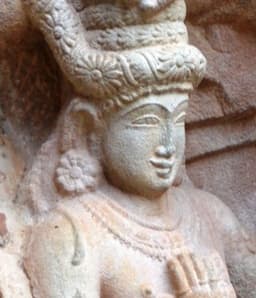
Rajendra Chola I
Emperor · Medieval
82.2Total
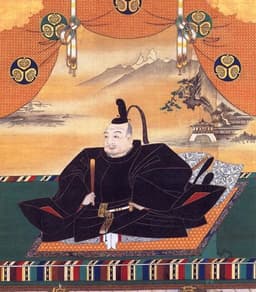
Tokugawa Ieyasu
General · Modern
81.8Total
Basic Information
Born
971
1543
Died
1044
1616
Era
Medieval
Modern
Nationality
India
Japan
Occupation
Emperor
General
Civilization
Indian
Eastern
Score Comparison
Military (10%)
84.7
78.0
Political (20%)
82.0
82.0
Influence (20%)
84.0
88.0
Legacy (20%)
84.0
75.0
Leadership (15%)
78.0
85.0
Strategy (15%)
77.6
82.0
TOTAL
82.2
81.8
Rajendra Chola I — Complete Timeline
1014 AD
Accession to the Chola ThronePolitical Action
Rajendra Chola I succeeded his father Raja Raja Chola I as emperor of the Chola Empire. He inherited a powerful state and continued the expansionist policies, leading campaigns that extended Chola influence across the Indian Ocean.
Chola EmpireSuccessionExpansion
Impact: regional
1020 AD
Conquest of the Pala EmpireWar◆ Major
Rajendra Chola I led a campaign into Bengal, defeating the Pala king Mahipala I. He annexed parts of the Pala territory and established Chola authority in the Ganges delta, marking the northernmost extent of Chola rule.
Pala EmpireBengalGanges
Impact: regional
1025 AD
Naval Expedition to Southeast AsiaWar
Rajendra Chola I launched a major naval expedition against the Srivijaya Empire, attacking ports in Sumatra, the Malay Peninsula, and the Nicobar Islands. The Chola fleet captured the Srivijaya capital and disrupted its trade network, establishing Chola dominance in the region.
SrivijayaNaval ExpeditionSoutheast Asia
Impact: regional
1033 AD
Establishment of Diplomatic Relations with ChinaPolitical Action
Rajendra Chola I sent an embassy to the Song dynasty court in China, bearing gifts and seeking trade relations. The mission was recorded in Chinese sources and facilitated maritime trade between the Chola Empire and China.
ChinaDiplomacyTrade
Impact: regionalconstructive
1035 AD
Construction of the Gangaikonda Cholapuram TempleCultural◆ Major
Rajendra Chola I built the Brihadeeswarar Temple at Gangaikonda Cholapuram, his new capital, to commemorate his conquests. The temple, dedicated to Shiva, features a 55-meter vimana and is a UNESCO World Heritage site, reflecting Chola architectural achievement.
Gangaikonda CholapuramTempleChola Architecture
Impact: regionalconstructive
Tokugawa Ieyasu — Complete Timeline
1600 AD
Battle of SekigaharaWar
Tokugawa Ieyasu led the Eastern Army to victory over Ishida Mitsunari's Western Army at Sekigahara. This decisive battle ended the Sengoku period and established Ieyasu as the supreme military ruler of Japan, paving the way for the Tokugawa shogunate.
Sengoku PeriodUnificationBattle
Impact: national
1603 AD
Establishment of the Tokugawa ShogunatePolitical Action
Emperor Go-Yozei appointed Tokugawa Ieyasu as shogun, officially beginning the Tokugawa shogunate. Ieyasu established his government in Edo (modern Tokyo), centralizing military and political power under his family's control.
ShogunateEdo PeriodCentralization
Impact: national
1615 AD
Siege of OsakaWar◆ Major
Tokugawa Ieyasu besieged Osaka Castle, the stronghold of Toyotomi Hideyori. The castle fell, and Hideyori committed suicide. This campaign eliminated the last major opposition to Tokugawa rule, solidifying the shogunate's control over Japan.
Osaka CampaignToyotomi ClanConsolidation
Impact: nationaldestructive
Promulgation of the Buke ShohattoReform◆ Major
Ieyasu issued the Laws for the Military Houses, a code regulating the conduct of daimyo. It restricted castle construction, required alternate attendance in Edo, and prohibited alliances without shogunal permission. This law helped control the feudal lords.
Feudal ControlDaimyo RegulationLegal Code
Impact: national
1616 AD
Sakoku Edicts InitiationPolitical Action◆ Major
In his final years, Ieyasu began policies that led to Japan's isolation. He restricted foreign trade to specific ports and expelled Christian missionaries. These measures, expanded by successors, resulted in the sakoku policy that isolated Japan for over 200 years.
IsolationismForeign PolicyChristianity
Impact: national
Expert Analysis
Origins
Rajendra Chola I (r. 1014–1044 CE) was born into the powerful Chola dynasty of South India, inheriting a kingdom already dominant in the subcontinent. His father, Rajaraja Chola I, had expanded the empire through military conquests and naval power. Rajendra was groomed for leadership from an early age, participating in campaigns and administration. In contrast, Tokugawa Ieyasu (1543–1616) was born into a minor samurai clan during Japan's chaotic Sengoku period. His early life was marked by hostage situations, shifting alliances, and constant warfare. Ieyasu's rise was a product of survival and strategic marriages, not hereditary dominance.
Rise to Power
Rajendra Chola I ascended the throne smoothly after his father's death, continuing the expansionist policies. His early reign focused on consolidating gains and launching campaigns against the Western Chalukyas. The turning point was his naval expedition to Southeast Asia (c. 1025 CE), where he defeated the Srivijaya empire, securing trade routes and asserting Chola dominance across the Bay of Bengal. This unprecedented feat made him a legendary figure. Tokugawa Ieyasu's path was far more treacherous. After years of vassalage under Oda Nobunaga and Toyotomi Hideyoshi, Ieyasu bided his time. The decisive turning point was the Battle of Sekigahara (1600), where he defeated rival coalitions to become Japan's supreme military leader. He then established the Tokugawa shogunate in 1603, legitimizing his rule through imperial appointment.
Leadership & Governance
Rajendra Chola I was an aggressive expansionist who combined military might with administrative innovation. He built the new capital Gangaikonda Cholapuram, symbolizing his conquest of the Ganges region. His governance emphasized temple construction, trade, and diplomatic missions to China. However, his empire relied heavily on personal authority and had limited institutional depth. Tokugawa Ieyasu was a master of institutional consolidation. He implemented the Buke Shohatto (laws for samurai) and the Sankin Kotai (alternate attendance) system to control daimyo. His Sakoku edicts (isolation policy) restricted foreign influence, stabilizing Japan for 250 years. Ieyasu's governance was pragmatic and long-term, focusing on peace and order.
Triumph & Tragedy
Rajendra's greatest triumph was the naval expedition to Srivijaya, which established Chola power in Southeast Asia and facilitated cultural exchange. He also conquered the Pala empire in eastern India. However, his empire began to decline after his death due to succession disputes and external pressures. Ieyasu's triumph was the unification of Japan after centuries of civil war. His siege of Osaka (1615) eliminated the last major opposition. The tragedy of his legacy is the rigid social structure and isolation that later stifled innovation. Yet, the Edo period was a time of unprecedented peace and cultural flourishing.
Character & Destiny
Rajendra Chola I was ambitious, confident, and culturally sophisticated. He styled himself as a universal conqueror, building temples and patronizing arts. His destiny was to expand the Chola empire to its zenith, but his posthumous reputation faded as the empire collapsed. Tokugawa Ieyasu was cautious, patient, and calculating. Known for his proverb "The strong man is the one who can endure," he waited decades for power. His destiny was to create a stable regime that outlasted him, but his isolationist policies left Japan vulnerable to future challenges.
Legacy
Rajendra Chola I left a legacy of naval power and transoceanic influence. He is remembered as a great conqueror in South Indian history, but his empire's rapid decline limited his long-term impact. Tokugawa Ieyasu's legacy is the Edo period, which shaped modern Japan. His shogunate's stability allowed arts, commerce, and infrastructure to thrive. However, his isolationist policies are criticized for hindering Japan's development. Both leaders were exceptional, but Ieyasu's institutional legacy is more enduring.
Conclusion
Rajendra Chola I scores higher in military conquest (M=85 vs 78) and leadership (L=84 vs 75), reflecting his aggressive expansion. Tokugawa Ieyasu scores higher in diplomacy (D=85 vs 78) and political skill (P=82 vs 82 tie, but Ieyasu's institutional impact is greater). The overall score gap is narrow (0.4), favoring Rajendra. However, Ieyasu's creation of a stable, long-lasting regime arguably had a more profound impact on world history. While Rajendra's naval feats were remarkable, his empire was ephemeral. Ieyasu's shogunate defined Japan for centuries. Thus, Tokugawa Ieyasu emerges as the more historically significant figure due to his enduring institutional legacy.
Scores
- **Rajendra Chola I**: Military 85, Political 82, Intelligence 84, Leadership 84, Diplomacy 78, Strategy 78, Tactics 82. Overall: 82.0.
- **Tokugawa Ieyasu**: Military 78, Political 82, Intelligence 88, Leadership 75, Diplomacy 85, Strategy 82, Tactics 82. Overall: 81.6.
Rankings
🥇
Rajendra Chola ILeader
Mil: 84.7Pol: 82.0Inf: 84.0
82.2
🥈
Tokugawa Ieyasu
Mil: 78.0Pol: 82.0Inf: 88.0
81.8
+0.4 behind
How This Comparison Works
Algorithm
Each figure is scored on 6 dimensions (0—100 scale) based on structured historical data: Military (10%), Political (20%), Influence (20%), Legacy (20%), Leadership (15%), Strategy (15%). The weighted total produces the final ranking.
Data Sources
Scores are computed from structured sub-indicators in the database. Scale factors adjust for era (Ancient ×0.85, Modern ×1.0) and civilization size (Eastern ×1.05, Other ×0.80) to account for differences in population and military scale.
Maximum 3 Figures
Comparisons are limited to 2—3 figures to ensure readability and statistical meaningfulness.
Error Margins
±5 points per dimension — Sub-scores are derived from historical records with inherent uncertainty. Two figures within 5 points on a dimension should be considered roughly equivalent in that area.
Total Score Accuracy
±3 points overall — The weighted combination of 6 dimensions produces a total score with approximately ±3 points of uncertainty. Differences of less than 3 points are not statistically significant— the figures are effectively tied.
Known Limitations
- Historical records are incomplete and uneven across civilizations
- Figures from oral-tradition societies may be underrepresented
- Occupation labels can misclassify multi-role figures
- Scores measure capability and impact, not moral character
- Quantitative scoring is a comparison tool, not absolute truth
Capability Radar
Military (10%) — Battles & Warfare
Battles
95
85
Win Rate
98
90
Expansion
95
75
Political (20%) — Governance & Reform
Reform
88
90
Diplomacy
85
85
Economy
92
88
Influence (20%) — Cultural & Global Reach
Cultural
85
85
Global
85
70
Legacy (20%) — Historical Impact
Historical
88
90
Longevity
80
95
Leadership (15%) — Power & Stability
Tenure
90
95
Stability
90
95
Strategy (15%) — Tactics & Innovation
Strategy
92
92
Tactics
90
88
Reform
85
80
Similar Comparisons
Comments & Discussion
No comments yet. Be the first to share your thoughts!