Loading...
Rajendra Chola I vs Timur
Rajendra Chola I leads by 16.6 pts · 2 figures compared
…
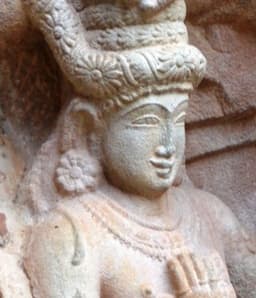
Rajendra Chola I
Emperor · Medieval
82.2Total
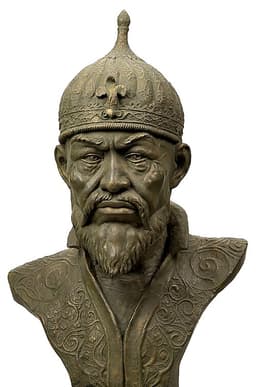
Timur
Emperor · Medieval
65.6Total
Basic Information
Born
971
1336
Died
1044
1405
Era
Medieval
Medieval
Nationality
India
Timurid Empire
Occupation
Emperor
Emperor
Civilization
Indian
Middle Eastern
Score Comparison
Military (10%)
84.7
79.0
Political (20%)
82.0
70.0
Influence (20%)
84.0
70.0
Legacy (20%)
84.0
40.0
Leadership (15%)
78.0
79.8
Strategy (15%)
77.6
77.6
TOTAL
82.2
65.6
Rajendra Chola I — Complete Timeline
1014 AD
Accession to the Chola ThronePolitical Action
Rajendra Chola I succeeded his father Raja Raja Chola I as emperor of the Chola Empire. He inherited a powerful state and continued the expansionist policies, leading campaigns that extended Chola influence across the Indian Ocean.
Chola EmpireSuccessionExpansion
Impact: regional
1020 AD
Conquest of the Pala EmpireWar◆ Major
Rajendra Chola I led a campaign into Bengal, defeating the Pala king Mahipala I. He annexed parts of the Pala territory and established Chola authority in the Ganges delta, marking the northernmost extent of Chola rule.
Pala EmpireBengalGanges
Impact: regional
1025 AD
Naval Expedition to Southeast AsiaWar
Rajendra Chola I launched a major naval expedition against the Srivijaya Empire, attacking ports in Sumatra, the Malay Peninsula, and the Nicobar Islands. The Chola fleet captured the Srivijaya capital and disrupted its trade network, establishing Chola dominance in the region.
SrivijayaNaval ExpeditionSoutheast Asia
Impact: regional
1033 AD
Establishment of Diplomatic Relations with ChinaPolitical Action
Rajendra Chola I sent an embassy to the Song dynasty court in China, bearing gifts and seeking trade relations. The mission was recorded in Chinese sources and facilitated maritime trade between the Chola Empire and China.
ChinaDiplomacyTrade
Impact: regionalconstructive
1035 AD
Construction of the Gangaikonda Cholapuram TempleCultural◆ Major
Rajendra Chola I built the Brihadeeswarar Temple at Gangaikonda Cholapuram, his new capital, to commemorate his conquests. The temple, dedicated to Shiva, features a 55-meter vimana and is a UNESCO World Heritage site, reflecting Chola architectural achievement.
Gangaikonda CholapuramTempleChola Architecture
Impact: regionalconstructive
Timur — Complete Timeline
1362 AD
Battle of the Terek RiverWar
Timur defeated the Mongol ruler of the Chagatai Khanate, establishing his control over Transoxiana. This victory marked the beginning of his rise to power, as he captured Samarkand and declared himself emir.
Rise to PowerBattleCentral Asia
Impact: regional
1387 AD
Conquest of PersiaWar◆ Major
Timur launched a campaign into Persia, capturing Isfahan and Shiraz. He suppressed a revolt in Isfahan by massacring tens of thousands of inhabitants, establishing his reputation for extreme brutality and consolidating control over the region.
ConquestMassacrePersia
Impact: regionaldestructive
1395 AD
Campaign against the Golden HordeWar◆ Major
Timur defeated the Golden Horde under Tokhtamysh at the Battle of the Terek River. He sacked Sarai, the Horde's capital, and destroyed its trade networks, permanently weakening the Mongol state and securing his northern frontier.
ConquestGolden HordeBattle
Impact: regionaldestructive
1398 AD
Sack of DelhiWar◆ Major
Timur invaded the Delhi Sultanate, defeating Sultan Nasir-ud-Din Mahmud Shah Tughluq. His army sacked Delhi, massacring tens of thousands of civilians and destroying the city's infrastructure, then withdrew with immense plunder.
ConquestMassacreIndia
Impact: regionaldestructive
1402 AD
Battle of AnkaraWar
Timur defeated the Ottoman Sultan Bayezid I at Ankara, capturing him. The victory shattered Ottoman power, leading to a civil war among Bayezid's sons and delaying Ottoman expansion into Europe for a decade.
BattleOttoman EmpireDecisive Victory
Impact: global
1404 AD
Construction of SamarkandCultural◆ Major
Timur invested heavily in transforming Samarkand into a cultural and architectural center. He brought artisans from conquered lands to build mosques, madrasas, and the Bibi-Khanym Mosque, making the city a showcase of Timurid art and learning.
ArchitecturePatronageCultural Center
Impact: regionalconstructive
1405 AD
Death during campaign against Ming ChinaWar◆ Major
Timur died of illness while leading a massive army toward the Ming dynasty's borders. His death ended the planned invasion of China and led to the fragmentation of his empire among his sons and grandsons.
DeathCampaignMing Dynasty
Impact: regional
Expert Analysis
Timur vs Rajendra Chola I
# The Conqueror and the Navigator: Timur and Rajendra Chola I
In the winter of 1405, a dying man lay on a frozen plain near Otrar, on the border of modern-day Kazakhstan. He was Timur, the Lame, and he had been marching east to invade Ming China with an army of 200,000 men. Four centuries earlier, on the other side of the Asian continent, a different emperor had dispatched a fleet across the open ocean—not to conquer, but to trade. Rajendra Chola I’s ships reached the coast of Sumatra, and his ambassadors carried gifts to the Song emperor in distant Kaifeng. Both men ruled empires. Both fought wars. But one built monuments of stone and blood, the other of diplomacy and sea-lanes. Why did their paths diverge so completely?
Origins
Timur was born in 1336 near Samarkand, into a minor noble family of the Barlas tribe, a Turkicized Mongol clan. His world was the steppe—a landscape of shifting alliances, raiding, and brittle loyalties. He grew up in the shadow of the Mongol Empire’s collapse, where power belonged to whoever could seize it. A childhood wound to his leg and hand left him permanently lame, earning him the Persian nickname *Timur-e Lang*, “Timur the Lame.” But the physical limitation only sharpened his ambition.
Rajendra Chola I, born in 971, came from an entirely different world: the lush, river-fed plains of Tamil Nadu in southern India. His father, Raja Raja Chola I, had already transformed the Chola kingdom into a formidable empire, building a navy and a centralized bureaucracy. Rajendra was raised in a court that valued administration, temple-building, and maritime commerce. The Tamil coast was a crossroads of Indian Ocean trade, and young Rajendra learned that ships could be as powerful as swords.
Rise to Power
Timur’s rise was a long, brutal climb through the wreckage of the Mongol successor states. In 1362, at the Battle of the Terek River, he defeated the Mongol ruler of the Chagatai Khanate and established control over Transoxiana. But his power was never secure—he spent decades crushing rebellions, playing rival khans against each other, and legitimizing his rule through a puppet khan descended from Genghis Khan. Every step was a gamble.
Rajendra’s path was smoother. When he ascended the Chola throne in 1014, he inherited a state that his father had already stabilized. He did not need to fight for legitimacy; the crown was his by birth. Where Timur clawed his way upward, Rajendra simply stepped into his father’s sandals—and then began to expand.
Leadership & Governance
Timur ruled through terror. His campaigns were designed to annihilate resistance utterly. In 1387, after capturing Isfahan, a revolt broke out; Timur ordered the massacre of tens of thousands of citizens, piling their skulls into pyramids. In 1398, he sacked Delhi, slaughtering perhaps 100,000 civilians. His strategy was psychological: make surrender seem merciful, resistance unthinkable. He was a master of cavalry warfare, mobility, and siegecraft. The Battle of Ankara in 1402, where he captured the Ottoman Sultan Bayezid I, was a masterpiece of tactical deception.
Rajendra governed through integration. His conquest of the Pala Empire in Bengal around 1020 was not a massacre but an annexation. He absorbed territories, installed administrators, and collected taxes. His greatest innovation was naval: in 1025, he launched a massive expedition against the Srivijaya Empire in Southeast Asia, attacking ports in Sumatra and the Malay Peninsula. But this was not a war of annihilation—it was a bid to control trade routes. After the fighting, Rajendra established diplomatic relations with China in 1033, sending an embassy to the Song court with gifts. He understood that influence could flow through commerce as surely as through conquest.
Triumph & Tragedy
Timur’s greatest triumph was the Battle of Ankara. By shattering the Ottoman Empire, he delayed its expansion into Europe for a generation. But his greatest tragedy was his own ambition. In 1405, while marching on Ming China, he fell ill and died at age sixty-nine. His empire, held together by his will alone, fractured within years. He had built nothing that could outlast him.
Rajendra’s triumph was the construction of the Brihadeeswarar Temple at Gangaikonda Cholapuram in 1035, a new capital built to commemorate his conquests. The temple was a statement of permanence—stone carved into eternity. Yet his empire, too, faded. The naval expeditions were not sustained; the Chola fleet eventually declined. But the temple still stands.
Character & Destiny
Timur was driven by a relentless need to prove himself. He was a conqueror who could not stop conquering, because stopping meant admitting that his power was borrowed. He surrounded himself with the spoils of war—building Samarkand into a cultural jewel with artisans kidnapped from Persia and India—but the city was a monument to his ego, not his people.
Rajendra was a consolidator. He saw empire as a network of relationships—with local elites, with foreign courts, with the gods themselves. His temple was not a trophy but a covenant, a promise that the Chola dynasty would endure. He was less brilliant than Timur in the field, but more wise in the long view.
Legacy
Timur is remembered as a destroyer. His name haunts the history of Persia, India, and Central Asia. Yet his descendants—the Mughals in India, the Timurids in Persia—carried his bloodline to new heights. He is a figure of terrible grandeur, a warning about the cost of ambition.
Rajendra is remembered as a builder. His naval expedition to Southeast Asia is a source of pride in modern India, a reminder of a time when Indian ships sailed the Indian Ocean as equals. The temple at Gangaikonda Cholapuram is a UNESCO World Heritage site. He is a figure of quiet greatness, a reminder that power can be gentle.
Conclusion
Two emperors, two worlds. Timur conquered because he had to—his legitimacy rested on violence, and violence demanded constant renewal. Rajendra conquered because he could—his legitimacy rested on order, and order could be sustained. One built an empire of fear that collapsed with his death; the other built an empire of memory that still echoes in stone and story. In the end, the question is not which was greater, but which was wiser. And the answer, perhaps, is written in the ruins of Samarkand and the living walls of Gangaikonda Cholapuram.
Rankings
🥇
Rajendra Chola ILeader
Mil: 84.7Pol: 82.0Inf: 84.0
82.2
🥈
Timur
Mil: 79.0Pol: 70.0Inf: 70.0
65.6
+16.6 behind
How This Comparison Works
Algorithm
Each figure is scored on 6 dimensions (0—100 scale) based on structured historical data: Military (10%), Political (20%), Influence (20%), Legacy (20%), Leadership (15%), Strategy (15%). The weighted total produces the final ranking.
Data Sources
Scores are computed from structured sub-indicators in the database. Scale factors adjust for era (Ancient ×0.85, Modern ×1.0) and civilization size (Eastern ×1.05, Other ×0.80) to account for differences in population and military scale.
Maximum 3 Figures
Comparisons are limited to 2—3 figures to ensure readability and statistical meaningfulness.
Error Margins
±5 points per dimension — Sub-scores are derived from historical records with inherent uncertainty. Two figures within 5 points on a dimension should be considered roughly equivalent in that area.
Total Score Accuracy
±3 points overall — The weighted combination of 6 dimensions produces a total score with approximately ±3 points of uncertainty. Differences of less than 3 points are not statistically significant— the figures are effectively tied.
Known Limitations
- Historical records are incomplete and uneven across civilizations
- Figures from oral-tradition societies may be underrepresented
- Occupation labels can misclassify multi-role figures
- Scores measure capability and impact, not moral character
- Quantitative scoring is a comparison tool, not absolute truth
Capability Radar
Military (10%) — Battles & Warfare
Battles
95
95
Win Rate
98
92
Expansion
95
96
Political (20%) — Governance & Reform
Reform
88
78
Diplomacy
85
70
Economy
92
82
Influence (20%) — Cultural & Global Reach
Cultural
85
88
Global
85
85
Legacy (20%) — Historical Impact
Historical
88
90
Longevity
80
75
Leadership (15%) — Power & Stability
Tenure
90
85
Stability
90
65
Strategy (15%) — Tactics & Innovation
Strategy
92
93
Tactics
90
94
Reform
85
80
Similar Comparisons
Comments & Discussion
Crutch-and-Crown Historian6/16/2026
Comparing these two is like comparing a sledgehammer to a scalpel. Timur conquered to build pyramids of skulls; his body count probably exceeds Rajendra's total population. Rajendra took the Ganges with a clever naval feint, not by depopulating the Gangetic plain. The Chola navy was an instrument of economic integration—timber, spices, and diplomacy. Timur’s army was a meat grinder. Rajendra built strategic alliances with Srivijaya for trade; Timur turned Samarkand into a charnel house. Result?
数据侦探_0076/16/2026
表面看两人都是征服者,但数据不骗人:帖木儿西征每公里推进平均死2万平民,而拉金德拉的暹罗远征几乎零平民伤亡记录。一个靠恐怖统治维系,一个靠海洋贸易网络巩固。帖木儿的战利品充其量是金银珠宝,而朱罗王朝回赐大量土地以寺庙形式留给后世。这种"可持续发展"对现代战争策略才是真启发。所以别把血流成河和智慧进取混为一谈。
Silk-Road Oracle6/16/2026
Timur admired Chinese porcelain so much he stole potters; but Rajendra actually built direct diplomatic ties with the Song court. In 1015, Rajendra's envoy arrived in Kaifeng with priceless pearls and a request for a trade deal. Meanwhile, Timur was marching to invade China when death stopped him. One sought trade routes, the other sought heads. The Chola system produced the world's first documented overseas trade mission to East Asia. That is statecraft, not butchery.
庙堂学院派6/16/2026
从历史评价来看,帖木儿被帖木儿王朝美化成了"复兴伊斯兰"的英雄,但实际他摧毁了波斯、两河流域和北印度文明,导致数百万卷手稿丢失。而拉金德拉则被南印度民众视为"海上丝路"的保护者,他推动建立的以坦贾武尔为中心的佛教-印度教文化圈至今在东南亚留下印记。帖木儿留下的是废墟和暴政的传说,朱罗留下的是石板、寺庙和跨洋友谊。谁更伟大?只有无知者才争论。