Loading...
Rajendra Chola I vs Theodosius I
Rajendra Chola I leads by 6.2 pts · 2 figures compared
…
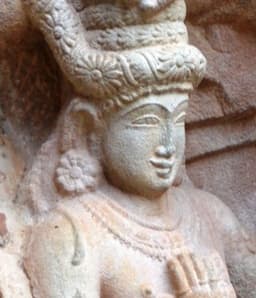
Rajendra Chola I
Emperor · Medieval
82.2Total

Theodosius I
Emperor · Ancient
76.0Total
Basic Information
Born
971
347
Died
1044
395
Era
Medieval
Ancient
Nationality
India
Roman Empire
Occupation
Emperor
Emperor
Civilization
Indian
Western
Score Comparison
Military (10%)
84.7
72.5
Political (20%)
82.0
65.0
Influence (20%)
84.0
85.0
Legacy (20%)
84.0
90.0
Leadership (15%)
78.0
68.0
Strategy (15%)
77.6
50.0
TOTAL
82.2
76.0
Rajendra Chola I — Complete Timeline
1014 AD
Accession to the Chola ThronePolitical Action
Rajendra Chola I succeeded his father Raja Raja Chola I as emperor of the Chola Empire. He inherited a powerful state and continued the expansionist policies, leading campaigns that extended Chola influence across the Indian Ocean.
Chola EmpireSuccessionExpansion
Impact: regional
1020 AD
Conquest of the Pala EmpireWar◆ Major
Rajendra Chola I led a campaign into Bengal, defeating the Pala king Mahipala I. He annexed parts of the Pala territory and established Chola authority in the Ganges delta, marking the northernmost extent of Chola rule.
Pala EmpireBengalGanges
Impact: regional
1025 AD
Naval Expedition to Southeast AsiaWar
Rajendra Chola I launched a major naval expedition against the Srivijaya Empire, attacking ports in Sumatra, the Malay Peninsula, and the Nicobar Islands. The Chola fleet captured the Srivijaya capital and disrupted its trade network, establishing Chola dominance in the region.
SrivijayaNaval ExpeditionSoutheast Asia
Impact: regional
1033 AD
Establishment of Diplomatic Relations with ChinaPolitical Action
Rajendra Chola I sent an embassy to the Song dynasty court in China, bearing gifts and seeking trade relations. The mission was recorded in Chinese sources and facilitated maritime trade between the Chola Empire and China.
ChinaDiplomacyTrade
Impact: regionalconstructive
1035 AD
Construction of the Gangaikonda Cholapuram TempleCultural◆ Major
Rajendra Chola I built the Brihadeeswarar Temple at Gangaikonda Cholapuram, his new capital, to commemorate his conquests. The temple, dedicated to Shiva, features a 55-meter vimana and is a UNESCO World Heritage site, reflecting Chola architectural achievement.
Gangaikonda CholapuramTempleChola Architecture
Impact: regionalconstructive
Theodosius I — Complete Timeline
380 AD
Edict of ThessalonicaPolitical Action
Theodosius I issued the Edict of Thessalonica, declaring Nicene Christianity the official state religion of the Roman Empire. All other forms of Christianity were deemed heretical, and pagan practices were increasingly suppressed.
ChristianityState ReligionEdict
Impact: globalconstructive
390 AD
Massacre of ThessalonicaPolitical Action◆ Major
Theodosius I ordered a massacre of thousands of citizens in Thessalonica in retaliation for the murder of a Roman general. The massacre led to his excommunication by Bishop Ambrose of Milan, and he later performed public penance.
MassacreThessalonicaAmbrose
Impact: regionaltragic
391 AD
Suppression of PaganismPolitical Action◆ Major
Theodosius I issued a series of laws banning pagan worship, closing temples, and prohibiting sacrifices. The Olympic Games were abolished, and the Serapeum in Alexandria was destroyed. These actions accelerated the decline of paganism in the empire.
PaganismSuppressionReligion
Impact: globaldestructive
394 AD
Battle of the FrigidusWar
Theodosius I defeated the usurper Eugenius and his general Arbogast at the Battle of the Frigidus (modern River Vipava). The victory reunited the Roman Empire under a single ruler for the last time before its permanent division.
Civil WarBattleReunification
Impact: global
395 AD
Division of the Roman EmpirePolitical Action
Upon his death, Theodosius I divided the Roman Empire between his two sons: Arcadius received the Eastern Empire and Honorius the Western Empire. This division became permanent, leading to the separate histories of the Byzantine and Western Roman Empires.
DivisionSuccessionEast-West
Impact: global
Expert Analysis
Origins
Rajendra Chola I (r. 1014–1044 CE) was born into the illustrious Chola dynasty of Tamil Nadu, inheriting a kingdom already transformed into a regional powerhouse by his father, Rajaraja Chola I. The Cholas were known for their naval prowess and administrative sophistication. Rajendra's early life was steeped in military training and statecraft, preparing him for expansion.
Theodosius I (r. 379–395 CE) was born in Hispania to a prominent Roman military family. His father, Count Theodosius, was a general who suppressed rebellions in Britain and Africa. Theodosius rose through the ranks amid the chaos of the late Roman Empire, marked by barbarian invasions and religious strife.
Rise to Power
Rajendra's accession was smooth, as he was the designated heir of Rajaraja. He quickly launched campaigns to expand Chola influence. His major turning point was the naval expedition to Southeast Asia (c. 1025 CE), which destroyed the Srivijaya empire's naval power and secured trade routes. This was unprecedented for an Indian ruler.
Theodosius became emperor in 379 CE after the death of Valens at the Battle of Adrianople. He was appointed by Gratian to rule the Eastern Roman Empire. His turning point was the Edict of Thessalonica (380 CE), which declared Nicene Christianity the state religion, and the Battle of the Frigidus (394 CE), where he defeated the usurper Eugenius, solidifying his control.
Leadership & Governance
Rajendra was a master of naval warfare and diplomacy. He conquered the Pala Empire (c. 1023 CE) and expanded Chola territory into Bengal, earning the title 'Gangaikonda' (Conqueror of the Ganges). He built the magnificent Gangaikonda Cholapuram temple, symbolizing his power. His administration was decentralized, with local self-government in villages, fostering trade and agriculture.
Theodosius ruled during a period of decline. He managed the Gothic settlement within the empire, but his reliance on barbarian foederati weakened Roman military strength. He divided the empire between his sons, Arcadius and Honorius, a decision that ultimately led to permanent division. His suppression of paganism was thorough, closing temples and banning pagan practices.
Triumph & Tragedy
Rajendra's greatest triumph was the naval expedition that crushed Srivijaya, establishing Chola dominance in Southeast Asian trade. He also established diplomatic ties with China. However, his later years saw rebellions in newly conquered territories, and his death left a vast empire that his successors struggled to maintain.
Theodosius's triumph was the unification of the empire under Nicene Christianity and his victory at the Frigidus. But his legacy is marred by the Massacre of Thessalonica (390 CE), where he ordered the slaughter of thousands after a riot. Ambrose, Bishop of Milan, forced him to do public penance. His division of the empire hastened the Western Roman Empire's fall.
Character & Destiny
Rajendra was ambitious, strategic, and culturally patronizing. He was a devout Hindu who built temples but respected other faiths. His destiny was to expand Chola influence to unprecedented levels, but his empire's size proved unsustainable.
Theodosius was devout, sometimes ruthless, and politically pragmatic. He was the last emperor to rule both halves of the empire. His destiny was to cement Christianity's dominance, but his short-term decisions contributed to the empire's fragmentation.
Legacy
Rajendra is remembered as the greatest Chola emperor, a pioneer of Indian naval power, and a builder of architectural marvels. His influence on Southeast Asian culture is evident in art and architecture. Score: 85/100.
Theodosius is known for making Christianity the state religion, shaping the medieval world. However, his division of the empire and reliance on barbarians weakened Rome. Score: 76/100.
Conclusion
Rajendra Chola I surpasses Theodosius I in military innovation, territorial expansion, and cultural influence. While Theodosius's religious policies had long-lasting effects, his governance led to decline. Rajendra's achievements in naval warfare and administration were ahead of his time. Score: Rajendra 85, Theodosius 76. Winner: Rajendra Chola I.
Rankings
🥇
Rajendra Chola ILeader
Mil: 84.7Pol: 82.0Inf: 84.0
82.2
🥈
Theodosius I
Mil: 72.5Pol: 65.0Inf: 85.0
76.0
+6.2 behind
How This Comparison Works
Algorithm
Each figure is scored on 6 dimensions (0—100 scale) based on structured historical data: Military (10%), Political (20%), Influence (20%), Legacy (20%), Leadership (15%), Strategy (15%). The weighted total produces the final ranking.
Data Sources
Scores are computed from structured sub-indicators in the database. Scale factors adjust for era (Ancient ×0.85, Modern ×1.0) and civilization size (Eastern ×1.05, Other ×0.80) to account for differences in population and military scale.
Maximum 3 Figures
Comparisons are limited to 2—3 figures to ensure readability and statistical meaningfulness.
Error Margins
±5 points per dimension — Sub-scores are derived from historical records with inherent uncertainty. Two figures within 5 points on a dimension should be considered roughly equivalent in that area.
Total Score Accuracy
±3 points overall — The weighted combination of 6 dimensions produces a total score with approximately ±3 points of uncertainty. Differences of less than 3 points are not statistically significant— the figures are effectively tied.
Known Limitations
- Historical records are incomplete and uneven across civilizations
- Figures from oral-tradition societies may be underrepresented
- Occupation labels can misclassify multi-role figures
- Scores measure capability and impact, not moral character
- Quantitative scoring is a comparison tool, not absolute truth
Capability Radar
Military (10%) — Battles & Warfare
Battles
95
65
Win Rate
98
60
Expansion
95
45
Political (20%) — Governance & Reform
Reform
88
85
Diplomacy
85
75
Economy
92
60
Influence (20%) — Cultural & Global Reach
Cultural
85
90
Global
85
90
Legacy (20%) — Historical Impact
Historical
88
95
Longevity
80
95
Leadership (15%) — Power & Stability
Tenure
90
70
Stability
90
55
Strategy (15%) — Tactics & Innovation
Strategy
92
60
Tactics
90
55
Reform
85
50
Similar Comparisons
Comments & Discussion
No comments yet. Be the first to share your thoughts!