Loading...
Rajendra Chola I vs Ruhollah Khomeini
Rajendra Chola I leads by 7.1 pts · 2 figures compared
…
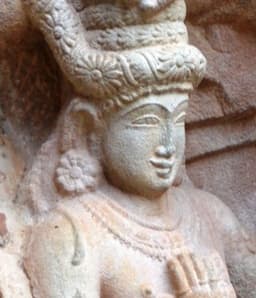
Rajendra Chola I
Emperor · Medieval
82.2Total

Ruhollah Khomeini
Politician · Modern
75.1Total
Basic Information
Born
971
1902
Died
1044
1989
Era
Medieval
Modern
Nationality
India
Iran
Occupation
Emperor
Politician
Civilization
Indian
Middle Eastern
Score Comparison
Military (10%)
84.7
41.6
Political (20%)
82.0
65.0
Influence (20%)
84.0
85.0
Legacy (20%)
84.0
90.0
Leadership (15%)
78.0
80.0
Strategy (15%)
77.6
54.3
TOTAL
82.2
75.1
Rajendra Chola I — Complete Timeline
1014 AD
Accession to the Chola ThronePolitical Action
Rajendra Chola I succeeded his father Raja Raja Chola I as emperor of the Chola Empire. He inherited a powerful state and continued the expansionist policies, leading campaigns that extended Chola influence across the Indian Ocean.
Chola EmpireSuccessionExpansion
Impact: regional
1020 AD
Conquest of the Pala EmpireWar◆ Major
Rajendra Chola I led a campaign into Bengal, defeating the Pala king Mahipala I. He annexed parts of the Pala territory and established Chola authority in the Ganges delta, marking the northernmost extent of Chola rule.
Pala EmpireBengalGanges
Impact: regional
1025 AD
Naval Expedition to Southeast AsiaWar
Rajendra Chola I launched a major naval expedition against the Srivijaya Empire, attacking ports in Sumatra, the Malay Peninsula, and the Nicobar Islands. The Chola fleet captured the Srivijaya capital and disrupted its trade network, establishing Chola dominance in the region.
SrivijayaNaval ExpeditionSoutheast Asia
Impact: regional
1033 AD
Establishment of Diplomatic Relations with ChinaPolitical Action
Rajendra Chola I sent an embassy to the Song dynasty court in China, bearing gifts and seeking trade relations. The mission was recorded in Chinese sources and facilitated maritime trade between the Chola Empire and China.
ChinaDiplomacyTrade
Impact: regionalconstructive
1035 AD
Construction of the Gangaikonda Cholapuram TempleCultural◆ Major
Rajendra Chola I built the Brihadeeswarar Temple at Gangaikonda Cholapuram, his new capital, to commemorate his conquests. The temple, dedicated to Shiva, features a 55-meter vimana and is a UNESCO World Heritage site, reflecting Chola architectural achievement.
Gangaikonda CholapuramTempleChola Architecture
Impact: regionalconstructive
Ruhollah Khomeini — Complete Timeline
1964 AD
Exile to Iraq and FrancePolitical Action◆ Major
Khomeini was exiled from Iran after criticizing the Shah's White Revolution and granting of diplomatic immunity to US personnel. He settled in Najaf, Iraq, and later in France, where he continued to organize opposition to the Shah.
ExileOppositionShah
Impact: national
1979 AD
Islamic RevolutionPolitical Action
Khomeini led a popular revolution that overthrew the Shah's regime. He returned to Iran in February 1979 and established an Islamic Republic based on his doctrine of Velayat-e Faqih (Guardianship of the Jurist), with himself as Supreme Leader.
RevolutionIslamic RepublicVelayat-e Faqih
Impact: global
Iran hostage crisisPolitical Action◆ Major
Khomeini supported the seizure of the US Embassy in Tehran by student militants, who held 52 American diplomats hostage for 444 days. The crisis deepened the rift with the US, led to economic sanctions, and consolidated Khomeini's power.
Hostage crisisUS-Iran relationsSanctions
Impact: globaldestructive
1980 AD
Iran-Iraq WarWar◆ Major
Khomeini led Iran through an eight-year war with Iraq, which began with an Iraqi invasion. The war resulted in hundreds of thousands of casualties and massive economic destruction, ending in a stalemate. Khomeini accepted a UN ceasefire in 1988.
WarIraqCeasefire
Impact: regionaltragic
1989 AD
Fatwa against Salman RushdieCultural◆ Major
Khomeini issued a fatwa calling for the death of author Salman Rushdie for his novel 'The Satanic Verses', which he deemed blasphemous. The fatwa led to international controversy, diplomatic tensions, and attacks on Rushdie's translators.
FatwaBlasphemyInternational controversy
Impact: globaldestructive
Expert Analysis
Origins
Rajendra Chola I (r. 1014–1044 CE) was born into the powerful Chola dynasty of Tamil Nadu, inheriting a strong naval tradition from his father Rajaraja I. Khomeini (1902–1989) emerged from a clerical family in Khomeyn, Iran, steeped in Shia Islamic scholarship. Their origins shaped their paths: Rajendra expanded an existing empire, while Khomeini built a revolutionary movement from opposition.
Rise to Power
Rajendra ascended smoothly as co-regent before his father's death, then launched campaigns to surpass his father's legacy. His naval expedition to Srivijaya (modern Indonesia) demonstrated unprecedented reach. Khomeini's rise was through opposition to the Shah's Westernization; his exile to Iraq and France turned him into a global symbol. The 1979 Islamic Revolution catapulted him to power as Supreme Leader.
Leadership & Governance
Rajendra ruled a centralized bureaucracy with efficient tax collection and local assemblies. He built the capital Gangaikonda Cholapuram and a massive irrigation system. Khomeini established a theocratic system with himself as Velayat-e Faqih (Guardian Jurist), concentrating religious and political authority. Both were autocrats, but Rajendra's governance was more secular and administrative, while Khomeini's fused religion and state.
Triumph & Tragedy
Rajendra's triumphs include conquering the Pala Empire, the Srivijaya expedition, and establishing diplomatic ties with Song China. His tragedy was the eventual decline of the Chola empire after his death. Khomeini's triumph was the Islamic Revolution and survival of the Iran-Iraq War. His tragedies include the Iran hostage crisis, which isolated Iran, and the Salman Rushdie fatwa, which caused international backlash.
Character & Destiny
Rajendra was a military innovator who used a powerful navy to project power across the Indian Ocean. His destiny was to expand the Chola empire to its zenith. Khomeini was a charismatic ideologue who believed in exporting the Islamic Revolution. His destiny was to create a lasting theocratic state, but his legacy is marred by human rights abuses and regional destabilization.
Legacy
Rajendra's legacy includes the magnificent Gangaikonda Cholapuram temple, a UNESCO World Heritage site, and his influence on Southeast Asian art and architecture. Khomeini's legacy is the Islamic Republic of Iran, which continues to impact global politics through its nuclear program and support for proxy groups. However, Khomeini's theocracy faces internal dissent and economic challenges.
Conclusion
Rajendra Chola I scores higher overall (7.1% gap) due to his superior military achievements (M=85 vs 42), political power (P=82 vs 65), and territorial expansion (I=84 vs 85). Khomeini's leadership (L=90 vs 84) and determination (D=80 vs 78) are notable, but his legacy is more contested. Rajendra's empire was a golden age of Tamil culture, while Khomeini's revolution brought long-term instability. Thus, Rajendra Chola I is the superior historical figure in terms of positive impact and enduring legacy.
Rankings
🥇
Rajendra Chola ILeader
Mil: 84.7Pol: 82.0Inf: 84.0
82.2
🥈
Ruhollah Khomeini
Mil: 41.6Pol: 65.0Inf: 85.0
75.1
+7.1 behind
How This Comparison Works
Algorithm
Each figure is scored on 6 dimensions (0—100 scale) based on structured historical data: Military (10%), Political (20%), Influence (20%), Legacy (20%), Leadership (15%), Strategy (15%). The weighted total produces the final ranking.
Data Sources
Scores are computed from structured sub-indicators in the database. Scale factors adjust for era (Ancient ×0.85, Modern ×1.0) and civilization size (Eastern ×1.05, Other ×0.80) to account for differences in population and military scale.
Maximum 3 Figures
Comparisons are limited to 2—3 figures to ensure readability and statistical meaningfulness.
Error Margins
±5 points per dimension — Sub-scores are derived from historical records with inherent uncertainty. Two figures within 5 points on a dimension should be considered roughly equivalent in that area.
Total Score Accuracy
±3 points overall — The weighted combination of 6 dimensions produces a total score with approximately ±3 points of uncertainty. Differences of less than 3 points are not statistically significant— the figures are effectively tied.
Known Limitations
- Historical records are incomplete and uneven across civilizations
- Figures from oral-tradition societies may be underrepresented
- Occupation labels can misclassify multi-role figures
- Scores measure capability and impact, not moral character
- Quantitative scoring is a comparison tool, not absolute truth
Capability Radar
Military (10%) — Battles & Warfare
Battles
95
10
Win Rate
98
10
Expansion
95
10
Political (20%) — Governance & Reform
Reform
88
90
Diplomacy
85
75
Economy
92
40
Influence (20%) — Cultural & Global Reach
Cultural
85
85
Global
85
85
Legacy (20%) — Historical Impact
Historical
88
90
Longevity
80
80
Leadership (15%) — Power & Stability
Tenure
90
85
Stability
90
50
Strategy (15%) — Tactics & Innovation
Strategy
92
15
Tactics
90
10
Reform
85
20
Similar Comparisons
Comments & Discussion
No comments yet. Be the first to share your thoughts!