Loading...
This comparison has not been analyzed yet.
One-time AI generation (~1 minute). Scores and timeline are already available below.
Rajadhiraja Chola I vs Wang Shichong
Rajadhiraja Chola I leads by 14.7 pts · 2 figures compared
…
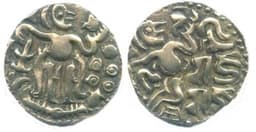
Rajadhiraja Chola I
Emperor · Medieval
61.7Total
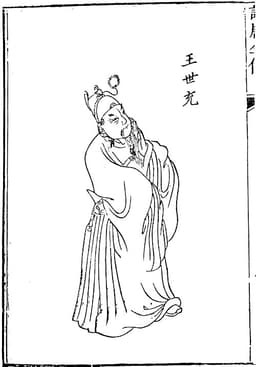
Wang Shichong
Emperor · Medieval
47.0Total
Basic Information
Born
1018
570
Died
1054
621
Era
Medieval
Medieval
Nationality
India
China
Occupation
Emperor
Emperor
Civilization
Indian
Eastern
Score Comparison
Military (10%)
74.7
60.0
Political (20%)
68.0
35.1
Influence (20%)
60.0
50.2
Legacy (20%)
52.0
40.8
Leadership (15%)
68.0
48.4
Strategy (15%)
58.0
57.5
TOTAL
61.7
47.0
Rajadhiraja Chola I — Complete Timeline
1018 AD
Coronation as Co-Regent with Rajendra IPolitical Action
Rajadhiraja Chola I was crowned as co-regent alongside his father Rajendra Chola I, a common practice in the Chola dynasty. This ensured a smooth succession and allowed him to gain administrative and military experience before becoming sole ruler.
SuccessionCo-RegencyChola Dynasty
Impact: national
1040 AD
Military Campaigns in the DeccanWar
Rajadhiraja Chola I led several campaigns into the Deccan plateau against the Western Chalukyas, aiming to expand Chola influence northward. These campaigns resulted in temporary gains but failed to achieve lasting territorial conquests.
Deccan CampaignsChola ExpansionMilitary
Impact: regional
1052 AD
Battle of KoppamWar◆ Major
Rajadhiraja Chola I fought the Battle of Koppam against the Western Chalukya king Someshvara I. The battle was indecisive, with both sides claiming victory, but it marked the beginning of a prolonged conflict between the Cholas and Chalukyas.
Chola-Chalukya WarBattleMilitary Conflict
Impact: regional
1054 AD
Death in Battle at Kudal SangamamWar◆ Major
Rajadhiraja Chola I was killed while fighting on an elephant at the Battle of Kudal Sangamam against the Western Chalukya king Someshvara I. His death on the battlefield was a rare event for a Chola monarch and led to the accession of his brother Rajendra II.
Death in BattleChola-Chalukya WarMilitary Leadership
Impact: regionaltragic
Wang Shichong — Complete Timeline
618 AD
Rebellion at LuoyangPolitical Action◆ Major
Wang Shichong, a Sui general, staged a coup in Luoyang, killing the Sui regent and declaring himself emperor of the short-lived Zheng dynasty. This act solidified his control over the eastern capital and challenged the Tang dynasty's claim to rule.
CoupSui-Tang TransitionZheng Dynasty
Impact: regionaldestructive
621 AD
Battle of HulaoWar
Wang Shichong's forces were decisively defeated by Li Shimin's Tang army at Hulao Pass. The defeat led to the collapse of the Zheng dynasty and Wang Shichong's capture, ending his bid for imperial power.
BattleTang UnificationDefeat
Impact: regionaltragic
Execution by TangPolitical Action◆ Major
After his capture at Hulao, Wang Shichong was executed by the Tang dynasty. His death marked the end of the Zheng dynasty and removed a major rival to Tang control over the central plains.
ExecutionTang Unification
Impact: regionaltragic
This comparison has not been analyzed yet.
One-time AI generation (~1 minute). Scores and timeline are already available below.
Rankings
🥇
Rajadhiraja Chola ILeader
Mil: 74.7Pol: 68.0Inf: 60.0
61.7
🥈
Wang Shichong
Mil: 60.0Pol: 35.1Inf: 50.2
47.0
+14.7 behind
How This Comparison Works
Algorithm
Each figure is scored on 6 dimensions (0—100 scale) based on structured historical data: Military (10%), Political (20%), Influence (20%), Legacy (20%), Leadership (15%), Strategy (15%). The weighted total produces the final ranking.
Data Sources
Scores are computed from structured sub-indicators in the database. Scale factors adjust for era (Ancient ×0.85, Modern ×1.0) and civilization size (Eastern ×1.05, Other ×0.80) to account for differences in population and military scale.
Maximum 3 Figures
Comparisons are limited to 2—3 figures to ensure readability and statistical meaningfulness.
Error Margins
±5 points per dimension — Sub-scores are derived from historical records with inherent uncertainty. Two figures within 5 points on a dimension should be considered roughly equivalent in that area.
Total Score Accuracy
±3 points overall — The weighted combination of 6 dimensions produces a total score with approximately ±3 points of uncertainty. Differences of less than 3 points are not statistically significant— the figures are effectively tied.
Known Limitations
- Historical records are incomplete and uneven across civilizations
- Figures from oral-tradition societies may be underrepresented
- Occupation labels can misclassify multi-role figures
- Scores measure capability and impact, not moral character
- Quantitative scoring is a comparison tool, not absolute truth
Capability Radar
Military (10%) — Battles & Warfare
Battles
75
65
Win Rate
70
45
Expansion
75
50
Political (20%) — Governance & Reform
Reform
55
25
Diplomacy
60
35
Economy
65
30
Influence (20%) — Cultural & Global Reach
Cultural
55
20
Global
45
10
Legacy (20%) — Historical Impact
Historical
60
30
Longevity
50
15
Leadership (15%) — Power & Stability
Tenure
65
40
Stability
60
20
Strategy (15%) — Tactics & Innovation
Strategy
70
55
Tactics
65
60
Reform
60
30
Similar Comparisons
Comments & Discussion
No comments yet. Be the first to share your thoughts!