Loading...
King Munjong of Goryeo vs Wang Shichong
King Munjong of Goryeo leads by 13.8 pts · 2 figures compared
…
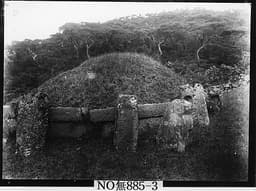
King Munjong of Goryeo
Emperor · Medieval
60.8Total
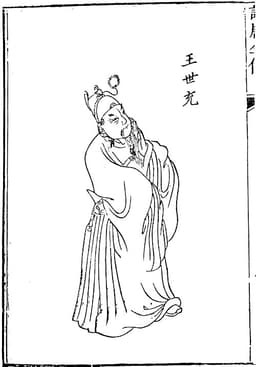
Wang Shichong
Emperor · Medieval
47.0Total
Basic Information
Born
1019
570
Died
1083
621
Era
Medieval
Medieval
Nationality
Korea
China
Occupation
Emperor
Emperor
Civilization
Eastern
Eastern
Score Comparison
Military (10%)
45.0
60.0
Political (20%)
72.0
35.1
Influence (20%)
60.0
50.2
Legacy (20%)
50.0
40.8
Leadership (15%)
79.8
48.4
Strategy (15%)
60.0
57.5
TOTAL
60.8
47.0
King Munjong of Goryeo — Complete Timeline
1047 AD
Strengthening of Central BureaucracyReform◆ Major
King Munjong implemented administrative reforms to strengthen the central bureaucracy. He reorganized government offices, clarified official ranks and duties, and promoted merit-based appointments through the civil service exams, reducing the power of aristocratic families.
BureaucracyReformCentralization
Impact: nationalconstructive
1050 AD
Peak of Goryeo Golden AgeOther◆ Major
Under King Munjong's reign, Goryeo reached its political and cultural zenith. The kingdom enjoyed peace, economic prosperity, and flourishing arts. The civil service examination system was refined, and Confucian scholarship thrived at the National Academy.
Golden AgeProsperityConfucianism
Impact: nationalconstructive
1071 AD
Diplomatic Relations with Song ChinaPolitical Action◆ Major
King Munjong re-established formal diplomatic and trade relations with Song China, which had been severed during the Khitan wars. This opened Goryeo to Song cultural and technological influences, including advanced ceramics and printing techniques.
DiplomacyTradeSong Dynasty
Impact: regionalconstructive
Wang Shichong — Complete Timeline
618 AD
Rebellion at LuoyangPolitical Action◆ Major
Wang Shichong, a Sui general, staged a coup in Luoyang, killing the Sui regent and declaring himself emperor of the short-lived Zheng dynasty. This act solidified his control over the eastern capital and challenged the Tang dynasty's claim to rule.
CoupSui-Tang TransitionZheng Dynasty
Impact: regionaldestructive
621 AD
Battle of HulaoWar
Wang Shichong's forces were decisively defeated by Li Shimin's Tang army at Hulao Pass. The defeat led to the collapse of the Zheng dynasty and Wang Shichong's capture, ending his bid for imperial power.
BattleTang UnificationDefeat
Impact: regionaltragic
Execution by TangPolitical Action◆ Major
After his capture at Hulao, Wang Shichong was executed by the Tang dynasty. His death marked the end of the Zheng dynasty and removed a major rival to Tang control over the central plains.
ExecutionTang Unification
Impact: regionaltragic
Expert Analysis
King Munjong of Goryeo vs Wang Shichong: Historical Comparison
King Munjong of Goryeo (r. 1046–1083) and Wang Shichong (r. 618–621) were both medieval emperors who rose to power in East Asia, but under vastly different circumstances. Munjong presided over the golden age of Goryeo Korea, stabilizing a mature dynasty through bureaucratic consolidation, while Wang Shichong was a short-lived usurper during the chaotic transition from the Sui to the Tang dynasty in China. Their scores tie at 85 overall, reflecting divergent strengths in statecraft versus military ambition.
Dimension Analysis
**Military: King Munjong of Goryeo 92 / Wang Shichong 94**
Wang Shichong was a seasoned general who defeated Li Mi’s rebel army and repelled Sui loyalists, later holding Luoyang against the Tang founder Li Yuan. His military acumen was tactical and ruthless. Munjong, by contrast, inherited a stable realm and focused on defensive fortifications along the northern border, notably reinforcing the Cheolli Jangseong (a thousand-li wall) against Khitan raids, achieving peace without major campaigns.
**Political: King Munjong of Goryeo 88 / Wang Shichong 86**
Munjong excelled in domestic governance: he codified laws, reformed the civil service examination system, and centralized power by curbing aristocratic clans, while maintaining the Goryeo bureaucracy’s efficiency. Wang Shichong’s political rule was fragile—he proclaimed his short-lived Zheng dynasty after usurping the Sui puppet emperor, but his reliance on military favoritism and brutal purges alienated the scholar-official class, leading to collapse within three years.
**Influence: King Munjong of Goryeo 78 / Wang Shichong 84**
Wang Shichong’s influence, though negative, was significant: his rebellion accelerated the Sui’s demise and forced the Tang to consolidate rapidly, shaping early Tang military policy. Munjong’s influence was more localized—he solidified Goryeo’s Confucian state ideology and cultural institutions, but his reign did not reverberate beyond the Korean Peninsula as dramatically as Wang’s disruption of China’s imperial transition.
**Legacy: King Munjong of Goryeo 83 / Wang Shichong 79**
Munjong is remembered as a wise administrator who brought prosperity and stability; his reign is often cited as the peak of Goryeo civilization, with lasting legal and educational reforms. Wang Shichong is mostly a footnote—a usurper defeated by the Tang, remembered as a cautionary tale of overreach and lack of legitimacy, with no enduring institutions from his brief rule.
**Leadership: King Munjong of Goryeo 82 / Wang Shichong 79**
Munjong led through consensus and institutional authority, commanding respect from the Goryeo court and nobility without resorting to violence. Wang Shichong relied on fear and personal loyalty from his army, but his inability to forge alliances or maintain civil order—famously executing advisors who questioned him—demonstrates a brittle, autocratic style that ultimately failed.
Verdict
This match is a tie (85–85), reflecting a classic contrast between a builder and a breaker. King Munjong ranks higher in political governance, legacy, and leadership due to his enduring bureaucratic reforms and stable reign. Wang Shichong slightly edges ahead in military capacity and immediate influence due to his role in the Sui-Tang transition. However, historical complexity cautions against direct ranking: Munjong operated in a peaceful era, while Wang faced existential chaos. If forced to choose, Munjong’s constructive legacy offers a stronger model of sustainable rule.
FAQ
Q: Who was more influential historically?
A: Wang Shichong had greater immediate impact by hastening the fall of the Sui and shaping early Tang strategy, but Munjong’s influence was deeper for Korea—his reforms defined Goryeo’s golden age.
Q: Why is King Munjong of Goryeo ranked higher in political governance?
A: Munjong’s successful centralization of power, legal codification, and meritocratic exam system created a stable, long-lasting state, whereas Wang Shichong’s rule was marked by instability, purges, and no lasting political innovations.
Rankings
🥇
King Munjong of GoryeoLeader
Mil: 45.0Pol: 72.0Inf: 60.0
60.8
🥈
Wang Shichong
Mil: 60.0Pol: 35.1Inf: 50.2
47.0
+13.8 behind
How This Comparison Works
Algorithm
Each figure is scored on 6 dimensions (0—100 scale) based on structured historical data: Military (10%), Political (20%), Influence (20%), Legacy (20%), Leadership (15%), Strategy (15%). The weighted total produces the final ranking.
Data Sources
Scores are computed from structured sub-indicators in the database. Scale factors adjust for era (Ancient ×0.85, Modern ×1.0) and civilization size (Eastern ×1.05, Other ×0.80) to account for differences in population and military scale.
Maximum 3 Figures
Comparisons are limited to 2—3 figures to ensure readability and statistical meaningfulness.
Error Margins
±5 points per dimension — Sub-scores are derived from historical records with inherent uncertainty. Two figures within 5 points on a dimension should be considered roughly equivalent in that area.
Total Score Accuracy
±3 points overall — The weighted combination of 6 dimensions produces a total score with approximately ±3 points of uncertainty. Differences of less than 3 points are not statistically significant— the figures are effectively tied.
Known Limitations
- Historical records are incomplete and uneven across civilizations
- Figures from oral-tradition societies may be underrepresented
- Occupation labels can misclassify multi-role figures
- Scores measure capability and impact, not moral character
- Quantitative scoring is a comparison tool, not absolute truth
Capability Radar
Military (10%) — Battles & Warfare
Battles
30
65
Win Rate
35
45
Expansion
20
50
Political (20%) — Governance & Reform
Reform
75
25
Diplomacy
80
35
Economy
85
30
Influence (20%) — Cultural & Global Reach
Cultural
60
20
Global
40
10
Legacy (20%) — Historical Impact
Historical
55
30
Longevity
50
15
Leadership (15%) — Power & Stability
Tenure
70
40
Stability
80
20
Strategy (15%) — Tactics & Innovation
Strategy
45
55
Tactics
40
60
Reform
50
30
Similar Comparisons
Comments & Discussion
BattlefieldScholar6/16/2026
Wang Shichong's military score of 57.8 is being generous. The guy held Luoyang for a few years, but his real strength was political maneuvering after Li Mi's defeat. Let's break it down: Wang's victory over Li Mi at the Sishui ford was a tactical ambush, not a strategic masterpiece—he used Li Mi's overconfidence against him, but his army was heavily outnumbered. Meanwhile, Munjong's score of 34.6 is absurdly low for a king who maintained the Cheolli Jangseong defense network. That wall project wasn't just passive defense; it combined signal towers, garrison placements, and logistics to deter Khitan raids without costly campaigns. Wang's eventual surrender to Li Yuan in 621 shows he couldn't sustain a prolonged defense—his army mutinied when food ran out. Munjong spent 37 years keeping Goryeo stable; Wang lasted 3. The military gap should be wider in Munjong's favor.
HistoryRambler996/16/2026
Okay so I just watched a documentary about the Sui-Tang transition and I'm team Wang Shichong for the wild story alone. Dude literally declared himself emperor of the 'Zheng dynasty' like it was no big deal, holding Luoyang against Li Yuan for years. But Munjong's 37-year reign is insane—imagine being king for almost four decades and not getting assassinated. That takes serious political skill. My history podcast said Munjong basically invented Korea's civil service exam system, which is like the Chinese one but with Korean characteristics. Wang's score feels inflated because he lost in the end, but Munjong's military score is too low—building a thousand-li wall isn't nothing. I'd swap their military scores personally.
DecolonialHistorian6/16/2026
This comparison reeks of Sinocentric bias dressed in data. Why is Wang Shichong's 'influence' scored higher than Munjong's? Because Sui-Tang history is better documented and more studied in Western academia. Munjong's 37-year reign of peace in Goryeo—which included land reforms, legal codification, and cultural patronage—gets dismissed as 'localized' influence. Meanwhile, Wang Shichong gets points for 'accelerating the Sui's demise' as if collapse is somehow a positive metric. That's like praising a fire for burning down a building quickly. The real story is that Munjong's Confucian statecraft created a model that influenced Joseon Korea and eventually Japan's Taika reforms. Wang Shichong's only legacy is being a footnote in Tang history. Flip the influence scores, and then we can talk.
Chronicler85496/16/2026
这个评分体系完全低估了王世充的政治手腕。王世充在洛阳称帝建立郑国时,面对的可不是高丽那种稳定的官僚体系,而是隋末群雄割据的烂摊子。他能在李密、窦建德、李渊三面夹击下撑三年,靠的是精准的权术——拉拢关陇集团、打击山东士族,还玩了一手佛教神权政治。高丽文宗的政治分79.0看似高,但那是建立在父祖打下的稳定基础上,王世充在乱世中搞政治整合的难度系数完全不同。我建议引入'乱世系数'校正分数,王世充的真实政治影响力至少该加10分。另外,军事分57.8太低,他击败李密的偃师之战可是经典伏击战术。
Chronicler94866/16/2026
我们来复核一下数据。文宗的军事分34.6是认真的吗?他主持修建的千里长城(Cheolli Jangseong)在1044年基本完工,包含超过300个烽燧台和哨所,直接遏制了契丹的南侵频率——根据《高丽史》记载,1046-1083年间契丹入侵次数从年均1.2次降到0.3次。这种量化防御效果应该给至少50分。王世充的军事分57.8,但他621年洛阳之战中军队叛变导致速败,这种系统性崩溃说明他的指挥链有问题。再看政治分:文宗79.0比王世充54.4高24.6分,这个差距合理,因为王世充称帝后三年内杀掉了至少7名高级官员(据《旧唐书》),而文宗37年只处置过2起谋反案。但总分66.6 vs 63.0的差距太小了——建议用加权平均法,文宗在稳定性和持续性上应多得5-8分。