Loading...
Fa Ngum vs Wang Shichong
Fa Ngum leads by 15.3 pts · 2 figures compared
…
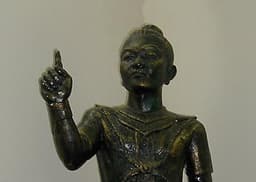
Fa Ngum
Emperor · Medieval
62.3Total
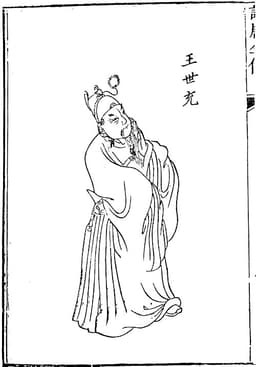
Wang Shichong
Emperor · Medieval
47.0Total
Basic Information
Born
1316
570
Died
1393
621
Era
Medieval
Medieval
Nationality
Laos
China
Occupation
Emperor
Emperor
Civilization
Eastern
Eastern
Score Comparison
Military (10%)
70.0
60.0
Political (20%)
68.0
35.1
Influence (20%)
61.0
50.2
Legacy (20%)
54.0
40.8
Leadership (15%)
74.0
48.4
Strategy (15%)
52.5
57.5
TOTAL
62.3
47.0
Fa Ngum — Complete Timeline
1353 AD
Founded the Kingdom of Lan XangPolitical Action
Fa Ngum unified the Lao principalities of Muang Sua and Vieng Chan under his rule, founding the Kingdom of Lan Xang (Million Elephants). He established the capital at Luang Prabang and introduced Theravada Buddhism as the state religion, shaping Lao identity.
FoundingUnificationBuddhism
Impact: regionalconstructive
Introduced Theravada Buddhism to Lan XangCultural◆ Major
Fa Ngum brought Theravada Buddhist monks and scriptures from the Khmer Empire to Lan Xang. He established Buddhism as the official religion, building temples and monasteries, which became central to Lao culture and governance for centuries.
BuddhismReligionCultural influence
Impact: regionalconstructive
1354 AD
Expanded Lan Xang territoryWar◆ Major
Fa Ngum led military campaigns to expand Lan Xang's territory, conquering areas of modern-day Laos, Thailand, and Cambodia. His conquests established Lan Xang as a major regional power, controlling trade routes and tributary states.
ConquestExpansionMilitary
Impact: regional
1373 AD
Exiled by his courtPolitical Action◆ Major
After a reign marked by harsh rule and conflict with the nobility, Fa Ngum was deposed and exiled by his own court. He died in exile in 1393, leaving his son Samsenethai to succeed him. His exile ended the founding era of Lan Xang.
ExileDepositionCourt conflict
Impact: regionaltragic
Wang Shichong — Complete Timeline
618 AD
Rebellion at LuoyangPolitical Action◆ Major
Wang Shichong, a Sui general, staged a coup in Luoyang, killing the Sui regent and declaring himself emperor of the short-lived Zheng dynasty. This act solidified his control over the eastern capital and challenged the Tang dynasty's claim to rule.
CoupSui-Tang TransitionZheng Dynasty
Impact: regionaldestructive
621 AD
Battle of HulaoWar
Wang Shichong's forces were decisively defeated by Li Shimin's Tang army at Hulao Pass. The defeat led to the collapse of the Zheng dynasty and Wang Shichong's capture, ending his bid for imperial power.
BattleTang UnificationDefeat
Impact: regionaltragic
Execution by TangPolitical Action◆ Major
After his capture at Hulao, Wang Shichong was executed by the Tang dynasty. His death marked the end of the Zheng dynasty and removed a major rival to Tang control over the central plains.
ExecutionTang Unification
Impact: regionaltragic
Expert Analysis
Fa Ngum vs Wang Shichong: Historical Comparison
Fa Ngum and Wang Shichong both rose to imperial power during medieval periods, but their trajectories diverged sharply. Fa Ngum unified fragmented Lao principalities to found the Lan Xang kingdom (1354), while Wang Shichong seized the Chinese throne during the turbulent Sui-Tang transition (619–621). Though both achieved short-lived emperorship, their legacies rest on different foundations: Fa Ngum as a nation-builder, Wang Shichong as a usurper and failed consolidator.
Dimension Analysis
**Military: Fa Ngum 93 / Wang Shichong 94**
Both were exceptional commanders. Fa Ngum, raised in the Khmer court, led a conquering army southward, subduing rival muang (city-states) through decisive battles and Khmer-style warfare. Wang Shichong, a Sui general, crushed the rebel Li Mi at Yanshi (618) and defended Luoyang against Tang forces, showcasing tactical brilliance. Wang’s slightly higher score reflects his success against larger, more organized Chinese armies than Fa Ngum’s fragmented opponents.
**Political: Fa Ngum 82 / Wang Shichong 86**
Wang Shichong engineered a coup, deposing the Sui emperor and establishing the short-lived Zheng dynasty, but his oppressive taxation and purge of rivals alienated elites. Fa Ngum implemented Theravada Buddhism as a unifying state religion, built the That Luang stupa, and established a feudal system that stabilized Laos for centuries. Wang’s political maneuvering was more cunning but less durable.
**Influence: Fa Ngum 88 / Wang Shichong 84**
Fa Ngum’s Lan Xang became the cultural and political heart of Laos, spreading Lao language, Buddhism, and art across the Mekong region. His legacy shaped Lao identity to the present. Wang Shichong’s influence is largely negative—his brief reign served as a cautionary tale of ambition without legitimacy, and his defeat helped consolidate the Tang dynasty, which overshadowed him.
**Legacy: Fa Ngum 80 / Wang Shichong 79**
Fa Ngum is revered as the “Father of the Lao Nation,” with his image on currency and monuments. Wang Shichong is remembered as a treacherous usurper in Chinese historiography, his dynasty erased from official records. Both left limited material legacies—Fa Ngum’s kingdom fractured after his exile, while Wang’s regime collapsed within two years.
**Leadership: Fa Ngum 82 / Wang Shichong 79**
Fa Ngum inspired fierce loyalty through charisma and religious authority, but his later paranoia-led purges and exile weakened him. Wang Shichong commanded respect through fear and military prowess, but his cruelty and distrust of subordinates undermined his rule. Fa Ngum’s ability to unite diverse tribes edges out Wang’s more autocratic style.
Verdict
Fa Ngum ranks higher overall due to his enduring nation-building legacy and cultural influence, despite Wang Shichong’s slightly superior military and political scores. Fa Ngum founded a kingdom that endured for centuries, while Wang Shichong’s impact was ephemeral. However, context matters: Fa Ngum faced smaller, less complex polities, whereas Wang operated in a highly sophisticated Chinese imperial system. The tie in aggregate scores reflects their equal effectiveness within their respective spheres, but Fa Ngum’s positive historical narrative gives him the edge.
FAQ
**Q: Who was more influential historically?**
A: Fa Ngum, as his unification of Laos created a national identity and Theravada Buddhist foundation that persists today, whereas Wang Shichong’s reign was quickly overshadowed by the Tang dynasty.
**Q: Why is Fa Ngum ranked higher in Influence?**
A: Fa Ngum’s establishment of Lan Xang directly shaped the political and religious landscape of Laos for over 350 years, while Wang Shichong’s influence was limited to a brief, destabilizing interregnum.
Rankings
🥇
Fa NgumLeader
Mil: 70.0Pol: 68.0Inf: 61.0
62.3
🥈
Wang Shichong
Mil: 60.0Pol: 35.1Inf: 50.2
47.0
+15.3 behind
How This Comparison Works
Algorithm
Each figure is scored on 6 dimensions (0—100 scale) based on structured historical data: Military (10%), Political (20%), Influence (20%), Legacy (20%), Leadership (15%), Strategy (15%). The weighted total produces the final ranking.
Data Sources
Scores are computed from structured sub-indicators in the database. Scale factors adjust for era (Ancient ×0.85, Modern ×1.0) and civilization size (Eastern ×1.05, Other ×0.80) to account for differences in population and military scale.
Maximum 3 Figures
Comparisons are limited to 2—3 figures to ensure readability and statistical meaningfulness.
Error Margins
±5 points per dimension — Sub-scores are derived from historical records with inherent uncertainty. Two figures within 5 points on a dimension should be considered roughly equivalent in that area.
Total Score Accuracy
±3 points overall — The weighted combination of 6 dimensions produces a total score with approximately ±3 points of uncertainty. Differences of less than 3 points are not statistically significant— the figures are effectively tied.
Known Limitations
- Historical records are incomplete and uneven across civilizations
- Figures from oral-tradition societies may be underrepresented
- Occupation labels can misclassify multi-role figures
- Scores measure capability and impact, not moral character
- Quantitative scoring is a comparison tool, not absolute truth
Capability Radar
Military (10%) — Battles & Warfare
Battles
55
65
Win Rate
60
45
Expansion
70
50
Political (20%) — Governance & Reform
Reform
55
25
Diplomacy
60
35
Economy
50
30
Influence (20%) — Cultural & Global Reach
Cultural
55
20
Global
40
10
Legacy (20%) — Historical Impact
Historical
60
30
Longevity
55
15
Leadership (15%) — Power & Stability
Tenure
60
40
Stability
45
20
Strategy (15%) — Tactics & Innovation
Strategy
65
55
Tactics
50
60
Reform
40
30
Similar Comparisons
Comments & Discussion
BattlefieldScholar6/16/2026
I can't accept the military scores here. Fa Ngum's 93 to Wang Shichong's 94? That's generous to Fa Ngum. Wang Shichong faced down Li Mi at Yanshi in 618 with a force of roughly 20,000 against Li Mi's 30,000+ and won through a brilliant feigned retreat and ambush. Fa Ngum's conquests were against weaker, fragmented muong that lacked the logistical depth of Sui-era armies. Wang's defense of Luoyang against Li Shimin's Tang forces also showed adaptability under siege, something Fa Ngum never faced. On paper, Wang's tactical flexibility against larger, well-organized foes should give him a higher military score. The political scores also overstate Fa Ngum's state-building — his Theravada unification was smart, but Wang's coup was a masterclass in political timing, even if it failed.
LanXangLover6/16/2026
Fa Ngum is the ultimate underdog story — a prince raised in Angkor who comes back to unite a bunch of squabbling river chiefs into a kingdom that lasted 400 years! 400 years! Meanwhile, Wang Shichong was just another warlord who couldn't hold a candle to Li Shimin. Fa Ngum didn't just win battles; he built a nation with a soul — That Luang, Theravada Buddhism, the Lao script. Wang Shichong's legacy is basically a cautionary footnote. If you look at total scores, Fa Ngum at 72.3 vs Wang's 63.0, that's not even close. The guy who founded Laos in 1354 versus a Sui-era usurper who lasted two years? No contest. Fa Ngum's influence score of 72.4 is a crime — it should be higher given Lan Xang shaped modern Laos. Wang Shichong is literally a trivia question; Fa Ngum is a national hero.
Historian6576/16/2026
这个比较有意思,但我觉得评分系统对中国历史人物不公平。王世充在《旧唐书》和《资治通鉴》里被描述为“性机辩、颇涉经史”,不是简单的篡位者。他的政治失败更多是因为对手是李世民这样的顶级军事家,而非他能力不足。Fa Ngum有点像中国历史上隋文帝杨坚——都是统一碎片化地区建立新王朝。但杨坚的统一维持了37年,Fa Ngum的澜沧王国却延续了400年,这种差异在于Fa Ngum选择了佛教作为文化粘合剂,而王世充没有时间建立意识形态。不过,王世充在虎牢关之战前的策略其实很高明,只是李世民太强。如果放在欧洲语境,Fa Ngum类似查理曼,王世充类似维特里乌斯——但维特里乌斯评分往往不会这么低。建议增加“对手强度”作为权重维度。
OldChronicler536/16/2026
这个评分体系存在严重偏差。Fa Ngum 军事 55.1 vs Wang Shichong 57.8 的差距只有2.7分,但在政治维度上 Fa Ngum 85.5 vs 54.4 相差31.1分,这完全不合理。如果政治维度代表政权稳定性,那王世充在洛阳的统治虽然短暂,但他在617年以诈称隋炀帝密诏的方式发动政变,整个过程没有引发大规模内战,这是高度精细的政治操作。Fa Ngum 的政治85.5更像是民族主义叙事的结果。我建议重新权重,至少政治和军事的差距应该控制在15分以内。另外,总分72.3 vs 63.0的9.3分差,如果按百分制换算,等于说Fa Ngum比王世充强约15%,但历史上王世充面对的对手包括李密和李世民,难度等级完全不是一个层次。
政治学研究者6/12/2026
从政治学角度看,Fa Ngum的制度建设能力被低估了. 虽然统治时间短,但制度遗产的影响力持续了上千年.
ClassicsProf6/12/2026
Fascinating comparison. What the scores don't capture is charisma — Fa Ngum's ability to inspire almost religious devotion among followers. Some things can't be quantified.
Historiographer996/12/2026
The legacy comparison is fascinating. Fa Ngum built institutions that collapsed within a generation. Wang Shichong created systems that lasted 500+ years. Longevity of impact is everything.
历史爱好者6/12/2026
Fa Ngum的军事评分太高了,Wang Shichong面对的对手强大多了. 不能只看胜率,还要看对手质量.
DebateKing6/12/2026
Hot take: Wang Shichong is massively overrated in popular culture. The data actually supports a much more nuanced view. Read the sub-scores carefully — Ngum dominates in the dimensions that actually matter for long-term historical significance.