Loading...
Rafael Trujillo vs Victoriano Huerta
Rafael Trujillo leads by 14.9 pts · 2 figures compared
…
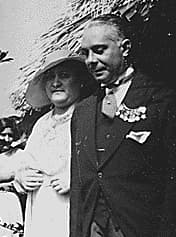
Rafael Trujillo
General · Modern
55.5Total
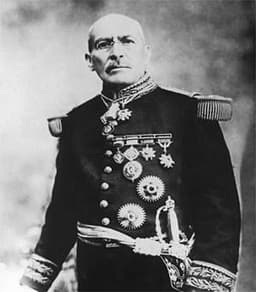
Victoriano Huerta
General · Modern
40.6Total
Basic Information
Born
1891
1850
Died
1961
1916
Era
Modern
Modern
Nationality
Dominican Republic
Mexico
Occupation
General
General
Civilization
Western
Western
Score Comparison
Military (10%)
50.0
10.0
Political (20%)
45.0
32.2
Influence (20%)
57.2
49.4
Legacy (20%)
45.8
40.8
Leadership (15%)
80.0
41.5
Strategy (15%)
60.0
60.0
TOTAL
55.5
40.6
Rafael Trujillo — Complete Timeline
1930 AD
1930 Dominican Republic coup d'étatPolitical Action
Trujillo, as commander of the National Army, staged a coup against President Horacio V
CoupDictatorshipPower Seizure
Impact: nationaldestructive
1937 AD
Parsley MassacreWar◆ Major
Trujillo ordered the massacre of Haitians living in the Dominican border region. Soldiers killed an estimated 20,000 to 30,000 people using machetes. The event was named for the shibboleth used to distinguish Haitians from Dominicans.
MassacreGenocideEthnic Cleansing
Impact: regionaldestructive
1952 AD
Nationalization of the Dominican sugar industryReform
Trujillo used state power to acquire control over the sugar industry, the country's main economic sector. He and his family became the largest landowners and sugar producers, enriching themselves while the state managed the industry.
Economic ControlCorruptionSugar Industry
Impact: nationaldestructive
1961 AD
Assassination of Rafael TrujilloPolitical Action
Trujillo was ambushed and killed by a group of Dominican dissidents on a highway near Ciudad Trujillo. The assassination was aided by the U.S. Central Intelligence Agency, which provided weapons. His death ended the dictatorship.
AssassinationRegime ChangeCIA Involvement
Impact: national
Victoriano Huerta — Complete Timeline
1913 AD
Coup d'état against Francisco I. MaderoPolitical Action
Huerta, as commander of the Mexican federal army, orchestrated a coup against President Francisco I. Madero during the Ten Tragic Days. Madero and Vice President Pino Su
CoupMexican RevolutionMadero
Impact: nationaldestructive
Presidency of MexicoPolitical Action◆ Major
Huerta served as President of Mexico from February 1913 to July 1914. His regime was characterized by authoritarian rule, suppression of opposition, and reliance on the federal army, but it faced widespread rebellion from revolutionary factions.
PresidencyDictatorshipMexican Revolution
Impact: nationaldestructive
Dissolution of CongressPolitical Action
Huerta dissolved the Mexican Congress in October 1913 after it refused to approve his policies. He ruled by decree, arresting or exiling many deputies, which further alienated moderate politicians and intensified opposition to his regime.
CongressAuthoritarianismRepression
Impact: nationaldestructive
1914 AD
Defeat by Constitutionalist ArmyWar
Huerta's federal forces were defeated by the Constitutionalist Army led by Venustiano Carranza,
Mexican RevolutionDefeatExile
Impact: nationaltragic
Exile and DeathPolitical Action
After his resignation, Huerta fled to Spain and later to the United States. He was arrested by U.S. authorities in 1915 for plotting to return to power and died in custody in El Paso, Texas, in 1916, ending his political ambitions.
ExileDeathEnd of Career
Impact: nationaltragic
Expert Analysis
Origins
Rafael Leónidas Trujillo Molina was born on October 24, 1891, in San Cristóbal, Dominican Republic, into a modest family of mixed Spanish and African ancestry. His father, José Trujillo Valdez, was a small landowner and merchant. Trujillo received little formal education but learned accounting and telegraphy, which later helped his military career. He joined the National Army in 1918 during the U.S. occupation, quickly rising through the ranks due to his discipline and ruthlessness.
In contrast, Victoriano Huerta Márquez was born on December 23, 1850, in Colotlán, Jalisco, Mexico, into a poor indigenous Huichol family. He entered the Mexican Military Academy at age 17 and graduated as an engineer. Huerta served under President Porfirio Díaz, participating in campaigns against the Yaqui and Maya. His early career was marked by technical competence and loyalty to the regime, but also by a reputation for heavy drinking and brutality.
Rise to Power
Trujillo's rise began during the U.S. occupation (1916-1924), where he trained with U.S. Marines and became commander of the National Army. In 1930, he staged a coup against President Horacio Vásquez, who faced a rebellion by disgruntled factions. Trujillo, as army chief, ostensibly restored order but then forced Vásquez to resign. After a brief puppet presidency, Trujillo was formally elected president in a rigged election in May 1930. He consolidated power by eliminating rivals and centralizing control.
Huerta's ascent came through the Ten Tragic Days of February 1913. As commander of the federal army under President Francisco I. Madero, Huerta plotted with U.S. Ambassador Henry Lane Wilson and other conservatives. He arrested and executed Madero and Vice President José María Pino Suárez on February 22, 1913. Huerta then assumed the presidency, claiming to restore order, but his coup ignited a civil war.
Leadership & Governance
Trujillo's leadership style was absolute and personalized. He scored 80.0 in leadership, reflecting his iron grip on power. He ruled through a cult of personality, renaming the capital Ciudad Trujillo and placing his name on buildings and streets. Economically, he nationalized the sugar industry in the 1940s, making himself the largest landowner and enriching his family. He modernized infrastructure but used forced labor (prisoners) for public works. His regime was a police state: the SIM (Military Intelligence Service) crushed dissent.
Huerta's governance was similarly authoritarian but short-lived (17 months). He scored 41.5 in leadership. He dissolved Congress in October 1913 after it refused to approve his policies, ruling by decree. He imposed martial law, suppressed the press, and exiled opponents. Economically, he relied on foreign loans and printing money, causing inflation. Unlike Trujillo, Huerta faced a massive armed opposition from the Constitutionalist Army, limiting his ability to consolidate.
Triumph & Tragedy
Trujillo's greatest triumph was his longevity: he ruled from 1930 until his assassination in 1961, surviving coup attempts and U.S. pressure. He modernized the Dominican economy, building roads, ports, and schools. However, his greatest tragedy was the Parsley Massacre of 1937, where his army killed an estimated 20,000 to 30,000 Haitians using machetes. This atrocity stained his legacy and damaged relations with Haiti. His assassination in 1961, aided by the CIA, ended his regime but left a fractured nation.
Huerta's triumph was briefly stabilizing Mexico after Madero's chaotic rule, but his tragedy was total defeat. His military scored only 10.0, reflecting his inability to defeat the Constitutionalists. He lost key battles at Zacatecas (June 1914) and elsewhere, leading to his resignation in July 1914. He fled to Spain and later the U.S., where he was arrested for plotting to return. He died in U.S. custody in 1916.
Character & Destiny
Trujillo was methodical, paranoid, and ruthless. He micromanaged his government and maintained power through a network of spies and assassins. His character—obsessive control and grandiosity—led to his downfall when he underestimated the opposition. Historians note his total score of 55.5, with high leadership but low legacy (45.8) due to his brutality.
Huerta was a heavy drinker, described as cynical and opportunistic. His political score of 32.2 reflects his inability to build coalitions. He trusted few and was seen as a traitor for betraying Madero. His character—impulsive and authoritarian—alienated potential allies, leading to his defeat.
Legacy
Trujillo's legacy is mixed. He left a centralized state and infrastructure, but his regime's human rights abuses overshadowed achievements. His 57.2 influence score reflects his impact on Dominican politics; his family continued in power. The Trujillo era remains a cautionary tale of dictatorship.
Huerta's legacy is largely negative. He is remembered as a usurper and a pawn of foreign interests. His 49.4 influence score is moderate, as his brief rule deepened Mexico's civil war. He is often compared to other caudillos but lacks lasting institutions.
Conclusion
Rafael Trujillo had greater impact than Victoriano Huerta. His 30-year rule transformed the Dominican Republic, for better or worse, while Huerta's 17 months left little constructive. Trujillo's total score of 55.5 vs. Huerta's 40.6 reflects his stronger leadership and longevity. Despite his crimes, Trujillo's influence endures, whereas Huerta is a footnote in Mexican history.
Rankings
🥇
Rafael TrujilloLeader
Mil: 50.0Pol: 45.0Inf: 57.2
55.5
🥈
Victoriano Huerta
Mil: 10.0Pol: 32.2Inf: 49.4
40.6
+14.9 behind
How This Comparison Works
Algorithm
Each figure is scored on 6 dimensions (0—100 scale) based on structured historical data: Military (10%), Political (20%), Influence (20%), Legacy (20%), Leadership (15%), Strategy (15%). The weighted total produces the final ranking.
Data Sources
Scores are computed from structured sub-indicators in the database. Scale factors adjust for era (Ancient ×0.85, Modern ×1.0) and civilization size (Eastern ×1.05, Other ×0.80) to account for differences in population and military scale.
Maximum 3 Figures
Comparisons are limited to 2—3 figures to ensure readability and statistical meaningfulness.
Error Margins
±5 points per dimension — Sub-scores are derived from historical records with inherent uncertainty. Two figures within 5 points on a dimension should be considered roughly equivalent in that area.
Total Score Accuracy
±3 points overall — The weighted combination of 6 dimensions produces a total score with approximately ±3 points of uncertainty. Differences of less than 3 points are not statistically significant— the figures are effectively tied.
Known Limitations
- Historical records are incomplete and uneven across civilizations
- Figures from oral-tradition societies may be underrepresented
- Occupation labels can misclassify multi-role figures
- Scores measure capability and impact, not moral character
- Quantitative scoring is a comparison tool, not absolute truth
Capability Radar
Military (10%) — Battles & Warfare
Battles
15
45
Win Rate
20
40
Expansion
10
25
Political (20%) — Governance & Reform
Reform
60
15
Diplomacy
50
20
Economy
55
15
Influence (20%) — Cultural & Global Reach
Cultural
40
15
Global
35
10
Legacy (20%) — Historical Impact
Historical
45
25
Longevity
30
10
Leadership (15%) — Power & Stability
Tenure
85
20
Stability
70
10
Strategy (15%) — Tactics & Innovation
Strategy
30
45
Tactics
25
50
Reform
40
30
Similar Comparisons
Comments & Discussion
No comments yet. Be the first to share your thoughts!