Loading...
Hachisuka Iemasa vs Rafael Trujillo
Rafael Trujillo leads by 9.3 pts · 2 figures compared
…

Hachisuka Iemasa
General · Modern
46.2Total
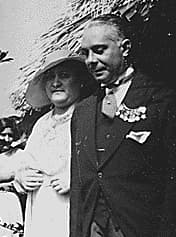
Rafael Trujillo
General · Modern
55.5Total
Basic Information
Born
1558
1891
Died
1639
1961
Era
Modern
Modern
Nationality
Japan
Dominican Republic
Occupation
General
General
Civilization
Eastern
Western
Score Comparison
Military (10%)
25.0
50.0
Political (20%)
45.1
45.0
Influence (20%)
50.2
57.2
Legacy (20%)
42.5
45.8
Leadership (15%)
62.0
80.0
Strategy (15%)
45.0
60.0
TOTAL
46.2
55.5
Hachisuka Iemasa — Complete Timeline
1600 AD
Battle of SekigaharaWar◆ Major
Hachisuka Iemasa fought for the Eastern Army under Tokugawa Ieyasu at Sekigahara. He commanded a force of 3,000 men and helped secure victory. After the battle, he was confirmed as daimyo of Awa Province.
SekigaharaEastern ArmyVictory
Impact: nationalconstructive
1601 AD
Governorship of Awa DomainPolitical Action
Iemasa was confirmed as daimyo of the Awa domain (modern Tokushima Prefecture) after Sekigahara. He administered the domain for nearly four decades, developing its infrastructure and economy.
Domain GovernanceAwaAdministration
Impact: regionalconstructive
Construction of Tokushima CastleCultural
Iemasa oversaw the construction of Tokushima Castle as the seat of his domain. The castle became the administrative center of Awa Province and a symbol of Hachisuka power.
Castle ConstructionTokushimaArchitecture
Impact: regionalconstructive
1614 AD
Siege of OsakaWar
Iemasa participated in the Siege of Osaka, leading Tokugawa forces. He commanded troops in both the winter and summer campaigns, contributing to the destruction of the Toyotomi clan.
Siege of OsakaTokugawaCampaign
Impact: national
Rafael Trujillo — Complete Timeline
1930 AD
1930 Dominican Republic coup d'étatPolitical Action
Trujillo, as commander of the National Army, staged a coup against President Horacio V
CoupDictatorshipPower Seizure
Impact: nationaldestructive
1937 AD
Parsley MassacreWar◆ Major
Trujillo ordered the massacre of Haitians living in the Dominican border region. Soldiers killed an estimated 20,000 to 30,000 people using machetes. The event was named for the shibboleth used to distinguish Haitians from Dominicans.
MassacreGenocideEthnic Cleansing
Impact: regionaldestructive
1952 AD
Nationalization of the Dominican sugar industryReform
Trujillo used state power to acquire control over the sugar industry, the country's main economic sector. He and his family became the largest landowners and sugar producers, enriching themselves while the state managed the industry.
Economic ControlCorruptionSugar Industry
Impact: nationaldestructive
1961 AD
Assassination of Rafael TrujilloPolitical Action
Trujillo was ambushed and killed by a group of Dominican dissidents on a highway near Ciudad Trujillo. The assassination was aided by the U.S. Central Intelligence Agency, which provided weapons. His death ended the dictatorship.
AssassinationRegime ChangeCIA Involvement
Impact: national
Expert Analysis
Origins
Hachisuka Iemasa (1558–1639) was born into a samurai family in Mikawa Province. His father, Hachisuka Masakatsu, served Tokugawa Ieyasu, and Iemasa grew up in the midst of Japan's Sengoku period. He received military training and education typical for a samurai heir, focusing on strategy and governance.
Rafael Trujillo (1891–1961) was born in San Cristóbal, Dominican Republic, into a modest family of mixed heritage. He worked various jobs before joining the National Guard, which was created by the U.S. occupation forces in 1916. Trujillo rose through the ranks by demonstrating loyalty and ambition, eventually becoming commander.
Rise to Power
Iemasa's rise came through his father's service and his own performance at the Battle of Sekigahara in 1600. Fighting for Tokugawa Ieyasu, he commanded 3,000 troops and contributed to the Eastern Army's victory. As a reward, he was confirmed as daimyo of the Awa domain (modern Tokushima Prefecture) with a revenue of 257,000 koku, securing his position among the Tokugawa loyalists.
Trujillo's ascent began with the 1930 coup d'état against President Horacio Vásquez. As commander of the National Army, he orchestrated the takeover, initially installing puppet presidents. In 1930, he was formally elected president after a rigged election. He consolidated power by eliminating rivals, controlling the military, and establishing a cult of personality.
Leadership & Governance
Iemasa governed the Awa domain for nearly four decades, focusing on stability and economic development. He oversaw the construction of Tokushima Castle, which became the administrative center. His leadership style was typical of a feudal lord: maintaining order, collecting taxes, and ensuring loyalty to the shogun. He scored 62.0 in leadership and 45.0 in strategy, reflecting competent but not exceptional governance within the Tokugawa system.
Trujillo ruled the Dominican Republic with an iron fist from 1930 until his assassination in 1961. He centralized power, nationalized the sugar industry, and amassed vast personal wealth. His regime was marked by corruption, repression, and violence. He scored 80.0 in leadership and 60.0 in strategy, indicating strong control but with a ruthless approach. His governance modernized infrastructure but at the cost of human rights.
Triumph & Tragedy
Iemasa's greatest success was securing the Awa domain and maintaining its prosperity under the Tokugawa shogunate. His participation in the Siege of Osaka (1614-1615) further solidified his position. However, his legacy is limited; he did not achieve national prominence like other daimyo. His domain remained stable but unremarkable.
Trujillo's triumphs include economic modernization, such as the nationalization of the sugar industry, and infrastructure projects. However, his tragedies are profound: the Parsley Massacre in 1937, where an estimated 20,000-30,000 Haitians were killed, and a brutal dictatorship that suppressed dissent. His assassination ended the regime but left a legacy of violence.
Character & Destiny
Iemasa was a loyal and competent vassal, following orders and maintaining his domain. His character aligned with the Tokugawa system; he was not ambitious beyond his station. His destiny was to be a reliable daimyo, remembered in local history but overshadowed by larger figures.
Trujillo was charismatic, ambitious, and ruthless. His personality drove him to absolute power, but also to his downfall. His paranoia and cruelty created many enemies, leading to his assassination. Historians assess him as a classic dictator whose character shaped a violent regime.
Legacy
Iemasa's legacy is local: Tokushima Castle and the Hachisuka clan's rule over Awa. He contributed to the stability of the Tokugawa shogunate, but his impact on broader Japanese history is minor. He scores 42.5 in legacy.
Trujillo's legacy is more significant but negative. He transformed the Dominican Republic's economy and infrastructure but through repression and violence. His regime influenced later Latin American dictatorships. He scores 45.8 in legacy. The gap in total scores is 9.3 points in Trujillo's favor (55.5 vs 46.2).
Conclusion
Rafael Trujillo had greater impact than Hachisuka Iemasa, both in scale and consequences. Trujillo's actions affected millions, shaped a nation's trajectory, and left a lasting, albeit dark, legacy. Iemasa was a competent feudal lord within a stable system, but his influence was confined to his domain. While Trujillo's scores reflect higher leadership and strategy, his negative legacy is undeniable. Taking a stance: Trujillo's impact, for better or worse, far exceeds Iemasa's, making him the more significant historical figure.
Rankings
🥇
Rafael TrujilloLeader
Mil: 50.0Pol: 45.0Inf: 57.2
55.5
🥈
Hachisuka Iemasa
Mil: 25.0Pol: 45.1Inf: 50.2
46.2
+9.3 behind
How This Comparison Works
Algorithm
Each figure is scored on 6 dimensions (0—100 scale) based on structured historical data: Military (10%), Political (20%), Influence (20%), Legacy (20%), Leadership (15%), Strategy (15%). The weighted total produces the final ranking.
Data Sources
Scores are computed from structured sub-indicators in the database. Scale factors adjust for era (Ancient ×0.85, Modern ×1.0) and civilization size (Eastern ×1.05, Other ×0.80) to account for differences in population and military scale.
Maximum 3 Figures
Comparisons are limited to 2—3 figures to ensure readability and statistical meaningfulness.
Error Margins
±5 points per dimension — Sub-scores are derived from historical records with inherent uncertainty. Two figures within 5 points on a dimension should be considered roughly equivalent in that area.
Total Score Accuracy
±3 points overall — The weighted combination of 6 dimensions produces a total score with approximately ±3 points of uncertainty. Differences of less than 3 points are not statistically significant— the figures are effectively tied.
Known Limitations
- Historical records are incomplete and uneven across civilizations
- Figures from oral-tradition societies may be underrepresented
- Occupation labels can misclassify multi-role figures
- Scores measure capability and impact, not moral character
- Quantitative scoring is a comparison tool, not absolute truth
Capability Radar
Military (10%) — Battles & Warfare
Battles
35
15
Win Rate
40
20
Expansion
30
10
Political (20%) — Governance & Reform
Reform
25
60
Diplomacy
40
50
Economy
30
55
Influence (20%) — Cultural & Global Reach
Cultural
20
40
Global
10
35
Legacy (20%) — Historical Impact
Historical
25
45
Longevity
20
30
Leadership (15%) — Power & Stability
Tenure
45
85
Stability
40
70
Strategy (15%) — Tactics & Innovation
Strategy
35
30
Tactics
30
25
Reform
20
40
Similar Comparisons
Comments & Discussion
No comments yet. Be the first to share your thoughts!